

I’ve always believed that no matter what happens in our lives, we can choose who we become. Your circumstances may limit what you can do, but they shouldn’t prevent you from becoming the person you want to be. No matter how far you’ve fallen or how hopeless your situation might feel, your past does not have to equal your future.
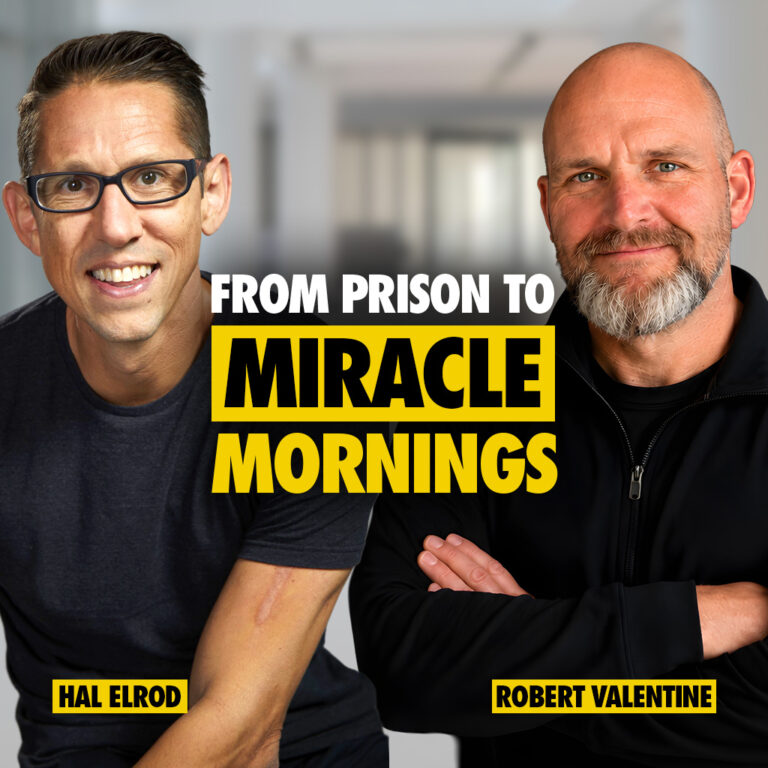
Today, I’m joined by Robert Valentine. Robert’s story is one of the most powerful examples of personal transformation I’ve ever heard. After years of addiction and spending over 10 years in prison, Robert had a huge breakthrough and decided to take responsibility and change his life. During his third prison sentence, he discovered the Achieve Your Goals podcast and began focusing on personal development to completely transform himself from the inside out.
In our conversation, Robert shares how he rebuilt his identity one day at a time and kept the promises he made to himself. He also shares how he lost 90 pounds, earned his college degree, became a certified yoga instructor, and ultimately rebuilt relationships with his family.
His story is a powerful reminder that no matter where you are today, you can still change who you become and create a better future for yourself.
KEY TAKEAWAYS
- Why Your Past Does Not Equal Your Future
- It Starts With You, Nobody Is Coming To Save You
- Take Responsibility For The Life You Want
- Keep Your Word And Rebuild Belief In Yourself
- Rebuilding Your Identity Through Consistent Daily Action
- How Personal Development Can Transform Your Life
- Keep Striving To Become The Person You Want To Be
- How Serving Others Helps Transform Yourself
- Change From The Inside And Learn To Live Free
AYG TWEETABLES
“Anything that we're experiencing in life right now that is holding us back from realizing our potential, that is a prison. The walls may be different, but the understanding and the idea are the same.”
Robert Valentine Tweet
“Addiction is just a symptom of deeper issues. And eventually, when life gets hard or challenging, you run back to what's comfortable.”
Robert Valentine Tweet
“Borrowing someone else's belief system will only work temporarily.”
Robert Valentine Tweet
“The theme in my life was self-betrayal because I wasn't being genuine with who I was and what I wanted because I didn't know, because I didn't take the time to develop some of these things that are important in life.”
Robert Valentine Tweet
“The thing about rock bottom moments is I always carry a shovel with me, because I can keep digging if you give me enough time. If I don't change my thinking, if I don't let all of this head knowledge come down to my heart knowledge, and actually live in this space, I'm going to keep digging.”
Robert Valentine Tweet
“When you finally learn how to love yourself, you can love others brilliantly and beautifully.”
Robert Valentine Tweet
RESOURCES
- Rio Salado College
- Mel Robbins
- The Let Them Theory: A Life-Changing Tool That Millions of People Can’t Stop Talking About by Mel Robbins and Sawyer Robbins
- Ashland University
- The Four Agreements: A Practical Guide to Personal Freedom by Don Miguel Ruiz
- The Untethered Soul: The Journey Beyond Yourself by Michael A. Singer
- Areté: Activate Your Heroic Potential by Brian Johnson
- The Code of the Extraordinary Mind: 10 Unconventional Laws to Redefine Your Life and Succeed On Your Own Terms by Vishen Lakhiani
- Unlocked: Embrace Your Greatness, Find the Flow, Discover Success by George Mumford
- 10% Happier with Dan Harris Podcast
- The Rhythm of Life: Living Every Day with Passion & Purpose by Matthew Kelly
- Jim Rohn
- The Miracle Morning App
THIS EPISODE IS BROUGHT TO YOU BY:
CURED Nutrition:
I want to talk about two of my favorite products. I’ve been taking these for four years, and they’re now a sponsor of the podcast, CURED Nutrition, Flow Gummies. I start every day with two of these. I meditate for 30 minutes without any supplements, and then I take Flow Gummies seven days a week, almost every day.
And then I go to bed with Night Oil. 30 minutes before bed I take Night Oil and it helps me fall asleep and stay asleep. So I start my day with Flow Gummies, I end my day with Night Oil.
If you want to implement my routine into your day with CURED Nutrition, go to CUREDnutrition.com/Hal and use the discount code HAL at checkout for 20% off your entire order.
Flow Gummies to start the day Night Oil to fall asleep. You’ll feel better, you’ll act better, you’ll perform better. Check it out.
RATE & REVIEW THE PODCAST
Reviews for the podcast on iTunes are greatly appreciated and will allow us to get the word out about the show and grow as a community. We read every single review and believe each one goes a long way in helping us make the show even better! If you received value from this episode, please take a moment and rate and review the podcast by clicking here.
Copyright © 2026 Miracle Morning, LP and International Literary Properties LLC
[INTRODUCTION]
Hal Elrod: Have you ever felt like your past has already decided your future? Like the mistakes you’ve made are too big, too many, or too permanent for real change to be possible? If so, you’re not alone, and I want you to hold onto that feeling for the next 10 minutes because my guest today is about to prove you wrong.
Robert Valentine spent 11 years in prison. He battled addiction to meth, heroin, pain pills, and food, and by the time he hit rock bottom, he’d lost nearly everything that mattered to him. But with five years left on his sentence, something shifted. Robert discovered this podcast and started practicing the Miracle Morning in a three-by-five-foot prison cell, and he never stopped.
As a result, he’s lost 90 pounds. He’s sober. He’s rebuilt relationships with his six kids, and he’s been out of prison less than 100 days and has dedicated his life to helping other people walk the same road that he walked.
Stay with us because you’re going to hear the exact habits that Robert built behind bars that are still positively transforming his life today. And you’re going to walk away with proof that the person you want to become is still available to you no matter what’s happened in your past or what you’re going through right now. It is my great pleasure to bring to you this conversation with Robert Valentine.
[INTERVIEW]
Hal Elrod: Robert Valentine, it is so good to be with you, brother.
Robert Valentine: Good to be with you too, Hal. Thank you.
Hal Elrod: Yeah. You just got emotional, and I appreciated that. And I said part of me was like, “Oh, I wish we would’ve recorded that to share it.” But I have a feeling you might get emotional a little bit more. And let me set the table for everybody. Robert sent me a video. And actually, Robert, let me ask you, who were you recording those videos for? Because that was day, I think, 36 that you were out of prison. Is that what the context was?
Robert Valentine: Yeah, that was correct. It’s a challenge that I’m doing, capturing my first year out of prison. So, I’m recording one video every day for the first 365 days I’m out.
Hal Elrod: Wow.
Robert Valentine: So, I like to do things that challenge myself, that are hard, that I can commit to every single day. So, that’s just a challenge. I haven’t really shared a lot of them yet. I share some of them with people. And so, I was just doing two things at once, recording my daily video that day, and plus, sending it to you, which I really got to thank Stephanie Blackbird for connecting us. That was really sweet of her and her story to do that. But yeah, I got emotional, Hal, because this has been a long journey to get here, to this point after listening to you and reading the books and doing this. Five years ago is when I started The Miracle Morning, in prison. So, yeah, it’s just I never really pictured this day happening, and happening this quick. So, it’s just an honor and a privilege to share this space with you today.
Hal Elrod: Awesome. Well, thank you, brother. And you’re an inspiration. I mean, you sent me that video, and I immediately invited you to be on the podcast. And then you shared, “Oh, that’s amazing.” I wasn’t asking, but that’s actually a dream of yours. Share the background. You mentioned that you were 36 days out of prison. How many days now have you been out of prison?
Robert Valentine: Drugs, fraud. This is my third case, and they decided to lay me down for it. So, I got ten and a half years for this. I was in county jail. Everybody was just done with me. So, there are some things that happened here, and this is what I want to get to because this is the important part of what started my transformation. So, in county jail was the last time that I used drugs. I was in county jail. I was clean for about three months, trying to wrap my head around all this time that I was going to have to do. Someone came in, smuggled a bunch of drugs inside the unit, and I used all of it. Like, it was meth and heroin. I used for two days, but this time was different. I really hated it. I hated the entire experience.
I was like, “This is the one thing that has cost me my life,” and I still continue to do it because, as a drug addict, that’s what you do. You use. And so, I hated it. I wrote a paragraph down on a piece of paper that I didn’t know that I wrote later, and I’ll share that at the end. But I wrote something down, and then I got a phone call. I called my mom. She was the only one that would answer my phone calls. I called my mom, and she handed the phone to my oldest daughter, who was 15 at the time, and the words that my daughter told me was this. She said, “Dad, you promised that you would never go to prison again.”
Hal Elrod: Wow.
Robert Valentine: And it was just, I mean, just a gut-wrenching moment. It’s like, God, she’s right, I did. Because I was so quick to make promises, and I would never follow through on them. And so, that happened, and then I got sentenced, and this is the moment that I made the choice that it was time to change. I got sentenced, and my mom was there. My brother was there in the courtroom. I didn’t care too much about it. I just wanted to get to prison and waste away the next 10 years of my life. But my lawyer came and brought me this presentence report. This presentence report is a document that captures every crime you’ve ever committed on paper. Like, every single thing, every list of all of it.
And I started reading through this, and I was like, “Who am I?” Like, I felt this disgust and this heaviness and this burden and this weight on me right now. Like, this is not the person… This is not how I thought my life would turn out. And then at the end of it, we’re getting to…
Hal Elrod: So, what age were you at that point? Around 40?
Robert Valentine: I was 37.
Hal Elrod: Okay.
Robert Valentine: Yep, 37. And then, at the end of this presentence report were all these victim impact statements from the people identities I stole and fraud that I committed, and this was new to me. Like, I never saw this part of it. And I started reading these things, and I’m like, I finally realized something, Hal, that’s really important. See, addiction is a self-centered disease. We are selfish, self-seeking. All we care about is what we want, when we want it, how we want it. But then I realized that for the first time, and maybe it was just this moment, right, this God moment that I had, it’s like, you know what? My actions don’t just affect me. They affect everybody around me, my kids, my family, my friends, society, the community I live in, strangers that I’ve never met, and it just blew me away.
I started crying in that courtroom. Inside, I was screaming like, “I am done.” I started waving this white flag of surrender, and I was like, “That’s it.” Like, I have got to do something about it. And so, that was just a really pivotal moment in my life, and I didn’t know what recovery was. I just knew I had to stay sober no matter what. That was the first thing I had to conquer. And so, I went to prison, and that’s when the work had to start. Like, you can’t make these declarations without actually putting action into it. And so, I started. I started to learn about my recovery. I found the 12 steps of a 12-step program, and I went through that, which opened my eyes up to a whole new way of life and this spiritual life. I had to find a relationship with God that made sense to me again.
And I kept doing something every day to make myself better and learn about my recovery. I went back to school. I went to Rio Salado and got my Addictions and Substance Abuse certificate. And so, I wanted to learn about addiction and why this thing kept messing with me. And so, in the beginning, it was just about staying sober and not hanging around with the people that were going to mess me up, and I just kind of kept to myself. But I also knew, being so self-centered all my life, that I immediately had to start giving back. And that’s what I did, either as a tutor in prison, talking to people about addiction, going to meetings, helping people out. It was just such a big part of my early recovery in prison is just service work.
And that just started to open up my heart to care about others, at the time. So, that was the early part of it. Now, in February, this is the good part. So, in February of 2021, and I know I’m going super-fast. I hope that’s okay. So, feel free to interrupt me anytime. But in February 2021 is when we actually got tablets inside the prison system. So, this was new. We didn’t have tablets before, and it opened up my whole world to podcasts and content that I didn’t have available before. And one thing I realized at the age of 37, going to prison for 10 and a half years, I didn’t know anything. Like, that was what I had to realize. I didn’t know sh*t about how to live, how to be, how to be a human being, how to take care of myself, how to exercise, how to do all these things that are going to make me feel better.
And so, I just started absorbing content, podcasts, and things and books and trying to read and study things. And I don’t even remember what platform it was on, but I found you on a little three-minute episode on something, and you talked about the five-minute rule. You talked about the five-minute rule, and that was awesome because in prison there are so much things you can’t control.
Hal Elrod: Sure. Yeah.
Robert Valentine: Nobody was going to let me out. This is my reality, okay? These are my circumstances. I can’t change a lot about it. And I love the five-minute rule, and I was like, “Who is this guy?” And then I looked you up, and sure enough, your podcast was on there, on the Achieve Your Goals podcast. And I knew that I had to take my recovery and my sobriety to the next level. 2021 was a year that changed a lot of things for me when I really set out to become committed, consistent, and disciplined. Those are three things that eluded me my entire life. And so, I listened to your podcast. It was, I don’t know, Episode 300-something at the time, and you talked about the Miracle Morning.
And I knew from all my research, like successful people start their day certain ways. And I wanted to be successful. Like I wanted so bad to change and to grow up and to take responsibility for my life because nobody was coming to save me. And honestly, no one cared.
Hal Elrod: And that’s true for all of us, by the way. Like pause and let that land. Mel Robbins, who she was in the Miracle Morning movie you probably saw, author of the book, The Let Them Theory, and so many more. That’s her message all the time. Nobody’s coming to save you. No one’s coming to lose the weight for you. Nobody’s coming to make the money for you. You have to take ownership, and you had that breakthrough, and you took ownership.
Robert Valentine: Yeah, and that was the one thing that I really embodied, and nobody cared what I was doing in prison. That’s the thing. See, there’s such a separation. Your family is just out there. Your kids are out there trying to survive. Everybody’s out there trying to live their life, and I’m in here, and they were hoping that I would get it. They were hoping that I would change. But honestly, it’s like whatever, like do whatever you want in there, and so many people don’t. They don’t take it. See, time is our greatest asset and also the great equalizer in life because we all have the same 24 hours in a day.
Hal Elrod: Sure.
Robert Valentine: So, I found the Miracle Morning. I had no idea. I was already exercising, journaling a little bit. I was doing some of these things. I was reading a little bit, not consistently. And so, I heard that framework, and it just made sense to me, and I wasn’t someone that was praying at the time, so my spiritual path was more understanding my thoughts in my mind and opening myself up. So, meditation seemed like a good segue into my life. So, I remember the first time I did the Miracle Morning, no clue what I was doing. I just sat on my bunk. I had a little three-by-five space cubicle they call it, and I sat there, with my legs crossed, and I remember the first thought that I had was, “This is stupid.”
Hal Elrod: I think that’s the first thought that somebody has when they meditate is either, “This is stupid,” “I’m doing this wrong.” It’s something along those lines, yeah.
Robert Valentine: Yeah. And I was like, and I kept waiting for something to happen, and I’m like, “Something’s going to happen, right?” I’m going to get enlightened, like things are going to change.
Hal Elrod: Yeah. I love it.
Robert Valentine: So, I went through like a really quick 40-minute little routine. And what I realized, it was imperfect. It was not anything great, but I realized that my day went better. I felt good. Things didn’t annoy me in prison like they used to. Like, I felt a little bit more at peace just that one time, one morning. That was it. It was just a little bit of a difference. I’m like, “There’s something to this.” And so, I was on this path of being committed, consistent, and disciplined, and I was running three days a week and working out and fasting and doing all of these other pieces that year. I was like, “You know what? This is going to be good.” And I have never stopped. So, I started doing that February 2021, and I’m approaching 2,000 days of the Miracle Morning, and so consistently. Now, obviously not every single one of the SAVERS I’ve done, but.
Hal Elrod: Me either. So, we’re in the same boat.
Robert Valentine: But I always start my day with meditation, prayer, and gratitude.
Hal Elrod: Yeah. I love it.
Robert Valentine: So, those are the three things that I start every single morning with, and I don’t even drink my caffeine until after I do those things. So, I have to correlate this, and there’s so much more to my story, and I know that we’re short on time, so people can ask me or look me up and I’ll be glad to tell them all of it. And of course, eventually, this is my little cover of my book that I’m writing that I made in prison for a visualization tool. So, eventually they can read all about it in there. But here’s the thing.
Hal Elrod: It’s called Never Again. That’s the title?
Robert Valentine: That’s correct. Never Again: Change Inside, Live Free.
Hal Elrod: Ah, I love it.
Robert Valentine: So, that was the one thing that I knew I had to do was change inside. And so, doing the Miracle Morning introduced me to so many things, okay? Not only did I have more peace, joy, and freedom in my life, but I started to care more about other people, and I jumped into service by becoming a peer support. I taught over 500 hours of classes inside of prison, helping people. I even taught the Miracle Morning twice as a class in prison to people.
Hal Elrod: Those were eight-week classes each, right?
Robert Valentine: Those were eight-week classes each. Yep. One an introduction and then a SAVER for each one. It was like when you find a gift, you want to share it with people.
Hal Elrod: Sure. No, the Miracle Morning was that for me. It was a gift that I felt like came into my life through serendipity and intuition and God, and I was like, “I have to share this with others.” And yeah, so continue, man. This is great.
Robert Valentine: Yeah. And so, again, so I started doing the Miracle Morning. I got up every day, and sometimes I got up early. Because I was still working full-time. I was taking five college classes that year, okay? So, I had a job in prison. I had five college classes, and it’s like, “Oh, wait, you don’t have time to do these things.” And it’s like, “No, it’s because I do this that I get to do these other things. It’s when I do these things is when I have the energy and the mindset and the attitude to actually accomplish the things I set out to accomplish.” And so, I went back to school. I got a college degree from Ashland University inside a prison, four-year degree in communications. I got that done. I became a peer support. I served in the prison community for five straight years as a peer support every day, helping…
Hal Elrod: You became a yoga instructor, right?
Robert Valentine: So, that came at the end of it. That year in 2021, because I started diving deep into meditation and studying Buddhism and Stoicism and all of these different philosophies, someone came to me and was like, “Hey, do you want to come do yoga? I have these DVDs that we could try.” I’m like, “No. Spandex pants?” And I’m like, “No, dude, I’m not doing yoga, man. You’re out of your mind.” But then something inside me is like, “Hey, man, you’re trying to change. Why don’t you try something new? What is it going to hurt?” And so, he put on this fire yoga DVD, and it was crazy. And I was like, “This is insane.” But then I felt really good afterwards. So, long story short, I’ve done yoga at least once a week every day for the last five years.
So, including this morning, as I did a full Miracle Morning preparing for this interview, I did that this morning. And then the Prison Yoga Project. I was in a position with my job inside the prison system. They let me take the course, and I did a 200-hour yoga teacher training through the Prison Yoga Project and became a certified yoga instructor, and I’m hoping to find a place in Phoenix here to teach a yoga class eventually. But yeah, yoga’s become a…
Hal Elrod: Incredible. How, how did you lose 90 pounds?
Robert Valentine: I stopped eating. No.
Hal Elrod: That’s one way.
Robert Valentine: So, in 2021, I fasted 24 hours, three days a week, I ran three days a week, and I worked out three days a week. So, that was my commitment that year and my challenge. So, I lost 62 pounds that year. And honestly, like it was the Miracle Morning that all the affirmations, the unwavering faith, the extraordinary effort. I love those terms because I knew that’s what it was going to take. And so, one other thing that I’ll share with that, and there’s so much more, but I knew I had to be present in my moment because I couldn’t wrap my head around this long prison sentence, but I could live one day at a time. That was really simple for me.
And one thing that I knew is like I had to keep an eye on my future, this future self, because it was important. Like, I didn’t want to put too much, because there’s so much uncertainty, and we don’t know what’s going to happen in a mystery to life, but I knew that this was going to prepare me for that. And I jumped into a lot of reading and read over 200 books. And there’s a whole another story behind that.
Hal Elrod: What are some of your favorites outside of Miracle Morning?
Robert Valentine: Oh my gosh. Oh my gosh.
Hal Elrod: Give me a list of just like three of yours that are important. Don’t have to be the best, but three that stand out for you.
Robert Valentine: The Four Agreements, for sure. The Untethered Soul.
Hal Elrod: Yes. That’s one of my favorites. Michael Singer.
Robert Valentine: Right? Areté. This is the second time I’ve read it. Brian Johnson. His light went off. Is that okay? I think I hit something. Okay. Yeah. Brian Johnson, right? Also, too, The Code of the Extraordinary Mind, you just talked.
Hal Elrod: Yes, Vishen Lakhiani.
Robert Valentine: That was one of my favorite books, you know. He talked about being un-fu*k-with-able. Sorry, cuss. My bad. Excuse the language. But I love that. That was amazing to me. So, so many books, and I’ll share a real quick. I know I got a lot of stories, but George Mumford, he also wrote unlocking the master within. He’s a mindset coach to Kobe Bryant and Michael Jordan. So, I was listening to a podcast on the 10% Happier podcast with Dan Harris when I was studying meditation, and George Mumford inspired me to become a reader by this line. He said, “I got clean off heroin 36 years ago, and I have read a book a week ever since.” That’s what he said. And I was like, “A book a week ever since? I’m counting. That’s a lot of books.”
And I wanted to become someone who is a reader. The knowledge, the wisdom, the understanding of things in life that come from that. And so, I was like, “What’s stopping me? Nothing’s stopping me from doing that.” So, I set out, and I averaged a book a week for almost three years after that.
Hal Elrod: Good for you, brother.
Robert Valentine: On top of everything else that I was doing. And so much of the books from your guests I have read. Every time I heard something, I got books sent in. So, now fast-forward, look, all of this stuff has opened up so much in my mind where now I have this compassion and enthusiasm for life and a deep appreciation, and I can pinpoint so many things in my life that change, especially gratitude. Gratitude opened up so much in my life. And so, I practice those things regularly. And people used to accuse me of being happy in prison. That was the accusation I got. Like I would say things like, “I’m living my best life.” They’re like, “What? What are you talking about?”
Hal Elrod: Like, “What’s wrong with you? You’re in prison, dude.”
Robert Valentine: Yeah. Right. And so, I was like I can’t pinpoint every little thing in my life that has collectively helped to energize that, whether it’s meditation, exercise, gratitude practice, yoga, all of these things that have just become a normal part of my life because the one thing that I was doing was changing my identity. I was changing my identity from a drug addict to a criminal to now just a human being, and the one thing that I wanted more than anything else in life was just to be a decent human being. I was tired of hurting people. I was tired of letting people down, but most of all, I let myself down. And so, prison is this lonely place, but it was a radical place for me to actually understand who I am, what I want, what’s important to me, and build these positive habits that have now helped other people, that help myself.
And there are two types of people in prison, okay? You’re either preparing to get out, or you’re preparing to come back. And if you don’t know the difference, you’re probably in trouble. So, there are so much things that you can do in your life. And so, I want to circle back real quick before I stop talking, and I’m sorry, I know I can talk a lot but is that thing that I wrote in county jail that I alluded to. I want to get back to it because it’s really important. And I believe it was like a message from my future self, and it was just one simple paragraph. I don’t remember writing it. I found it three years later after I was cleaning out all my stuff. And it said this. It said, “I failed miserably. I relapsed when a bunch of dope came into my unit, meth and heroin. I went from sober Bobby, working out, trying to do good, to drug addict in an instant. I hated it.” And the last two words on that paragraph were, “Never again.”
Those were the last two words in that paragraph. And after I found that in one of my deep meditations once, that’s when the title of my book came, because never again, if you change inside, you can live free, no matter where you’re at. Circumstances don’t matter. It’s our mindset, our attitude, what we do that matters. So, that’s where the title of my book came. And now I have all of these journals, 27 journals that I wrote in prison.
Hal Elrod: Look at that.
Robert Valentine: So, there they all are, 27 of them.
Hal Elrod: Oh my gosh, and that was only half. Incredible.
Robert Valentine: These are all my Miracle Morning books, one for each year that I’ve done the Miracle Morning. So, with all my affirmations in them. And now I have to somehow magically take all of this and turn it into a book.
Hal Elrod: Yeah. Easy peasy.
Robert Valentine: Yeah, simple, right? Not easy. But today, 79 days out of freedom, and I have to tell people this. In the beginning of my prison sentence, I had no contact with my kids. I didn’t know if I would ever be able to be a father, to have my family back in my life. All of that was unclear. There was no certainty of any of that. And a lot of people use that as an excuse to just keep being how they were. I couldn’t let that because I finally made a decision to change for myself. I couldn’t get emotionally attached to the results. Someone taught me that. And I just had to keep trying to become the best version of myself, thanks to The Rhythm of Life, another great book, by the way, by Matthew Kelly.
And so, I knew that I had to just keep going. Never give up, change the way that I talk, change the way that I sound. And all of these things, all of these writings and journaling, I just became this cheerleader. See, no one was there to celebrate the days I ran 18 miles or the times that I graduated with a diploma or a degree. No one was there to celebrate those things, but I celebrated them because every time I kept my word to myself, I was building a new belief structure. And that was important. And so, now I have character and integrity, and this foundation under me that all circles back to love. When you finally learn how to love yourself, you can love others brilliantly and beautifully.
And it’s just been this huge journey in my life to get to where I’m at. And now today, I have a relationship with all four of my kids and two amazing stepdaughters, ex-stepdaughters. They’re from my ex, but they’re amazing, and I have a relationship with all six of those beautiful human beings. I’m trying to be the best dad that I can. I love my kids so much. My brother, who disowned me 10 years ago in this office, I am now sitting in his office, recording this podcast, and he is back in my life. So, look, things can happen. People can change. Your past does not have to drag you backwards, and it’s an important message for all of us. So, I’ve said a lot, and I’m sorry I took way more time than you probably wanted me to, but I’ll stop talking and let you go. Thank you.
Hal Elrod: Well, Robert, I appreciate everything you said, and how you just closed us out. I mean, those are such valuable, empowering, life-changing lessons that you just shared, and they’re applicable for all of us. And you’re a living example that people can change that, all the things that you just said, your past doesn’t equal your future. And I think this is a full circle moment in terms of the entire quote that gave birth to The Miracle Morning, you’re the living embodiment of. It’s Jim Rohn, “Your level of success will seldom exceed your level of personal development, because success is something you attract by the person that you become.” You dedicated your life, essentially, in prison to personal development as well as service, and you became the best version of yourself, as you said.
And then your success, physical success, losing 90 pounds, mental and emotional health, your relational success, reconnecting with your family, creating great relations with your kids, the success and contribution, making an impact for other people, like all of it, it all centers around you focusing on your personal development to become the person that you needed to be to turn your life around and create everything you want. So, thank you for the living example that you are. I’m so proud of you for what you’ve done for yourself and your family, and that you are dedicating your life to writing the book, Never Again, and pursuing it.
And that message, never again, I love it because never again am I going to do drugs, but also never again am I going to beat myself up. Never again am I going to stop believing in myself. Never again am I going to focus on things that are out of my control and make myself miserable. Like, there are so many never agains for all of us.
Robert Valentine: So many, that’s right.
Hal Elrod: So, again, you are an inspiration. You are a living example that no matter how low you get, how hopeless life might seem, your circumstances are always temporary, and that anything in your future is possible if you commit to becoming the person that you need to be to create it. So, thank you, brother, for sharing your story today.
Robert Valentine: Thank you. And, Hal, thank you. You have been a mentor to me for five years, a voice in my ear. And funny, I never actually read The Miracle Morning book until four years after I was doing it.
Hal Elrod: Amazing. Yeah, you just learned the practice and implemented it. Amazing.
Robert Valentine: I just want just a heartfelt gratitude to you for impacting my life in such a huge way. My life will never be the same because of it. And so, I just want to say thank you. This has been an honor and a privilege of my life, being able to share this, my story, and share this space with you and to meet you, which is on my bucket list. I wrote in my journal three years ago that one day I will be on this podcast sharing my story. And today is that day, so thank you very much.
Hal Elrod: Amazing. I wonder how many of our listeners now I’m going to have on the podcast in the next five years or a few years. They’re like, “I wrote it down the day that Robert told me to do it. It worked.”
Robert Valentine: I started a trend.
Hal Elrod: What did you say?
Robert Valentine: I said I’m going to start a trend.
Hal Elrod: Yeah. There you go. Well, Robert, keep doing what you’re doing, brother. Keep being a light in this world. Keep sharing your story, yeah, because you’re a living example that all the things that we talked about, they apply to everybody in some way, one shape or form. Like you said, prison isn’t necessarily just the jail cell. It’s the prison of our mind. It’s the prison of our belief system. It’s the prison of our self-imposed limitations, and you’ve broken free, and we can all break free. So, thank you, brother. I look forward to our paths crossing, and I want to give you a hug in person one day.
Robert Valentine: Yes. Can’t wait. Thank you, Hal.
Hal Elrod: Awesome, brother. Take care.
[END]