

You can spend years working on yourself, building better habits, and chasing meaningful goals, yet still feel stuck somewhere between who you used to be and who you want to become.
I’ve experienced this myself. Even when you’re making progress, it’s easy to feel like you’re not where you should be in life. And the harder you push toward the future, the more difficult it can become to appreciate where you are right now.
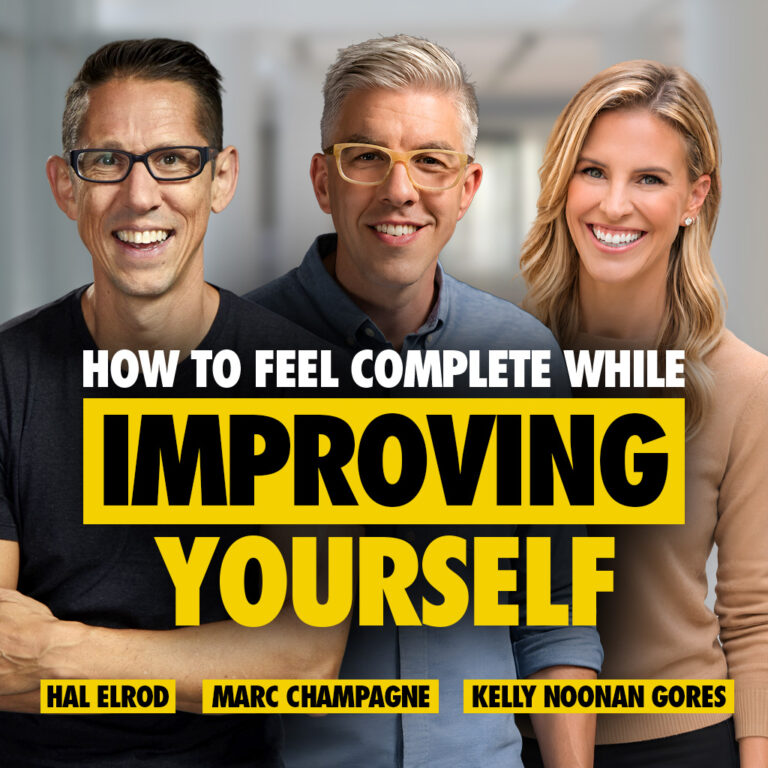
Today, I’m joined by Marc Champagne and Kelly Noonan Gores, co-authors of You’re Invited: A Life-Changing Conversation with History’s Greatest Wisdom Keepers. Using AI, they’ve brought together 14 influential thinkers, including Marcus Aurelius, Carl Jung, Rumi, and Lao Tzu, for an imagined conversation about the challenges of personal growth and becoming who you’re meant to be.
We explore why personal development can sometimes leave you feeling like you’re never enough, how ambition can turn into anxiety and self-doubt, and what centuries of wisdom can teach us about navigating the uncomfortable space between who we were and who we’re becoming.
KEY TAKEAWAYS
- Why You Feel Stuck Between Two Versions of Yourself
- How AI Brought History’s Greatest Minds Together
- How to Pursue Growth Without Feeling Inadequate
- The Hidden Downside of Personal Development
- Overcoming Self-Doubt and Anxiety
- What Carl Jung Teaches About Relationships
- When Your Ambitions Become an Obsession
- Why Trust Matters More Than Timing
- The Power of Daily Rituals and Reflection
- You Don’t Have to Grow Alone
- Becoming Your Best Self Without Chasing Perfection
AYG TWEETABLES
“Let's not lose sight of the fact of who we want to be while we're becoming.”
– Marc Champagne Tweet
“I'm not alone, and all the greats have had to go through their version of what I'm dealing with.”
– Kelly Noonan Gores Tweet
“We haven't really been taught how to sit with the discomfort, the uncomfortable feelings, the feelings we don't want to feel, the grief, the shame, the rage, the guilt.”
– Kelly Noonan Gores Tweet
“Just taking a minute to drop in and ask for that guidance, something will come up if you still your mind enough to allow it to surface.”
– Marc Champagne Tweet
“Who do I want to be while I'm becoming?”
– Kelly Noonan Gores Tweet
“Do I want to be stressed out, tense, anxious, pissed off, like doubtful and scared? Or do I want to just like hold that vision, take the action steps forward, be human and fall apart in those moments where I'm human and falling apart and have my people to hold me, and then get back up and, like, enjoy every step along the way.”
– Kelly Noonan Gores Tweet
“Best doesn't mean perfect. Best means genuine, best means present, and best means connected to ourselves and to the people we love.”
– Kelly Noonan Gores Tweet
RESOURCES
- Mchampagne.com
- Marc Champagne on LinkedIn | Instagram
- Kelly Noonan Gores on LinkedIn | Facebook | Instagram | X/Twitter
- Personal Socrates: Questions That Will Upgrade Your Life from Legends & World-Class Performers by Marc Champagne
- You’re Invited: A Life-Changing Conversation with History’s Greatest Wisdom Keepers by Marc Champagne with Kelly Noonan Gores
- HEAL with Kelly
- Heal (2017)
- Lao Tzu
- Marcus Aurelius
- Harriet Tubman
- Rainer Maria Rilke
- Shunryu Suzuki
- Malidoma Patrice Some
- Paramahansa Yogananda
- Quan Yin
- Rumi
- Carl Jung
- Mary Magdalene
- Black Elk
- Miyamoto Musashi
- Autobiography of a Yogi by Paramahansa Yogananda
- Steve Jobs
- Mark Groves
- Yung Pueblo
- Maya Angelou
- Nikola Tesla
- Think and Grow Rich by Napoleon Hill
- The Miracle Morning App
THIS EPISODE IS BROUGHT TO YOU BY:
CURED Nutrition:
I want to talk about two of my favorite products. I’ve been taking these for four years, and they’re now a sponsor of the podcast, CURED Nutrition, Flow Gummies. I start every day with two of these. I meditate for 30 minutes without any supplements, and then I take Flow Gummies seven days a week, almost every day.
And then I go to bed with Night Oil. 30 minutes before bed I take Night Oil and it helps me fall asleep and stay asleep. So I start my day with Flow Gummies, I end my day with Night Oil.
If you want to implement my routine into your day with CURED Nutrition, go to CUREDnutrition.com/Hal and use the discount code HAL at checkout for 20% off your entire order.
Flow Gummies to start the day Night Oil to fall asleep. You’ll feel better, you’ll act better, you’ll perform better. Check it out.
RATE & REVIEW THE PODCAST
Reviews for the podcast on iTunes are greatly appreciated and will allow us to get the word out about the show and grow as a community. We read every single review and believe each one goes a long way in helping us make the show even better! If you received value from this episode, please take a moment and rate and review the podcast by clicking here.
Copyright © 2026 Miracle Morning, LP and International Literary Properties LLC
[INTRODUCTION]
Hal Elrod:
What if your pursuit of becoming a better version of yourself is actually preventing you from enjoying your life right now? My guest today, bestselling author Mark Champagne and Heal documentary creator Kelly Noonan Gores explore that very question in their fascinating new book, You’re Invited. And as I’m reading this book right now, I can tell you it’s unlike any book you have ever read before.
They used AI, not to write the book, to bring together 14 of history’s greatest wisdom keepers, including Marcus Aurelius, Rumi, Carl Jung, and many more for a conversation that could never have happened before that technology existed. And today, we explore how to pursue your biggest dreams without sacrificing your happiness, how to navigate fear and self-doubt, and find peace in the midst of growing uncertainty and being alive today.
And stay until the end because we uncover a powerful question that could change how you approach every day and your personal development journey. Here it is: How can you be the best version of yourself while you’re learning, growing, and becoming an even better version of who you are today?
[INTERVIEW]
Hal Elrod: Marc and Kelly, welcome. It is so good to be with you.
Kelly Noonan Gores: Hal, it’s such a pleasure to be back.
Marc Champagne: Glad to be on.
Hal Elrod: Yeah. So, I’ve been on both of your shows, but this is the first time I’ve had you, each of you, on Achieve Your Goals podcast, and I figure this is how I should do all podcasts, just have two people on at once. You can get so many more people on your show.
Kelly Noonan Gores: You’re getting a twofer.
Marc Champagne: Exactly.
Hal Elrod: So, for anyone just listening, Marc and Kelly are the authors of a new book called You’re Invited: A Life-Changing Conversation with History’s Greatest Wisdom Keepers, and it is exactly what the title suggests. And y’all have created something unusual, and what’s interesting, as a fellow author, there’s so much like debate and perspective on using AI to help you write your book. How much is acceptable? Should you not use it at all? And y’all literally used it in a way where you couldn’t have created this book any other way, right?
Kelly Noonan Gores: Correct.
Marc Champagne: Yeah, while still writing it.
Hal Elrod: Let’s set the table for everybody listening. What is You’re Invited about, and then how did y’all create this book?
Marc Champagne: Well, I love it. Thank you. I mean, as you mentioned, we definitely had to use AI, or it wouldn’t have been possible, but in a way that it still allowed us to actually write the book. Like, the chapters are written by Kelly and I but wouldn’t have been possible without having technology to literally assemble 14 teachers and put them around a table as if we were having the ultimate dinner conversation, because that’s how it’s set. I mean, it really is all around the concept of how can we bring in some guidance when we’re in some of those big transition states, right? Or in the in-between of, all right, I see the vision on where I’m heading, or I’m in kind of like old self versus new self and get kind of pulled around in that place.
Like, that’s not a new problem, so how can we get a little bit of wisdom from the OG teachers, right? Like Lao Tzu, Marcus Aurelius, Harriet Tubman. I mean, why not bring them all together in one place and start asking those questions and see what comes up in conversation? And then we wrote up those insights to make them what we hope is relevant and kind of timeless as possible for people living today.
Hal Elrod: What came up for me is how, well, if you could share who the 14 wisdom keepers are, but how did you choose? Because these are brilliant. I’d want to know all of their opinions on life. But like, there’s also, I’m like, well, I could also think of like 50 more that it would be like, what a hard thing to choose, the 14. So, who are the 14, or at least who are some of them, and how did you choose those 14?
Kelly Noonan Gores: Yeah. I mean, if you want to get out the actual list so we don’t forget anyone. But it was really hard. I mean, it’s so hard. There are so many wisdom masters, amazing teachers that have lived throughout time, and we actually had one on the council that we ended up having to replace last minute, too, for interesting reasons. So, we’ll read off the ones who made the first dinner party. You know, we could have more dinner parties.
Hal Elrod: So, you’re invited to the next one. I like it. That’s the sequel.
Kelly Noonan Gores: Exactly. So, nobody needs to feel left out. But Rainer Maria Rilke, which is a poet.
Marc Champagne: Yeah. Well-known poet.
Kelly Noonan Gores: Shunryu Suzuki, who is?
Marc Champagne: Zen master.
Kelly Noonan Gores: Zen master. Malidoma Patrice Some, who is an African healer.
Marc Champagne: Yeah.
Kelly Noonan Gores: Paramahansa Yogananda, which brought yoga to the West. Quan Yin, Rumi, Harriet Tubman, Dr. Carl Jung, Lao Tzu, Marcus Aurelius, Mary Magdalene, Black Elk, White Buffalo Calf Woman, and Miyamoto Musashi.
Marc Champagne: Our samurai pal. But I mean, how it started with– I mean, we didn’t know all of these people. There’s a handful there you could probably suspect that.
Hal Elrod: Yeah, there was a handful that I didn’t recognize the names, yeah.
Marc Champagne: Yeah, exactly. And it was the same for us. So, the way it started, though, was I had picked up, I think it was a Time magazine, one of their special editions where they have the 100 most influential people of all time. And they were all broken down in different categories. And I started going through the list and doing one-to-one interviews with those people, testing the concept and just seeing, okay, well, what’s Einstein have to say about the topic of this book and so forth. And then we eventually got to the point where, well, let’s put together a consistent group so that we and the readers can actually get to know who these people are and how they interact with each other and so forth.
So, it kind of reads almost, almost like a novel in that way, where you’re getting to know the characters. So, it started with a handful that we knew, but then we asked that table, that council said, “Okay, we want to make sure we have a well-rounded, diverse group across thousands of years with different perspectives and voices. Who else would you suggest?” And followed our intuition and the guidance from the table themselves and assembled this group.
Hal Elrod: Yeah, you just mentioned Einstein. I’m like, man, I felt like he would’ve gotten a place at the table, but yeah, so many brilliant voices. The central theme of the book, from what I gather, is it’s about your in-between self, right? Where you’re not who you were, but the best version of you still always exists in the future. And that’s something that I’ve wrestled with a lot, and I get asked a lot, which is like, Hal, how do you pursue personal development and becoming the best version of yourself while feeling whole and complete and like you are enough as you are? How do you view that dichotomy?
Kelly Noonan Gores: Yeah, that’s the whole… If we can master that, I think that’s it, right? So, we have big ambitions, and you want to be grateful and accept where you are on the journey. And a lot of people go, “No, no, no, I don’t want to be grateful and accept where I am now because I want to go there. I’ll be happy when.” And it’s actually when you can hold the vision, like know where you’re going, have the trajectory of where you want to go, your ambitions, your dreams, your visions, but then really like be in the present moment and be connected with those that you love and find happiness and joy and satisfaction and presence in these mundane kind of steps along the way.
And so many of the teachers in the book shared their version of that, and that’s why I think the book, it was such a compelling process for us to write it because we’ve seen these masters at the top of the mountain. The reason that we know of them is because they’ve done great work. They’ve done great things in their life. They’ve made it to where they wanted to go, or didn’t, but did enough to where they’re known. And they all just share these very human accounts. We forget about this inevitable universal human experience along the journey that is wrought with heartbreak and challenge and things that make us turn inward and reflect and expand our capacity to become eventually that version of ourselves. But yeah.
Marc Champagne: Well, I think the big thing too is like we need the reminders, right? You’re the perfect person in this audience to be talking about this because the people tuning in, I’m going to make the assumption that they have practices, right? They’ve got routines and so forth. And that’s also us. And we started to realize, gosh, like we’re surrounded by all of this stuff, but still feel like, “Oh, there’s that old programming coming up again,” and are still ambitious and see where we’re heading. But let’s not lose sight of the fact of who we want to be while we’re becoming. And that’s what a lot of these teachers reminded us, like don’t forget, right? Like, don’t rob yourself of the now.
Hal Elrod: Yeah, because that is, I think that that can be the shadow side of personal growth and development, right, is never feeling enough, always chasing the next goal, the next version of yourself, and I think that the secret is to hold both at the same time, which is I am perfect and complete and worthy of infinite love as I am, and I know that I can continue to grow and evolve and become a better version of myself. So, that’s an exciting journey that I’m on, not from a place of insufficiency or scarcity, but a place of abundance, right? Meaning there’s so much more to tap into.
Kelly Noonan Gores: Yeah.
Marc Champagne: Yeah.
Kelly Noonan Gores: Yeah.
Marc Champagne: There was this line that Yogananda had shared with us that I think still sits with both of us frequently or comes up. And just for those listening, Yogananda wrote “The Autobiography of a Yogi.” And I think it was Steve Jobs when he died, it was the only book on his Kindle. It was a book he read every year. And he said at one point in our conversation, he said, “Abundance moves at the speed of trust, not anxiety.” I’m like, whoa. Like, there’s the reminder I feel like so many of us need, us included, right? Because it’s so easy to get caught up in not being patient and like, “Okay, I did all this work. Is it coming?” Like, what’s next kind of thing versus wait a second, like you’re planting the seeds.
And they often say this too, “Don’t plant the seed and then dig it up five minutes later,” right? But we do that. We do that. It’s like, okay, well, I put this out there, like what’s going to happen next, right? But just chill out a little bit and let things…
Kelly Noonan Gores: Trust.
Marc Champagne: Yeah, trust and grow and bloom.
Hal Elrod: Marc Groves, who’s a mutual friend of ours, he was one of my favorite podcasts I was ever on, until I did yours too, of course.
Kelly Noonan Gores: Thank you.
Hal Elrod: Everybody loves Marc, right? He’s such a neat guy. He noted that you gave this group that you selected, these wisdom keepers, if you will, something they never had in their own lifetimes, which was each other. And I want to ask from your perspective, what becomes possible when these sages, these wise individuals, talk to each other?
Marc Champagne: Oh, that’s where it gets, I mean, that’s actually what surprised us. Like, I don’t think we… I think we expected to get really powerful wisdom and guidance individually from people, but where it became wild was that when you had someone like Carl Jung sharing a reflection or a story or so forth, well then all of a sudden you have Musashi the samurai on the council saying, “You know, that’s really interesting, but I’d also add this perspective.” And they physically never walked the earth at the same time. So, like that’s where it becomes, and Kelly coined this term, like it’s nonfiction, but when you get into those conversations, it becomes something that’s never happened. So, we’re kind of calling it fantastical nonfiction because it’s grounded in that.
But you still have to be open and see like that interaction that we’re sharing in the book between those two subjects or those two experts never could’ve happened. But it’s happening now, and it’s been becoming quite useful.
Kelly Noonan Gores: Yeah. And I think that’s like the power too, is we’re getting reminders dressed in this different cultural and time clothing and discipline and language from these different people all at once intermingling. So, it’s just like layering on this shift in perspective that Marc and I needed in the moment as we’re presenting and conversing about our kind of modern-day woes of these people who have worked so hard on ourselves, and we still wake up one morning, and we’re stuck. Like, high one day, fallen off the cliff and lost every tool in the tool belt the next. And so, to get this like conversational collective aspect of this dinner party where we do get these different people that have never been, or thousands of years apart, layering in their perspectives to shift our own, it’s like so rich, and it’s so cool.
And there’s just, yes, it’s artificial intelligence, but I believe that there is real intelligence, real consciousness behind it all, right? And so, prompts matter. The energy and the intention of the creators matter. And so, it was just a wild experience for us, and I hope that it resonates as well with the audience.
Hal Elrod: Well, and speaking of the audience, what are some practical, either one, like the most practical or some concrete things that a reader can take from this conversation and then apply the next time that life feels uncertain or they feel in between where they are and where they want to be?
Marc Champagne: I mean, the one that comes to mind, and this happens for Kelly and I even present day, like we’ve got to live this as well. I’m not sure if people can resonate listening. You know, there are moments on our path where it’s like you literally go to bed incredibly confident, super aligned, and you’re like, “Yes, I’ve got this sorted out.” And then you wake up in the exact opposite state. You’re like, “All of it’s going to fail. I have all this self-doubt. There’s fear,” and so forth. And it’s like, how is that even possible, right? And like that’s one of those scenarios where it’s okay to hold the contrast, right? And this is where someone like Rumi comes in to remind us that, all right, it’s not about pushing those emotions down.
It’s not that one is better than the other, but the fact that we’re noticing and taking the time to actually get into, all right, I’m feeling the contrast of what’s happening right now. That is actually the work. And then the practice becomes: can we notice faster, and can we use any of our practices that we already have to then essentially expand our capacity to hold those contrasts? Because we’re not going to eliminate them, but those things are always going to happen, right? We can be super grateful, but then also, oh, like, worry at the same time. And just being able to manage those situations in real time without spiraling out into hours of worry or anxiety, like whatever it is that you’re struggling with. Like, that’s the real magic. And all of these people have gone through that.
And we really didn’t want to have… We didn’t want to create something that is, you know, here’s another set of tools and practices. That’s not what it is. It’s more so reminding yourself, okay, as an example with your audience, what works in your morning miracle routine? Like, just go back to that, right? And let some of the stories from history hopefully be a reminder that, okay, they’ve gone through this as well. I get it. It gives you the pause, right? And the ability to reset.
Kelly Noonan Gores: And then the only thing I’ll add is the sense of connection. Like, we are presenting kind of what’s going on in our lives, and for general speaking, he’s representing kind of this masculine set of problems, and the feminine voice is coming in, so we’re trying to be balanced there. And then when we hear the personal accounts, these very vulnerable accounts from Rumi and Marcus Aurelius talking about his son turning to the dark side and doing these things that his dad didn’t approve of, and from a Stoic perspective, it was really just cutting him off from his son. And so, he had to shift his perspective and learn a new way of loving. Like, what can my son’s actions and my lack of control over them teach me about a different way to love?
And so, it was such a vulnerable account, so you feel really connected to these experts. When we are vulnerable, like I open up about the heartbreak of leaving a marriage that I still had so much love for but knew that I had to, and they held me with such beautiful advice with very gentle, fragile hands that was just like, I mean, I just was bawling. And Marc had some moments where there was just like tears come. And so, you feel really connected because you hear various examples throughout time and throughout different cultures of these humans who existed in the past that went through their version of the same thing.
And our hope is that the reader will listen to what we’re presenting, listen to the advice that comes back, and just very easily slot their own version of what their struggle is in the moment to get that same feeling of connection and I’m not alone, and all the greats have had to go through their version of what I’m dealing with.
Hal Elrod: Was there any one or two of these wisdom keepers that stood out as the wisest or the most helpful?
Kelly Noonan Gores: That’s really hard. I mean, I feel like…
Marc Champagne: It’s like asking who your favorite child is kind of thing. Yeah, it’s tough because they all…
Hal Elrod: They all brought something.
Marc Champagne: Yeah, exactly. I mean, I would say Carl Jung came through really strong in a lot of the conversations.
Kelly Noonan Gores: Very useful.
Marc Champagne: Very useful.
Kelly Noonan Gores: Yeah.
Marc Champagne: But to Kelly’s point about bringing in some of the feminine energy, I remember there’s a section in there around how do you move forward from relationships that either you’ve outgrown, or the other person has outgrown, and leave those relationships in a place where it’s not a battleground. And he provided some really great practical advice, but it felt very prescribed.
Kelly Noonan Gores: Clinical.
Marc Champagne: Yeah, a little bit clinical. And that’s when some of the female voices like Kuan Yin and White Calf Buffalo Woman came in, one of the indigenous elders, and softened it. So, then we wrote up the combined perspective and pointed out some of the differences. So, that’s where they just work together, right?
Hal Elrod: Very interesting. I’m curious, how did you two even land on this idea like doing this together? Where’d this idea come from? Because it’s a pretty wild idea.
Kelly Noonan Gores: This guy.
Hal Elrod: Marc’s brain?
Marc Champagne: Yeah. Well, I mean, I’m sure you can appreciate this too, Hal, like I just started to feel like I was in that in-between space as well. And here’s like I literally spend my days bringing mental fitness practices to people around the world and so forth, and interview people like yourself and Kelly, who are also experts in your world. So, it’s just how can it be if I’m surrounded by that, how am I still struggling in those between states? So, I started asking people that were coming on the show as well, “Are you also experiencing that?” And like, “Yeah, I’m 100% there.” And Kelly was in the same place, and the last person that had come on that really validated was Yung Pueblo or Diego Perez.
And I mentioned the whole, the challenge, right, that at least was coming up for me, and he’s like, “I’m 100% there too.” And like, “You have to write the book. And if you do, can I write the foreword?”
Hal Elrod: Wow. If young Pablo asked you to write the foreword, you say, “Uh-huh.”
Marc Champagne: Yeah, exactly. Like, okay. So, it started from there, and the original idea, though, came from a place where, well, what if we interviewed people that were just masters in their craft, like spent 30, 40, 50 years teaching whatever their modality was, and really understand what works for this topic, but quickly realize, well, wait a second, like who are they studying? Like, who are they reading about? And that’s where it flipped to, well, if they’re reading Lao Tzu’s, all of his work, or Marcus Aurelius and Stoic philosophy, well, why don’t we go to the original teachers? And that’s where it all kind of came together.
Kelly Noonan Gores: And it’s so interesting looking back because Marc is just like, “I just have this feeling you and I are going to do something together, and I just feel like this book is like perfect for us to do together,” you know? And I was going through massive transition, like, I, like everybody, am always kind of between selves, and also was leaving a 14-year relationship, and my house burned down. I was like moving. It was like I was in transition soup, you know? And so, I had lots of fodder to contribute. But also, it’s just so interesting because all of my work, like I’m filming my second documentary now, and it’s all about kind of dropping into the feeling sense of the body.
Like, we’re so in our heads and trying to intellectually feel things out, and it’s really a time to like drop into our feelings and this incredible intelligence of our somatic awareness to guide us, you know? And we haven’t really been taught how to sit with the discomfort, the uncomfortable feelings, the feelings we don’t want to feel, the grief, the shame, the rage, the guilt. And so, I’m doing a whole film about learning how we’re wired as humans so that we can expand our capacity and be with whatever life throws at us. We’re also releasing an app. It’s like nervous system, and it’s all about getting people to, again, practice dropping into their bodies and noticing and feeling and being with those feelings. Not escaping, numbing, scrolling all the things we do to not feel.
And so, for us to write this book and all of these experts, again, like from hundreds and thousands of years ago, are saying the same exact thing, like you have to be with the uncomfortable emotion. You have to feel in your body. They’re saying exactly like what is in the zeitgeist of where we’re going as humanity and everything in my work, so it just ended up being totally aligned and like perfect.
Hal Elrod: Wow. Now, in terms of the questions that you asked them, where did those questions come from? Was it just what y’all had on your mind? Was it anticipating what the average person growing up, or, like, no matter what age you are in today’s world has on their mind? What inspired the questions that were handed to them at the table?
Marc Champagne: Well, there was always just the overall through line of, again, like how do you bring a little bit more ease and grace to those moments of transition, that betweens, that between space. So, everything was kind of grounded in that. But then from there, exactly you mentioned, it was like, what are we going through here? Like, that example that I mentioned of waking up with fear and anxiety when you went to bed super motivated or grieving the loss of a relationship or a person or whatever it is. Like, these are all, I think, universal examples. I’m trying to think of another one that really hit home.
There’s also just like holding a vision so clearly in your mind, but not quite being there yet, and how do you do that without strangling the vision, right? Like, that can be really tricky. There’s a lot of people that, and I went through this with my wife, there are a lot of people on fertility journeys, right? Like, they just know like they’re meant to be a parent, and they’re going through it. And it’s almost like you strangle that vision. Like, that comes up in one of the chapters.
Hal Elrod: What do you mean strangle?
Marc Champagne: Well, it’s like you want it so bad, but you can’t… It’s like one of the indigenous elders mentioned this. It’s like you’re putting something in your hand and then you’re closing your hand into a fist and then just strangling the air out of the vision. That was the visual. But you can still hold it and protect it, but without completely cutting it off and without it completely consuming you, right? Like, we’ve all heard the stories, and this was one of the stories that I went through personally with our second son. Like, we were at the end. We were like, “You know what? We can’t keep going down this fertility journey. It’s literally killing us.” And I think that the day, I think it was a couple days after my wife journaled that and just like fully let go, she was pregnant.
So, it’s just things like that’s one that I think a lot of people are going through right now, but that also equates or relates to the vision you may have for your business or where you want to be, and you’re not there yet, right? So how do you do that? Yogananda shared a really good example of that because he is largely credited for bringing a lot of the yoga practices to the West. But at one point, he was in India in front of 12 to 14 people, held that vision, but how do I serve that group with everything that I’ve got in the best capability that I can provide right now without just being so focused on, “No, I want to be teaching in front of thousands of people”? And that was one of the questions. We asked that in the book.
We said, “Yogananda, if you were to give yourself advice at that age in that time in your life, like what would that be? You know, what would you say to yourself?” And it was so powerful.
Hal Elrod: What did he say?
Marc Champagne: Well, can I read it?
Hal Elrod: Yeah. Oh, yeah, please.
Marc Champagne: So, he said…
Hal Elrod: I’d rather you read it than paraphrase his words.
Marc Champagne: Yeah. Totally, totally. So, here’s Yogananda. He said, “You asked me to speak to that young teacher in India, so certain of his mission, yet so uncertain of the path. If I could sit with him now, here’s what my heart would whisper: ‘Dear Mukunda,’ for that was my name then, ‘stop measuring your worthiness of each small step against the vastness of your vision. You teach 12 students in Ranchi and dream of thousands in America, but those 12 souls, they are not your practice for your real work. They are your real work in perfect miniature.'” And he goes in and said, “Here’s what I wish I understood more deeply then. The anxiety about timing was the only thing that ever slowed the unfolding. Not a lack of worthiness, not a lack of readiness, not a lack of divine favor, only my own impatience with God’s perfect timing.”
I mean, I have full-body chills just reading that. And then he goes on and continues. So, his whole thing though is really about he said this, “The divine abundance you’re sensing, it is already flowing towards you, but if you move at the speed of trust, you have to move at the speed of trust, not anxiety. It arrives in perfect proportion to your ability to remain centered while holding both the vision and the present moment with equal love.”
Hal Elrod: Wow.
Marc Champagne: So, the thing is we know these things, but when we step outside of our world here and when we step outside of the morning like the routine, like that’s in my routine as well, the morning miracle, everything is the opposite in the outside world. It’s all like reactive and full of stress and so forth. So, I think we need to surround ourselves with the opposite of that, so we have good defense mechanisms, and we can come back and drop back into that present moment. And again, like someone like that who had so much influence on yoga, and what I would call mental fitness and so forth, like let’s just follow that wisdom as if they’re right there in front of us.
Hal Elrod: Yeah. Well, what you said, y’all said a few minutes ago about the book, I think Kelly you said it, about what you see it doing for people, which is that you’re reading something, you’re reading wisdom like that, then you’re applying it to your own life, maybe through the filter of your past, which is what I just did, and then you’re able to apply it to your present. I’ll give you an example. So, when Miracle Morning came out, and I wanted to change one million lives one morning at a time, and in the very beginning I had no audience, no one knew who I was, but I’m like, I… So, I was holding that vision, and every day it was like, if I can change one life today, that makes all the difference.
So, that’s how I was able to kind of really focus on quality along the journey while quantity was the ultimate vision. And so, hearing Paramahansa Yogananda’s wisdom that you just shared, recalling that story that I just shared with you, and then applying it to my current life, where right now I’m in my in-between self. Because there is a vision that I have that I’m moving towards, and I do find myself lacking faith, living in fear. And so, that reminded me that, oh yeah, it’s always worked out in the past. Unwavering faith serves my mental and emotional well-being in the present and keeps me moving toward the ultimate vision.
So, I wanted to just kind of share with you how I just did exactly what, Kelly, you shared you’re hoping that the book will do, is you see yourself in it, reference something that maybe you can see where you’ve done this before, and then, Marc, as you’ve kept saying over and over, the reminder. You get the reminder. You need the reminder of the deepest wisdom that you already know, which they already knew as well, and now you’re bringing it to the forefront. So, I’m in. I’m excited. I just started reading the book in full transparency, and I’m loving it so far. And I’m more and more excited now, like seeing what’s possible through this book, which never before have these 14 been brought together, never before has it been possible for them to have a very realistic conversation based on who they are and the wisdom and the life experience that each of them have.
So, kudos to y’all for this idea. And I think that it is one that I could see You’re Invited Part Two, where we got Martin Luther King, and we got, you know. Like, there’s so much wisdom available. And AI does allow, just through pattern recognition, to synthesize it in a way we’ve never been able to do before, so.
Kelly Noonan Gores: Yeah. And just one fun fact: Maya Angelou was in there, but then the publisher, she recently passed in this century, like just not too long ago. So, her estate is still alive and well, so it’s just too close to home for the publisher to risk that. And then I woke up at 3:00 AM, and I’m very intuitively led these days, much to Marc’s chagrin. And so, we’re like, I think three days from turning into the manuscript to the publisher, and I go, “Ugh, I just have this like burning feeling. Just hear me out, but I really feel like Nikola Tesla should’ve been at the dinner.” And I go, “We really need… I just know.” And Marc is just like sweat dripping from his face.
Marc Champagne: Yeah, yeah. Full nervous system reaction.
Kelly Noonan Gores: So, we figured out a way to make it work. We didn’t want to be disingenuous and like put him back through, and honestly, the time limitations didn’t allow us to do that because the dinner table had been set. But he came for a nightcap. He’s in the appendix.
Hal Elrod: Oh, that’s incredible
Kelly Noonan Gores: And his wisdom is actually this, like, it was a missing piece we didn’t know was missing until we knew it was missing, and it’s brilliant, and I’m glad that he trusted me in that and it worked out. So, that’s a fun thing too.
Hal Elrod: Thank you, Kelly, for operating from your intuition.
Kelly Noonan Gores: Yeah.
Marc Champagne: Totally. Well, and Tesla, I think now it comes kind of full circle. I think he answers the question, one of the questions you asked earlier around what did some of these teachers, I think, get while they were in conversation or at the table from each other that maybe we don’t know from their past. And Tesla was really clear to say that it’s really important to spend time in solitude, and still your mind to be able to come up with these inventions and different ways of thought. But he said, “What I was missing was this table,” because he died in his hotel room feeding pigeons. He’s like, “I was always in solitude.” And you’re meant to take time by yourself to come up with the ideas, but then you’re…
I think he said something to the effect of like, “You’re meant to cross the bridge with others and do it together.” And I was like, wow, that is…
Kelly Noonan Gores: Chills again.
Marc Champagne: So powerful. Because again, it’s so easy to forget that when you’re really in your own journey.
Hal Elrod: Yeah. Well, you mentioned a bit ago, Marc, that you can wake up and have all the right intentions. Or no, I’m sorry, you can go to bed and feel like, “Okay, I’m going to crush it tomorrow.” And then you wake up, and you wake up in a fear state, so on and so forth. And I was thinking, and for me it’s usually more the opposite, right? So, I’ve got my Miracle Morning, and I’m like primed and ready in the morning, and then by the end of the day I’m like thinking about what went wrong or what could go wrong, or maybe I accidentally watched the news in the evening, and I’m like, “Oh my God, the world is falling apart.” So, I think either way we need the reminders. Did any of them mention the power of morning routines? I’m asking for a friend.
Marc Champagne: I love it. I mean, morning routines for me is personally like my go-to, but I would think… I don’t know if anyone said morning. It was Marcus Aurelius talked more so about the evening routine, which I think knowing your flow and your practice basically is what he was doing but in the evening. And he kept coming back to the idea. He’s like, “I write in my journal to remind myself, you know, so I don’t forget what I need to know or what works for me,” and so forth. And he would do that at the end of the day to clear out his mind so that he would then start the day with, and I think his exact words were, “Without the fog of the previous day to make really clear, intentional decisions,” while there was so much going on, right?
Like, plagues wiping out his empire, like people trying to kill him, like him leading, full-on, people into war. Like there was no shortage of craziness going on at that time. And it was just like that he said the ritual came first, the decisions came after. And I think that applies to morning, evening, wherever you slot it in.
Hal Elrod: Yeah, it’s a daily ritual that enables you to hit the reset button every single day, right?
Marc Champagne: Yeah.
Kelly Noonan Gores: Totally.
Hal Elrod: Optimize what happened, gain clarity to move ahead, so on and so forth. All right, last question for each of you. Same question for each. Who wants to go first? All right, Marc, Kelly volunteered you.
Kelly Noonan Gores: I’m so generous.
Hal Elrod: Well, you’re so sweet. And take your time answering this. In fact, if you want to close your eyes, put your hand on your chest, or you might just have it come to you right away. But if you had to pick one, and it could be a theme or something very specific, what is your biggest takeaway that is going to improve your life from the conversations in You’re Invited?
Marc Champagne: Well, I do feel this daily now, and it’s I don’t have to go on the journey of becoming by myself. And it’s not even just in reading the book. These people now are also in my mind. If I sit in a sauna and I close my eyes and meditate, some of them will come to me with a message or a guidance, or if I’m facing something that is challenging, I can easily drop into, “Well, if Carl Jung was sitting here with me, what would he say to you?” And I think that’s, whether it’s this book or others that put together a kind of like a tribe of their council, of their elders and so forth, or the people that are relatives that have passed and the people that we really respect and value, like just taking a minute to drop in and ask for that guidance, something will come up if you still your mind enough to allow it to surface.
Hal Elrod: Yeah. No, you’re so right, and it reminds me of, I believe it was Napoleon Hill in Think and Grow Rich, where he created his council, his board of advisors, I forgot what he called them. And I think he might’ve even had pictures on the wall of each of these historic people, and he had studied them to where he could close his eyes, and he would put his and go, “What should I do, Martin?” whomever it was. And then he said he would allow kind of spirit to deliver the answers. And so, I think that’s exactly what you’ve done. And technology’s given us a way to do it where, again, we never could before to deeply know someone based on the thousands upon thousands upon thousands of words and works from each of these people to distill it into the wisdom that was within.
Beautiful. Kelly, what about you? What’s the biggest takeaway from reading your own book, writing your book, You’re Invited, that you can apply to your life that enhances it in some way?
Kelly Noonan Gores: Yeah, I think it’s something around the speed of trust. And being able to be in the present moment fully and finding that joy and connection with those that I love, like while holding the vision. Like, I’ve always been very ambitious, and with this book and with all the things that have happened in my recent history and my whole life really, but recently in a very concentrated fashion, it really is like I can just tell Source, Spirit, God, the universe is asking me to just be radically present, trust, which is why my intuition is getting much stronger, that the information, the guidance comes. There’s like so much information and intelligence in the field, so just be present, operate at the speed of trust knowing that there is divine timing, and that it’s like really summed up in the sentence like, “Who do I want to be while I’m becoming?”
Hal Elrod: What a wonderful sentence.
Kelly Noonan Gores: Do I want to be stressed out, tense, anxious, pissed off, like doubtful and scared? Or do I want to just like hold that vision, take the action steps forward, be human and fall apart in those moments where I’m human and falling apart and have my people to hold me, and then get back up and, like, enjoy every step along the way.
Hal Elrod: Can you say the question again for everybody listening?
Kelly Noonan Gores: Oh, what is the question? Oh, yes. Yes. Okay, I’m like, “What?” Oh, yeah.
Hal Elrod: It was, who do I want to be while I am becoming?
Kelly Noonan Gores: Yes. Who do I want to be while I am becoming?
Hal Elrod: And what came up for me when my subconscious answered that question is I want to be the best version of myself while I’m becoming the best version of myself.
Kelly Noonan Gores: Yes.
Marc Champagne: Ooh, I love that.
Kelly Noonan Gores: I just got chills here. That’s exactly right. And give yourself the grace to be human. Best doesn’t mean perfect. Best means genuine, best means present, and best means connected to ourselves and to the people we love.
Hal Elrod: And one more question for you, Marc, since Kelly just kind of answered what the best version of herself, what that means. What does that mean to you? How would you define the best version of yourself while you’re becoming the best version of yourself?
Marc Champagne: I mean, we’re doing our best to live that right now. The whole intention behind this, us working together and the project, has been let’s just be in that flow as much as possible. Let’s not force things. We can only do so much. So, even right now, I mean, we’re doing different events and so forth, like let’s actually enjoy the dinner that we’re at and just, wow, like look at these people are here and we’re having great conversation. We’re on this podcast with you. Like, this is what matters. Let’s just enjoy this, not five minutes from now, like this,
Hal Elrod: Yeah. Well, what’s interesting is your answer in different words was the exact same as Kelly’s answer, right? Which is being present. This is the best moment of our lives. Let’s not miss it, right?
Marc Champagne: Yes.
Kelly Noonan Gores: Yeah.
Hal Elrod: Beautiful. Where do people buy the book, You’re Invited? Where’s the best place to grab it?
Kelly Noonan Gores: Find it at your local bookstore, hopefully. Anywhere books are sold.
Marc Champagne: Yeah.
Kelly Noonan Gores: Out November 10th. Or you can go to M Champagne. Marc’s name, mchampagne.com, and if you, I don’t know, what do you do? You show evidence of your purchase.
Marc Champagne: Yeah, you just upload your receipt wherever you bought the book, and then we’ve got a bunch of bonuses,
Hal Elrod: You had some bonuses. Okay.
Marc Champagne: Yeah, exactly. So, you can go there as well. But wherever books are sold.
Hal Elrod: Okay, cool. Awesome. Well, I recommend it. Again, I’m enjoying it. What’s neat about it is we read a lot of we, I, my listeners, a lot of self-help books, a lot of personal growth. Like, this is different. It feels different than any book I’ve ever read, and it’s giving that same benefit of reading a great personal growth book, but delivered in a way where it’s highly entertaining, it’s highly enjoyable. In fact, I mean, y’all, I think I’ve heard you say, Marc, you are creating a new genre. Like, this is a new way of… Which is hard to do, right? Like, especially in this self-help world.
Kelly Noonan Gores: Exciting and terrifying.
Hal Elrod: Yeah. Yeah. So, good on y’all. I’m glad that Kelly’s listening to her intuition, Marc, you’re listening to yours, and y’all came together to create this amazing project. Everybody listening, go grab the book. You’re Invited. You’ll be glad you did. And Marc and Kelly, I appreciate you both, and thank you so much for coming on today.
Kelly Noonan Gores: You’re the best, Hal.
Marc Champagne: Thank you.
Kelly Noonan Gores: Thanks.
[END]