

When you’re going through an incredibly difficult time in your life, whether it’s a health crisis, losing someone you love, or facing challenges that seem impossible to overcome, it can be hard to be grateful for anything. Sometimes, the struggle becomes so overwhelming that you forget what it feels like to be happy.
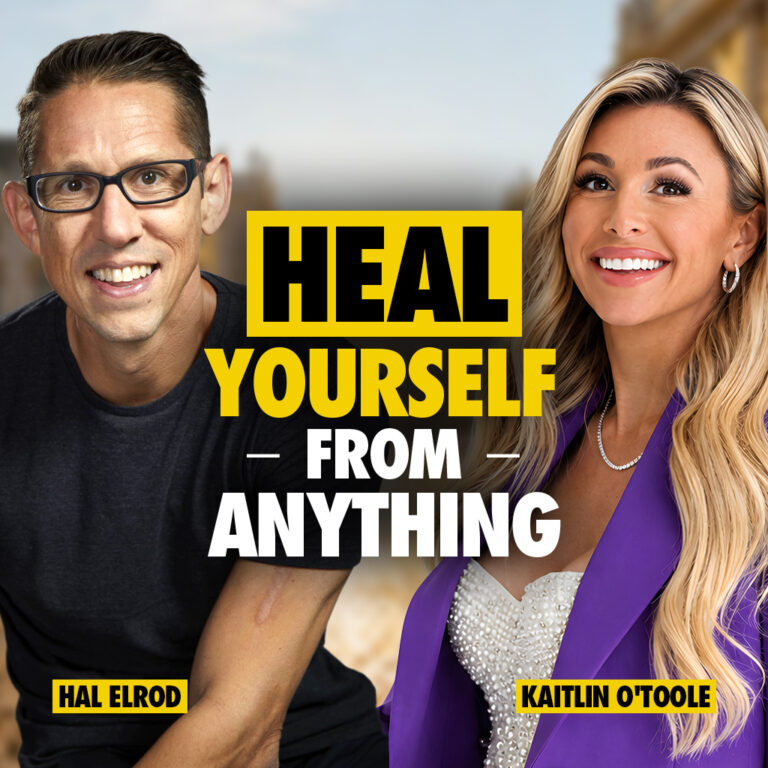
Today’s guest, Kaitlin O’Toole, is one of the most inspiring people I’ve ever met. At just 24 years old, after battling multiple autoimmune diseases, Kaitlin was told by doctors that she had only five years to live. Despite trying countless treatments and medications, her health continued to deteriorate until she reached a point where she could no longer remember what it felt like to love her life. But what happened next completely transformed her understanding of what’s possible.
After years of struggling with her health, Kaitlin decided to stop allowing her illness to define her life and started focusing on rediscovering joy through meaningful work, faith, and music. Today, she’s sharing her remarkable journey and the inspiration behind Lovify, an app she created to help people use music to transform their thoughts, emotions, and mindset.
In our conversation, Kaitlin shares how she went from living in constant fear to embracing the gift of being alive, the extraordinary changes she experienced in her health, and why she believes our thoughts and emotions play such a powerful role in shaping our lives. We also discuss our shared experiences with life-threatening illnesses, the importance of surrounding ourselves with people who believe in us, and how anyone can start creating a more joyful, fulfilling life.
KEY TAKEAWAYS
- How Kaitlin overcame a devastating five-year prognosis.
- Why fear can keep us trapped in negative thought patterns.
- The turning point that changed Kaitlin’s entire life.
- How music can instantly change your emotional state.
- Why your identity influences how you experience life.
- The incredible connection between your mind and body.
- How Kaitlin experienced an extraordinary recovery after ten months.
- Why surrounding yourself with believers can change everything.
- How Lovify helps people transform their thoughts through music.
AYG TWEETABLES
“I always believe that all things are possible if you believe in possibilities. And life has given me many opportunities to actually embody what I believe is true.”
– Kaitlin O’Toole Tweet
“It was like the more scared I was that I was going to die, the more I attracted things to kill me.”
– Kaitlin O’Toole Tweet
“You can do all these things in the outside world, but my soul inside was dying, and I really believe when the soul dies, the body follows.”
– Kaitlin O’Toole Tweet
“I was literally rewiring my mind, my thoughts, and my emotions, my biology to literally become a different person. And that is the power that we all have, and that is such a powerful tool and way to do that.”
– Kaitlin O’Toole Tweet
“Every single thing in my body healed, and for the first time, I wasn't trying to heal. I had spent 10 years trying to heal, and the moment I decided I was going to fall in love with life is when everything happened.”
– Kaitlin O’Toole Tweet
RESOURCES
- KaitlinOToole.com
- Kaitlin O’Toole on LinkedIn | Facebook | Instagram | YouTube | X/Twitter
- Lovify
- Mindvalley
- DraftKings
- Joe Dispenza
- The Miracle Morning App
THIS EPISODE IS BROUGHT TO YOU BY:
CURED Nutrition:
I want to talk about two of my favorite products. I’ve been taking these for four years, and they’re now a sponsor of the podcast, CURED Nutrition, Flow Gummies. I start every day with two of these. I meditate for 30 minutes without any supplements, and then I take Flow Gummies seven days a week, almost every day.
And then I go to bed with Night Oil. 30 minutes before bed I take Night Oil and it helps me fall asleep and stay asleep. So I start my day with Flow Gummies, I end my day with Night Oil.
If you want to implement my routine into your day with CURED Nutrition, go to CUREDnutrition.com/Hal and use the discount code HAL at checkout for 20% off your entire order.
Flow Gummies to start the day Night Oil to fall asleep. You’ll feel better, you’ll act better, you’ll perform better. Check it out.
RATE & REVIEW THE PODCAST
Reviews for the podcast on iTunes are greatly appreciated and will allow us to get the word out about the show and grow as a community. We read every single review and believe each one goes a long way in helping us make the show even better! If you received value from this episode, please take a moment and rate and review the podcast by clicking here.
Copyright © 2026 Miracle Morning, LP and International Literary Properties LLC
[INTRODUCTION]
Hal Elrod: If you are struggling with health challenges or just your mindset in general, this episode is for you. You’re about to meet one of the most inspiring people that I have ever known, literally. When she was only 24 years old, Kaitlin O’Toole was faced with an unimaginable reality. Doctors told her that she only had five years to live. But her story took an unexpected turn when she stopped focusing only on trying to stay alive and began rediscovering joy in her life through meaningful work, faith, and music. In this conversation, Kaitlin shares the moment she hit rock bottom, the surprising role music played in turning her life around, and why she believes that our thoughts and emotions can shape how we experience the world and every moment of this one life that we have been blessed to live.
Her journey is powerful, honest, and full of hope, so prepare to be inspired. It is my great pleasure to introduce you to my friend, Kaitlin O’Toole.
[INTERVIEW]
Hal Elrod: Kaitlin O’Toole, I am so grateful to be here with you right now.
Kaitlin O’Toole: I’m so happy to be here, Hal. Thank you for having me.
Hal Elrod: You’re welcome. I’ve told you this multiple times, but I want to say it for everybody watching and listening. You’re one of the most inspirational people that I have ever met, ever seen. I’m so blown away. Like, the first time I went to your… We met in Estonia, at Mindvalley. And we really connected, hit it off, found out you had a story, different but similar in terms of brain tumor, and given five years to live, just this unbelievable… And then I went to your Instagram, and I just binge-watched. I was like, every video makes me feel better about myself, makes me feel inspired, gives me hope. Like, you’re incredible.
Kaitlin O’Toole: Thank you, Hal.
Hal Elrod: Yeah. With that said, and we can start where you want to start, but, well, let’s start here. You were given five years to live at one point.
Kaitlin O’Toole: Yeah.
Hal Elrod: Take us back to that moment. Why were you given five years to live, and what did you do? What did you feel? What did you do?
Kaitlin O’Toole: So, in 2017, I walked into a doctor’s office in Upstate New York and, like you said, they looked me in the eyes and said, “I’m really sorry. There’s nothing we can do, and at best, you’re looking at five years left to live.” And I had gone through years at this time of a health battle, of getting diagnosis after diagnosis after diagnosis.
Hal Elrod: And what were these? Autoimmune diseases, or what was the diagnosis?
Kaitlin O’Toole: Yeah. So, it started with celiac, which is so random. Before, this was cool. Before, you could, like, getting a gluten-free anything wasn’t real. I lived in New York City. I lived off dollar slices of pizza. And I was like, “What is gluten? What is this?” So, it started with celiac. Then I was diagnosed with lupus. Then I was working for a sports show, but it was sponsored by DraftKings. I had this fantasy football show. And I remember talking and interviewing, and I would just stop talking. My producer was like, “Kaitlin, are you okay?” And I’m like, “Yeah.” And it was like lights out. I didn’t even know what happened. But I was like a robot glitching. And I got diagnosed at this time with neurological Lyme disease, with multiple co-infections.
Hal Elrod: You catch lupus and then Lyme, like, oh my gosh.
Kaitlin O’Toole: Yeah. And I kept doing all the things. I changed my diet, and I changed where I live, and I changed my habits, and I changed everything, but no matter what I did on the outside, I just kept continuing to get sicker. And eventually I was diagnosed in 2017 with a rare form of scleroderma, which is an autoimmune, where my large and small intestine were hardening, and it was moving up into my heart and into my throat. And if I was talking to you at the time, Hal, you would hear me like (gasping sound) as I’m talking. Flashbacks. So, it’s a rare autoimmune, and like many auto-immunes, there are no answers. And so, the rate at which it was progressing and the organs at which it was affecting is why they gave me five years to live.
Hal Elrod: Wow. And so, you were how old when you got that news?
Kaitlin O’Toole: 2017, so I was 24.
Hal Elrod: Okay. Wow. Time flies.
Kaitlin O’Toole: Yeah, so 24, 25, somewhere around there. Yeah, I was going after my dreams, you know? It’s like I really believe that everything is possible. And so, at this…
Hal Elrod: So, you were an optimist back then.
Kaitlin O’Toole: I was always an optimist.
Hal Elrod: Okay. All right.
Kaitlin O’Toole: I always believe that all things are possible if you believe in possibilities. And life has given me many opportunities to actually embody what I believe is true, and that is what I look at it. And so, yeah, I moved to New York, I’m going after my dreams, and I believe this all started getting sick when I got a call from my brother that my brother was missing. And that’s kind of the catalyst that led me down to this disease, which there’s more after scleroderma. It progressed, and it progressed to more things. It was like the more scared I was I was going to die, the more I attracted things to kill me.
Hal Elrod: And so, what was the mindset? You mentioned being scared of dying, which is a normal human reaction when that’s on the table now. I mean, it’s always on the table. People fear death in general, but to be like, “Hey, you’re sick,” not to mention you’re now feeling the effects, you’re weakened, et cetera, and you have five years to live. What was the mindset beyond the fear? So, you’re experiencing the fear. How did you deal with that? How did you respond to that? How did you potentially transcend that?
Kaitlin O’Toole: So, I decided I was going to leave New York, and I was going to move to be by my brother. My brother’s my best friend. And, you know…
Hal Elrod: Now, was this before he disappeared?
Kaitlin O’Toole: Yeah. So, this was before. So, my brother… I’ll backtrack you because it’s a big part of it. So, in 2012, I just moved to New York City, and I was like, “This is where dreams are made of. Like, I’m going to make my dreams happen.” And I got my dream job at MTV.
Hal Elrod: Wow.
Kaitlin O’Toole: And I was like, “This is it.” And just a month after being there, I got a phone call from my mom that my brother was missing. And my brother was a veteran. And he really had a hard time transitioning when he came back from war. And so, one day he took all the medication that the VA gave him and attempted to take his life. And I share this because you talk about the mindset, and I didn’t know this at the time, but I think it’s important for people to consider about decisions and prayers and things that we make in our life. And so, by the time I’d gotten from New York City to where they were in Louisville, Kentucky, my brother had passed.
My dad found him. He was blue. He was able to revive him. He was in a coma when I arrived. And I remember getting on my knees at his hospital bed and being like, “God, just please give me what he has. Like, let him wake up. Like, let him be okay.” And I don’t believe that God works like that, that the Creator’s like that. But what I didn’t know at the time is that prayer was almost like this program into my subconscious mind. And so, by the grace of God, he woke up, and they said he’d be brain dead, and he wasn’t, and it was like he was okay. And a month later, I was in the hospital, and that was the beginning of this illness. So, five years later, I’m now given five years to live, and you ask what I did in this moment.
I thought, “I just want to be by my brother.” He always just believed in me and thought I was going to be okay, and I think the opposite of fear, we know this, is faith. And so, having that fear, having a doctor tell me I’m not going to live, being scared and also upset, I’m like, “I’m trying to make my dreams happen. I don’t have time for this.”
Hal Elrod: Yeah. “This isn’t part of my plan.”
Kaitlin O’Toole: “This is not my plan. Do you hear me? This is not my plan.” But it was a greater plan that wasn’t mine. It was God’s plan. And so, I left, and I moved to California. And I really just started to have faith that things could be okay, but that’s the thing is you can have faith, but if you have these underlying emotions like fear, like I was saying, not knowing subconsciously what I had prayed and what I had asked for, that was like this program that was running. Not even a program. It was a virus in the operating system of my mind that no matter if I did leave New York or no matter if I did try to change my mindset, I had these subconscious deep beliefs that if my brother was going to be okay, I couldn’t. That was running the show.
Hal Elrod: Wow. And my understanding, if I recall, is you were on medication for a while?
Kaitlin O’Toole: Yeah. So, I was on all kinds of medications. I mean, I remember going into the doctor’s office, and like, for example, for lupus, it’s like, “We need you to take this medication, but you’re going to have to go to the ophthalmologist every month because 2 in 10 people go blind.” And I’m like, “What?” And so, I was on this journey of trying to find what would heal me. That’s been so much of my life is how do I stay alive? What is going to heal me? And I was doing Eastern medicine, I was doing Western medicine, and I was doing antibiotics and IV antibiotics, and oxygen therapy and acupuncture and enemas and you name it, and I was on it, and I was trying it.
And then I was continuously in this pattern of taking more because another disease would show up. Now, once I moved to California, I started to have some ovarian issues. And I remember going in and being like, “Okay, I’m going to get better. I moved to California. I’m out of New York. It’s not as crazy. There’s not as much chaos. Like, I’m going to relax and go to the beaches, what Californians do. We’re going to chill out. And my body would heal.”
Hal Elrod: Chill and heal.
Kaitlin O’Toole: Yeah, chill and heal. Exactly. But again, I had this fear, and so I wound up getting diagnosed. At that time, they had found tumors in my ovaries that were on the cancer spectrum, so now I have new medication. And so, there were all of these new diagnoses, and then with that were more medicine and, yeah, I just was listening to what the doctors told me to do, while also trying to find different types of doctors. But I just believed that something outside of me, someone, some medication, would heal me.
Hal Elrod: And I can relate to that. When I was diagnosed with cancer, I was like, “I don’t want to do chemo.” And then I reached out to some of the best holistic oncologists in America. They’re like, “You actually have to do chemo.” I was trying to get them to be like, “Hey, we can help you naturally.” And they’re like, “Your organs are failing. You have to do chemo.” So, I started chemo, and then I get on predni… But what’s also, for me, it became a slippery slope where initially I’m like, “I’m natural. I don’t want to do pharmaceutical drugs and chemo that have all these side effects and that are harmful.” But then all of a sudden, a year into it, I just forgot that that’s who I was before, and now I’m on all these medications until I wasn’t. How did you go from you were on the medications until you weren’t? Because I believe there was a shift.
Kaitlin O’Toole: Yeah. So, for me, I got to the point where more things continued to happen in my life. I got sicker and sicker to the point, and I know you know this, it’s like my life consisted of going in and out of hospital, of doctors, and reading, and how do I solve this, and how do I heal? And people being young, and people being like, “What do you do?” And living in a society where so much of our self-worth is based on who we are and what we do and how we contribute, and having to constantly say, “I am S-I-C-K,” and this affirming this over and over again, it got to the point where I could not feel joy. I didn’t remember what it felt like to love life. I didn’t remember what that was even like. Like, I knew it existed. I knew I had felt it, and I saw other people experiencing it, but I couldn’t feel it.
And through a series of events of being on so many different medications, getting so many diagnoses, trying to travel and do the things that I wanted to do before I died, while also just feeling so empty inside. It’s like you can do all these things in the outside world, but my soul inside was dying, and I really believe when the soul dies, the body follows. And so, I got to a point where I went through a really challenging breakup, and I remember sitting in the car after walking in on him with two girls, I should say, for context.
Hal Elrod: Wow, okay.
Kaitlin O’Toole: It was this moment. But I share that because it was like I thought I was at rock bottom, but then I was like, “There’s more rocks at the bottom? This goes deeper?” And I remember being in this moment and just screaming like, “I’m done.” Like, “I’m done. Do you hear me? Like, I’m never going to live this life again.” And I was so angry. I was so angry that why was this happening to me? Why was it so hard? Why couldn’t I get better? Why was I just getting worse? Why was everybody else living their life? And I had dreams, and yet I couldn’t ever just get to the point of being okay. And if I was, it wouldn’t last too long, and then there’d be something else.
And I remember being this moment, and that was the moment where I’m like, “I don’t even remember what joy feels like.” And I made a decision. I’m like, “I’m going to go back to work.” Like, “I’m going to go back to work.” And at this time, they had also found tumors in my breast. I’d just found one in my brain. And I remember calling my mom and dad, and I’m like, “I’m going to go back to work.” And they’re like, “You’re crazy.” She’s like, “And do what? Like, you’re so sick.” And it was in that moment of choosing, like, this wasn’t working. And nothing the doctors were saying, or nothing that I was doing was working.
Hal Elrod: You had to change something. It’s like, “This isn’t working. Got to do something different.”
Kaitlin O’Toole: Exactly. And it was just this intuitive feeling. And I’m not saying this is for everybody, but for me it was like, “I need to go find joy.” I need to remember what loving life is and what it’s like the gift to be alive.” I was trying to stay alive, but I wasn’t even enjoying the gift of life in the time that I had it in this moment. And I went out, going in for this. I got a phone call out of nowhere, because that’s how it works. You make a decision, and then God hears you, and it’s like, woo, okay.
Hal Elrod: I’m going to start loving life again, and then you get a phone call.
Kaitlin O’Toole: Phone call. It’s like, “Hey, you want to come love life?” I had an audition for a job in journalism, and I hadn’t worked in years. And I was like, I remember the producer calling me. I used to work with him in New York. And he was like, “Kate, how are you doing?” And the scene is like me in my brother’s house crying, going through a breakup. I’m like, I thought it was a butt dial, and I’m like, “Huh?” I’m like, “Yeah, I’m good. How are you?” And he’s like, “Any chance you’re looking for work?” And I’m like you want one of these? I’m like, “What?” Playing it cool. And I’m like, “Yeah, but I don’t live in New York anymore.” And he’s like, “Where are you?” And I’m like, “I live in California.” And he’s like, “No kidding, Kate. Job’s in California.”
Hal Elrod: No way.
Kaitlin O’Toole: Yes. It’s like, my God, divine synchronicity. And I remember, it was a Friday. I said, “Any chance you can come in on Monday to Santa Monica?” And that was an hour from me. And I was like, “I’ll be there.” And it was in this moment of going in for the audition, I couldn’t tell anyone I was sick because they’ll never hire you. I’m like, what am I going to say? Like, “What’s your guys’ health insurance look like?” So, not a funny joke, but the truth. And I went in, and I was just acting like I’m okay, and like God heard my prayers, and we’re going in this direction. And now I have a chance to embody this new identity. And I went back for three days, and on the fourth day, I remember my dad called me, and he’s like, “Kate, you need to come home.”
And I’m like, “Dad,” like, “Do you know where I am right now?” I am like, “I’m so happy. I can feel happiness. I can feel joy. Like, I’m doing something I’ve always wanted to do.” And he’s like, “Kate, they’re going to shut the country down. I need you to come home. Either you’re going to come get me, or I’m getting you.” And it was March 2020.
Hal Elrod: Oh, wow.
Kaitlin O’Toole: And so, my dad’s a military man. You, “Yes, sir. I’ll be on the first flight out. And you don’t have to come get me. I’ll get on the plane.” But I remember in this moment feeling like, “Oh, my God, did I miss my window?” Like, was that the opportunity I had been praying for? And it wasn’t, because it turned out I got the job, and now I had this huge decision, and this is, to get to your point of medication, I could either take this job, and to me it signified this embodiment of faith. Like people talk about miracles, and they happen. They genuinely happen every single day. And if we’re lucky enough, we get the chance to believe that they could be something we get to experience, whatever that looks like in our own life, whether that’s health or love or finance, whatever it is.
And I remember being like, “I’m going to do this.” Like, “I’m going to take this job. It brings me joy.” And I had to sit my mom and dad down and say, “I’m going to take this, but that means I’m going to stop taking all my medication because I can’t function.” I know it’s there to help me, but I couldn’t think. I was a shell of myself. And that was a pivotal moment in my life of…
Hal Elrod: Wait, when was that?
Kaitlin O’Toole: 2020.
Hal Elrod: What month?
Kaitlin O’Toole: March or April of 2020.
Hal Elrod: So, I think it was May of 2020 when I told my doctor I’m done taking all of my meds.
Kaitlin O’Toole: Really?
Hal Elrod: Yeah. And I had lost the ability to feel joy, and I was depressed, and I was suicidal, and I was like, to your point, when you say that, I’m like, “I don’t remember what it feels like to be happy, and I hate that.” And what’s the point of living if not like I haven’t been happy in a while, like it’s been years and I can’t remember what it… I know I used to be super happy, which even makes this worse.
Kaitlin O’Toole: Yeah. Because I know that feeling, just trying to get there.
Hal Elrod: But I’m like, I don’t even remember what it felt like to be happy. So, anyway, but yeah.
Kaitlin O’Toole: No, it’s true. And, Hal, on that point, it’s like, you know, and maybe for even anyone watching this, something I didn’t know then that I’ve learned now that has helped me understand our human bodies is we are all addicts. Like, we all can get stuck in loops, and every single thought we have produces a chemical in our body. That’s science. So, when you’re going through hard times in your life, like a health illness or depression or maybe your job’s changing, it just can take a little bit for your body to start to think that’s who we are. Like, those thoughts of fear or sadness or anger, upset or heartbreak or whatever it is, it starts to create this chemical addiction.
And so, we start becoming addicted to a life and living a life we don’t even want to have. And for some of us, it’s not our fault. Like, it’s something happened. For all of us, it’s not our fault. For all of us, something happens in our life.
Hal Elrod: Nobody chooses to be miserable.
Kaitlin O’Toole: Absolutely not. And I think no matter what you’re going through, you have to remember that you can change, and it starts in your mind. And you can start to fire and wire new thoughts, and that can produce new chemicals, and you can literally start being a new person and feeling that joy and that happiness. That’s so interesting, the timing. It was either end of March or beginning of April when I made this decision and took the job and was like, “Here we go.” But it was a tough one from my parents. I remember telling my mom and dad, “I’m going to do this.” And my dad looked at me, and he’s like, “So, we’re just playing make-believe. We’re just going to make believe that none of this is happening.” And I was like, “That’s it. That’s it, and I need you to believe this with me, Dad.”
And there’s power in that. Like, I didn’t know in the moment exactly what I was doing, and it might sound crazy, and I’m not recommending it. It was my path. It was my soul’s journey to understand the power that exists within me, within all of us.
Hal Elrod: That mind-body connection.
Kaitlin O’Toole: That was waiting to be discovered. Exactly.
Hal Elrod: So, you stopped taking all your medication? You just quit cold turkey?
Kaitlin O’Toole: I stopped taking everything, and I replaced it with a new medication called music and worship, and yeah. And yeah, I began every single day, like I do still, is I would wake up and I would pray, and I would thank God for another day. And then I would find the happiest music that I could find, and I would listen to it, and a lot of it was worship, you know? And I just remember being like, “And when I fight, I fight on my knees.” Like, the battle belongs to you like let’s go. And I would do this because what I’ve learned now is music is the fastest way to change your state. And so, in those moments, like when you’re going through a challenging time, sometimes our own thoughts are not good. I mean, they can be good for a little bit, and then fear creeps in. Doubt creeps in.
It’s like, what am I doing? And so, I realized that if my thoughts weren’t good, I had to replace them with something else. And so, I would use God and worship music and sometimes even just services and things, but music was the key for me. Especially, I had to get on camera, and I had to act like I was okay, and I had to come up with interviews. And so, this was this tool of listening to positive music, and then getting on camera, doing an interview, and I loved it. You know, it was during the pandemic, which was such a challenging time, and there was so much negative news in the world that I was like, “What is a positive story I can tell?”
Oh, there are over 20 million children in the United States that eat all their meals at school because they don’t have the finances at home to have them, and they’re not eating. How are they alive? Like, what are they doing? “Oh, LeBron James is doing a food drive. We got to go talk to him.” And I would find story after story, and in between I’d put my music on, and I’d change my state. I didn’t know about meditation at this time or all these other tools that exist that can help us, but it was just the fastest way that I could reset myself and get back into joy. And I did this for 10 months.
Hal Elrod: I want to spotlight this before we move on. And also, I know you have an app now that helps people create custom music for this exact purpose, so we’ll circle back to that. But you said something, which is music is the fastest way to change your state, and I want to unpack that for people because… And then you mentioned, “I didn’t know about meditation.” But I want someone to think about this, because I know this from experience. When I’m in the car, and I’m like, “I’m tired,” I turn on some upbeat, positive music, very often actually worship music, right? And instantaneously I’m like, “Let’s go!” And I’m energized. But think about it. If I were to meditate, that would not happen.
I’d be like, “Am I doing this right? Oh my God, my thoughts are taking over. Oh, I’m still feeling fearful thoughts, right? So, I just wanted to really unpack that because you said it in passing, but I’m like, “Guys, I want you to, and gals listening, think about that.” Music is the fastest way to change your state. When you change your state, you change your psychology, and you change your biology, and you change your entire world and your quality of life. So, back to you.
Kaitlin O’Toole: Thank you for that. It’s true, and I think what has happened is we’ve seen in the music industry that people know this, and we look at lyrics, and we look at the way that people are getting put into states. And so many of it is so negative.
Hal Elrod: Oh my gosh.
Kaitlin O’Toole: And Harvard did a study recently that said music is the only thing that lights up every single part of our brain. The only thing. And if you look at people with Alzheimer’s and dementia, and it’s like they don’t know what’s going on or where they are, but it fires and wires. And I think it’s just one of the fastest ways to change your identity. And I didn’t know it at the time, but what I was doing is I was literally, as you said, rewiring my mind, my thoughts, and my emotions, my biology to literally become a different person. And that is the power that we all have, and that is such a powerful tool and way to do that.
Hal Elrod: So, what was the healing journey like after that? Because you’ve got all these diseases. You’ve got medication. The doctors say, “You have to have this. That’s what’s keeping you going.”
Daniel Faggella: Yeah. Or else.
Hal Elrod: Yeah, or else. Exactly. I got those threats, too, or those ultimatums. What was the healing journey?
Kaitlin O’Toole: So, my healing journey, I’ll take you to the end. So, 10 months of being home and listening to positive music, telling the most amazing stories that I could find.
Hal Elrod: Living your dream job.
Kaitlin O’Toole: Living my dream job, and I couldn’t go anywhere. Remember, it was the pandemic. I couldn’t go anywhere. I couldn’t do anything. I just had to be with myself, and that created the perfect conditions for me to heal. And after 10 months of being home, the country starts opening. My dad’s like, “Okay, I know we’re doing this make-believe thing, but you need to go back to the doctor. Like, you need to go get a brain scan. You need to check your organs. Like, we need to see what’s going on.” And at this point, it’s like I had become such a new person. I was like, “We’re really going to go do it. I feel great.” It wasn’t at first. Like, I’m not saying… Anyone who’s going through something, it’s like, okay, that sounds, “So, we’re just going to pretend.”
Like, you still are overcoming your body. It’s not like the pain wasn’t there. It wasn’t like my hair wasn’t falling out. It wasn’t like I couldn’t move my right leg. It wasn’t like there weren’t these real things. It’s just, could I overcome them with my mind? Could I fall more in love with the moment and with the music and with what I was doing, that that emotion was greater than the pain? And the love, of course, with my family, being in love and being surrounded with my mom and my dad. And I remember flying back, because you got to fly back. You got to use the same machine, same equipment, same everything. It’s so important. And I fly back to California, and the first thing I do is I get my brain scan.
Doctor comes out, and he looks at me, and he’s like, “What have you been doing?” And the only thing I could think of, Hal, was I just fell in love with my life. And he’s like, “Your tumor’s gone.” Like, this was gone. I wound up going to get my organs checked. Everything that they said was incurable, it was impossible, was fine. Everything was in perfect health. The surgery I was supposed to have to take the cancerous cells out of my ovaries, I didn’t have them, but they were no longer there. And every single thing in my body healed, and for the first time, I wasn’t trying to heal. I had spent 10 years trying to heal, and the moment I decided I was going to fall in love with life is when everything happened.
And it was the most like, “Oh my God, I can’t believe this happened,” and, “Oh my God, of course it happened. Thank you, God. Miracles are real, and it’s possible.” And it was this dynamic, but of course I’m just this girl. Like, I’m just this girl that I have a ton of faith and whatever you believe in, whatever you want to call it, just call on it, right? Whatever it is. But I have a ton of faith, but again, this was my initiation to embody that and to practice that, but I was still fascinated by this idea of how is this possible? Like, nobody in my life taught me. You know, I heard of positive thinking, right? But nobody told me that my thoughts had something to do with my life, that my thoughts could literally make me sick and can make me well. Like, I did not know this until this moment.
Hal Elrod: And the naysayers, the skeptics, they’re like, “Well, if the doctors and experts don’t show me a double-blind placebo study, then I don’t believe it.” And I think some of the most important and overlooked is anecdotal evidence. They’re like, “That’s just anecdotal.” I’m like, “Yeah, that’s a human being that did this thing and got this result, like many other human beings that did the thing and got the result. But because they weren’t studied at the time, you’re going to discount it?” I think it’s one of the most undervalued and I’m an example. Like, I show people sometimes, I’m like, “I don’t have a graph to show,” because when I had my car accident, they said you would never walk again, and I had the very similar mindset as you.
I’m like, “I have unwavering faith that I can heal my body, and I can walk again.” And when I’m giving a speech, I’m like, “I don’t have a graph where I can show you how my mindset and my body healed together. Nobody was measuring that. I just have this picture of me taking my first step three weeks after they said I would never walk again.” I’m like, “So, you can discount it, because there’s no study and no expert tells you it’s real,” and they just go, “Well, that’s a fluke.” No, it’s a miracle. In fact, what doctors call flukes I would call miracles. Yeah. Right?
Kaitlin O’Toole: And they’re happening every single day, and, Hal, now more than ever, if you look at like the miracles in Dr. Joe Dispenza’s work, and I think he’s done an incredible job of showcasing. And this is what I love about him so much is he’s showing the science, right? Because how do you demystify the mystical is what he says, and it’s there. And the thing is, we’ve just never been taught that we are so powerful. But it’s like we know it to an extreme. It’s like if you fall and you scratch your knee, it’s like, oh, it’ll be fine. Like, your body will heal. And we can think of it on the micro.
Hal Elrod: I love that example.
Kaitlin O’Toole: But why don’t we believe that on the macro? And I think now we’re seeing it. It’s like the people that are regrowing their thyroids, regrowing a colon. Like, the amount of miracles I have seen, you cannot talk me out of it. I have seen people get out of a wheelchair and walk. A friend, Andy, of mine, 13 years paralyzed, a snowboarding accident. They said he’d never walk. I remember being at an event with him, and everything in my body was like, “We got to get this guy up.” And we stand him up, and it was like life came back in his face. And three days later he took his first steps. I mean, that is what’s happening right here, right now. But if we don’t believe it’s possible, then it’s not.
Hal Elrod: Yeah, exactly.
Kaitlin O’Toole: That famous quote, “Whether you believe you can or you can’t,” it’s true. And if we think that on you could start a business, or you can move, or you could find love, or like I mentioned, you can skin your knee, you can create health in your body. The mind-body connection is real. The moment you’re at least curious, or you’re open to the idea, is the moment now a possibility exists for you.
Hal Elrod: I love that. You just open the door for them. It’s like be open.
Kaitlin O’Toole: Yeah. Knock, and the door will open.
Hal Elrod: Yeah. Go google people. Show me people who have healed themselves spontaneously, naturally. Like, I want to read all of those anecdotes, see that anecdotal evidence.
Kaitlin O’Toole: This is actually what I’m creating. So, inside of the app and what I’ve been called to create.
Hal Elrod: What’s the app called again? Remind me.
Kaitlin O’Toole: It’s called Lovify.
Hal Elrod: Lovify. Spell it.
Kaitlin O’Toole: L-O-V-I-F-Y. Lovify Music. So, in Latin, it means to shine light or to become. So, the idea is to shine light or to become someone you love. Because for me, what I learned is that I healed. Everything happened in love. We say, “Go enjoy your life.” No, be in joy. It is a state. It is a frequency. Love, joy, enthusiasm, inspiration, this is God, right, in theos, in God’s presence, in spiritus, in spirit. These are the things. So, the idea is to just be in a state of joy and love, and to use music and images and videos to help you do that. And in there we have the database of miracles. And so, the idea is tracking the miracles since the Bible or maybe the Quran or some of these old scriptures and texts. They’re happening every day, but who’s documenting them?
So, this is something I’m called to do, is like let’s have the database of miracles where, at any moment, like you get the worst news of your life, whether that’s a health diagnosis or bankruptcy or grieving. And finding other people that have not only gone through that but have overcome that. One of the biggest things that is so important for me is that we have these examples. We have these belief buddies. We have people that are believing in you and with you. They’re like, “Hal, you know, I believe in you. I got you,” right? Two or more, I am there. In quantum physics, it’s called constructive interference. You’ve got two vibrating at the same. It doesn’t double. It amplifies. And that’s the beauty in each other is that we have this faith that we can hold, this vision we can hold, this love that we can hold, this life that we can hold for one another.
And in that field, through prayer, through music, whatever it may be, we can literally help pull people into a new reality. We can help create order where there’s chaos, right? Where ease where there’s disease. And all of these things can really help shift us into a world where we can create heaven on earth, where it’s all possible.
Hal Elrod: Yeah. Heaven on earth. I love that. And if stress is, I’ve read it’s the number one cause of disease, well then what’s the opposite of stress? And you could say it’s love, it’s joy, peace, etcetera, roll that all into one. But if stress is the number one cause of disease, well then what would the opposite cause, right? The number one cause of healing, of self-healing, of miracles, you know? What’s the best way for people to… Well, again, your Instagram. What’s your Instagram handle?
Kaitlin O’Toole: Kaitlin O’Toole. So, K-A-I-T-L-I-N underscore O’Toole, O-T-O-O-L-E.
Hal Elrod: Okay. Well, everybody has to follow you there, and they’ll binge-watch your Instagram. And then where do people find the app, and is there anywhere else for people to go to learn from you, to follow you, to get inspiration?
Kaitlin O’Toole: Yeah. Obviously on my channels, on Instagram, on YouTube. And try Lovify. You can make your first songs free. And I just want people to know that that change is possible, that we can all do this, that we’re greater than what we think we are. After healing, I went through other crazy traumas that I ended up at Joe Dispenza. I ended up learning about meditation. I ended up at all these things. We are the soul within. Like, that’s who we really are, and at any moment we can change our life. At any moment, we can believe in a new possibility. At any moment, we can create. Like, we are creators. We are made in the image. And so, I just want people to know that and encourage them and inspire them that it truly is all possible.
And so, yeah, you can find me on Instagram, and please check out the app. Again, you can make your first songs free. If you have a miracle, please just go report it, either at the databaseofmiracles.com or on the app. And what’s really cool about it is it’s teaching you to rewire your mind and to shift your identity, like we talked about, to change that state. And music is the way to do this. And for you can track…
Hal Elrod: Fast way to change your state.
Kaitlin O’Toole: Fastest way, and you can track it. So, it’s really cool. We’re seeing it already of people that made songs, and they’re like, “Oh my gosh,” like, “I made a song about this, and now it manifested.” Like, now it’s happened, and those manifestations can be tracked in there. And so, I just want people to know that it’s all possible.
Hal Elrod: It would seem like the Lovify app would be great for kids and teens.
Kaitlin O’Toole: Yeah. Exactly. And I love that you’re saying that. I’m actually talking to a few different children’s hospitals right now, you know? Kids have such faith. They’re not programmed. Like, for us, it’s like we go through life, like we come over this clean slate, and then all of a sudden it’s like this is who you are.
Hal Elrod: Get beat up and jaded and, yeah.
Kaitlin O’Toole: Depending on where you go to school and what you’re taught. Your parents and the institutions, and if you played sports. Whatever the outside world is, that’s all programming us. And so, so many people look at their life right now, and they’re like, they’re unhappy, or they’re sad, or they’re like, “I thought it would be different.” And I know because I was one of those people. Right? It’s like I didn’t think it was going to be like this, and my message to them is, “It’s not your fault. Like, it’s just the programs that are running the show.” I call it a mind virus. It is a virus that somebody else installed, and we’re seeing this all the time now with movies, with music, with media, with everything that’s going on that is programming us into people that aren’t even the real us, that’s not even the true us.
So, once we understand this, then we can change. And so, it’s so important for kids. It’s so important for the youth because they’re being shaped by the world right now. So, if we can teach them…
Hal Elrod: The music’s terrible. It’s destroying their minds. It’s, yeah.
Kaitlin O’Toole: Totally. The music, the movies, what they’re consuming is just terrible. So, yeah, sharing this with kids that believe, sharing this with the youth that their whole world is in front of them. And they’re going to be the ones that change the world. So, if we can positively program them, I call it like brainwash. It’s a sneak attack, but it’s a positive sneak attack. It’s like if we can lay down these beliefs that anything is possible, that healing is one thought away, that your dreams are available to you, and we can show them with visions and mind movies and songs, then I think we’ll live in a completely different world and reality.
Hal Elrod: I told y’all she’s the most inspiring person you’ve ever met. Follow Kaitlin O’Toole, Kaitlin_OToole, K-A-I-T-L-I-N underscore T-O-O-L-E
Kaitlin O’Toole: O-T-O-O-L-E.
Hal Elrod: Oh my gosh, O’Toole. O’Toole. Okay.
Kaitlin O’Toole: It’s okay. We got it.
Hal Elrod: Why am I spelling it? Anyway, Kaitlin O’Toole. And get the Lovify app. Yeah, thank you for who you are and for shining your light so brightly.
Kaitlin O’Toole: Thank you.
Hal Elrod: I’m so grateful for you.
Kaitlin O’Toole: I’m so grateful for you, too. Seriously, you are helping us all start our mornings in the most beautiful way, and that is the most powerful time to do it. So, thank you, Hal, for having me. And thank you to everyone watching this, and please keep believing it is all possible.
Hal Elrod: Love y’all. See you next week.
Kaitlin O’Toole: We love you.
[END]