

Sometimes the tools that have always helped you manage stress suddenly stop working, and keeping a positive mindset isn’t enough.
When that happens, the answer isn’t to push harder or immediately look for the silver lining. Sometimes you need to acknowledge what you’re going through and allow yourself time to get the support you need.
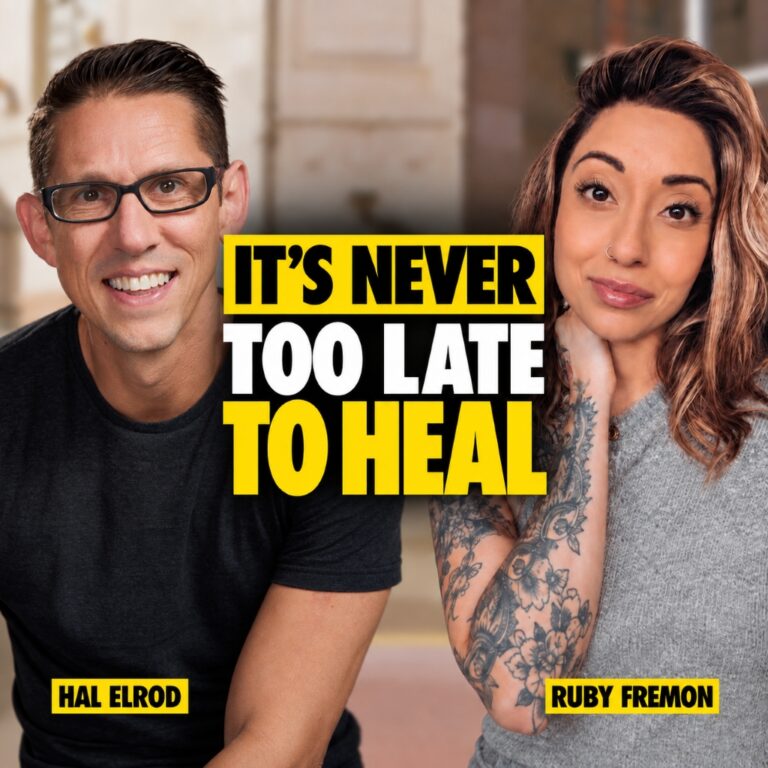
Today’s guest, Ruby Fremon, knows firsthand what that feels like. Ruby is an author, coach, and someone I’ve had the privilege of knowing for years. She’s also the author of Potent Leadership and has spent the last several years studying Somatic Experiencing. She works with high-achieving leaders who have reached a point where they know they can’t keep living and leading the way they have been.
In 2022, Ruby was at the highest point of her career when a traumatic event involving the death of her dog triggered a very unfortunate series of events. Over the next few years, her mental and physical health declined; she stepped away from the business and identity she had spent years building, and eventually reached a point where she was contemplating taking her own life.
In our conversation, Ruby shares what helped her survive the darkest season of her life and explains why healing doesn’t always mean immediately finding the positive in what happened. We also talk about how trauma can affect the way you experience life, practical ways to build your capacity to move through difficult emotions, and how losing the person you thought you were can ultimately help you reconnect with who you really are.
KEY TAKEAWAYS
- What happens when the regular life tools stop working
- Why healing doesn’t always begin by finding the silver lining
- The importance of acknowledging what you’re actually going through
- How Somatic Experiencing can help build emotional resilience
- True regulation means increasing your capacity to experience emotions
- How your identity is usually shaped by past experiences
- How A dark night of the soul or season can challenge your sense of self
- Why high achievers need to stop trying to do everything alone
- Finding the right support can change your healing journey
AYG TWEETABLES
“When you let go of so many pieces of your life that you've built an identity around, there's like another form of grief that comes in, and that's the grief of losing sense of who you are, the significance that you hold.”
Ruby Fremon Tweet
“If someone would just sit beside me, hold my hand, and watch me cry, that was everything I needed.”
Ruby Fremon Tweet
“Regulation is not you're grounded all the time. Regulation is when you can feel anger and come back down. You can feel sadness and come back down. You have the resilience and the capacity to move through the human experience.”
Ruby Fremon Tweet
“I'd rather feel the intensity of my emotions and the beauty of my emotions than numb myself out.”
Ruby Fremon Tweet
RESOURCES
- RubyFremon.com
- Ruby Fremon on LinkedIn | Facebook | Instagram | YouTube | TikTok | Substack | X/Twitter
- Potent Leadership: Drop the Mask, Ignite the Real You, and Reclaim the Leader Within by Ruby Fremon
- Potent Truth Podcast
- Leia’s Story
- Somatic Experiencing
- The Body Keeps the Score: Brain, Mind, and Body in the Healing of Trauma by Bessel van der Kolk M.D.
- Front Row Dads
- Human Garage
- LeAnn Rimes
- UPW Youth Leadership
- Kyle Cease
- Jon Vroman
- The Miracle Morning App
THIS EPISODE IS BROUGHT TO YOU BY:
CURED Nutrition:
I want to talk about two of my favorite products. I’ve been taking these for four years, and they’re now a sponsor of the podcast, CURED Nutrition, Flow Gummies. I start every day with two of these. I meditate for 30 minutes without any supplements, and then I take Flow Gummies seven days a week, almost every day.
And then I go to bed with Night Oil. 30 minutes before bed I take Night Oil and it helps me fall asleep and stay asleep. So I start my day with Flow Gummies, I end my day with Night Oil.
If you want to implement my routine into your day with CURED Nutrition, go to CUREDnutrition.com/Hal and use the discount code HAL at checkout for 20% off your entire order.
Flow Gummies to start the day Night Oil to fall asleep. You’ll feel better, you’ll act better, you’ll perform better. Check it out.
RATE & REVIEW THE PODCAST
Reviews for the podcast on iTunes are greatly appreciated and will allow us to get the word out about the show and grow as a community. We read every single review and believe each one goes a long way in helping us make the show even better! If you received value from this episode, please take a moment and rate and review the podcast by clicking here.
Copyright © 2026 Miracle Morning, LP and International Literary Properties LLC
[INTRODUCTION]
Hal Elrod: What do you do when the tools that once helped you succeed and the identity that got you there suddenly stop working? My guest today knows the answer to that question firsthand, and so do I. We talk about that. Ruby Fremon was at the height of her career when a devastating personal tragedy set off a cascade of events that changed everything. She faced harassment, stalking, a million-dollar lawsuit, serious health concerns, the loss of her personal identity, and eventually a period where she was planning how to end her life. But this is not a conversation about staying stuck in the darkness.
It is a conversation about what happened next, how Ruby began rebuilding her life with the support of her husband, therapist, and closest friends, why traditional personal development advice that you and I have been given, and we’ve tried it, it wasn’t enough for her trauma, and how somatic work helped her reconnect with her body, her emotions, and her sense of self. We’ll talk about the difference between a difficult season and what Ruby calls dark night of the soul. We’ll explore how trauma can live in the body, why calming yourself during anxiety isn’t simply distraction, and a practical exercise that you can use immediately to begin expanding your capacity to feel difficult emotions without being overwhelmed by them.
And stay with us until the end because Ruby shares the first step she recommends for anyone who feels like they’re falling apart, and I’ll share the belief that helped me through some of the darkest moments of my own life. A brief content note before we begin. This episode includes discussions of suicide, trauma, grief, and mental health crises. If you or someone you know is in immediate danger, contact local emergency services or a crisis resource in your area. With that said, it is my great pleasure to share this vulnerable, real, and raw conversation that can help you through the darkest times in your life with Ruby Fremon.
[INTERVIEW]
Hal Elrod: Ruby, it’s so good to see you.
Ruby Fremon: Hal, it is so good to be reunited here online.
Hal Elrod: Yeah. You used to live near me, and then you moved to Montana.
Ruby Fremon: Yep, we moved to our dream state.
Hal Elrod: Yeah. Is it just beautiful there?
Ruby Fremon: It’s stunningly gorgeous.
Hal Elrod: Yeah, I’ve seen some pictures.
Stephanie Fisher: Like, every season is gorgeous to me as well.
Hal Elrod: That’s incredible. So, today, there’s so much we could talk about. I’ve had you on the podcast before. This is your second appearance, which, by the way, that’s a very small percentage of folks that I love so much and get so much value from the conversation that I bring them back on. I know you’ve gone through what some might call a dark night of the soul. You’ve gone through some real traumatic events. And you and I have talked. We’ve both been literally to the point of contemplating suicide, and I know we’re not alone in that. I know that we actually represent, I don’t know what percentage, but a large percentage of people that are listening to this that are either going through that now or have gone through it or might experience life events that put them in that place in the future.
So, with that, I love your story. I want to hear your story and share it with folks. And then you went through all the dark night of the soul, as did I, and now we’re both on the other side of it, so to speak. And not that life doesn’t have more in store for us, but yeah, share with folks some of the cascading events, some of the dominoes that led to your challenges.
Ruby Fremon: Yeah, beginning of 2022, I was literally at the highest point of my career. Everything felt great. Everything felt easy. There was a flow. My husband and I were finally in a place where we were trying to get pregnant. And then in June 2022, we experienced a shock trauma where our dog, Leia, went “missing.” But what had actually happened was she was killed, and the dog sitters lied to us. Without going too much into the detail of that, and we can link the story actually in the show notes, too. I think that would be helpful. This ended up being one of the most prolific dog care provider cases in the state of Texas.
We were on Fox News. We ended up changing the laws in Texas for animal cruelty. Lots happened. However, going through that trauma, there was a lot involved: harassment, stalking, being sued for a million dollars, a counter-suit for defamation, having my entire life and history online being used against me. I went from fight into straight-up dorsal vagal shutdown. My hypervigilance was so high that I couldn’t leave the house. I couldn’t get groceries. I couldn’t go anywhere by myself, which was very different from the hyper-independent woman that I knew, you know? Like, now all of a sudden I am a dependent. I can’t do anything on my own. I’m depressed. I’m anxious. And then let’s just throw into the mix, all of a sudden, I’m in early-onset menopause, so my hormones are declining.
Because of my dorsal vagal shutdown state, my kidneys started shutting down, and my vascular system was shutting down. So, my body was literally shutting down. So, it wasn’t just emotional trauma. It was the emotional trauma that impacted my physical health. And this was between 2022 and 2024, and during that time, I slowly let go of pieces of my business that felt too overwhelming or too much to manage, and I just kept my private clients. But when you let go of so many pieces of your life that you’ve built an identity around, there’s like another form of grief that comes in, and that’s the grief of losing sense of who you are, the significance that you hold.
And losing that was like, it felt like sand through my fingertips. Like, I started to lose sight of who I was. I didn’t feel the same. I wasn’t able to socially engage in the same ways. I wasn’t able to engage with life. And in December of 2024, it all just became too much, and I entered a chapter of being suicidal, where I was spending a lot of time trying to figure out how I was going to kill myself. I had a plan. That was the thing I obsessed on all day, every day. And in January 2025, I almost was admitted to a center with the help of my therapist, because I decided, okay, let me try to live with the support of my husband and my therapist. But I couldn’t find a center that would support me in ways that felt really aligned, like without pharmaceuticals, because if I was going to live, then I want to live my way.
So, I ended up increasing the amount of therapy I was doing, including other therapies, quitting work completely, so letting go of everything. Everything I had spent years building, who I thought I was, just letting it all go, which, again, like there’s a lot of grief with letting go of who you think you are. And with that, loss of friendships, relationships. Like, it just felt like my entire life was hitting rock bottom, and I lost sight of everything.
Hal Elrod: How did that impact your marriage, by the way? And I know that for me, my marriage barely survived my darkest point, because it was like my wife at some point was like, “Is this forever? Like, is this the new you? Because this is not the man that I married.” And I’m like, “I don’t know.”
Ruby Fremon: God, I think it would be interesting if the four of us got on a podcast together to talk about this. It was really hard. I mean, we were already kind of up and down before that, and then this was the biggest test of our marriage. Because just like you said, my husband married a hyper-independent, successful woman who made her own money, who contributed. And then all of a sudden I’m manic, having extreme manic episodes, a shell of myself, unable to even just connect with him, and completely, completely dependent on him. And so, for him, he was going through his own grief of losing the identity of the woman that he had been with, while I am going through the grief of losing my own identity.
So, it was definitely challenging, and we made our way through, but it wasn’t easy. And I think we made our way through because as I was focusing on my own therapy and healing, I really did keep him in mind. I really did consider what the impact of this was on him. And we continued to keep those lines of communication open, as open as possible, because it was really hard to communicate about that at the time. But he was also my rock during this time, right? He was the one that saw me every single day. No one saw me in a lot of this because I hid. I hid from the world. But he saw me, and he loved me through it. And as much as it was extremely challenging to do so, he did. And I feel like because of him and because of my therapist, I really made it through.
And 2025 was really just that year of healing, of completely surrendering, allowing, letting everything go, like everything that I had a tight grip on, just letting it all go and holding faith like God has a plan, that I’m going to choose to trust that this is leading me somewhere. And that faith and walking step by step and taking it slow, which is very different for this hyper-independent type A woman. You know, going step by step and ensuring that everything that I’m doing is actually contributing to my foundation instead of tearing it up was what brought me to where I am today, and our marriage is the strongest it’s ever been because we made it through that together, right? High fives.
Hal Elrod: Yeah, yeah. Yes. Amen.
Ruby Fremon: But I feel more connected to myself, to the world around me, to the people around me, to my work, to my purpose. I feel more alive than ever before, and I also look back and question: was I ever really alive? Or was I just surviving?
Hal Elrod: Yeah. I mean, it’s amazing too. I mean, you literally wrote the book, Potent Leadership, right? And so, that is such an identity crisis to be like, “I’m supposed to be the one who… I’m supposed to be the light. I’m supposed to be the light worker. I’m supposed to be the leader.” Right? Like, “I teach others how to manage their…” Right? So, I mean, I can very much relate. And then when you’re going through it, and I think it’s so important to have in this conversation for folks because everybody, no matter how much of a pedestal you might put someone on like, “Oh my gosh, they’re the CEO of this book, whatever. They’re the author. They’re the speaker. They’re so successful.” They’re a human being.
I don’t know who said it, but once someone’s like, “We’re all just teenagers in 40-year-old bodies or 30-year-old or 50-year-old or whatever, however old you are,” right? We’re all teenagers. Like, we’re all insecure teenagers trying to prove ourselves, dealing with trauma in various ways. Some of us were bullied. Some of us didn’t have love from our parents, right? All the stuff, it doesn’t go away. And so, I think that we’re all vulnerable to the challenges that life face. And I want to ask you about the tools that you use. Some of it you’ve kind of alluded to, but I think that’s what’s so crucial is all the adversity that I’ve been through, that you’ve been through, right, like, the fact that we had an arsenal of tools, being perspectives, paradigms, practices. You know what I mean?
Like, all these things that we’ve learned through personal growth and development over the years, through the work that we’ve done, that it’s like we now can… At least I have this tool, I have this resource, this perspective. So, I’m curious what your tools have been that have gotten you through that anybody listening is like, “That’s something that I can apply in my own life.”
Ruby Fremon: Yeah. What’s interesting is so much of the personal development space and coaching world that I was immersed in, and even plant medicine world, a lot of that wasn’t applying anymore, and that was confusing me. Like, all the tools that I typically go towards were not working. And I realized through therapy, so my therapist is a psychotherapist. She does IFS, which I absolutely love. It changed my life.
Hal Elrod: What does that stand for?
Ruby Fremon: Internal Family Systems. Yeah. And she’s also a somatic experiencing practitioner, which I will soon be. I graduate this year. But the SE work, all of that really supported me because it felt like offering myself positivity or focusing on the silver lining, focusing on where this is leading me, was actually leading me astray. And what I really needed was to acknowledge the horrific nature of what I was going through. So, not being a victim, but recognizing that through this crime that happened, I’m the victim of a crime. And that has an impact. I think so much of the personal development space is not very trauma-informed, and so they have this whole aversion to victim mentality, but it’s important to understand when you have been victimized.
So, me taking that time to show myself compassion and grace and recognize all the stuff that is not okay helped me. It is like heal the inner child that was hurting, heal the adult self that just needed recognition and acknowledgement of what she was going through. Because I was already surrounded by people in Austin telling me, “Well, what’s the silver lining?” And I’m like, “My dog was killed. Like, I’m being stalked. I’m sued for a million dollars. Like, what do you mean there’s a silver lining?” Right? Like, that just pushed me the other way. Whereas if someone would just sit beside me, hold my hand, and watch me cry, that was everything I needed.
And that shift has supported me in how I carry myself today, how I treat myself today, how I show up for friends, for clients. It’s impacted my work. And as I mentioned through this journey, I also started my three-year program with somatic experiencing because I loved working, like, how that impacted my healing process. And for those who don’t know, the simplest way I can describe it is we work with the trauma responses that are stuck in the body. So, rather than talk therapy, we work with the responses that are showing up in the body, which leads to the recurrence of patterns in your relationships and the way you operate through life. So, it was like my old toolkit wasn’t that effective during this time, but it helped shed light on other tools of incorporating it and weaving together the old with the new to pave a way forward. It highlighted all the ways in which I actually wasn’t supporting myself prior to this.
Hal Elrod: So, the somatic work, I actually would love to dive into that, especially when you’re about to graduate. Is that correct?
Ruby Fremon: Yes. It’s a three-year program. So, I’m very, very excited.
Hal Elrod: Yeah. So, you’ve been in it for three years, and when are you done?
Ruby Fremon: I’ll be done in November. I head out… And they’re all in-person training, so they’re intense, like five days.
Hal Elrod: So, for those, yeah, so I really want to double tap on this, for at least a few minutes or more. The somatic, I want to give a couple examples. And somatic, first, define it real quick, right? I take it as like our body and how our body stores emotions. I think of the book, The Body Keeps the Score. But, yeah, how would you define, for someone that’s like not familiar with the term somatic, what are you referring to?
Ruby Fremon: The whole self. So, mind, body, spirit. The whole self. It’s not just the physical body. It’s not just the mind. It’s taking into consideration the entire organism of the human.
Hal Elrod: Got it. Okay. And am I correct in understanding that our body literally stores trauma, that we might not even be aware of, right?
Ruby Fremon: Definitely. And an example like how many people listening you’ve experienced something in life, and later in life you see the same thing, similar car, you smell a certain smell that reminds you of something in the past, and all of a sudden you can feel your body going into constriction, like the memory’s coming up. This happens in more subtle ways than we think. It doesn’t always happen like that. And I’ll use a personal, vulnerable example here. So, speaking on stages, hosting events, writing my book, having a podcast, and there’s a chapter in my book where I talk about how we’re all seeking significance. Yet here I was thinking I wasn’t doing that.
Well, looking back, all of this was me chasing a sense of respect that I never got within my household, right? So, my childhood trauma has played a huge impact on how I have led myself and my life. Yes, it helped me gain success, which I’m thankful for, and I no longer want to operate from that way.
Hal Elrod: Yeah. Yeah. It’s a good self-awareness. So, an example for me, somatic, like the release, I was at a Front Row Dads event a few years ago and, day one, night one, it was like 90 minutes of breathwork session. I’m like, I’ve done breathwork before. It doesn’t really work for me, right? And so, I’m laying there on a yoga mat, and I’m listening, and I’m like, I’ll play along, and I’m doing the breathwork, and just pretty intense breathwork. And I remember I was thinking this doesn’t work for me while I was doing it, which is wild because I literally was like, the psychology was all wrong, but that didn’t change the somatic work and the somatic release that I was about to experience.
So, I’m doing the breathwork and all of a sudden, I think it was probably seven minutes in, and it was getting, I mean, difficult to do. I’m like, “This isn’t comfortable. I don’t like this. I want to stop.” And all of a sudden, I start bawling my eyes out, just crying. And I’m not a crier. Like, I literally have 40 years of pent-up tears in my body. And using the positive thinking to suppress the emotion and not feel it. So, not only do I start crying my eyes out, but I start talking to myself without my… Like, I wasn’t even really conscious of it. And I was basically just telling myself, it was like God talking to me, just like, “Hal, I love you, and you’ve never allowed yourself to feel pain. And you need to allow and release and all the things.”
And so, that was a personal experience I had. And I just want to give one quick other example that I just came across the other day. In fact, anybody can watch this. If you go… Are you familiar with Human Garage?
Ruby Fremon: Yeah.
Hal Elrod: So, Human Garage, they do somatic work and if you go to their Instagram, it’s one of their pinned posts. I think it’s the second one over right in the middle. It’s LeAnn Rimes, the Grammy-winning musician. And he’s doing work where he’s simply putting pressure on her jaw with her finger to where her face is cringing, and eventually, within a matter of seconds, she releases, and she just starts bawling uncontrollably. And it’s not physical pain. It’s emotional pain. And he’s got many examples on his Instagram of that. So, I wanted to give those two reference points for someone, so you have just an understanding of what is stored in our body that therapy or psychology may not be able to release or access, that it takes physical somatic work to do.
So, with that, being that I have no expertise in this area, I would love for you to share a little bit about what can they do if they know they’ve got trauma and they know maybe it shows up in anger or it shows up in fear or different ways. What are some somatic practices or resources that they can use?
Ruby Fremon: Yeah. So, with somatic experiencing, it’s a little more subtle. So, we don’t focus on huge forms of catharsis. We focus on, if you think about the body, and in each of us, we all have only so much capacity and so much resilience. This is called our zone of tolerance. And when people have a lot of trauma, it’s a little bit smaller. So, we don’t have much room to experience the waves of our emotion, which is why we get overwhelmed easily, or we shut down easily. Somatic experiencing works to open that window up slowly so that you start to develop the capacity and resilience to move through the ebbs and flows of your emotions.
This is true regulation. Regulation is not you’re grounded all the time. Regulation is you can feel anger and come back down. You can feel sadness and come back down. You have the resilience and the capacity to move through the human experience. And so, SE, short for somatic experiencing, helps. This is how I help my clients, is develop that window of tolerance, develop capacity, develop resilience. So, let’s use anxiety, because I think everyone, I think everyone nowadays deals with anxiety on some level, right? Well, let’s imagine for a moment you’re anxious. What do you tend to notice in your body? There’s usually some form of physical sensation, a fluttering, a zap.
Some people experience it as shakiness, wobbly, and all of a sudden your vision becomes very narrow, and you’re only focused on the anxiety and what it feels like in your body, and you can’t think of anything else. In those moments, trying to get someone to, “Okay, just breathe,” sometimes that’s really hard just to breathe. But can you just, for a moment, look around your room, and as you look around your room, move your head and your neck. Don’t just like… because most people, when they’re anxious, they’re only going to move their eyes. Move your head, move your neck, and let your eyes fall on something that feels somewhat pleasant to look at.
So, right now my eyes are falling on this crystal I have on my desk. It’s really pretty. You can focus on what looks nice about it. Why do you like looking at that thing? And then all of a sudden, your body will start to regulate itself. Because you are bringing yourself out and using another sense to direct yourself. Some people aren’t really vision-oriented. A lot of people are tactile. Fuzzy blankets, weighted blankets. So, when you’re having or experiencing anxiety, is there something that you can touch? I often touch my dogs, because they’re fuzzy. I’ll put them in my laps like a weighted blanket. So, animals serve a great purpose in supporting us.
Hal Elrod: My son yesterday was about to do an interview for the Tony Robbins UPW Youth event, and he was so nervous, and he picked up our little kitten. And it completely calmed, right? So, he did exactly what you’re talking about.
Ruby Fremon: Yes. Because you’re giving yourself the experience of just coming out of the body long enough to feel something outside of you, which supports you in creating that regulation. And in doing that, you’re helping yourself regulate. This is why the work I do with horses has been so profound, because the horses are able to reflect so much of that for my clients.
Hal Elrod: I think I told you on our last interview that we did a couple years ago, that my wife had gone, we had gone to, I forgot where we were at, but she did work with horses, and it completely, like, transformed her anxiety. And yeah, that’s amazing. What about someone that, like, I want to play the devil’s advocate here, which is, aren’t you just distracting your… Am I just distracting myself, though? So, I’m looking at this, I got this awesome, beautiful picture on my wall with a guy in sunset, and it makes me feel really good to look at it, but then as soon as I go back to work or email or whatever was causing me anxiety, didn’t I just distract myself? And maybe there’s value just in that. I don’t know. What are your thoughts?
Ruby Fremon: It’s actually building capacity. So, the way you want to look at it is like imagine you’re having anxiety right now. Again, you tend to go into this. We go into this tunnel vision. Everything becomes about the thing that we’re anxious about, or everything becomes about the sensation in our body that we’re experiencing because we have anxiety. So, people who have panic disorders tend to focus a lot on, oh my God, the body. It becomes too overwhelming to be in the body, or it becomes too overwhelming to be in front of the laptop, the thing that is activating us. This is not a distraction. This is a way to open up the window of tolerance. So, by finding something nice to look at, petting my dog, I am opening up my capacity.
And then you can go back to the computer screen, if that’s the thing that’s activating you. But then go back to the dog. And then go back to the computer screen. And then go back to the dog. And what you’re going to find is that your capacity for the computer screen is going to widen. It’s going to broaden. You’re going to experience a healthier capacity for that. One thing, like if someone is experiencing anxiety in a certain part of their body, “My chest feels like it’s fluttering. I can’t breathe.” Is there any part of your body that feels really steady and grounded? Even if it’s just your big toe or the soles of your feet. And for them to connect, “Oh, yeah, you know, the soles of my feet, yeah, I feel grounded in the soles of my feet, but I still feel the anxiety in my chest.”
“Okay, let’s go back to the soles of your feet. Focus on the soles of your feet. Maybe rub your feet against the carpet. See how that feels. Now go back to your chest. How is that feeling now? Better, worse, or the same?” A lot of times people will be like, “The same or slightly better,” and you just keep oscillating between the two, and eventually that feeling in the chest will start to dissipate. Why? Because we’ve widened the capacity, and we’ve brought our attention to something that is outside of that, like, thing that we’ve been obsessed on. A distraction would be like, “F this, I’m going to go sit in front of the TV and watch Netflix.”
Hal Elrod: Or check your phone. Yeah, yeah, right? Like that’s…
Ruby Fremon: Right. Yeah. Check your phone. What is that actually doing for you?
Hal Elrod: Yeah, and what’s amazing is as I’m thinking through what you’re talking about, it’s like, let’s say I do look at this picture and I go from feeling anxiety or stress to feeling calm and peaceful. I’m literally telling myself that I’m not the anxiety. I’m not the stress. I can literally shift my state at any moment by shifting where I put my attention, right? So, that in itself is liberating and empowering. In terms of…
Ruby Fremon: Well, you’re bringing attention to the complexity of a human, right? We can feel two things at once. We can recognize the anxiety but also recognize I feel calm here.
Hal Elrod: Yeah. And that liberates you from the all-consuming-ness of the anxiety, which is powerful. So, I know you do private coaching, right? And then I know you have a retreat next year. In your private coaching and at the retreat you’re doing, what are the, and maybe it’s different for each of them, but what do you do with people? How do you help them?
Ruby Fremon: Yeah. So, my focus is on helping high-achieving leaders who have found themselves at a threshold of life where they’re like, “I can’t keep doing it like this anymore.” They’re burning out. The capacity is dwindling. They’ve gone through a divorce. Something has happened to make them want to renegotiate things. This is where I step in, and I support them in not only understanding their capacity and the ways in which they’ve been overriding themselves, but in developing a deeper sense of capacity and resilience so that they can actually live and lead with a sense of aliveness. So, no more surviving, no more just going after achievements, but let’s see how alive and embodied you can feel today. And how that ends up impacting their leadership, their businesses, their families, their relationships is…
Hal Elrod: And their quality of life. That’s what I would see. And to me, that’s in… Quality of life, yeah, continue.
Ruby Fremon: Yes, exactly. It’s exactly that. It’s the quality of life, but the quality of connection. And I think so many people live and desire connection with each other, with the world, but they’re unable to achieve it, and it becomes this thing that they’re constantly chasing. But once you connect to that aliveness within you, it’s like everything just connects. Like, I feel so connected to everything all the time in the best way possible, including my emotions, which can get pretty intense. But at the same time, I’d rather feel the intensity of my emotions and the beauty of my emotions than numb out.
Hal Elrod: Yeah. That makes sense. How does someone know you mentioned when we talked the other day, and I brought it up at the beginning of our conversation, going through a dark night of the soul, what’s the difference between a rough patch and a dark night of the soul? And how does someone identify if there is a difference? Is it a very gray area? Like, how would you separate those? Or how would you help somebody identify whether this is a rough patch or this really monumental, significant…? And I guess what is a dark night of the soul for someone that might not be familiar with that term?
Ruby Fremon: The simplest way I describe a dark night of the soul is when you start to lose sense of self, which is very different than a rough patch or a challenging time. It’s like when, all of a sudden, the person that you’ve strived to be is no longer who you are, but it’s almost like it’s not a choice point. It’s disintegrating in front of you. That is the dark night.
Hal Elrod: And would you say… Oh, go ahead.
Ruby Fremon: Oh, I was just going to say, it’s like it becomes like the stage of unbecoming all that you thought you were.
Hal Elrod: Yeah. And I think that part of what you said earlier, which I really resonated with, when you’re like all of… When I asked you about which tools helped you get through, you’re like, “All the tools that I had at that point, none of them were working.” And that, for me, was the case in 2020 is when it started. And that’s part of also what you’re saying, the dark night of the soul, which is like my identity is… Like, the tools that I use that I’ve taught to millions of people, that’s part of my identity. Like, “Hey, this is how you can get through anything.” And then it’s like, “Wait, I’m falling apart even though I have the tools in place.”
So, yeah, there’s such an integration with identity, and your perspectives, and your mindset, and the tools, and the things you’ve done that have worked before, and then when they stop working. Now, does any of that,.. Like, ego death comes up for me right now. And that’s an area that I don’t talk about a lot, so I don’t know that I can speak on it with a lot of expertise. But I think about a dark night of the soul and an ego death, that seems to make sense. If the dark night of the soul is you’re losing your identity, like my friend Kyle Cease. Do you know Kyle?
Ruby Fremon: Yeah, I do.
Hal Elrod: Yeah. I love Kyle. He talks a lot about this. Like, he always says the… He calls it the small self, right? Like, the part of you that is falling away and falling apart, it’s because that’s not who you are. You’re so much bigger than that. You’re so much more limitless than this little version of you that you’ve thought you were up until this point. And so, dark night of the soul, ego death, do those kind of go hand in hand, or do you see a correlation?
Ruby Fremon: Yeah, but I think I would explain ego death… So, ego is your sense of self. So, that is actually something that our brain… Sigmund Freud is who coined that term and really started talking about it. But it is your sense of self. It’s your sense of I. It’s like kids go through it in their terrible twos, because everything is like, “I, me.” But that’s when they develop their sense of self. So, it’s your sense of self. But as we grow, as we experience trauma, as we experience projections whether it’s parents molding us into who we need to be to be loved and accepted, or society, whatever it is, we slowly begin to shape-shift our way into the identity that feels the safest to be.
So, for some people, it’s going to be a big grandiose, like loud, extravagant identity that has a lot of accolades and achievements because that’s how they feel loved. For some, it’s going to be, “I’m going to hide. I’m going to play small. I’m going to be as quiet as possible so that I don’t get hurt.” And the ego death, yeah, I would say that coincides with the dark night. It’s losing your identities, but then you start to uncover the real sense of self. So, it’s not like, yes, the ego how you knew it dies, but there is another ego, and that’s your sense of self, and this is your identity. It’s who you truly are beyond the trauma, beyond the projections that were placed upon you, and you start to meet who you are underneath it all. And that in itself is a life-changing experience.
Hal Elrod: Who are you meeting? Who have you met underneath it all, Ruby?
Ruby Fremon: Well, she’s a lot softer than she was.
Hal Elrod: Got it. So, you had a hard shell, like a protective shell?
Ruby Fremon: Yeah. As caring and compassionate as I have always been, I hid a lot of that. I hid a lot of that because it didn’t feel safe to show. And now, if I’m going to feel so grateful to meet someone and I feel like crying, I just cry. It’s part of who I’ve become. So, there’s a softness. The fierceness is still there, but now there’s a softness. Now, there’s an unwillingness to hide these parts of myself, whereas before, I think I felt like I needed to protect these soft parts and not let them be seen. So, definitely softer, more compassionate, more curious, and more honoring of my own boundaries and intuition.
Hal Elrod: I love that. Congratulations on that evolution.
Ruby Fremon: Thank you.
Hal Elrod: Well, I have one more question before we wrap up here, which actually I’ll ask you another question, how to get in touch with you, of course. But before I ask that question, if somebody is listening or watching this right now and they feel some level of discomfort that we’ve talked about, whether they’re going through a rough patch and it’s adversity, it’s difficult, or they’re suicidal, they’re going through a dark night of the soul, anywhere in between, what’s one thing that you would encourage? Like, what’s the next step, the first step for them? Is it a question? Is it a resource? Is it a perspective? What would you say?
Ruby Fremon: Support, I would say, number one. And as someone who was hyper-independent, that was life-changing for me. Finding the right support, which also means letting go of the people who are not able to support you in this season of life. But finding the right support, people who will just see you and not try to change you, not try to save you, but will recognize that you are going through a season that is extremely challenging, and they are willing to sit with you through it. Because that support, it provides like a cushion for you to land on. And when you’re living in a season of life where you feel like you’re falling every day, having that support, it will change the trajectory of your healing process.
Hal Elrod: I totally agree. And I think for me, I can think about my wife, I can think about one friend in particular, a few friends, but Jon Vroman stands out for me as someone that was just there, and just there to listen, and not to try to fix everything. And then I did work with some different therapists. For you, was it your therapist? Was it a team of folks?
Ruby Fremon: It was my therapist and my husband, and two really close friends. And that piece of letting go of the rest was hard for me, because I wanted just to be mad at people. Like, why aren’t you supporting me? But once I realized, oh, it’s not that they don’t want to. They just don’t know how to, or they don’t have the capacity to. And that’s okay, because I have this small support system, and they’re willing to be there with me and for me every step of the way. Let’s focus my energy here.
Hal Elrod: Yeah. I love that. The last thing that I want to say for anybody watching or listening, if I can add to this, is it’s temporary. I think that’s one of the hardest things to see when you’re going through it, and your vision is so limited, and you feel like this is forever. In the same way that when somebody’s on a high, right? Like, when business is great, and you’re making a bunch of money, you feel like that’s forever. You’re like, “Well, this is my new life,” right? And there are seasons, and there are ups and downs, and there are peaks and valleys. And whatever you’re going through right now, if you’re watching this, if you’re listening to this, know that it is temporary, and your best is yet to come.
And that, for me, has been a belief that’s gotten me through the toughest times, is this is temporary, and my best is yet to come. And I will manifest that. I will create that. I will have faith in that. And I will keep going forward until I unveil my best. So, thank you for being vulnerable. What is the best way for people, if they want to coach with you, go to your retreat next year, where can they learn more, and where can they follow you online, all that?
Ruby Fremon: Yeah, my website is the best place, rubyfremon.com. My June retreat info is up there, as well as different ways that we can work together virtually. I also offer private retreats in Montana. So, if the group retreat isn’t for you but you want to book something private and work with me and the herd, my horses, we can do that. And for social media, I’m most active on Substack and on Instagram at ruby.fremon. So, if you do hear this and it inspires you in some way, please do drop me a DM. It is me replying, not AI, and I would love to hear from you.
Hal Elrod: Amazing. And spell Ruby Fremon, just so everyone knows.
Ruby Fremon: Yeah. R-U-B-Y, and my last name is F-R-E-M-O-N. Fremon. French. Fremon.
Hal Elrod: Fremon. That sounds way cooler than the way that I’ve been saying it. Freeman, I think.
Ruby Fremon: I know, and then people spell it incorrectly.
Hal Elrod: Oh, do they? Okay. Oh yeah, that’s true. Fremon, R-U-B-Y-F-R-E-M-O-N.com or ruby.fremon at Instagram and Substack. Well, Ruby, I love you. You’re such a wonderful, pure soul who’s doing great work in the world, and thanks for being you.
Ruby Fremon: Thank you so much for having me back on the show. It is such an honor to know you, to be friends with you, and just to walk alongside each other in this lifetime. What a journey.
Hal Elrod: What a journey. What a journey. Awesome. Until next time. Everybody go check out Ruby’s book…
Ruby Fremon: Potent Leadership.
Hal Elrod: Potent Leadership. Drew a blank there for a second. And then hopefully, she had the Potent Leadersh- or the Potent… What was the podcast?
Ruby Fremon: Potent Truth Podcast. Potent Truth.
Hal Elrod: Potent Truth. Okay. Man, I just really butchered that right at the end. Potent Truth, and I think you’ve taken a hiatus from that, but you’re hopefully coming back?
Ruby Fremon: Yes, hopefully coming back real soon.
Hal Elrod: Awesome. But check out Ruby Fremon. Her work is transformative, and as you saw from this conversation, she has so much value to offer to your life. I love y’all, and I’ll see you next week.
[END]