

We are living in a world that is more digitally connected than ever, yet there are millions of people who are struggling with loneliness. Whether it’s your marriage, friendships, or work, that lack of deep connection can quietly affect your overall health and happiness.
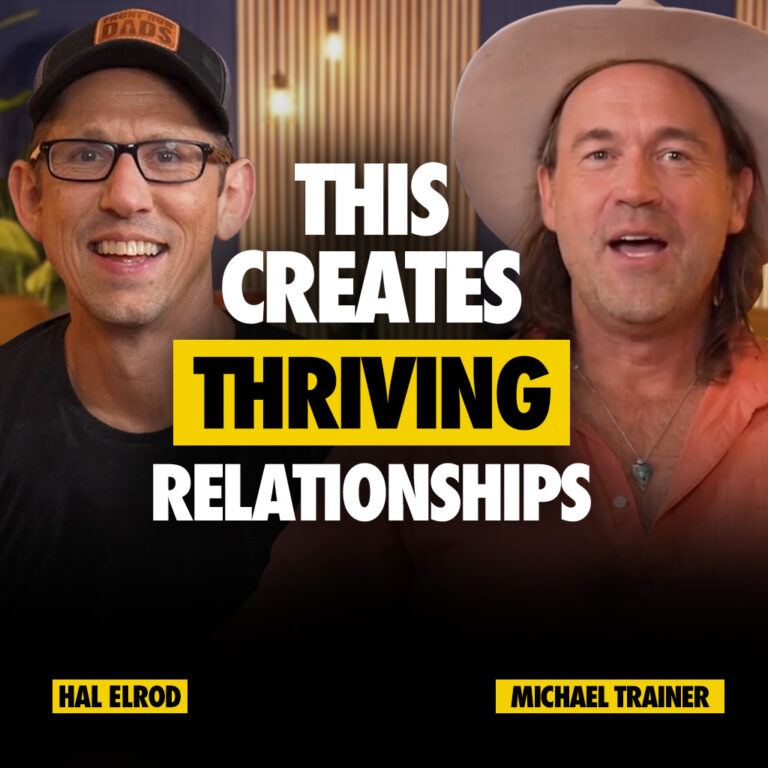
Today, I’m joined by my friend Michael Trainer, who has a new book out called Resonance: The Art and Science of Human Connection. Michael is one of the most fascinating people I’ve ever met, and his work is centered around helping people create deeper, more aligned relationships in every area of life. From co-creating the Global Citizen Festival, which has helped raise over $40 billion to defeat extreme poverty, to studying human connection across cultures and the neuroscience behind it, Michael brings a unique blend of real-world experience and science-based insights.
In our conversation, we discussed the loneliness epidemic and why so many people feel disconnected despite having greater access to communication than ever before. Michael shares what it means to create “resonance” in your relationships, how the people you surround yourself with directly influence your emotional and physical well-being, and practical ways to become someone who attracts and builds powerful, life-giving connections.
We also explore how to identify the relationships that energize you versus the ones that drain you, and how taking intentional actions can completely transform the quality of your relationships and your life.
KEY TAKEAWAYS
- The Loneliness Epidemic Is Actually Killing us
- What Resonance In Relationships Really Means
- Getting Jumped at 12 y/o & Michael’s Healing Journey
- Why You Have to Tune Your Own Instrument First
- Defining “The More” in Relationships and Life
- Identifying The People Who Are Positive or Negative Energy
- The Relational Bucket List: Why Shared Experiences Matter
- Networking 3.0 – Leading by Being an Offering
- How Resonance Lives in the Space Between the Notes
- The Morning Three Practice for Building Better Relationships
- Relationships Are The Biggest Driver Of Health & Happiness
AYG TWEETABLES
“There is music, an authentic song that exists within all of us. The tragic part is I think many of us, as Bronnie Ware found, get to the end of our lives, and we never took a shot at singing it.”
– Michael Trainer Tweet
“We are actually literally regulating each other's nervous systems.”
– Michael Trainer Tweet
“Our greatest investments are the people we're spending the most time with, and it is literally modifying you as a human. So, it's super important to be attuned to relational intelligence.”
– Michael Trainer Tweet
“When we’re relationally attuned, we’re like a great jazz musician. Jazz isn’t three people all trying to jump in and solo right at once to show how cool they can play music. Good jazz is listening for the space between the notes.”
– Michael Trainer Tweet
“To be in the practice of checking in on someone and from a place of just being a gift is one of the greatest gifts you can do. And the thing that’s most powerful about it is if there’s an aspect of an authentic acknowledgement.”
– Michael Trainer Tweet
RESOURCES
- Michael Trainer on LinkedIn | Facebook | Instagram | YouTube
- Resonance: The Art and Science of Human Connection by Michael Trainer
- How to Win Friends and Influence People by Dale Carnegie
- Terence McKenna
- Matthew Lieberman
- Global Citizen Festival
- The Beatles
- Great Lawn
- Simon & Garfunkel
- Top Five Regrets of the Dying : A Life Transformed by the Dearly Departing by Bronnie Ware
- Robin Dunbar
- Steven Pressfield
- The War of Art: Break Through the Blocks and Win Your Inner Creative Battles by Steven Pressfield
- Big Magic: Creative Living Beyond Fear by Elizabeth Gilbert
- Stephen Covey
- Kyle Cease
- SunLife Organics
- Matthew Hussey
- Nelson Mandela
- Long Walk to Freedom: The Autobiography of Nelson Mandela by Nelson Mandela
- Wolf Connection
- Moby
- Teo Alfero
- Little Pine
- Coachella
- Tony Kanal
- No Doubt
- Flea
- Red Hot Chili Peppers
- Rosario Dawson
- Woody Harrelson
- Love Is the Killer App: How to Win Business and Influence Friends by Tim Sanders
- Tim Sanders
- Yahoo
- Cutco
- Lewis Howes
- Deepak Chopra
- Miles Davis
- Claude Debussy
- Charlie Parker
- Martin Prechtel
- Great Lawn
- The Black Keys
- Foo Fighters
- Neil Young
- K’naan
- Band of Horses
- Yosemite National Park
- Tuolumne Meadows
- Joe Polish
- Craig Clemens
- Mark Shapiro
- LoveBomb
- Tim Ferriss
- The 4-Hour Workweek
- Robert Waldinger
- Beyonce
- The Miracle Morning App
THIS EPISODE IS BROUGHT TO YOU BY:
CURED Nutrition:
I want to talk about two of my favorite products. I’ve been taking these for four years, and they’re now a sponsor of the podcast, CURED Nutrition, Flow Gummies. I start every day with two of these. I meditate for 30 minutes without any supplements, and then I take Flow Gummies seven days a week, almost every day.
And then I go to bed with Night Oil. 30 minutes before bed I take Night Oil and it helps me fall asleep and stay asleep. So I start my day with Flow Gummies, I end my day with Night Oil.
If you want to implement my routine into your day with CURED Nutrition, go to CUREDnutrition.com/Hal and use the discount code HAL at checkout for 20% off your entire order.
Flow Gummies to start the day Night Oil to fall asleep. You’ll feel better, you’ll act better, you’ll perform better. Check it out.
RATE & REVIEW THE PODCAST
Reviews for the podcast on iTunes are greatly appreciated and will allow us to get the word out about the show and grow as a community. We read every single review and believe each one goes a long way in helping us make the show even better! If you received value from this episode, please take a moment and rate and review the podcast by clicking here.
Copyright © 2026 Miracle Morning, LP and International Literary Properties LLC
[INTRODUCTION]
Hal Elrod: Hello, friends. If you have relationships in your life, this is going to be for you, and of course, you do. But today’s guest is the author of the new book, Resonance, and Michael Trainer is one of the most interesting individuals that I’ve ever met, but his book is what I’m obsessed with. Literally, I got this book before it even came out. He sent me a copy. And I don’t know that I’ve been this enthralled with a book because it is relevant, it’s practical, and it solves a problem that all of us have, which is relationship challenges, whether those are personal or professional. As an entrepreneur, this is teaching me how to create resonance in the relationships and even the individuals who I want to develop relationships with.
In my marriage, this is teaching me how to connect with my wife at a deeper and more meaningful level. With my children, this is teaching me the same, how to connect at a deeper, more meaningful level. This is the best book I’ve ever read, and it trumps, to me, How to Win Friends and Influence People would be an example of the most famous book in regards to how to connect with people at a deep, deep level. But here’s where it goes beyond that. It talks about the actual scientific evidence and research around what challenges in our relationships do to our physical body. So, our cortisol level is spiked when we’re in stressful relationships. When we are experiencing loneliness or disconnection, our immune system is suppressed.
And for me, what really resonates is our cognitive function is diminished when our relationships are not thriving. And you can relate to that when you’re having an argument with, let’s say, your significant other, your spouse, whatever, right? When you guys are fighting, it affects you mentally, emotionally, and even physically. So, this conversation will unpack how you can create resonance, connection, deep connection in the relationships in your life that matter most. It’s my great pleasure to introduce you to my friend, Mr. Michael Trainer.
[INTERVIEW]
Hal Elrod: Michael Trainer, so good to be with you.
Michael Trainer: Hal, it’s an absolute honor and a privilege, my friend.
Hal Elrod: I texted you about an hour or two ago and said, “I’m obsessed with your book, and I can’t wait to be with you today.” And thank you for sending me a copy, Resonance: The Art and Science of Human Connection. And I was just telling you when we walked in here, complimenting you as an author of like how well the book is written, how practical it is, how actionable it is, how structured it is. So, you don’t go very far in the book without getting some sort of break in the writing to be like, “Okay, now here’s how you apply this, or here’s an exercise.” So, dude, just well done.
Michael Trainer: Thank you, brother. I mean, especially coming from you with what you’ve been able to achieve, probably one of the greatest selling authors of all time. I mean, it’s quite an honor to hear that from you, and, as I shared with you, deeply meaningful, because as I mentioned, I wrote and rewrote it three times. I literally have three full manuscripts, but I was obsessed with getting it to a place where it would be of maximum value to the reader.
Hal Elrod: Yeah. Let’s talk about, often when you hear an author interview, and it’s like, they save the book as an afterthought. I’m like, “That’s so dumb.” You just spent three years of your life.
Michael Trainer: Six.
Hal Elrod: Six. Pouring your heart and soul to this. I’m like, we’re going to just make it a mention. No. And this is brilliant. So, start with why. You talk about the loneliness epidemic. 50% of Americans report being lonely despite our hyperconnected digital world. So, talk about what’s the problem that we are facing as human beings, and how does this book solve it?
Michael Trainer: Yeah. Well, I think, so first of all, we’re in unprecedented times, right? Terence McKenna said that the world has changed more since 1992 than it did in the previous thousand years. And I think you and I are similar age, but I mean, I remember growing up as a kid, skateboarding, no cell phones, no personal computer.
Hal Elrod: Ah, those were the days.
Michael Trainer: Right? Like incredible. And in my lifetime, in our lifetimes, we’ve seen the birth of the personal computer. We’ve seen the rise of the internet from like the AOL dial-up days now to like lightning fast, more information, the palm of our hand than previous heads of state had 30 years ago. And now, of course, the advent of AI and the existential question around how are humans going to relate in this new era. And the consequence of that, which is being born out in the research, is that we have what the surgeon general calls, basically, an epidemic of loneliness. And that the equivalent is if we were smoking 15 cigarettes a day.
And unfortunately, it’s getting worse, and this is crazy among people who are actually in relationship. So, married couples, actually, some of them reported the highest incidents of loneliness. And so, it’s not just being alone in terms of the solitary aspect, but it’s actually how do we relate beautifully together? How do we actually not just cohabitate, but how do we create resonance? How do we build what I would call next-generation relationships? And so, the impetus for the book was really from my own personal journey, having gone from what society would call great success to profound loneliness, having also transcended some pretty significant traumas, being jumped as a kid when I was 12 and associating others with threats, and having to transcend being both a traumatized introvert and being able to then flex into becoming an extrovert.
So, having some insights in those tools on a personal basis, but then secondarily, doing the research and connecting with Lieberman at UCLA and other cutting-edge neurosciences, and realizing that we process social pain. Like, our nervous system is wired socially, and we process pain in the same centers of our brain as physical pain. And so, it’s incumbent upon us, I think, to have a new operating system for how we relate.
Hal Elrod: Yeah. Loneliness is killing us.
Michael Trainer: That’s correct.
Hal Elrod: Yeah. And it’s interesting, because like I would, when I’m reading that, I’m going, “Well, I don’t know if this applies to me. I don’t feel lonely.” So, I think there are two ways to look at what I’m, as I’m reading, either someone who’s like, “Yeah, I don’t have quality relationships. I don’t feel seen. I don’t feel heard. I don’t feel like there’s someone I can be vulnerable and pour into. I think that’s one part of it. But then, for me, it’s almost like the other side of it for someone that is like I’ve got a great network and I’m pretty well connected. It’s like this teaches you how to optimize and really create thriving relationships. And I like it that it’s almost, you mentioned marriage, people feel most lonely. This could be a marriage book.
Michael Trainer: Sure.
Hal Elrod: This could be a business networking book.
Michael Trainer: Yes.
Hal Elrod: This could be how to create a thriving work environment, right? Like, literally, relationships are the center of our lives.
Michael Trainer: That’s right.
Hal Elrod: And I do love that you go so much into the science, both on the pain of like, dude, actually it hurts your immune system. You will, like you said, it’s 15 cigarettes a day. You are shortening your lifespan even on thriving relationships. And I think about in my marriage, when my wife and I have gone through difficult times and conflict, and we’re still on the same page, can’t figure it out, and you talk about the cognitive function declines. You can’t think as clearly. You’re not happy. You get sick. I mean, it’s across the board, and I think this first and foremost, it’s like, “Oh, wow. I wasn’t even fully aware of how important relationships are.” It’s like, I didn’t know, but like the implications of not thriving, not having what you call resonant relationships. Talk about that word. Resonance is the title of the book.
Michael Trainer: Yes.
Hal Elrod: How does that apply?
Michael Trainer: Well, so the idea for resonance for me was really born out of, so I’ve had a deep passion for music my whole life. And my background is I launched a music festival called Global Citizen Festival in New York City a little over a decade ago, with an incredible group of people.
Hal Elrod: Wait, wait. For those that don’t know, like, don’t be too humble on that in terms of like explain. So, I mean, Coldplay Beyonce, like you brought together some of the biggest bands in the world.
Michael Trainer: Yes.
Hal Elrod: You had how many people in Central Park?
Michael Trainer: 70,000.
Hal Elrod: 70,000 people in Central Park. And you raised how much money?
Michael Trainer: Well, our first year, we raised $1.3 billion. And in the last decade, the festival’s gone on to raise over $40 billion.
Hal Elrod: Yeah. And this was your brainchild, right?
Michael Trainer: Yes. Well, yes-and, as in I cannot take sole credit by any stretch. There was a small group of us that iterated over the course of nine months to birth the first festival. And that’s another thing I recognize, and part of the impetus for the book was when you have a small group of committed individuals, and then you combine that, I use the analogy in the book, for example, of say The Beatles, which is a band obviously pretty much everyone knows. It’s like, okay, you have John, Paul, Ringo. They’re all incredible musicians in and of themselves. But together there’s something more. The Beatles is born. The music that has touched all of our lives is born. And that was the case with Global Citizen, right?
Like, that was one of the use cases where I realized, okay, when you get individuals all with sort of exceptional ideas, but somehow they’re dedicated to the more of what can be born. And that’s why, to be frank, that’s why the Beyonces, the Jay-Z’s, the Coldplay said yes because we were in devotion to something bigger than ourselves. But it is an incredible testament to the potentiality of resonance and what happens when people come together. I mean, I think the magic of the festival is we didn’t ask people to buy tickets. You had to earn your ticket. And so, people took action, and they developed rapport, and then they came to the festival knowing that they had acted together.
Hal Elrod: Talk about what they had to do to earn it because, I mean, I loved that. You were like, “Hey, you actually have to do some stuff to give back and make a difference. And once you do the things, then you can qualify to get a ticket.” Like, I loved it. Versus just like, “Give us $40.”
Michael Trainer: Totally, yeah. So, in essence, the great disruption I think of Global Citizen was we wanted to host on the Great Lawn in Central Park. Now, Great Lawn is incredible. I mean, it’s this iconic place. Very few bands have played there. You know, Simon & Garfunkel, when I grew up, it was one of my favorite albums, and I think we were only the second Saturday since Simon & Garfunkel. And the reason being to host on the Central Park Great Lawn, basically, you have to hire the union, the police force, the conservancy. You have to make sure, obviously, more than 10 million people rely on this green space. You have to take care of it.
Hal Elrod: Yeah.
Michael Trainer: So, long story short, but you can’t sell tickets. So, how do you have the requisite resources to host, but at the same time not sell tickets? Well, that makes it for many not commercially viable, but we said, well, let’s philanthropically raise the base funds to make this happen, but we’ll create the exponential more in the impact, and we’ll host it during the UN General Assembly when all the world’s leaders come together. And then we’ll find the world leaders that have causes that connect with some of the greatest megaphones of our time, the Beyonces of the world, and the empowerment of women and girls, and we’ll put them together on stage. And together, the alchemy of that more will be what became the legacy of Global Citizen.
Hal Elrod: Two questions I have right now. One, I want you to define them more because that’s a central part of the book. But the other part, you can answer these in whatever order you want. What were you doing before? Because before Global Citizen, right? Because you hear that, you’re like, “Who the heck is this guy?” that’s like, “Hey, let’s get Central Park to agree to let us put 70,000 people in it. We can’t sell tickets, but let’s figure out a way to fund that. And then who would we get? Like, Beyonce, Coldplay, Jay.” So, who was Michael Trainer? What were you doing before that, when that happened?
Michael Trainer: Well, let me actually give you, I think, a real juxtaposition. And the reason I say this is because I think this is what might be most meaningful for someone listening who may have social anxiety or a high performer that really wants to step up to the next level. So, context is, which I write a bit about in the book. So, when I was 12, my very first experience alone and abroad, and literally the last thing my parents said to me as I was getting on the airplane for this study abroad program, I went to a public school language academy in Chicago, where I grew up. They said, “Michael, whatever you do, don’t get into any trouble over there because things work differently.”
And to make a long story short, I wound up there, and my host brother got accosted by an individual, and I went up to check on him and support him. And long story short, I took a right hand to the jaw. And then I didn’t realize that that wasn’t just one individual, it was actually 30, and that that was the gang of the town. And I couldn’t even go do the study abroad. And so, I got jumped at 12 years old, which, without going into great detail, led to me developing an obsessive proposal personality and transcending that by going deep into my fear. So, what I wound up doing is actually, you know, Western doctors said, “Okay, well, just take Prozac, take this medication, and it’ll help assuage your anxiety.”
But I decided, okay, I’m going to go, not that I’m anti-intervention, but I want to actually get rid of this. Like, I don’t want to be afraid of people. People are like my great passion. And travel’s my great passion. So, what can I do to get over this? And they said, “Well, what you can do is something called exposure therapy.” So, for example, if you’re arachnophobic, maybe you get a little bit closer to a spider every day. Not one for half measures, I was like, “You know what, let me go as far into this fear as I can.” And I grew up in Chicago. I decided to live, which wound up being for two years of my life on the other side of the world in Sri Lanka, a country at the time, amid civil war. And there I studied with a traditional healer about basically social alchemy.
So, in that culture, there was no word for privacy, and there was no word for possession. So, imagine us as individuals or individual-centered in terms of how we grow up. If I were to say, “Hal, can you pass me your book?” It would be (Sri Lankan language), which is, “Hal, is there unto you a book you can pass?” So, the way that that influences your consciousness is profound. And I basically studied with what I would describe as the SEAL Team Six of like when someone falls out, when they’re deeply lonely, when they’re in dis-ease. And maybe in the west someone who might wind up in an insane asylum, or just we don’t know how to figure this out.
This guy was what I would call the SEAL Team Six of social alchemy. So, from sunset to sunrise, they would create this elaborate ritual where that person would be placed in the middle of a circle, and they would be made to be seen, heard, and appreciated in the most elaborate pageantry, flower offerings, fire dancing. The whole village would come together. He described it like the heart rhythm. He said, “Basically, health is like the heart rhythm. For the first nine months of our lives, the sound that we know is the sound of our mother’s heart, when we’re in utero.” And he said that health is like that, being in tune with the rhythm of the heart, which is also part of the DNA for resonance.
So, when someone falls far away, it’s like they’ve forgotten how to hear the rhythm, like they’ve lost the drumbeat of the collective. So, what the collective would do is bring them back into rhythm through their collective action. I share all that as a long way to say that DNA of ritual, of ceremony of the traditional ways that humans, since Time and Memorial have honored each other, have seen each other, have existed in this tribal context where we are held, where there is a social safety net informed not only the consciousness that led to the book, but also was the genesis for some of the ideology behind Global Citizen. How do we bring people back? Our movement, the movement we’re trying to make effect around, was this ending of extreme poverty.
How do we bring the 1.3 billion people who are, in many ways, forgotten, who live on $1.25 or its equivalent around the world? How do we move beyond the guilt and shame paradigm of like the Sally Struthers, poor child, like, give up your cup of coffee. Maybe you’ll do that, but that’s not inspiring you to the shared humanity of seeing these people as your brothers and sisters. So, the idea with the Global Citizen was let’s build a movement around our shared humanity. Let’s bring these people back into rhythm. And so, I share all that to say who I was was very, very different from the man I became that was able to hold the vision for something that was much more.
But what I outline in the book is the process I took to get there and the replicable steps, which I talk about seven principles of first, which was integral for my own healing, what I call tuning your own instrument. So, like finding the things that bring you back into center, which I think is so integral in today’s world. Today’s world, especially, because we’re now besieged by more noise than ever before. Algorithms that are literally engineered to know your psychographic and to pull you into an attention wormhole that may or may not be commensurate with your own best interest, oftentimes not. So, what I did was I went on a deep inward journey to tune the instrument that is me, and from that place to listen for my band, which is what I found in Global Citizen, the people with whom I could make music that achieved the more.
And I think that’s why I love the metaphor of music, because like when you’re a Global Citizen, and you’re literally in sync with 70,000 people listening to this person clearly in their song, like there’s no denying the authenticity of her song. You feel resonance. So, we all know it. It’s integral to who we are, but it’s also easier than ever in modern-day society to fall out of balance, to fall away from it, to lose the rhythm of resonance. So, the whole intention with the book and my continued journey as well is to know basically what brings me into tune and from that place to find the others that bring me most to life and that bring my song most to life. Because in that place, just like a great band, our music lives.
And so, it’s my great belief that each of us, just like our fingertips, have unique notes that want to live inside of us. And I talk in the book about Bronnie Ware, this incredible palliative care nurse who shepherded many people on their deathbeds, and she found that the number one regret of the dying is that they never took a shot at living life on their own terms. They lived their entire life based on what they thought society expected of them. And so, my hope and my intention with the book is that it’s a bit of a guidepost, if you will, like a lighthouse. I’m mixing my metaphors now, but a lighthouse for those sailing through uncertain waters to help find their way
home.
Hal Elrod: Yeah. It makes me even think as an entrepreneur, as I’m reading it, and I immediately called our CEO. I’m like, “Dude, you got to get this book.” I’m like, “Wait, it’s not available. You could pre-order it.” So, I pre-ordered him a copy, but it’s so good. And I’m like trying to explain it. I’m doing kind of a terrible job, but basically I’m like, dude, it’s relationships and how the quality of our relationships, the quality of our lives. And he’s like, dismissing. He’s like, “Yeah, yeah, yeah.” That’s like Tony Robbins. I get it. Tony Robbins stuff eats that.” I go, “No, no, no. But not like this.” And it’s funny. And I go, “Actually, yeah, the opening quote is from Tony Robbins. The quality of your life is the quality of your relationships.”
Here’s my point. As I’m imagining the future of the Miracle Morning and even beyond the Miracle Morning, The Miracle Life is kind of the next iteration, potentially. And I’m reading this, it’s reminding me, and not just reminding you, but like giving me heightened awareness and clarity on how important community is going to be in whatever we launch next. And if you’re an entrepreneur, like this is a must-read. If you’re married, this is a must-read. If you are a parent, this is a must-read. If you have a relationship, like, you know what I mean? There are so many. But in business, that’s the filter I’m seeing through. And then the… What was the other thing I was going to say on that? Well, define the more because we didn’t get to that.
Michael Trainer: Yeah, please. Okay. So, first of all, let me just attend to the fact that what you, I’m going to get to the more, but I’m going to do it first by addressing what you just said, which is incredible, and incredible feedback from you in particular. And by the way, it is actually a business book. So, what’s interesting is, but our lives just like you could look at holistic medicine versus western medicine, we compartmentalize aspects of our life. But as it relates to relationships, yes, there are relationships that exist in certain areas, right? Your CEO is different, obviously, from your relationship with your wife. And so, that’s why if you look at the cover, it’s kind of like it ripples out like a sound wave or like the ripple of a pebble that touches the water.
And the idea is there’s Dunbar’s principle, which is that tribal relationships really were confined to upwards of 150 true relationships. Now, obviously, with social media, we have much more in our relational field. So, the idea is, which I talk about is really relational intelligence. So, how do we become relationally attuned? And the idea of the more, to answer your question specifically, is it’s my belief. I’ll speak about it musically, but first, I’m going to actually give a grounded take. So, Steven Pressfield is one of my great mentors.
Hal Elrod: Yeah. Right on the front of the book, “Outstanding. I wouldn’t change a word.”
Michael Trainer: Which I honestly just like, he’s honestly probably my favorite living author on the planet. And he actually, on principle, doesn’t read other people’s work, but I went out for breakfast with him, and I was like, look, because he’s a Marine. I was like, “Shoot me straight. Read the introduction and if it’s sh*t, tell me.” Pardon the language.
Hal Elrod: Yeah, yeah, yeah. That’s alright.
Michael Trainer: And he agreed to read the introduction, and long story short, yeah, he said, “Outstanding. I wouldn’t change a word,” which meant the world to me. But he talks about this concept, which was deeply meaningful for me in the War of Art, about the muse and resistance. And that is, as a businessperson, as a creative person, as anyone in the world who is seeking to make something, there is what he calls a muse. There is a goddess, the creative force. And we are vessels in our best way for that creative force. So, we’re trying to get out of our own way to allow that creativity to move through. You know, Elizabeth Gilbert talks about this in Big Magic as well.
For me, the more is somewhat aligned. The more is this idea of there is a music, an authentic song that exists within all of us. The tragic part is I think many of us, as Bronnie Ware found, get to the end of our lives and we never took a shot at singing it. And I know for myself, one of the messages unfortunately I got when I was a kid was, “Michael, you’re great at many things, but singing isn’t one of them.” And the irony is, I think my voice is part of my gift, but for many, many years I suppressed it as I’m sure many listening have with their own gifts. And so, the more is about depersonalizing, because I think part of what holds us back, whether it be as business leaders, whether it be as mothers and fathers, or friends, is we have this codified what Steven Pressfield called resistance.
All the things that like the little picadillos in our mind that are our insecurities or our social projections that keep us from going after the things that we most yearn for, that feel most authentic and true to us, what I call your authentic note. And so, the more is it depersonalizes because it’s beyond your individual concern. If you’re a religious person, you might call it the Song of God. If you are a creative person, it might be the creative genius, the muse. The more is what I call the exponential. It’s where, just as in the physics of resonance, if you have a bridge and you actually have soldiers walking across that bridge, and they’re an absolute lockstep, they can collapse a concrete bridge. So, this is actually a law of physics.
Hal Elrod: Wow.
Michael Trainer: That to me is an example of the more. What happens when the seemingly impossible is made possible? And we’ve all experienced that through the synchronicity, through the attunement, through the connection that is beyond what was previously perceived. I talk in the book about various classical music compositions. One of the things I’m deeply moved by is the symphony. The symphony is an incredible example of the more. It’s also an incredible example of relationship, right? Because here you have a conductor and 40, 50 genius individual musicians, but they’re somehow in the listening for the music that wants to live and attuned to the more of the collective.
If you had one out-of-tune violin in a symphony, it would kill the whole thing. So, the question is, how do we both tune ourselves and then, from that place, start to tune what I call our band? So, maybe those are our closest relationships, whether that be in business with your CEO, whether that be in family with your wife and children, and slowly just like the sound wave over the ripple, how do we then have that expand out to the different areas of our life? Stephen Covey, talk about a classic business book, talks about our circle of influence and our circle of concern. One of the things that I do to keep my instrument in tune is anytime I recognize I’m focusing all my energy on my circle of concern, or in other words, an area of life I exhibit no influence, but it’s still taking my energy, which is easier than ever in this day and age.
Hal Elrod: Everybody. Yeah. That’s the biggest thing I realized in 2020 is everyone’s focused on things that are out of our control, and then they feel out of control.
Michael Trainer: That’s right. That’s right. I had to stop, for example, I used to read the Wall Street Journal every morning, because I love knowing what’s going on in the world. I love business. But I was like, you know what, at the moment, what I’m realizing is the whole first hour talk about a Miracle Morning. I’ve ruined my Miracle Morning because I did my meditation, I did my prayer, I did my breath work, but then I go into the challenges of the world. And it’s not to say, by the way, I’m now naive to. I still stay attuned, but I realized I literally would get depressed afterwards, and I was focusing on things where I exerted no influence whatsoever. So, I doubled down on my areas of influence. An example might be reconnecting with you.
We chatted. You were on my show years ago, and it’s like, “Okay, reach out to Hal,” someone who I know and respect, and now this conversation is happening, right? That’s an area where it’s like, okay, that’s something in my area, a sphere of influence, right? So, I share that to say, and now the more of this is the depth of our potential friendship is the people who are listening that maybe move to launch that creative project that they’ve been sitting on for years. The conversation I didn’t even know that’s going to happen that results from our conversation and leads to a world of possibility beyond my previous reckoning, the down-the-trail things that happen.
So, the concept of, in the context of let’s use romantic relationship, right? There’s a traditional notion that’s been kind of popularized by Hollywood movies where it’s like, “I got to find the other half that completes me.” Whereas the more is I’m a whole and complete individual. This is a whole and complete individual, but instead of one plus one equals two. One plus one equals 11.
Hal Elrod: Infinity.
Michael Trainer: Yeah. Or infinity or whatever that is, right? Something where it’s like, and that’s what you want. There are many people you could probably partner with that would be perfectly adequate as a partner. But that’s not what we want. What we want is a person where it’s like, I can’t even imagine what my life was like before you, like you have invited me into a world of possibility evoked. Yesterday I was on a walk, and I ran into a woman I had literally met in the park a month and a half ago. She gave me a hello, and it led to this beautiful micro experience of the more because I started sharing stories that have been dormant in me for years that evoked her.
And it led to like this moment of possibility where it was just like, “Oh, let’s definitely get together again.” It’s like that’s a micro example, but in the context of partnership, “Oh, I want to create a family with you.” These are all examples of the more that wants to live when we find the alchemy of the people, our band, with whom we’re meant to make beautiful music.
Hal Elrod: It reminds me of that when two or more are gathered, it’s like the exponential. And I think when I get with Jeremy, he’s actually the Chief Growth Officer for Miracle Morning. When we’re in isolation, and we’re working on our own stuff, we’re both like hitting our head against the wall. We’re like, “Arrgh.” And then we get on a call, and it’s like, “Oh, oh, oh, oh, oh, oh, we got it.”
Michael Trainer: Exactly.
Hal Elrod: That would be like the more in a very practical business sense, when you have more than one person sharing their unique perspectives and wisdom and love and energy and all of that.
Michael Trainer: Okay. You hit on it. And what’s interesting is there’s also, so people can actually be instruments for the more. Places can be instruments for the more.
Hal Elrod: Yeah. You go to the nature.
Michael Trainer: So, at Global Citizen, nature for me. So, like also, what are the key things that keep you in tune? Because oftentimes those are secrets or hints into the kinds of relational experiences that will lead to your best relationships. So, for me, nature. When I’m out of tune, when the noise of the world gets too much, I go into nature. It brings me back into center. It brings me back into tune. With Global Citizen, in the early days, we were almost out of money. We had just run something. At the time, we were called Global Poverty Project. I was having to let some of my team members go. We were really kind of like struggling directionally, and we went on a retreat to my chairman’s house at the time, and into nature.
And we did a weekend like a weekend away. And the business ideas that came from those four days connecting, like you just shared with your CEO, we’re riding ATVs, we’re having thought sessions that are leading to these exponential ideas. Those things, it’s like the exponential more is the container, and also, the people in that container and how they compound each other’s influence. And I talk in the battery about a distinction, which other people have probably heard about, but of batteries and black holes. And I like batteries and black holes better than the notion of, for example, givers and takers, relationally, because it goes to what I call the attunement of like a different form of intelligence.
So, I’m very cerebrally dominant, but I realize, actually, a lot of my deeper intelligence, intelligence is in my gut, and honestly, which I realize through research now, also heart. Like, there’s way more signal going from the heart to the brain than vice versa. So, I use this distinction because someone, for example, let’s break down, give or take, or battery, black holes, and then I’ll bring this home. So, someone who you might have a friend for example, who’s just maybe they’re not financially abundant, you pick up the tab more often than not. You would say, “Oh, well, maybe that’s a taker,” but actually, they’re the first person to show up when you need to move. God forbid you’re in the hospital. They’d be there with flowers.
They’ve got your back no matter what. To me, that’s a battery. Like, that’s a battery in my life. Those are the people I want to double down on. Whereas another person, maybe they’re the person who always wants to pick up a check. They’re a giver, but they do it from a place of manipulation.
Hal Elrod: Totally. They got an agenda.
Michael Trainer: Exactly. They want you to owe them, and then subtly they’re going to pull on those strings when it’s most in their benefit. That to me is a black hole. So, to me, I have a dominant…
Hal Elrod: I have a black hole in my mind right now. Go ahead. I won’t say their name.
Michael Trainer: Well, we all do, right? And I think that part of the process, which I talk about in the book, is how we actually double down on the batteries in our lives. The places that our batteries, right, which is what we were talking about earlier, the people that our batteries, because that actually accentuates that exponential more to be sort of optimized. But, in essence, some people, no matter what, just kind of it’s based on how we feel when we’re with them, and how we feel after we’ve left their presence. And that internal thermostat is, unfortunately, all too often ignored because we like, on paper, cerebrally, what we think they bring to the table.
But the deeper attunement, the deeper peace, the resonant intelligence is how does someone make me feel when I’m in their presence, because what science is showing is that we are actually literally regulating each other’s nervous systems. So, we’ve all heard the saying, you’re the sum of the five people you spend the most time with. But that’s true not only psychologically, that’s true physiologically and now biologically. So, it’s integral, like our greatest investments are the people we’re spending the most time with, and it is literally modifying you as a human. So, it’s super important to be attuned to relational intelligence.
Hal Elrod: Yeah. I think about, you know Kyle Cease?
Michael Trainer: Yeah, of course.
Hal Elrod: Oh, you do? Okay. So, Kyle and I, we’ve known of each other online for like 10 years. And then it was just wild. We recently connected a few months ago, and within a couple of days, we realized, “Wait, we live next to each other.” And then we’re like, “Let’s go get a smoothie at SunLife Organics.” And like, I’ve never experienced resonance with another human being as fast and profoundly. In fact, this is really funny. Like, he had to go do a podcast. He had to leave at 10:30 or whatever to do a podcast. And he’s like, “Oh, it’s 10:30. I want to keep talking, but I got to go.” And he’s like, “Do you want to call each other in the car on our drive home?”
Michael Trainer: I love that.
Hal Elrod: I go, “Yes. Yes, I do.”
Michael Trainer: I love that.
Hal Elrod: Like, we were resonating so much, and it felt so good, and it was lifting us up. And it was healing our immune system at a level that is just, and I had never experienced, and we call each other. It’s like we didn’t want to get off the phone. And then we’re texting each other, and now, we’ve become like fast close friends. Yeah. That’s it. And I feel better. I feel happier. And so, it’s like, how do I have more Kyle Ceases in my life? And more importantly, because you can’t always control life, how do you be the Kyle? Kyle, I hope you’re watching this. But how do you be the Kyle Cease, right? How do you be a lighthouse, a source of love and energy, and acceptance, receptivity, understanding, empathy, right? That’s all we can do is change or evolve who we are.
What part does that play in, obviously, it’s central, but what part does that play in, maybe based on what the book is, but in terms of how we show up in our relationships and how we can make the difference?
Michael Trainer: Beautifully said. It’s the central premise, right? The whole first half of the book is actually how we tune ourselves. And probably several of your listeners have heard this before, but I remember, actually, I had a beautiful conversation with Matthew Hussey, relationship expert. And I was telling him a story where I was on the rooftop with a man who was very clearly glowing. Like, the same vibe you had with Kyle in that moment we’re having. But he was talking about his partner, his wife, and I was like, “Wow, okay, this guy’s onto something.”
Hal Elrod: Wow.
Michael Trainer: And he’s like, “Oh, yeah, tell me about your partner, who I’m still trying to call in.” And I said, “Oh, yeah, I’ve got this whole list and I’ve read up some of the qualities.” And he’s like, “Yeah, I don’t know about all that, but well, my partner, when she walks in the room, she lights up the room and we go to bed at night, we go to bed laughing.” And I was like, “Man, okay, scrap the list.”
Hal Elrod: Yeah, you got to pick it up.
Michael Trainer: That’s what I want. That’s what I want. But also, the other piece is, another dear friend, my friend Alyssa said, you have a whole list of what you want to attract. Okay, great. Now, first step, go off and be all those things, right? And so, the first aspect I think is maybe we can actually attract, but we can’t hold relationally the space for the relationships we most want in our lives without first building that inner capacity, right?
Hal Elrod: I love that. You’re saying the Miracle Morning is the first part of this and you become the person, and I just, go ahead.
Michael Trainer: No, no, I would say 100%. I actually think– not to toot your horn, but to toot your horn, I actually think that’s one of the most, you actually spoke to the more of the morning, right? Like, the more of something that was far too often underthought about and utilized, right? In a way that built up, which is the dream I think all of us would have. I’ll be excited beyond measure if I attract the kind of community that you’ve generated for the Miracle Morning into Resonance, because that’s where it comes to life, right, where people start making it their own and talking about their practices, and then someone else around the world is like, oh, I listed what you said and then I did this thing and it’s the more of it starts to grow around the world.
And I’ve experienced with Global Citizen the birth of a movement, but you’ve also gestated a movement. And so, I will be honored, like you actually, and I’m not, I don’t know, I wasn’t going to say this out loud, your Miracle Morning is very much the model for what I hope to scratch the surface of because I think the book is a symbol for the broader base more of the movement that people have made their own, right? Like, on Global Citizen days, I would talk about how do we grow advocates that then turn into ambassadors? And they’re their own cells, their own cells that then go off and make it their own, it’s like– and so, to me, that is what you want. You want to bring it back to relationships.
What you’re talking about is the experience we have of each other and like, what is the experience of you? How do people experience you? Because ultimately, relationships are all about experiences. I talk at the end of the book about the relational bucket list. My dad who’s the love of my life to date, I’ll be lucky if I find another love in this life that proximates the love I have for my father.
Hal Elrod: Wow.
Michael Trainer: He passed away in 2020. But when he was diagnosed with dementia, so he had been fighting cancer, I brought him to the first Global Citizen festival soon thereafter he was diagnosed with dementia, and I said, “Dad, I’ll take you anywhere in the world you want to go.” And he was way too humbled to ask for anything. So, I just had to surprise him. And I said, “Stamp your passport.” And I knew he loved nature and I knew he loved history. So, I flew him to South Africa and spent the 10 best days of my life, driving him from the Atlantic to the Indian Ocean, riding rescued elephants under the African skies. You know what I mean? Like, we had the best. We went to the Nelson Mandela’s, went to Robben Island. I bought him– it was wild. So, the most prized possession I have on the planet is Long Walk to Freedom, Nelson Mandela’s book.
My dad, who was a literal genius, but slowly, his cognitive faculties were lost. He took this book that I gifted him for Christmas after I took him to South Africa and he read it and reread it as a way to hold on to our connection and to this moment that we had together, and then he re-gifted it to me the following Christmas. And when you were showing me all the highlights from the book, it actually evoked that for me. And I share that to say I’ve done many things in my life, but I think that one of the things I’m most proud of to date is the decision to actually do that trip. Not just to think about it, but to do it.
And what I’m actually about to do, so it’s about to be my 50th birthday, is I’m going to do 50 experiences with people I love because I was like, I was feeling all this pressure around it this day and I was like, you know what? What if instead I just do a relational bucket list where I do 50 cool things with people who I love with the intention of building that relationship. And I think one of the core ways I think about things is how can I invite someone into an experience? How can I be a catalyst for the exponential potentiality of that experience, not just for myself, but for them? Like what you did with Miracle Morning in terms of people taking it and running with it on their own.
And so, one of the things I talk about in a very concrete way is I, when I lived in Los Angeles, used to invite people to a place I volunteered at called the Wolf Connection. And what was so special about the Wolf Connection was it was one of the few places in this urban environment where you could go within 45 minutes and you’re out of the chaos of the city, and you could walk with wolves under the full moon. So, today actually is a full moon. If we were at the Wolf Connection, you and I could be walking literally with wolves in a few hours.
And I took a friend who was a director from Venice, and she just happened to invite Moby, who’s one of my favorite musicians. Lo and behold, Moby starts to play guitar by the fire. He’s a big animal rights advocate, so he was very evoked by the experience. So, he invites me and Teo, the founder of the Wolf Connection to his restaurant, at the time called Little Pine. And there, I’m seated next to co-founder of Coachella, Tony Kanal, the bassist from No Doubt. We wound up doing a sweat lodge with Flea from the Red Hot Chili Peppers. I kid you not. So, all these were exponential, more opportunities that came from me just being in tune and inviting one person into an experience, that then turned into literally a men’s group with me and some of my favorite rockstar heroes, where we would gather every month, every other month. And all that came from this experience where I was like, what’s a unique experience I can invite people into?
And then that became my go-to when I met someone, say, I met you out, and I potentially wanted to connect with you, but I didn’t know the best way to do it. I talk about in the book, always have a go-to experience. So, I wound up, now I host dinners every month or every other month. So, if I meet someone, I’m like, “Hey, by the way, I’m hosting a dinner. If you’re interested, love to invite you.”
And it’s one of the most pragmatic tools because the other thing is, for example, Rosario Dawson, Woody Harrelson, I’m just mentioning this because these are people I would feel very awkward being like, hey, love to connect again. Like, how am I going to do? Whereas in both those instances, I was just like, oh, if you want to take your daughter to the Wolf Connection, I’d love to connect you. Bang! Take my number. Like, so they’re offering you their connection and you are offering them value, right? Like, I’m not necessarily going with them, I’m just connecting them.
But like, part of the principle of the book is how can we lead by being an offering? I call it sort of networking 3.0 because I think the traditional context of networking is antiquated, right? It’s like, who are you? I’ve been at plenty of New York name tag events. It’s like, who are you? What can I get from you?
Hal Elrod: Interaction, yeah.
Michael Trainer: Exactly. And if not, how fast can I get to the bar or find someone “more important”? And it’s like, that’s so backwards.
Hal Elrod: It’s all self-centered.
Michael Trainer: All self-centered. So, the whole idea with residency is how do we lead with being an offering?
Hal Elrod: I love that.
Michael Trainer: And not having any attachment to that person giving anything in return.
Hal Elrod: Even in an email, like you talked about, when you email someone, you set it up to where they don’t have to email you back.
Michael Trainer: Correct.
Hal Elrod: So, it says you’re just adding value being an offering.
Michael Trainer: That’s right.
Hal Elrod: And there’s no pressure on, and then there’s no pressure on you to even go, wait, why didn’t they respond to me? It’s just literally, I’m just giving. And to me, it’s a way of being. And I’m sorry, I got to cut you off.
Michael Trainer: No, not at all.
Hal Elrod: In 2004, I read a book back then called Love Is the Killer App by Tim Sanders. You familiar?
Michael Trainer: No, I haven’t read it.
Hal Elrod: So, he was the COO of Yahoo, I think, back in the day. And it was all about how– the premise I got from it was adding value. And I define my purpose in life in writing for the first time ever in 2004 to selflessly add value to the lives of every person I come in contact with. And I began reading that every day, like living in alignment with that. That was pre-Miracle Morning. But I was reading it every day and I was like really living in alignment, and every interaction, it was like, I am literally just, I’m not saying it, but I’m just thinking, okay, how can add value for this? I’m just, that’s the question that dominates my mind, and whether it’s friend, family, my fiancée at the time, my wife now, right, and in business especially, and I’m just selflessly adding value.
And it turned into so many opportunities, I remember. So, I led a group in my company for free every week for the 52 weeks to support them every week on a call. And then, next year, my first book that I wrote and I reached out to the– and I was all nervous. I’m like, oh, I don’t want to bother anybody. And I reached out to one of the higher ups at Cutco, the company that I was with, that I had led this group for. I go, “Hey, John, I don’t want to bug you, but like, I know the event’s coming up. Is there any way I could come there and like have my book available or something, you know?” And he goes, “Hal, are you kidding?” I go, “Oh, I’m so sorry.” He goes, “No, no, no, we’ll buy your book for every person there.” And he said something to the effect of, “Hal, you’ve given more this last year to our company than anybody ever. Whatever you need, man.” And I’m like, “Oh,” and it’s like you selflessly out of value. So, I wasn’t doing it to get something, but I think I call this being selfishly selfless.
Michael Trainer: Yes.
Hal Elrod: Or flip it, right? But where it’s like, meaning, it’s like you know that if you’re a person who genuinely isn’t doing anything to get something out of it, but you’re always that person that’s always serving and giving without burning out, right? You’ve got to protect your boundaries. But then you’re someone that when someone’s like, I’ll do anything for that person, that Michael is always giving, he’s always, if I need something, I can count on Michael. So, if he needs something, 100%.
Michael Trainer: That’s right.
Hal Elrod: So, back to you, like being an offering. So, when I read that, I’m like, dude, this so resonates deeply because when I adopted what you’re talking about, it transformed my life and as a business person.
Michael Trainer: 100%. Actually, what you’re talking was, it reminded me of Lewis Howes, a mutual friend of ours. And I actually remember seeing a picture, I think, I believe, forgive me if I’m off, but when you were in the hospital.
Hal Elrod: Yeah, yeah, he came to visit me.
Michael Trainer: Yeah, and he came to visit you. And I was like, those are the batteries. Those are the people you want in your life because they show up when it’s not sexy for them, right? Like, I realized for a great period of my life, I had a lot of friends, but what I would call party friends. They were there for me when they wanted tickets to the festival or like, we were at a great party, but if, God forbid I was in the hospital or I had a challenge I was going through, they would definitely not be there. And so, I think what you’re sharing is so powerful because it’s the essence of it, right?
Like, how can we be batteries just as a stand? As a stand, I love that you actually made this your declaration because what it does is it creates a home for the more to live in. It’s like that notion of providence, right? They say, once you step into the arena, like the universe, the world will step up. God conspire to help you once you declare that I am in service, right? If you think about whether it be the sun, the water, again, I have a deep affinity for nature, right? The sun gives every day without any expectation of anything in return. The water the same. They are the life-giving principles, and yet many of us are taught to go through life kind of sussing out, okay, if I do this, can I get– it’s like it’s almost manipulative context of living and it’s like, no.
And to your point, exactly right. So, like now, for example, I mean you’ve written books that I deeply admire. This is my first book, but it’s when you’re birthing a book, like, I actually, the irony is when I started this book, I couldn’t wait for this moment. I was like because I love this. I love sharing, talking. But now, I just can’t wait to go back in the cave and write another book.
Hal Elrod: Write another one, yeah.
Michael Trainer: Exactly, which is to say like, there is this awkward moment, right? Like, for example, I can’t remember exactly how it went, but I hadn’t personally talked to you for a couple of years and you’d been in my show, but it’s like I’m reaching out, hey, also zero pressure, no expectation, but if this aligns in of as of interest, I’d love to share, you know. But doing that is a very vulnerable act, right?
Hal Elrod: Totally.
Michael Trainer: So, whoever’s listening, watching, right, like, we all have instances where we care deeply about something. We know someone else that we deeply admire could have an influence in introducing that to others who might have resonance with it. But I mean, there’s still more, like, there’s plenty of people on my phone still where it’s like, they’re even deep friends of mine, but I’m hesitant because in my mind, I’m in resistance, right, what Steven Pressfield call, whereas what happens when you release any expectation and you totally frame it as a gift, right? It’s like, hey, I’d love to add value, this, this, and this. And by the way, if it’s not a value, no need to reply, is you relieve all pressure from that relationship. And then, maybe they think of someone else or maybe three years down the road, it’s a better time.
But what I think the gift of that is another pragmatic piece that I talk about in the book is, like, I remember I did a podcast once and afterwards, and I’m totally down for introductions, I’m all for spreading the love. But they were like, “Hey, can you introduce me to the Dalai Lama, Deepak Chopra?” Literally, I was like, “Wow.” And so, what I said was, because also, I didn’t want to burn that relationship, but I was like, okay, there’s complexities there. I was like, “Look, I practice,” which I highly recommend everyone, “I practice double opt-in introductions.” I was like, “Look, share exactly what value you think you could add. I will share it with them.” And again, gracefully and hopefully, they opt in, then I can introduce both of you.
In that way, everyone, the more of that moment is in everyone’s hands and everyone’s opted into it. The challenge of like a cold, random introduction is if someone didn’t want that in the first place, now you as the introducer are in an awkward place. They’re in an awkward place. And the person waiting on in a reply is in an awkward place. So, it’s always thinking about like, okay, how relationally as artists, as musicians, like Miles Davis has this beautiful statement which I love and I quote in the book, sometimes credited previously to Claude Debussy is music is what lives in the space between the notes. Music is what lives in the space between the notes.
And I think when we’re relationally attuned, we’re like a great jazz musician. Jazz isn’t three people all trying to jump in and solo right at once to show how cool they can play music, right? Good jazz is listening for the space between the notes. Like, what wants to live here? And that might actually not be what you initially had in mind as like the first thing. It might be something that emerges after you listen, after you offer to add value, after you give someone the space to play their song, to solo.
And then wow, all of a sudden, they just handballed it back to you and you’re eloquently bringing your notes to the table. And then all of a sudden, you’re Charlie Parker and you’re just like, it’s a jam. But I think that’s the piece. And that’s why with residents, it’s really about thinking musically about what wants to live here and how can I be an instrument for that song. Like that when people ask, how would you describe resonance? When I describe it in its succinct form, I said, resonance to me is about the music that wants to live, the music that wants to live through us and the music that wants to live in the space between us and how can we become instruments for that song.
Hal Elrod: If somebody’s not musically inclined, give me another analogy.
Michael Trainer: Okay, great.
Hal Elrod: And by the way, I’m not musically inclined, and so, I will say as I started reading it, I’m like, I don’t know if I’m going to resonate with it. But it’s so good that I could not, I’m like.
Michael Trainer: No, I love this challenge. So, the way I would describe it for someone who’s not musically inclined is, I’m going to use a guard because I love nature. I’m going to go with gardening, right? So, resonance, someone asked me the other day in another podcast, they were like, how do you build a movement? Or whether that movement is something like Global Citizen or like it’s your business or it’s basically the flourishing of your life in some particular form, right? I think many of us envision, like, to use the nature metaphor, it’s like, okay, how do I become this huge oak tree? How are my leaves and my branch, how am I just like everything in the world is creating this whole ecosystem, where it’s okay, first principle, right, we’ve got to first find the right soil, right?
Like, many people plant themselves in the wrong place. Speak like very concrete form, right? Like, professionally, if you are an actor and you’re living in Topeka, Kansas, you’re not in the right garden. You know what I mean?
Hal Elrod: That makes sense.
Michael Trainer: You got to move to New York or LA. That’s actually, on a physical basis, probably the most important thing. How do you put yourself in a place where you can create escape velocity. You can basically bump into people in your industry. Steve Pressfield talks about that as well, right? So, what garden are you planting yourself in, right? Then on the tuning your own instrument, the metaphor I would use is how are you tending to that soil? So, once you’ve decided on your garden, how do you tend to that soil? There’s a beautiful saying that was said to me by a guy named Martin Prechtel. And it was during a very difficult time in my life, and he said to me, “I love horses.” And he said, “Pain is the horse that beauty rides. Pain is the horse that beauty rides.” And he said, “If you take the challenges in your life and you actually work with them instead of just letting them cover you over with crap, that becomes the compost. That becomes the compost for whole new world of growth and opportunity.”
And so, what we haven’t really talked about here but is deep in the book is this notion of dissonance, right? Because the opposite of resonance is dissonance. And all of us also have challenges in our life. All of us have, I think this is overused word, but traumas, right? So, how do we move through dissonance? How do we move through the traumas? How do we move through the crap that comes to us in life, which also can be the gift of our lives if we choose to see it that way and have that be the fertile soil from which that oak tree can grow.
So, part of that is the friends. The relationships that we’re talking about are the things that grow alongside that oak tree, right? And in gardening, they call it a permaculture garden, right? Corns beans and squash. The waste from one thing is the fuel for the other.
Hal Elrod: Sure.
Michael Trainer: And so, basically what we’re talking about, to use a different metaphor is how do you both plant the seed? How do you plant it in the right place? How do you take the challenges in life and turn that into the compost that nourishes the soil that enables you to grow exponentially, right? For example, when we started Global Citizen, we started in Los Angeles. It was not the right garden for us.
Hal Elrod: Got it.
Michael Trainer: We moved to New York City and in nine months, we went from an idea with almost no money to hosting a festival on the Great Lawn in Central Park and raising $1.3 billion with Black Keys, Foo Fighters, Neil Young, K’naan, Band of Horses. So, partly, so it’s knowing what is the right ecosystem and then, but that was enabled, that was empowered because we brought the right relationships in. And we brought the right relationships in because we told a story that other people, like the oak tree could be sheltered by, they could be inspired by, they could resonate with, right?
Hal Elrod: One thing, yeah, I was listening, I think it was actually one of your podcast episodes this morning about how important it is to have a big vision.
Michael Trainer: Yes.
Hal Elrod: Because that is what people are attracted. And I think about, like me, my Miracle Morning when it launched, it was change 1 million lives one morning at a time. And people were like, yes, this thing changed my life. I want to be part of that. And then once we reached a million people, we were like, we got to evolve the vision, and then we really did a lot of deep dive. Like, I did a lot of soul searching. What is this doing for people at the deepest level? And I was like, it’s elevating their consciousness. They’re becoming more aware and intentional about how their thoughts, words, and actions are impacting their life and those around them. This is elevating the consciousness of humanity one morning at a time, and that has become the vision, the mission, right? I want to get tactical and practical in terms of some of the strategies you teach in the book.
Michael Trainer: Please.
Hal Elrod: And since we’re talking about Miracle Morning, you talk about the Morning Three.
Michael Trainer: Yes.
Hal Elrod: And you actually talk about this, you’re like, “Hey, add this onto your morning routine.” So, most of our listeners are Miracle Morning practitioners. This is like a perfect, like, okay, so fit this in or add this on, to the back of the Miracle Morning. And this is like a very– this is how you actually implement what you’re talking about in the book. So, talk about the Morning Three.
Michael Trainer: Beautiful. Beautiful. I’m so glad you brought this up, because it’s actually perfect to this idea of sowing seeds, right? So, one of my morning practices for my own Miracle Morning is I will take, and this, by the way, can literally take one to two minutes. It can be a 5 to 10-minute practice. And I like to think about, I have this thing in my mind of where’s the uncrowded place, right? This is actually inspired by going to a national park and realizing, okay, at Yosemite, everyone goes to the valley and it’s great, but like Tuolumne Meadows is equally as epic and it’s 2% of the people.
So, I think about, okay, in someone’s inbox, everyone’s email is crowded. It’s like the valley, right? What’s the Tuolumne Meadows? Like, where are the places that are less frequented? And I talk about this in the book, right? Like, if you’re a public speaker, don’t try to go talk to someone right after they get off stage, whether you’re in line and there’s 50 people Try to talk to them before they go on stage or try to get a note through the reception to their hotel room, right?
The equivalent of this is on a daily basis, how can I find a way? And usually, for me, my go-to is a voice note or a handwritten note, because right now, the mailbox is actually one of the great Tuolumne Meadows. People only get bills in their mailbox, but if you get a handwritten note in the physical mail, it means a lot. To me, like, I’m going for my journals and the notes, like that’s my most valuable.
Hal Elrod: And I like that you said voice note because, and really if you want to go video, but I know it’s more people are a little more anxiety around the video.
Michael Trainer: But yeah, video works too. You could actually send, this is, like you could send an LCD card actually in the physical mail of a video, like a popup card. You can get really creative there.
Hal Elrod: I got one of those the other day, where– you mean a video card?
Michael Trainer: Yeah, yeah.
Hal Elrod: I got one of those. I spoke and the CEO, after I spoke, handed, he’s like, hey, and I went back to my hotel room and it was, “Hey, Hal, thanks for speaking for us,” yada, which was awesome. Real quick, oh, I was going to say, Joe Polish is the king of sending video, text messages, right?
Michael Trainer: Exactly what I had just thought about, yeah.
Hal Elrod: Yeah. But it’s like– and even I like voice because (a) it’s easier, but what I love about it is now I can feel the resonance. I can feel your energy and your love and your intention and your tone and what you’re like, right, versus text has none of that.
Michael Trainer: That’s 100% right. And what you just inspired, so my buddy Craig Clemens actually, so I would send him a lot of voice notes as part of my morning practice. So, in essence, just to be very specific, so I, as my Miracle Morning, I send three notes, unsolicited, and not necessarily, of course, it’s nice to send on someone’s birthday, but ideally, when it’s not related to any particular moment and there’s generally the core of it is, it’s an acknowledgement. Because I think one of the best things that we can do to build authentic relationships is to authentically acknowledge someone, right? So, I’m just going to riff this right now. This is not planned.
But I might say, so for those listening, if I were to voice note Hal right now, I’d be like, alright, okay, cool. So, I’m going to do three of these this morning. “Hal, I just wanted to say, man, I just had such a beautiful time talking with you the other day. It was meaningful to me because I think we spoke probably seven years ago and I was so inspired by what you’d built with Miracle Morning in terms of not just having it be about a book, but having it be about a community and having it be about people leading their lives one day at a time into the exponential, more of what is possible for them. And you have been a torch bearer for that cause and for the more that wants to live in the space between people for a decade. And it’s honestly, my hope in my own life is that I just touch a fraction of that impact with my own book. And what you did and what you shared with me was so meaningful. I don’t think you’ll even know. And the conversation we had where you acknowledged as one of my most respected thought leaders and authors that you acknowledged my work so beautifully, it meant the world to me. And I just want to say I’m inspired. I was watching what you were doing with your son. I’m super inspired by the partnership that you’ve brought in and your family. And I just want to say I wish you nothing but love. No need to reply, wishing you a beautiful day.” So, just that, right? I don’t know what that was. Call it 30 seconds, 45 seconds. Is it perfect? It doesn’t matter.
Hal Elrod: No.
Michael Trainer: It’s not about perfect. It’s not about scripting. I’m not writing it. It’s literally like whatever’s on your heart in that moment. And I do three of those, and I’ll do that in the morning. And I tell you what, like, I have a buddy named Mark Shapiro, he started something called LoveBomb. And he was good at that. He was like the Joe Polish, where he would just send me a video note as a love bomb basically. And it’s just like, he told me after doing that, not that that was his intention. He got invited to everybody’s birthday party, everybody’s office launch. And so, it wound up gestating a fertile garden of relational opportunity.
And so, I think the beauty of that is so many people now only reach out when they need something. So, to be in the practice of checking in on someone and from a place of just being a gift is one of the greatest gifts you can do. And the thing that’s most powerful about it is if there’s an aspect of an authentic acknowledgement.
Hal Elrod: And I love the removal. I try to do that. If not, no worry, whenever I ask for anything…
Michael Trainer: Exactly.
Hal Elrod: By the way, zero, I always am typing zero pressure. If not, no worries. I love you, like, so that way, they feel like, oh, there’s, okay, no pressure.
Michael Trainer: No pressure. That’s right.
Hal Elrod: And then that actually, you know right, and not that you’re doing it to be manipulative, but it like actually makes them want to lean in more because they’re like, oh, I feel no pressure. So, now I get to choose. How I respond, when I respond, if I respond, right, I feel empowered, I feel no pressure. It feels good.
Michael Trainer: The irony is they’re actually probably doubly more likely to respond if you say no need to respond, especially with like very in demand. And actually, I think that that, I read about that and referenced it also. Tim Ferriss, when he started reaching out for, I think it was 4-Hour Workweek, he gives a template and that line is also integral to his outreach, right, where it would be like, hey, no need to reply.
Hal Elrod: Yeah, that’s great.
Michael Trainer: And I think it just, to remove that weight and make it just like a pure gift is what makes it work.
Hal Elrod: We can keep talking. I’m going to give you a chance. We’re going to wrap up here, and I’m going to ask you to share anyone who is like Resonance: The Art and Science of Human Connection, this makes sense. I want to learn how to enhance my relationships and thus enhance my quality of life and live longer and all of the things that this book helps people do. What would you say to the person that’s like, I’ve got a lot of books though? I don’t know if I should get this. Like, what’s your compelling vision and call to action, not just for the big picture of how the book impacts the world, but the individual listening right now?
Michael Trainer: Yeah, I mean, well, first of all, and maybe I’m a little too close to what we just said, but I would say no pressure. As in literally like, you should field the call. And I mean that literally. That said, relationships are, I think, the aspect of our health and wellbeing that are most infrequently discussed in the current conversation. We talk about…
Hal Elrod: Like diet, exercise, sleep.
Michael Trainer: Sleep, diet, exercise, the Holy Trinity, yes. But literally, the longest longitudinal study of its kind out of Harvard, 80-plus years, Robert Waldinger, study found that the single greatest corollary to our long-term health and happiness, so how long we live, literally the years that we live exponentially more and the quality with which we live those years, the single greatest corollary is the quality of our long-term relationships.
Hal Elrod: Wow.
Michael Trainer: So, if you’re good on that, I would say you don’t need the book. You’re good, honestly. But if you are still yearning to build new relationships, if you have a mindset which I do, a growth mindset around relationship, around the opportunity that relationships affords, the mirror that is the growth opportunity of relationship, there is a tremendous amount of exercise. Like, you can just read the book or listen to the book and you can also, if you chose to, like, there’s exercises where you actually did all of those pieces, has to say this, I would guarantee transformational value, right, in terms of the quality of your relationship.
So, as it relates to either maintaining, moving through some of the challenging relationships in our lives, oftentimes, that can be family, that can be friends, it can be people where those people are in our lives one way or the other. How do we actually move through dissonance into a place of resonance and/or where it relates to, man, I have this big vision, this big dream, and I know that one of the things that would foster that becoming a reality is being in relationship or close to some of the people that are incredible in this industry, in this sphere.
Hal Elrod: Beyonce’s, the Moby’s, the Woody Harrelson.
Michael Trainer: And to be frank, like, that was kind of like, that’s I think what the publisher initially wanted me to write about because like that’s the buzzy stuff. And to be fair, it is profoundly useful and I talk about those principles.
Hal Elrod: Sure.
Michael Trainer: But what are those equivalents in your own life? You know what I mean? Like, and that may have be names no one…
Hal Elrod: No one’s ever heard of yet.
Michael Trainer: Exactly. But more so, like, okay, there are people all of us yearn to, whether it be an archetype or an actual person to be in a beautiful relationship with. And even just to bring it back to you, like what you were talking about with Kyle, right? Like, most people unfortunately today, like the research is scary, many people, many, especially men, don’t have someone they can call a best friend. And it’s tragic. And unfortunately, the quality, the tribal aspect of our culture, the technology, not to vilify, but it’s becoming harder to build and maintain relationships in the era of AI and a tech-empowered world where people are on their phones and busier and more distracted than ever.
So, my goal and my hope is that this book is in some ways the antidote or the road map through the challenging waters of our brave new world that we’re living in, such that people can build and maintain beautiful relationships that are the core, honestly, to the integrity of our lives. Like, I honestly believe that when it comes down to it, again, not to– there’s resume goals and there’s eulogy goals, and many of us chase resume goals our whole life. And the eulogy goals, I’ll use the book as an example, right? Keep vulnerable in real talk. When I sold this book, of course, I was like, yeah, I want to be a New York Times bestseller. Like, that’s a big resume goal. And of course, I would still love for that to happen.
And I also had a reckoning about a month ago where I was like, you know what? I’m not sure it’s going to hit the– I don’t know that that’s the way in which this story wants to move. I actually think this is a longer tale. The metaphor I’ll use is there’s a wedding and there’s the marriage. I was focusing on the wedding.
Hal Elrod: The wedding, yeah, that’s how all authors do or most authors.
Michael Trainer: Yeah. And I was like, you know what? Let me focus on the marriage. Like, how can I actually turn this into, and you’re the perfect person for this because what I want to do, actually, way more than, of course, I’m not naive to want to sell books, but what I want to do is be, like we do with Global Citizen, I want to have the offering towards the more that wants to live for people. And I want people to find their own way with it and ideally, take it in directions I haven’t even fathom or thought about, right?
I remember, seeing your community and like the creative ways in which they made it their own, like, that’s what I want and I want it to lead to relationships beyond my wildest dreams. And I’ll close with this because it just came to mind. I was coming down from a hike at Temescal Canyon in Los Angeles and I was by myself and one of the places I go to get back into. And this woman stops in her SUV and she goes, “Michael.” I look over. I was like, I kind of vaguely remembered her, but I was like, “Oh, hey, how are you?” She’s like, “I don’t know if you remember me, but,” and then she rolls down the back windows and there’s two children in the backseat, said, “I don’t know if you remember me, but you invited me to your Super Bowl party eight years ago. I met my husband there. These kids are a result.”
Hal Elrod: Oh, wow.
Michael Trainer: And I was like, “Wow.”
Hal Elrod: The power of connection, man.
Michael Trainer: The power of connection. And like, that’s it. Like, that’s partly like, not that I set out the agenda, but like in creating these events, these experiences, these offerings where other people come, even if it has nothing to do with you, right, even especially if it has nothing to do with you, I may have never even known about that, right? Like, what are the worlds of possibility that you can be a stand for? And how does that gestate relationships both in your own life and in the lives of others that truly become worlds beyond your reckoning?
Hal Elrod: Yeah. Yeah, well said, man. And this book is a beautiful blend of art and science and practical application. The seven stages that you teach, are, again, it’s a road map. And if I were to sum this up, to me, and it echoes what we’ve been talking about, which is this book Resonance. I highly recommend it. Again, I’m obsessed. It’s such a great book. It will help you in the simplest way. It will help you be the person that you need to be to improve, transform, uplevel the relationships in your personal and professional life that will enrich your quality of life and the lives of people around you. And it will help you get what you want in life because you will be resonating in such a way that people will be attracted to, want to add value for you, and so on and so forth. So, this book Resonance, get a copy today where books are sold. And Michael, appreciate you so much, brother.
Michael Trainer: Thank you, man. I so appreciate you. It’s a true honor to be here and I’m so grateful.
Hal Elrod: Thanks, buddy.
Michael Trainer: Thank you.
[END]