

Imagine the possibilities if you stopped waiting until you felt ready and just committed to the idea you’ve had that could make a huge impact on other people’s lives.
If you’ve ever felt the pull to make a bigger difference but told yourself you didn’t have enough time, money, or clarity to begin, this conversation will challenge that excuse in the best possible way. It’s a powerful reminder that impact doesn’t start when everything is figured out. It starts the moment you decide to take action.
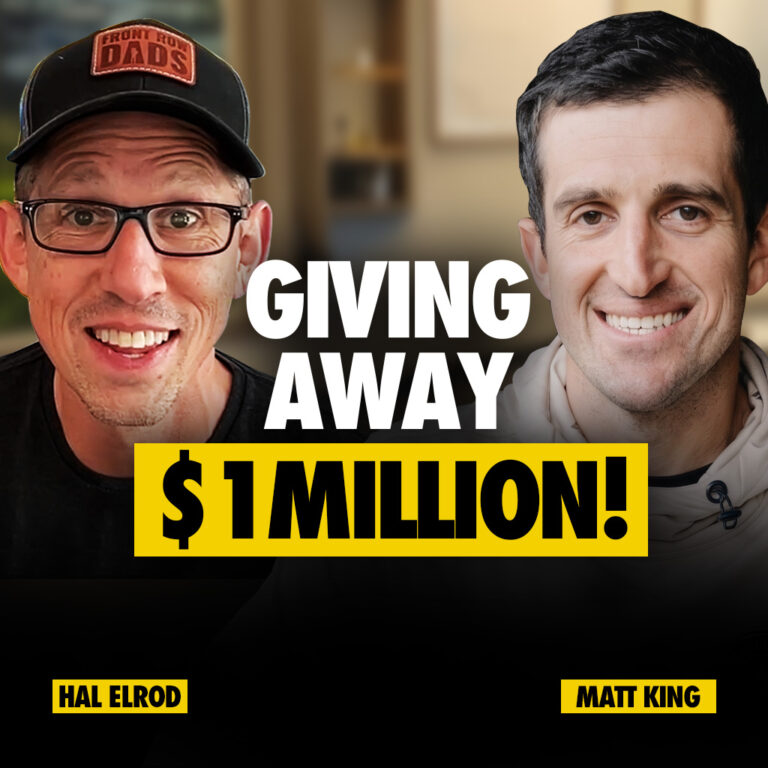
Today, I’m joined by my friend Matt King, CEO of GoBundance, who is preparing to ride his bike 2,000 miles from Mexico to Canada over 13 consecutive days! Why is he doing it? His goal is to raise over $1 million that will be given directly to people in overlooked communities along the route. No nonprofit overhead, just real people helping others in ways that will make a huge impact immediately.
In our conversation, Matt shares why he committed to this mission before he knew exactly how it would come together, and how that decision set everything in motion. We talk about how great outcomes are achieved by taking action first, what it means to lead by example for your kids, and why so many of us spend our lives waiting for permission instead of trusting that we’ll find the way once we begin.
Above all else, Matt explains how seemingly small acts of kindness can make someone feel seen, loved, and heard, and how anyone can get started if they want to achieve something that’s bigger than themselves.
KEY TAKEAWAYS
- Matt’s Unique Approach to Charitable Giving
- Commit to The Outcome & Then Figure It Out
- 150 Miles A Day for 13 Straight Days
- When the Why Is Strong Enough, You’ll Persevere
- The Moment Matt Realized He Had To Go First
- How Matt Finds The People He’s Going To Help
- Who You Become by Doing Hard Things
- The First Step to Making a Huge Impact
AYG TWEETABLES
“So many people spend their entire life waiting for permission, and so they never actually take off."
– Matt King Tweet
“What really determines somebody's success is their desire or their willingness to take action before they're ready and trust that they will find the way or make the way along the journey.”
– Matt King Tweet
“When the why is strong enough, the body becomes silent.”
– Matt King Tweet
“I think really the three core basic needs of a human being are to be seen, loved, and heard. And so, when you think about actually making an impact or actually doing good, I would start there.”
– Matt King Tweet
“Sometimes when we go in with like these predetermined plans or these preconceived notions, all we actually do is we set a ceiling on our life of what's capable.”
– Matt King Tweet
RESOURCES
- GoBundance
- BackTheRide.com
- GoBundance on LinkedIn | Facebook | Instagram | YouTube | X/Twitter
- Matt King on LinkedIn | Facebook | Instagram
- Matt Johnson
- GoFundMe
- David Osborn
- Pat Hiban
- Jon Berghoff
- Jon Vroman
- Cars
- 29029 Everesting
- Big Brothers Big Sisters of America
- The Miracle Morning App
THIS EPISODE IS BROUGHT TO YOU BY:
CURED Nutrition:
I want to talk about two of my favorite products. I’ve been taking these for four years, and they’re now a sponsor of the podcast, CURED Nutrition, Flow Gummies. I start every day with two of these. I meditate for 30 minutes without any supplements, and then I take Flow Gummies seven days a week, almost every day.
And then I go to bed with Night Oil. 30 minutes before bed I take Night Oil and it helps me fall asleep and stay asleep. So I start my day with Flow Gummies, I end my day with Night Oil.
If you want to implement my routine into your day with CURED Nutrition, go to CUREDnutrition.com/Hal and use the discount code HAL at checkout for 20% off your entire order.
Flow Gummies to start the day Night Oil to fall asleep. You’ll feel better, you’ll act better, you’ll perform better. Check it out.
RATE & REVIEW THE PODCAST
Reviews for the podcast on iTunes are greatly appreciated and will allow us to get the word out about the show and grow as a community. We read every single review and believe each one goes a long way in helping us make the show even better! If you received value from this episode, please take a moment and rate and review the podcast by clicking here.
Copyright © 2026 Miracle Morning, LP and International Literary Properties LLC
[INTRODUCTION]
Hal Elrod: Most of us donate to charity the easy way. We click a button, enter a card number, and we tell ourselves we did something good. My guest today decided that wasn’t enough. Not for him, not for his kids, not for the communities. Nobody’s stopping to notice anymore. Matt King, he’s the CEO of GoBundance, and he’s riding his bike 2,000 miles from Mexico to Canada, 150 miles a day for 13 consecutive days, and he is raising over $1 million to give directly to strangers that he meets along the way. No nonprofit overhead, no black box, just a guy on a bike pulling into small towns, finding the single mom with three jobs and no car, and handing her the keys.
Today’s conversation inspired me in ways I did not expect, and I think it’s going to do the same for you. Matt and I talk about what it means to commit before you’re ready, why the body goes quiet, when the why is strong enough, and the small thing any of us can do today that costs almost nothing and means everything to somebody else. Let’s go.
[INTERVIEW]
Hal Elrod: Matt, what’s up, brother?
Matt King: How are you, man?
Hal Elrod: It’s good to see you. I want to set the premise where you told me to not prepare for today’s episode, because I want to be curious, I want to discover along with my audience what you’re doing, and I know what you’re doing. You’re about to ride 2,000 miles from Mexico to Canada to raise money, but I don’t know all the details. Like, I don’t even know who you’re raising money for. So, I’m excited to dive in, but here’s where I want to start. We’ve known each other for a decade almost, going on that.
Matt King: Yeah, probably more. Probably more.
Hal Elrod: But here’s where I want to start, is that most people when they want to raise money for a cause, maybe they set up a GoFundMe, right? Or maybe they’ll throw a gala if they want to go big, but you chose to ride your bike 2,000 miles from Mexico to Canada, and with a goal of not raising a little bit of money, raising over $1 million. Why?
Matt King: I think, Hal, like that’s one of the gifts that I’ve been given in my life, is being surrounded by people like yourself, people like David Osborn, people like Pat Hiban, who when you want to do something, you challenge the status quo with what you’re going to do. I mean, when you wrote a book, you challenge the status quo with how you did it. You’re like, “I’m just going to write the first two chapters and give them away for free.” And then like, “Oh my gosh, this has something. Now, I’m going to keep writing. I’m going to impact millions of lives, and I’ll go into a different country, and I’ll go speak in other countries in foreign languages.”
You just figured it out while flying the plane, and I think so many people spend their entire life waiting for permission, and so they never actually take off. And I’m like, “What a miserable way to live life.” And so, last year, I went and helped support one of the guys who’s become a friend of mine here in Austin. His name is Matt Johnson, and he ran across Texas to raise $100,000 for veterans to get them back into community through CrossFit to try to combat the isolation that comes post-deployment. And GoBundance and the members of GoBundance raised about $55,000 for him, and I ran a morning with him. And I went out there and ran with him, and as the sun came up, I couldn’t help but reflect on how like the ability to do something bigger than ourselves in this lifetime.
And I think you’ve done an incredible job of that with The Miracle Morning. Like, you’ve touched more lives than you will ever truly know because there are just not enough hours in the day for you to see all of that impact. And I think that’s like what a life well lived looks like. But even more important than that, what I’ve been able to watch you do and David Osborne do, and Pat, like all these people do, is they do it to show their kids this is what we stand for, this is what we stand against. They recognize that their kids will learn more from their actions than they will from their words. So, your kids watch you go on speeches, watch you go on podcasts, watch you work the long days, stay disciplined in the Miracle Morning, and therefore they too will have those patterns as they continue to grow up.
So, I was running with Matt. I was just like, dude, this guy’s literally spending 19 days to run from Oklahoma to Mexico to raise a cause for something bigger than himself for people he’ll probably never meet. And I was like, “Man, that would be so cool. What could I do?” And my first thought was like, “I’ll ride my bike across Texas.” And then, Hal, I was like, “Well, that dude just ran. You can’t ride your bike after he just ran. Like, that’s like saying I’ll drive my car, I’ll fly a plane. Like, that’s such a weak move.” And so, it just kind of hit me. I was like, “What if I rode my bike from Mexico to Canada?” And I’m not a cyclist. The first question I asked myself was, when was the last time I rode? I was like, “Oh, two years ago,” but the bike looks really good on the wall.
And what I realized, Hal, is like the lessons that I’ve learned along the journey of studying people like David, like you, like Jon Vroman, like all these people that I’ve been able to be around and study up close and from afar is what really determines somebody’s success is their desire or their willingness to take action before they’re ready and trust that they will find the way or make the way along the journey. And so, I literally, one day on a GoBundance call with a bunch of members present, I was like, “Hey, y’all, next year I’m riding my bike from Mexico to Canada to raise a million dollars for overlooked communities. More information coming.”
And I hadn’t told my wife at that time, I hadn’t told my assistant at that time, and they were all like, “You’re doing what?” And I was like, “Yeah, this is what I’m going to do.” They’re like, “How are you going to do it?” I’m like, I’m not sure, but I’m going to do it. And God, the universe, whatever you believe in, when you put that flag in the ground, I swear, it all conspires to work for you.
Hal Elrod: Amen.
Matt King: And so, when I said this, all of a sudden, the crew chief lands in our lap. Another guy on the aid crew lands in our lap. My cycling coach, who’s training for the Olympics, gets introduced to me, and like just all these weird things happen. Really the why is twofold, Hal. The first is I recognize that I have a 7-year-old, a 4-year-old, and a one-year-old, and they’re studying me at all hours of the day, and they’re doing what I do, not what I say. And so, I say, “Hey, you need to sleep in,” but then they watch me get up at 3:00 AM, and they’re like, “No, we’re going to be up.” Like, I want to set an example for our kids of what we stand for, what we stand against, and that like we find the way, or make the way to do whatever we desire.
The other thing, though, Hal, is I’m sick and tired of all of these big organizations raising all of this money for these causes, and nobody knows where the money goes. It’s like a black box, and I just feel like what made America so incredible was these small communities, these small mom and pop businesses, and people going into the local hardware store and people coming into the local mechanic, and the relationships and the friendships and the camaraderie and the reciprocity that occurred. Now, it’s just like order sh*t on Amazon and wait for it to land at my door. And what happened was I was watching the movie, Cars, and it dawned on me that in the movie, Cars, Lightning Queen gets stranded in this like abandoned town. And essentially, this town used to be vibrant, but they built a highway, and so everybody drove past the town.
The businesses in that community died. The people in that community started to struggle, and I’m like, “We have those communities here. So, what if I get on my bike and I ride through those communities, find the people in those communities that need help, and whatever it is, we show up with that.” And I was like, “Well, what do I need to do that?” I’m like, “Well, if we had $1 million, I could buy a car. I could buy furniture. I could pay off debt. I could pay the mortgages. I could give cash. I could buy a coffee, I could give a hug, I could give a handshake.” I’m like, “Yeah, that sounds like a good number.” And so, I put a flag in the ground. I said, “I’m going to do this. I’m going to raise $1 million. I’m going to document the whole journey. I’m going to bring a bunch of people along on the way.”
Hal Elrod: Dude, I am, number one, so inspired. Number two, I have so many questions, man. And number three, you’re a really good, like you need to be a motivational speaker, Matt, if that’s not on your, like, I know you speak at GoBundance events, but, yeah, man. In fact, I would like you speaking to kids. As I’m sitting here, I’m like, “Man, I want this message, this energy,” and you said so much. There was so much weaved in what you just said, like what you’re doing, why you’re doing it. But beyond that, the example for the kids raising money for people, charities, where they raise all this money, and then they get rich because they raise all the money versus people that actually needed it so much.
So, first question, how are you going to do that? So, I know you’ve raised over $300,000, so you’re on your way to a million, which is amazing. How are you going to find, like logistically, the ride starts May 27th.
Matt King: 27th, yep. May 27th.
Hal Elrod: So, you’re going to ride for roughly 13 days.
Matt King: The plan is 13 days. So, the plan is 150 miles a day for 13 days, which at my current mile per hour average is about 11 hours a day on the bike pedaling.
Hal Elrod: That’s insane. 150 miles a day. And then here’s the thing. If you were to be like I’m going to ride 150 miles today, I think me and anyone listening is like, “Oh my gosh, that’s crazy, and you’re going to be so sore the next day. You probably won’t be able to walk.” And then you’re like, “No, no, no, no, no. Then I’m going to do 150 miles the next day.” And they’ll be like, “Oh man, you’re going to be in a wheelchair.” You’re like, “No, no, no, no, no. Then I’m going to do…” How is the human body like, you know? What have you done endurance athlete-wise before?
Matt King: I ran a couple of marathons. I’ve done the 29029, where you hike the elevation of Mount Everest within 36 hours. Earlier this year, I ran a hundred-mile race that I refused to train for, so the most I ran leading up to it was three miles. I ended up dropping out at mile 40 because I tweaked my Achilles, have ruptured my other Achilles twice, and then I started to get paranoid that I would jeopardize the ride. I mean, we’d already raised like $250,000, so I kind of panicked. But what I’ve really learned, Hal, is like when the why is strong enough, the body becomes silent. And what I mean by that is like if you are running for a cause bigger than yourself, when the pain kicks in, you persevere because it’s not about you. It’s about whatever that cause was.
And when we did our first training camp three weeks ago, we ended day one. We rode 103 miles, and we ended day one at the Burke Center for Youth, which is right here out by Austin, Driftwood. And the Burke Center of Youth houses young boys, ages 11 to 17, who have all been victims of sexual abuse, neglect, and extreme trauma. Like, these are people who have been dealt a hand that nobody should ever be dealt at that age. And nobody should ever be dealt at, period, but like at 11, at 14. And as we were getting ready to leave, a 14-year-old boy came up to me, and he said, “Can I tell you my story?” Now, we were warned before we went there, like, we don’t know how these kids are going to respond. They haven’t had positive male figures for the most part in their life. Like, just be careful.
And I was like, “Yeah, sure. I’d love to hear it.” He’s like, “My mom’s in prison. I never met my father, and my sister’s been adopted, and I won’t be able to see her or talk to her again until we’re both 18, assuming I can connect with her because that’s how the system works.” And he is like, “I’m here to try to fix my anger issues. I’ve been kicked out of a foster home. I’ve been kicked out of other homes. I can’t get my anger under control.” And I’m like, “Okay, well, what’s the goal?” He is like, “I want to get back in the foster home where my good friend is, like I really miss them.” And I was like, “Dude, that’s incredible.” Come to find out he has no family helping him on this journey. Again, he’s 14. And he looks me in the eyes and says, “Will you come back?”
And in that moment, Hal, I was like, “What do I say here? Like, how am I supposed to respond?” So, I just asked him a question. I was like, “Look, man, do you want me to come back?” He’s like, “Yes, please. I really enjoyed this.” The next day, Hal, when we did 105 miles, the hills were irrelevant. The headwind was irrelevant. The pain in my legs was irrelevant because I’m like, “I chose this hard intentionally to impact people who didn’t choose the hard that they’re having to deal with and shouldn’t have to deal with. And I want to show up to provide them the aid.” And so, from a physical perspective, it’s going to be hard, it’s going to be taxing. It’s definitely going to drain me. But I just keep going back to like, what’s the why?
And this why is so strong, it’s like I don’t care what hand I’m dealt on this journey. I’m going to find a way to get it done because it’s for people who deserve to be seen, loved, and heard in this world who have been dealt a hand that I don’t think anybody should have to be dealt.
Hal Elrod: What inspired you to think this way? Because I think that right now I can just speak for me personally. Like, the way you’re talking is I’m like, “Yes, yes, yes.” And there’s a part of me that’s like, “Man, I haven’t thought this way in a while,” or I don’t think this way often enough. Or I’m not doing like I’m not doing what Matt is. I might help people with the Miracle Morning, but there’s a big part of me for a long time, that’s like I don’t do as much charity work as I used to. And so, I’m wondering like, what inspired this in you? Now, you mentioned the run, right? You saw Matt Johnson run across Texas. Was there anything before that? Like, what was your past in terms of helping those less fortunate or seeing those less fortunate?
Matt King: I just feel like, Hal, I always talk about leaving the world a better place than I found it. And leading GoBundance, I often talk to our members of like how do we create impact for the people we come in contact with? Like, let’s talk about that ripple effect. If Hal Elrod changes as a human, that’s going to impact his wife, that’s going to impact his kids, they’re going to impact others, they’re going to impact community. Like, there’s a ripple effect that happens. And one day, I just felt like a false prophet. I was standing on stage in front of 300 guys talking about making the world a better place. And I looked in the mirror, I was like, “What the hell are you doing? Like, you’re just sitting here preaching about it. Why don’t you get out there and do it?”
And so, I was like, if I’m going to ask others to show up for communities and to show up for strangers, then I’m going to be the first one to demonstrate it. I’m going to be the first one at the front lines. And I just really recognize that there’s been times in my life, Hal, where I felt down, I felt counted out. I know you have like battling cancer, doing these things. Amazing people showed up for us in those dark, gloomy moments. Now, we might not have been 14 with sexual abuse or whatever, and I’m grateful that I didn’t have to deal with that, but people showed up for me, and I was really fortunate to have people show up for me.
These folks that we’re going to meet along this journey may have had somebody show up, but they also may not have yet. And so, why don’t I do it? And it goes back to what I learned from David. He said whenever he was facing a big challenge, he would get overwhelmed. And then a mentor of his gave him this quote, Jim Rohn said, “Why not me? If somebody’s going to do it, why not me?” And so, I was like, “Well, wait. Somebody’s going to have an impact on these humans. Why not me?” And how do I create momentum, and how do I create gravity around this? I’m like, “Well, I do something really hard. I document the whole journey. We create content.”
We’re going to create a wheel of doom where people can make certain donations to make me do crazy stuff on the bike, ride a bull in Stephenville, Texas, hot sauce, like make it engaging so that people want to come along for the good and the benefit, rather than just doing it in isolation and in silence.
Hal Elrod: Before I forget, I just want to tell folks, go to, is it, no, what is the website?
Matt King: Yeah. Just BackTheRide.com. People can learn all about the story. They can sign up to ride with us. We want people to ride with us throughout the way. They can ride a mile, they can ride a minute, they can ride a hundred miles. They don’t have to ride at all. They can donate. They can follow along on the content. They can nominate a story on the route, which is one of the things I’m really excited about. If you know somebody in need on this path, nominate them. I mean, literally last week, Hal, I got a call. “Hey, I see you’re stopping in Stevensville, Texas on this date. I have a story for you.” I’m like, “Tell me more.” A family was sitting in their house, drunk driver lost control of their vehicle, drove through the house, killed the mother, killed the 7-year-old daughter, left a husband and a son in a low-income area. Do you think you could show up for them?”
I’m like, “Do I think?” I’m like, “I will be there. What do they need?” And like that’s going to be the exciting part for me, is getting these stories nominated and then providing the impact with the human that nominate. I’m like, “Hey, I know this person. Cool. Meet me there. Let’s do it together. Let’s do this together.” And so, everybody can find all of that at backtheride.com.
Hal Elrod: Does it show the path so people can… Oh, it does. Okay. I’m looking at it right now.
Matt King: Yeah. If you scroll all the way to the bottom, it shows the path, it shows the days, where we’re going to stop. It shows the exact route. Now, that route may change just very slightly, given construction or whatever else pops up along the way. But that is the main route and where we’re going to stop every day.
Hal Elrod: Yeah. And if you go to the website backtheride.com, you can click follow along, and it drops you right down to the Ride at the bottom. Wow. Okay. All right. So, next question, I was going to ask this earlier, logistics, like my brain is trying to figure out, you’re riding a bike for 11 to 12 hours a day. Other than people nominating folks, how are you going to find out who in each town along the way needs help so that you can, and what they need, and deploy the funds? Like, how are those logistics? Is that all being planned out ahead of time?
Matt King: Yeah. So, yes and no, and I’ll start with this. When I set out to raise a million dollars to give it all away along the route, I never spent the time with a calculator. Our friends were over one night, and my friend looked at me, and he is like, “Do you know you have to give away $75,000 a day if you raise the $1 million?” I was like, “No, but that’s a lot of money. Like, that’s a good point. Didn’t think about that.” And I hope, Hal, we’re blessed and fortunate enough that we have to give away 150,000 a day or 200,000 like that would be an incredible problem. But really, we’re thinking about giving in three ways. The first way is people nominate a story. So, somebody has nominated some individuals already, and these are pre-planned, pre-programmed. We’re already working on some of the logistics to do the giving in certain locations.
The second way is like with other organizations. So, one of our GoBundance members is on the board of Big Brothers Big Sisters. We’re working with a local Big Brothers Big Sisters organization to find the family in that market that we can provide benefit in tandem together with the hope, I should say expectation, but I’ll never say that. But with the hope that Big Brothers Big Sisters matches us, dollar for dollar, for whatever we’re doing or whatever organization matches us to make a bigger impact and a bigger movement. But I don’t want to give it directly to them because again, I’m a little paranoid about that stuff.
The last way, Hal, and the thing I’m most excited about, we have about 21 GoBundance members that have signed up to ride with me at various points in the route, most of which don’t want to ride a whole day. So, they’ll ride for an hour, two hours, 30 minutes, whatever that looks like, and then they, as a cohort, will be deployed to where we’re going to end the day. They’ll go to the small town, they’ll go to the coffee shops, they’ll go to the diners. They’ll go to the mechanics. They’ll go to the laundromats. They’ll go to those places, and they’ll find the story. They’ll report back to us saying like, “Hey, found a single mom, three jobs, no car. She’s taking the bus. Can we get her a car?”
“Yep. Here’s who we need to call. They can get us a car. Great.” By the time we get there on the bike, we’ll have the car, we’ll have the story, and then we will go find the human and be like, “Here’s the keys to your car,” and we will be able to really see them and honor them. So, we’re using like the GoBundance members that come along on the way and anybody else that joins us as like secret agents that get deployed into these communities to go find the people. And then when we get to the communities, I want to do a lot of that too. So, I plan to walk into the Walmart at nine o’clock at night and just randomly ask people, “What’s up? What’s up?” And see a lady with three kids and a newborn baby at nine o’clock, go like, “What are you doing in Walmart?”
Like, “This is the only time I can come,” and be like, “What do you need? Okay, cool. Here’s $10,000. Here’s all the furniture you need. We’re going to pay off your rent.” Whatever that looks like, I just want to meet people and hear their stories.
Hal Elrod: Oh man, this is so cool. Matt, you were right that the less prepared I was, the more I didn’t know. I’m just speechless right now. Okay. So, I’d imagine this has to be a yes, but do you have a professional filmmaker that is going to be along documenting the whole thing?
Matt King: Yeah. We have a full content team, so we’re going to have short-form content on Instagram and stuff that drops every single day. And then I was like, “Let’s totally change the game.” I’m like, “I want a badass vlog that drops every day at noon of the day prior.” So, we literally have a full content team that’s going to be able to tell the full story of day one, that will drop on day two. Of day two, that’ll drop on day three. And so, people can really engage with what’s going on, be inspired by what’s going on, and really follow along. And not just on the biking, not just on the giving, on the whole, like, how do you problem solve? What’s the power of your network? What’s the power of proximity? How do you deal with weather? How do you alter the course? Like, just tell the whole story of what we’re up to, and we’ll be able to do that every single day.
Hal Elrod: Love that, dude. I’m so inspired, man. I’m going to be just digging into this so much. Backtheride.com, everybody. So, I want to ask a question about you. There’s a concept in personal development about identity, right, that we do hard things not for the physical outcomes, but because of who we become in the process. And I think about when I ran, I ran an ultramarathon because I hated running. Right? It wasn’t like, okay, I did a 5K, then I did a half marathon, then I did a marathon. Now, I’m in a challenge. It was like, similar to you, I’m like, I haven’t run since high school PE class when they made you run a mandatory mile every year, and I hated it. And my identity is I am not a runner.
So, similar to you, I did it to raise money for Front Row Foundation, right, for a charity that my friend Jon Vroman, our friend, Jon Vroman had founded and similar to you. This is funny. I’m seeing all these similarities as you’re telling the story. Matt Johnson ran across Texas, so you’re like, “I can’t ride a bike across Texas.” Well, originally, I was going to do a marathon, but I’m like, “Dude, my two friends, Jon Bergoff and Jon Vroman, both ran double ultra marathons. I’m like, “If I run a marathon, that’s weak.” It’s like the competitor in us, the ego, like whatever. I’m like, “I got to run an ultra. That’s what they did.” And similar to you, having zero idea of what I was saying, and there’s a big lesson for everybody that you commit and then the how, H-O-W, the how reveals itself.
You announced on a call, “I’m going to ride a bike from Mexico to Canada.” And they’re like, “Well, how?” “I don’t know. I just am committing to it, and I’m going to figure it out.” And that’s what I did all like, I committed online, “Hey, guys, I’m going to run.” I actually called Jon Vroman first. I’m like, “Buddy, I’m giving you my word. I’m going to run an ultramarathon.” He’s like, “Dude, have you ever run?” And I’m like, “Nope. Let me figure it out.” And then you do, right? Like, you commit to the outcome, and then you figure it out. So, anyway, here’s the question. I just wanted to share some of what I like. I was so relating to you on points.
But the question is, going back to this personal development philosophy of who you become by committing to this. Like, who is the version of Matt King that is going to be crossing the finish line with his bike in Canada? Like, have you visualized that? Have you thought about that?
Matt King: I’ve thought about what it could look like, and for a while I was really obsessing on what it would feel like. And then I realized that no different than this interview, sometimes when we go in with like these predetermined plans or these preconceived notions, all we actually do is we set a ceiling on our life of what’s capable because we’re like, “Oh yeah, I knew it would feel like this,” or, “Oh yeah, I knew it would look like this.” And in reality, if we didn’t define it, maybe it could have been more or different or better, or like whatever else could show up. And so, I’ve spent a lot of time letting go of those thoughts now. I’m like, it doesn’t matter because I know the hero’s journey, the journey of man, like anything, it’s about the journey. And it’s about who you become on that journey.
And I’m like, I’m just going to obsess with every single mile, and then whatever comes, I’m not going to have judgment, resentment. I’m just going to have pure curiosity to like, wow, how special is that? How great is that? And I think you’ve done a good job of that as well. Like, you didn’t write a book to create a movement that would go global. You wrote a book to change your life, and it in turn changed millions and millions and millions of lives. And I think if you would’ve said like, “Hey, I want to write this book to be a New York Times bestseller,” it maybe would’ve been a New York Times bestseller and then fizzled out. But instead, you’re like, “I want to write a book to change my life.” You changed your life, and now you’ve changed way more than you probably ever dreamed was possible. And that’s really how I’m thinking about it.
Hal Elrod: I love it. Yeah. I think about how like I go to events, when I go to like a personal growth or a business event, and I’ve heard people say like, “What’s your outcome?” I’m like, “I have zero.” I don’t know. Like, my outcome is to be open and curious along the way and then be surprised by whatever the outcome is that emerges. And so, I think you’re taking that same mindset. So, I want to close this out with giving me, whoever’s listening to this right now or watching this on YouTube, and they’re thinking, “Man, Matt is inspiring. I want to help those in need. I’m not going to ride a bike from Mexico to Canada. I don’t know that I could raise a million dollars,” right? Like, I want to give somebody like action.
And even for me, like, where does somebody start? When they had that realization, you had, which you were on stage, you’re like, “I’m talking about giving back, but I’m not even doing it.” So, where’s the baby step, way before you think about? And maybe after the baby step, they help somebody in need. Maybe it’s their neighbor, maybe it’s somebody in their family, maybe it’s a local charity. But where’s a baby step that would move in this direction?
Matt King: You know, Hal, I think really the three core basic needs of a human being are to be seen, loved, and heard. And so, when you think about actually making an impact or actually doing good, I would start there. And a lot of our life is spent sleepwalking and getting out of Starbucks as fast as we can because we got to race to the next thing and then the next thing and the next thing. Like, today, could you leave the house 10 minutes earlier? And could you just pick up a random conversation with a sweet old man or woman sitting in Starbucks alone and reading a book, and just say like, “Hey, do you mind if I sit down? How are you? Tell me your story.”
Like, sometimes that’s all it takes. It could be as simple as saying in the Starbucks coffee line, and this is not a promotion for Starbucks, but you could be in the Starbucks drive-through line, and you could just be like, “Hey, here’s $40, pay for the coffee behind me, and whatever is left over, you guys keep as a tip.” Does that person then pay it forward? It doesn’t matter. You can leave there feeling good, and I really saw the power of this. We take our kids on Christmas Eve, with $2,000, a hundred-dollar bills. We go to Walmart in a lower-income area, and I let my kids just hand out the money to whoever they see that they feel like needs it. And the first year we did this, my in-laws were with us, and my mother-in-law was like very scared. Like, she’s like, “I don’t want to be by you guys.” I’m like, “That’s fine. You don’t have to be, but we’ll be okay.”
We walked out of that Walmart, Hal, and I asked my daughter, I said, “How does your heart feel?” And she said, “My heart feels so happy.” And I was like, okay, so if a 4-year-old can tell me that giving to strangers who one cried, one gave her a hug, one had just had a newborn and cried like a hundred dollars, and she can say, “My heart feels full and happy,” like how powerful is that? And so, I just think it’s small acts, and it’s just literally like asking the old woman leaving the grocery store, “Can I help you with those groceries?” And even if she says no, she’s going to smile and say like, “Thank you so much for seeing me. Like, I appreciate you.” And I just really encourage people to just slow down a little bit.
I know life’s busy. I know life’s chaotic. I get it. It’s amazing but just slow down a little bit and just see somebody like, “Hey, good morning.” Like, that’s all it takes.
Hal Elrod: Yeah. I love that, man. It’s showing up with love, showing up with kindness, showing up with presence to be aware enough of like looking around and going, “Who could I fill up today? Who could I be sweet to?” Yeah. And it’s really the theme of what you’re doing is it’s this hands-on. Like, it’s easy to write a check. It’s easy to run your credit card on a nonprofit’s website and hope that a decent percentage is actually going to help somebody, versus just go to pay all the expenses to run the business, the nonprofit. But I love that like what you’re doing, and it feels way better. It feels way better for your daughter. Like, if you would’ve had your daughter run your credit card number online for a hundred dollars for a charity and be like, “Hey, how’d that feel?” She’s like, “It was fine.”
Like, how do you feel to look a human in the eye, give them something of value that made an impact in their life, and then receive the love or appreciation or gratitude that they gave to you, right? Like, I love this hands-on giving, and I love the examples you gave, which is at Starbucks, or not Starbucks, any coffee chain will do, right? Matt’s a big stockholder in Starbucks. No, I’m kidding.
Matt King: Unless Starbucks sponsors you, Hal. You don’t have to keep…
Hal Elrod: This episode is brought to you by Starbucks, overpriced coffee, non-organic.
Matt King: That doesn’t taste very good.
Hal Elrod: Yeah but just being a human that’s helping other humans. And I think that the biggest challenge in that is getting out of our comfort zone, where we’ve become so socially isolated in a way where it’s like we don’t talk to strangers, right? Ever since we were little kids versus like, they’re not strangers. They’re members of the human family that we’re all members of. And might you be able to lend a hand, lend a smile, lend a kind word, or lend $40 to pay for somebody’s coffee? So, Matt, dude, you are being the change that I think we need in this world. I am so inspired by you more than I imagined coming into this conversation. And thank you for shining your light, dude. Thank you for making a difference. Thank you for being courageous. Thank you for how you are showing up for your family and for all of us.
Matt King: Thank you so much, Hal. It means the world to me to hear that from someone like you, who I’ve looked up to and learned so much from. It’s been a true joy being with you today.
Hal Elrod: Awesome, brother. All right. Everybody, go to backtheride.com and find ways to follow the journey, to donate money to the cause that you know is going to go to a good place. You can tell Matt’s not going to be paying admin fees with that money. It’s going to all 100% go to help somebody in need, boots on the ground. Love you, goal achievers. Thanks for listening, members of the Miracle Morning Community, and I will talk to y’all next week.
[END]