

Imagine that you’ve spent years optimizing your health, dialing in your routines, pushing yourself to the limit, and doing everything right, but something still feels missing.
In this conversation, we explore what it really means to live well and in alignment, along with the biohacks and daily habits, and how to approach your diet in a way that actually improves your health and well-being.
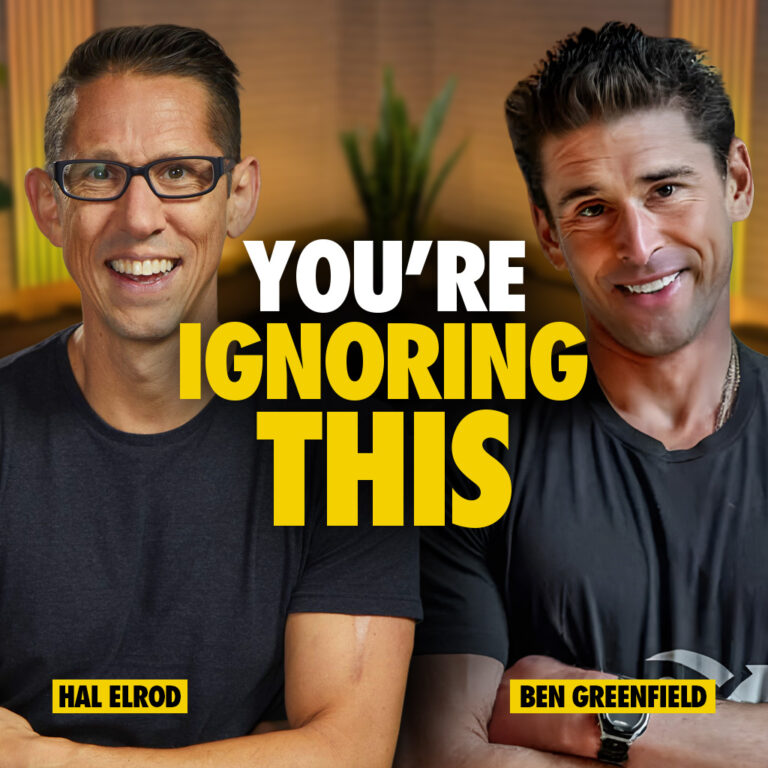
Today, I’m sitting down with my good friend, Ben Greenfield. Ben is a bestselling author, speaker, and world-renowned expert in biohacking and longevity, who has spent decades at the highest level of health, fitness, and human performance. But what makes this conversation so powerful is how his perspective has evolved—from extreme performance and optimization to a more meaningful, balanced, and intentional way of living focused on family, relationships, and legacy.
We also dive into how to approach testing your body, from blood work to hormones, including what to focus on for long-term health and cancer prevention. And beyond physical health, Ben shares the powerful rites of passage he’s created for his sons and how intentionally instilling family values can shape confidence, independence, and purpose for generations.
KEY TAKEAWAYS
- Living Fully vs Chasing Longevity
- Rites of Passage for Parents & Kids
- Pros and Cons of Plant Medicines
- The Passage Into Adulthood & Learning Responsibility
- Why Most Young Men Struggle with Manhood
- The Value of Creating a Family Constitution
- What Kickstarted Ben’s Journey in Biohealth
- How to Think About AI Will Reshape the Future
- The Problems With Too Much Exercise
- Super Slow Strength Training Explained
- Ideal HIIT, VO2 Max, and Cardio Intervals
- Simple Fasting Methods to Burn Fat & Lose Weight
- Ben’s Advice for Creating the Optimal Diet
- Cost-Effective Ways to Get Health Tests Done
- Function Health: How To Get to Started
- The Most Underrated Health & Fitness Habit
AYG TWEETABLES
“Living fully is what I'm more excited about like family, relationships, danger, adventure, and basically spending more time focusing on getting the most out of the years that we have, rather than grasping at the straws of immortality.”
– Ben Greenfield Tweet
“90% of the time, the quality time that you're going to have with your kids is kind of over with when they're 18 years old.”
– Ben Greenfield Tweet
“ I think you can get sucked into this vicious cycle of beating your body down with too much of a focus on fitness, on endurance, because that's where you're getting your pleasure.”
– Ben Greenfield Tweet
“ If you were going to choose a form of training that lends itself best to building strength and muscle with a low risk of injury, I’d do Super Slow training, full body, two to three times a week. Typically you can get it done in anywhere from 25 to 45 minutes and it's a pretty good workout.”
– Ben Greenfield Tweet
RESOURCES
- Ben Greenfield Life
- Ben Greenfield Life on LinkedIn | YouTube
- Ben Greenfield on LinkedIn | Facebook | Instagram | X/Twitter
- LIFE Market
- LIFE Network
- WME
- Plant-Based Medicine 101: How To Use Wild Plants For Cognitive Enhancement, Physical Performance, Immunity And More!
- Greenfield Family Constitution
- Bryan Johnson
- The 5 Types of Wealth: A Transformative Guide to Design Your Dream Life by Sahil Bloom
- Front Row Dads
- Jon Vroman
- Twin Eagles Wilderness School
- Tim Corcoran
- Tom Patterson
- Tommy John
- Alone
- Garrett Gunderson
- Tim Corcoran
- Legado Family
- IRONMAN
- National Strength and Conditioning Association
- Joe Rogan
- Trainerize
- TrainingPeaks
- Mat Boggs
- ChatGPT
- Jeff Bezos
- Amazon
- Six Senses
- Ironman
- Reebok
- Spartan Race
- CrossFit
- Hyrox
- Mark Hyman MD
- Doug McGuff
- Body by Science: A Research Based Program for Strength Training, Body building, and Complete Fitness in 12 Minutes a Week by John McGuff
- Body for Life: 12 Weeks to Mental and Physical Strength by Bill Phillips, Michael D’Orso
- Bill Phillips
- Whole Foods Market
- Tony Robbins
- Mikhaila Fuller
- Jordan Peterson
- Princeton Longevity Institute
- Mark Cuban
- Rupa Health
- DirectLabs
- 3X4 Genetics
- 10X Health
- SelfDecode
- Function Health
- Quest Diagnostics
- SiPhox Health
- Labcorp
- Infinite Allergy Labs
- Next Health
- Fountain Life
- The Miracle Morning App
THIS EPISODE IS BROUGHT TO YOU BY:
CURED Nutrition:
I want to talk about two of my favorite products. I’ve been taking these for four years, and they’re now a sponsor of the podcast, CURED Nutrition, Flow Gummies. I start every day with two of these. I meditate for 30 minutes without any supplements, and then I take Flow Gummies seven days a week, almost every day.
And then I go to bed with Night Oil. 30 minutes before bed I take Night Oil and it helps me fall asleep and stay asleep. So I start my day with Flow Gummies, I end my day with Night Oil.
If you want to implement my routine into your day with CURED Nutrition, go to CUREDnutrition.com/Hal and use the discount code HAL at checkout for 20% off your entire order.
Flow Gummies to start the day Night Oil to fall asleep. You’ll feel better, you’ll act better, you’ll perform better. Check it out.
RATE & REVIEW THE PODCAST
Reviews for the podcast on iTunes are greatly appreciated and will allow us to get the word out about the show and grow as a community. We read every single review and believe each one goes a long way in helping us make the show even better! If you received value from this episode, please take a moment and rate and review the podcast by clicking here.
Copyright © 2026 Miracle Morning, LP and International Literary Properties LLC
[INTRODUCTION]
Hal Elrod: Today, I’m sitting down with someone who has been at the forefront of health performance and what is possible for the human body for well over a decade. Ben Greenfield is a world renowned biohacker, bestselling author, former elite endurance athlete, and one of the most sought after experts in optimizing energy, longevity, and overall wellbeing.
But beyond all their credentials, what I appreciate most about Ben is that he’s not just about pushing limits. He’s about living well and living aligned, especially as a husband and father. And that is where we start the podcast today.
In this conversation, we’re going above the surface and below the surface. We’re talking about what matters most to him right now, how his views on exercise have evolved from high intensity training to a more sustainable approach that the rest of us can implement in our life, and what he believes is the optimal human diet in which biohacks actually move the needle versus ones that just sound cool.
We’ll also get into something that affects all of us: How to think about testing your body from blood work to hormones in a practical and cost effective way, and even touch on cancer prevention and what we should all be paying more attention to.
If you care about your health, your energy, your longevity, and showing up at your best for the people that you love, this is a conversation that you’re going to want to pay close attention to.
It is my great pleasure to welcome my friend, Mr. Ben Greenfield.
[INTERVIEW]
Hal Elrod: Ben, good to see you again, brother.
Ben Greenfield: Good to see you, too, dude. It’s always fun to come to Austin.
Hal Elrod: Yeah, Ben. It’s two dinners in a couple of months.
Ben Greenfield: I know.
Hal Elrod: Actually, we’ve never had dinner together, and then now we’re having dinner twice in like a month or two.
Ben Greenfield: Yeah. It’s good that I’m not strict carnivore and you’re not strict vegan, so somehow we can match up.
Hal Elrod: We always find something that works.
Ben Greenfield: Yeah. Or you can have the broccoli, and I’ll have the steak, and, yeah, call it even.
Hal Elrod: So, I’m excited for this conversation. It’s interesting. We’ve known each other for like probably a decade or something, just going to events and such. Never really gotten, this is the longest conversation we will ever had, which is cool.
Ben Greenfield: Possibly awkward. We’ll see.
Hal Elrod: Awkward. It was. Well, the prep was awkward before we hit record.
Ben Greenfield: Forced conversation with Hal and Ben for an hour. We’ll see how this goes.
Hal Elrod: Poor audience, man. No, but, well, in prepping for today, I watched multiple interviews of yours, and I was like, “Oh, Ben’s even more brilliant than his reputation.”
Ben Greenfield: I thought you were going to say you cured your insomnia.
Hal Elrod: No, dude. Like, your expertise runs really, really deep, and that’s why, yeah, so I’m excited about that. Here’s where I want to start. Just what matters most to you right now in your life? Like, what are you focused on right now? What comes to mind when I ask you that question?
Ben Greenfield: Oh, you are an author, so you’ll appreciate this. I’ve been working, and when I say I, I’ve really been doing nothing except smiling at the camera. So, the CEO of my company, I have this company that’s called Life Enterprises, and Life Enterprises like owns my coaching and consulting arm and BenGreenfieldLife.com.
Hal Elrod: It’s the parent company.
Ben Greenfield: It is the parent company and Life Market, which is like Amazon for health products, and Life Network, which is kind of like an in-your-pocket app for podcasts, health content, biohacking, et cetera. And the CEO happens to be my best friend, who lives 20 minutes from my house. His background is the film industry, and he basically just like came to work for me as a fun project three years ago. And then last year started having a team follow me around with a video camera. And I didn’t really know what he was up to behind the scenes, but he made a documentary.
Hal Elrod: Wow. Without you even knowing, just making a documentary.
Ben Greenfield: I knew he was like making some kind of like…
Hal Elrod: Some kind of content?
Ben Greenfield: I thought maybe like some series of short cinematic YouTube shorts. And eventually, like four months before it came out, I realized that it was a bigger project, and then he screened it for me on my birthday in December, so like four months ago. And long story short is we had like a big Hollywood guy come on as executive producer. And then WME found out about it. And so, they’re working on selling it now. It’s basically based around this concept of a little bit of an antithesis to like, not that I want to like throw people under the bus and this is not intentional, but like the Bryan Johnson-esque Don’t Die pursuit of immortality where just spending five hours a day in your hyperbaric chamber and cold and hungry and libido list hunched over with your IV and your red light beds.
Hal Elrod: Yeah. And promoting that you are going to live to 185 cause that gets clicks and such.
Ben Greenfield: Right. And living fully is what I’m more excited about like family, relationships, danger, adventure, and basically spending more time focusing on getting the most out of the years that we have, rather than grasping at the straws of immortality. And also, like I’m a Christian, so for me, immortality is something that will happen in the afterlife anyways based on my religious beliefs.
Hal Elrod: Sure.
Ben Greenfield: And I would rather focus more on building relationships and family and legacy. And so, I thought, “Well, gosh, with this documentary, like back to the author thing, it would be cool to do a book that kind of rides on the back end of that.” Now, we live in an era in which AI can churn out books, unfortunately, way better than you and I could probably write when prompted the right way.
Hal Elrod: And way faster for sure.
Ben Greenfield: Way faster. I think fact-based books are a thing of the past, right? Like, I have these like 600, 700-page biohacking tomes. And there’s a lot of like story and in-the-trenches knowledge in those, but I think writing a fact-based book is kind of a thing of the past.
Hal Elrod: Because that information is…
Ben Greenfield: Right. Exactly. So, I like the idea of more of an immersive journalistic approach, right?
Ben Greenfield: And so, my idea, back to what I’m excited about is I want to take my sons on a series of adventures over the next two years. So, we’re kicking things off with a bow hunting spearfishing trip in Florida this June. We’re going to do everything from like open mic comedy night together to restoring a used car, to writing a children’s book, to doing a service project in the local community. We’ve chosen about 10 different adventures, and I want to write it as a way for fathers and sons to have like this guidebook to bond through life. And Sahil Bloom wrote in his book, The Five Types of Wealth, that like 90% of the time, the quality time that you’re going to have with your kids is kind of like over with when they’re 18 years old.
Hal Elrod: Yeah. How old are your kids?
Ben Greenfield: They’re 18. Well, they’re 18, oh, thanks for the reminder, tomorrow. Thank you for the reminder. They’re not here in Austin with me, so I’ll call them.
Hal Elrod: Oh, you don’t want to forget that.
Ben Greenfield: But I want to defy that status quo. It’s like, why couldn’t you kind of craft your life such that you and your children are going on adventures every year for the rest of your lives? And this book is designed to generate some ideas but also tell stories of what kind of teamwork and challenges and learnings and growth occurs along the way. So, I’m in early stages, but that’s what I’m kind of in my downtime in the back of the Uber, and stuff like that. That’s what I’m kind of fleshing out.
Hal Elrod: Now, I know you’re on the Front Row Dads podcast recently. Was this idea already brewing? Were you able to talk about that?
Ben Greenfield: I’m on the Front Row Dads podcast tomorrow morning.
Hal Elrod: Oh, you are?
Ben Greenfield: Yeah.
Hal Elrod: Oh, I don’t know why I thought you… Okay, mark.
Ben Greenfield: I think right here, the same recording studio.
Hal Elrod: Oh, that’s great.
Ben Greenfield: Yeah. So, now this idea has been brewing for about three weeks.
Hal Elrod: Oh, wow. So, new.
Ben Greenfield: Yeah. Based on a few discussions I’ve had, banging my head against the wall with what kind of book I want to write. And this got me excited. Of course, it got my sons excited, and I think it’d just be like, if nothing comes of it, and I sell 24 copies to my mom and a few neighbors. It’d just be a fun project.
Hal Elrod: Yeah. Well, the process of, I mean, it’s actually a metaphor for life, right? That it’s like, it’s not about the outcome or the end result, it’s about the journey. With the journey of you having tinned adventures with your sons even if the book sucks. Nobody buys it.
Ben Greenfield: Right. Exactly. A video crew follows. We’re going to pull some cinematic shorts out of it.
Hal Elrod: So, the documentary, so these are separate, right? This is separate projects?
Ben Greenfield: They’re separate.
Hal Elrod: The documentary is about living fully though.
Ben Greenfield: Yeah. Separate, comma, related because the book would be more about living fully, but in the niche of like the parenting family. And even more niche-y father-son space.
Hal Elrod: So, there’s three topics that I was prepping for today and it’s health, it’s fitness. Those are the two that you’re known for. And interestingly enough, the third was parenting. And that we just kind of started.
Ben Greenfield: Okay. We’re done with that.
Hal Elrod: Well, no, actually, well, let’s just go. I was going to start with a health and fitness, but let’s actually, since we’re already talking about parenting, you’re an extraordinary father. And I only know that. Again, you and I don’t talk dad stuff. I know that from just hearing about what you’ve done with your kids, for your kids, and then, actually, Jon Vroman, who you’re having the podcast with for Front Row Dads tomorrow. He had mentioned that he went and did the adventure with Tim and his crew, the Wilderness Adventure.
Ben Greenfield: Oh, the Father-Son Wilderness Adventure Camp. Yeah.
Hal Elrod: Yeah, father-son. I was supposed to be there. I was sick. It was such a bummer, man. I was so sick I couldn’t go.
Ben Greenfield: Oh, shout out to Twin Eagles Wilderness School. They put those on every year, and we did two. And then my sons go to that wilderness school or went to that wilderness school since they were six every year.
Hal Elrod: Since they were six?
Ben Greenfield: Yeah. So, then they became mentors after learning the fire building and shelter making, and whatever, bird language, animal tracking, all this stuff that you do in that camp. And so, I think Jon met them at the camp that they were mentors for.
Hal Elrod: He was mentor. Yeah. They were mentors there. And he was just so impressed with them. So, that really brought that to the forefront for me. Talk about some of the rites of passage, and I know that the Twin Eagles Wilderness School, I know the leader, Tim. What’s his last name?
Ben Greenfield: Tim Corcoran.
Hal Elrod: Tim Corcoran. You’ve told me he’s an extraordinary man and you’ve learned a ton from him, and that’s helped you be even a better dad, and having the kids in the wilderness school. What are some of the rites of passage that you’ve done for your sons throughout the years? Because they’re pretty extreme.
Ben Greenfield: I mean, relatively, yeah, I met Tim because we moved to Spokane, Washington, and the first like property that I bought was this 10-acre plot in the forest. And I’m walking around the forest. Our home had just been built. And I’m like, “Gosh, I don’t know much about these plants, like the local flora and fauna.” Like, what can you eat? What’s the history of certain bushes and flowers, and what can you dig up and what can you carve into medicine or brew or ferment? So, I posted on Facebook. I’m like, “Who’s the local like…?”
Hal Elrod: Botanist?
Ben Greenfield: Foraging expert is what I was looking for. And somebody recommended Tim. He came over to the house. We recorded a podcast. He was just kind of getting Twin Eagles off the ground, and he walked me and my sons, and my wife all over the land, and we learned a ton. And that’s how I met him. Yeah, that’s how it started.
Hal Elrod: Twelve years ago, because they were six, right?
Ben Greenfield: Yeah. And it turns out that a lot of his training is in kind of the Native American lineage. And a big part of that included studying rites of passage into adolescence, rites of passage into adulthood, and even rites of passage for older adults who just never did that and want to find their way in life or challenge themselves with something that’s different than, I don’t know, like flying to Peru to do ayahuasca or whatever. Almost like climbing Mount Everest instead of getting dropped by a helicopter on top of Everest.
Hal Elrod: Yeah. Rather take the plant medicine shortcut, it’s actually doing the work.
Ben Greenfield: Right. Exactly. And I do think that in some scenarios, plant medicines could play a role in a rite of passage, but would be very few and far between, not like your weekend visit with the shaman, but something that you spend months and months or even years preparing for, and highly respect. And I think they’ve kind of gotten a little bit diluted in that sense as far as the modern infatuation with ayahuasca and psilocybin, and ibogaine and all the things.
Hal Elrod: Yeah. Your podcast on that, by the way, my buddy, Tom. I’m blanking his last name. He’s a friend of mine, Tom Patterson. He’s the founder of Tommy John underwear. You know him?
Ben Greenfield: Yeah, I know Tom.
Hal Elrod: Oh, yeah. You guys have been texting. That’s right.
Ben Greenfield: Yeah. I’m having dinner with him this week. Yeah.
Hal Elrod: Oh, yeah.
Ben Greenfield: Okay. Yeah,
Hal Elrod: Yeah. That’s right. Small world. But, anyway, he said, yeah, have you listened to this episode of Ben’s?
Ben Greenfield: Yeah.
Hal Elrod: And this is wild. So, I listened to your episode. I was really moved by it. And I’ve been very much off plant medicine, for the most part, for years. I did a lot of it when I did my cancer journey. Cannabis got me through pain and got me to sleep, and then psilocybin helped me on the other side of it.
Ben Greenfield: Yeah. Psilocybin for like end-of-life therapy if it progresses that far. It’s another tool.
Hal Elrod: Totally. Yeah. But what’s wild is I was listening to it, and I sent it to my buddy. I don’t want to say his name. He’ll be at dinner tonight.
Ben Greenfield: Okay.
Hal Elrod: So, you know who it is now, but I sent it to him, and he coming here to do a podcast, and he listened to it on the way here, and then we talked about it, and he was like, “I’m not doing it anymore.” So, you’re that episode, man. I don’t know how. I’m sure many, many people though it was a paradigm shift. He’s like, “I’m not doing plant medicine anymore.”
Ben Greenfield: Yeah. And 30-second summary, I’m sure we can dig it up and link to it, is that we’re talking about compounds that traditionally have been used for things like divination with the gods, relegated to the priesthood, even used, if you believe this, as a portal to communicate with a spirit world. Not just the divine, but angels, demons, spirits, entities. And that by opening that portal and venturing across it, and pretending that you, as let’s say like a young human being doing a heroic dose of psilocybin in your college dorm room or whatever, can figure out how to navigate these spirits that have been effing with humans for thousands of years is a dangerous road to go down.
And I’m not 100% against plant medicines in any situation whatsoever, but the recreational use, particularly high-dose recreational use, I think for every, let’s be generous and say like, for every nine people that they help, there’s like one person that winds up with schizophrenia or bipolar. And I’ve seen people doing like horrific self-mutilation, and I realize this is controversial, but I would not be surprised if some of that is related to interaction with entities when in that space, and that there’s a much, much deeper spiritual component that isn’t respected as much as it should be.
Hal Elrod: Yeah, that makes sense.
Ben Greenfield: So, playing with fire.
Hal Elrod: Yeah. If anybody wants to go search Ben Greenfield Plant Medicine, it’s a two-part episode.
Ben Greenfield: It’ll pop up. Yeah. So, the rite of passage thing, basically, what my sons did was the first step was rite of passage into adolescence. So, this would generally be for them as a young man when they’re 12 years old, approaching that threshold to 13. Like something that celebrates the end of childhood. And as a part of that, not only did we do like a ceremonial recognition, a big party with grandma and grandpa and all the family members a big like a fire ceremony. And then at that point, they were given more responsibilities in the household, more chores, more we started calling them men, not boys. And so, it’s a little bit different than just, “Hey, I’m a teenager now, and instead I’ve entered into this new era of responsibility.” Their rite of passage was three days in the wilderness.
Hal Elrod: This was at 12?
Ben Greenfield: This was at 12, yeah, just before they turned 13. And this is not like, “Hey, kids, put on a backpack and go hike with the bears and see if you come out alive.” It’s more like the TV show, Alone, where they are in a specific location. People know where they are. And they are by themselves facing their fears. They’ve got like a backpack, and a wool blanket, and a knife. They have a certain amount of water allotment. And then there is some fasting that’s involved, too. And it’s a chance to face your fears, to be with yourself, to understand what that feels like to be cut off from technology and all the distractions of social media and your friends. And it was formed for them.
Hal Elrod: They do it together?
Ben Greenfield: No.
Hal Elrod: By yourself. Okay.
Ben Greenfield: Yeah. Which for twins is different just because they’ve been with each other since birth. And then, so we have three distinct rites of passage built into what we call the Greenfield Family Constitution, which is kind of like the handbook that we use to run our family. The first is that rite of passage into adolescence. The second is when they turned 16, they had to leave the house for three months with no money from mom and dad and go on an adventure with the only rule being that they couldn’t come home for three months. And initially, they thought they’d go do like an international trip, and once they started to look at the cost of plane flights, like they were like, “Man, we’re going to burn through our whole budget just like getting to point A and back to point B.”
So, they got a used car, and they bought like a pop-up tent that goes on the top of the car like a roof tent. And they drove all the national parks from Idaho down to Arizona and back up over the course of three months, just like figuring out how to stretch a dollar, and how to make campfire oatmeal, and how long you can stretch a chicken from Walmart. And basically, came back with a great deal of independence and a little bit more knowledge about just like the way that the world works and what it’s like to not be yolks to mom and dad or on, I guess, mom and dad’s teat for several months. And so, that was at 16. And then at 17, what we have in our constitutions at some point between 17 and 18.
Then they do a 10-day rite of passage, which is similar to that one that they did between 12 and 13 years old. That one was also overseen by Twin Eagles Wilderness School, but that’s like the rite of passage into adulthood, where after that, they’re given even more responsibility. They’re expected to help pitch in with even more at the house.
Hal Elrod: This is at 18?
Ben Greenfield: Yep. Contribute to the family income.
Hal Elrod: How long are they in the wilderness? 10 days, you said?
Ben Greenfield: It was 10 days? Yep.
Hal Elrod: And what supplies do they have?
Ben Greenfield: So, the way they structure at Twin Eagles is they have a three-day buildup of training, of workshops, of talks with Tim and the staff. Then four days of no food. They brought in a certain number of gallons of water, backpack, blanket, wool knife. And, yeah, I mean, like, they came back and told stories. Like, one of them was like, “Yeah, I just like made a fishing pole and fished for imaginary fish over the edge of a cliff for like three hours.” And another one was convinced he was being stalked by a mountain lion, so he built this whole shelter, like with the base of a tree at it, and like sleep with his neck against the base of the tree because he didn’t want to get paralyzed by the jaw of a mountain lion. And then they have three days of integration afterwards, talking, journaling, processing. And that was something that they finished like five months ago.
Hal Elrod: So, I’ve never met your boys. I want to meet your, like, what?
Ben Greenfield: Yeah. I got to bring them down here sometime.
Hal Elrod: Yeah. If you can even give me like 1, 2, 3, like the rite of passage at 12, at 16, at 18, what do you feel? Even if I were to ask them, I’m curious, like, how did they grow? How did they benefit from each of those?
Ben Greenfield: I think for the 12 to 13-year-old, it was getting the opportunity to be proud of what they’d just achieved, getting the sense that they were suddenly in a situation in which they had more responsibility as young men.
Hal Elrod: When they came back?
Ben Greenfield: Yep. I would say responsibility and maturity was the first one. The second one was a little bit more independent, right? Just like being on your own for three months.
Hal Elrod: I mean, on your own for three months at 16 years old, having to figure out how to just live.
Ben Greenfield: Yeah.
Hal Elrod: It’s almost being, not homeless, but it’s almost like that type of it’s like, “Hey, go figure it out, and we’ll see you in three months.”
Ben Greenfield: Right. Similar. Yep. Homeless without the dreadlocks and the weed, and at least I don’t think that was involved. And then 18, I would say, or 17 to 18-ish, a little bit more growth, similar to the 12 to 13. And a lot of people might be thinking like, “Why the heck, dude?”
Hal Elrod: I mean, I think it’s amazing. I’m wanting, I’m going, “Yeah, I wish I would’ve done this with my kids.” And what can I still do?
Ben Greenfield: Well, me too, I wish I’d have done it myself, right? Because I think we have this kind of epidemic in a lot of Western cultures who no longer do rites of passage, whether that’s a young man going off on their first hunt or like the movie, Spartan, going and facing the wolves and coming back as the young king or whatever. We have an epidemic of basically boys who shave, right? Like men who grew up never really being told when they crossed the threshold into manhood. And so, for many men, including myself, that involved going on a series of our own conquests and adventures to try to prove to the world that we are men, whether it be body infatuation, building muscle, getting a certain number of women, achieving a certain body count, homes, cars, businesses, whatever.
And I think that a sense of acceptance that you actually are recognized as a contributory member of society in a ceremonial way that involves some kind of a threshold that you cross in order to be given that position is something that would help a lot of guys out as far as just confidence and not feeling like you need to prove to the world that you’re somebody through a lot of the other ways that guys are doing it now.
Hal Elrod: Well, so, yeah, for me, like I’ve never, I almost have never thought of myself as a man. I’m 46 years old, but I never had a rite of passage.
Ben Greenfield: Nobody ever told you, right?
Hal Elrod: No one ever told, right? It was like, I’m still a boy. I’m a teenager that my body’s getting older, but like…
Ben Greenfield: Yeah. And it’s different. This is controversial, especially in a post-feminist era, but women do have a specific biological moment at which they become a woman, right? Their first period, “Hey, you can now bring human souls into the world,” which is a pretty significantly epic moment. And like you don’t wake up as a man one day and just like, “Hey, your balls have dropped,” and your voice is like, some stuff happens over a gradual period of time. But men don’t really have that distinct biological moment, which is probably why rites of passage for males have been a little bit more formalized in the past than those for females. We don’t have daughters. My sons, it will be their responsibility to write into the future Greenfield Family Constitution what kind of rites of passage a young woman goes through.
Because there probably are certain things that you’d want to think about. Like, do you celebrate like onset of menstruation? Is there a party? Is there a coming-of-age ceremony? These are things that will be their responsibility.
Hal Elrod: You haven’t had to think about them.
Ben Greenfield: Yeah.
Hal Elrod: Give me a summary of the Greenfield Family Constitution. What is this document?
Ben Greenfield: Oh, it’s like, it’s the playbook for the family.
Hal Elrod: Family values.
Ben Greenfield: Yeah. So, in the same way that you’d brand a business, you can brand a family. I learned a lot about this from two guys, primarily. A guy who used to be my financial advisor, named Garrett Gunderson. He still does work in this area, like helping families with their family constitution. And then another guy named Rich Christiansen, who has I think called…
Hal Elrod: Okay. Legado.
Ben Greenfield: Legado. And Legado, they helped us a lot. We actually went down to a cabin with Rich in Utah for like two days and learned a lot of this. But basically, we have our family values, which feed into and kind of craft the foundation of the family mission statement. And then that’s graphically represented in the family logo, which are like family logos on our pepper grinder and our pickleball paddles and our throw pillows, the flags that hang outside the front door, and most importantly, in a crest that’s like proudly displayed, like, a really nice big metal-worked crest in the home study.
Hal Elrod: Just family pride, bonding identity.
Ben Greenfield: Exactly. My sons can be proud of their last name and know what the family stands for, like what our values are and the impact that we want to make on the world, which is all woven into the mission statement. And then tradition.
Hal Elrod: What’s the mission statement, by the way?
Ben Greenfield: Oh, it’s long. It’s like three paragraphs long. I don’t have it memorized.
Hal Elrod: It’s not a sentence.
Ben Greenfield: Yeah, but it’s like we’re content no matter our circumstances, and we’re here to help, love, and serve people and connect people more deeply to their Creator. And just everything that we really want to focus on in terms of world impact as a family is in there. And this is also important because of the way that it feeds into financial legacy and generational wealth, which I’ll get to in a moment. But then traditions are in there. So, like Easter, Christmas, Thanksgiving, like, what do we do? When we paint puff T-shirts and watch an old Christmas movie, and what mom makes for the Christmas Eve brunch or dinner, and it’s all in there, and it provides, like, almost this sense of solidarity for the family, like, “Oh, this is just like us. This is what we do.”
And it gets super detailed. I mean, like every family member, like spirit animal, and hex logo or hex color and font, and end-of-life memorial wishes is everything that you can imagine, and we build on it every year. We typically revisit it every year and add things that we’ve been saving up to add. You kind of like can get the family together in a sort of retreat type of situation and build on it, which would be fun, as they have kids.
Hal Elrod: Where does the document live?
Ben Greenfield: It is in Dropbox. It’s printed at the house.
Hal Elrod: There’s a printed version.
Ben Greenfield: And now it’s also a website, so you can update it via a website. The thing is that if you look at passing on or building generational wealth, you can also use this as a tool for that, because if you form like a living trust, let’s say like an irrevocable dynasty trust for the family that spells out not only who manages the family wealth, but what decisions or what money can and cannot be used for. A lot of that is advised by the family values and the family mission statement. And then if you really want to get into the details of generational wealth, basically every time a family member dies, if you have a whole life insurance policy on them, I’m not an insurance salesman, so, yeah, no need for the goosebumps to come up about.
Hal Elrod: Email Ben for the policy.
Ben Greenfield: I’m about to sell you, yes, whole life insurance with Ben.com. Basically, you can start an insurance policy on a kid when they’re like 30 days old. And then with paid-up additions to that policy, you can create a sort of family bank which you can borrow against, while the money that’s stationery has to grow.
Hal Elrod: This is Garrett Gunderson 101.
Ben Greenfield: Yeah, exactly. And then every time, let’s say 20 or 30 or 40 million, or whatever the policy is, pays out, that goes into the trust. You can basically build a family bank and build family wealth over multiple generations by tying insurance policies to the trust, and then that kind of like comes full circle and ties into the Family Constitution.
Hal Elrod: Intentional parenting. Man, that’s like, so two things come up. One is how intentional you are, but also that you didn’t reinvent the wheel, right? You got Garrett Gunderson to teach you the whole life step to create the wealth, right? You got Tim Cochran to teach you the rites of passage. And then who’s the third? There’s a third you mentioned.
Ben Greenfield: Rich Christensen. Yeah, all of these things like these are my ideas. All you do as a family is step back and say, “Well, what are our values?” Because that’s going to be different for every family. What’s the impact that you want to make on the world? What is it that your family holds dear and stands for? What kind of businesses are you in? What kind of businesses do you frown upon or encourage the kids to operate? And so, yeah, if your family’s into just like gambling and trips to Vegas and all forms of hedonism, then that family’s values and mission statement.
Hal Elrod: No judgment.
Ben Greenfield: Choose your own adventure.
Hal Elrod: I love this, man. No, I mean, you’ve really got me thinking about being intentional. And I think that often my first thought, maybe people listening, right, you learn something, and then you go, “Oh man, I wish I would have done that when my kids were six.” My daughter’s 16, my son’s 13, but it’s like, “No, I’m going to go back, and I’m going to do the best I can with what you know…
Ben Greenfield: The best time to plant a tree? Chinese proverb, right? But if you look at it from a legacy standpoint, let’s say you start when your children are 16 or 17 or 18, you’re basically training them on what it’s going to look like to get this structure in place when their kids are born, whatever, five or seven or 10 years down the road. So, I mean, I even think, like a grandparent who’s listening could teach this to their children, who have children to do it with their children. So, I don’t really think there’s like a bad time to start if you’re thinking generationally and you don’t think that AI is just going to blow up the world. We’re not even all going to be here in 20 years.
Hal Elrod: Yeah. That’s our next podcast episode. So, let’s go back to your…
Ben Greenfield: Blowing up the world.
Hal Elrod: Yeah. AI just being humanity’s downfall.
Ben Greenfield: Okay, there’s a podcast on explosives. Yeah. Weaponry.
Hal Elrod: No. So, talk about your background, and we don’t spend a lot of time on this, but for people that don’t know you, like endurance athlete, worked with Reebok, hardcore, and then that’s going to, that’ll lead into how your views on exercise have shifted. That’s where I’m going, right? Which was where you were a hardcore nerd athlete. Now you like walking.
Ben Greenfield: Yeah. From masochism to walking. Well, I was homeschooled K-12. I wasn’t that interested in human science or physiology or the type of things that you really wouldn’t expect the average homeschooled kid to be interested in, right? So, president of chess club, played violin, super into fantasy fiction, like stereotypical homeschooler. And I got into sports in high school. Sports pulled me into wanting to study exercise, physiology, biomechanics. I was even interested in medicine, sports medicine, and orthopedic surgery.
Hal Elrod: You had public high school?
Ben Greenfield: No. Home-schooled K-12, yeah. But in Idaho, you can play sports at the high school level, even if you’re homeschooled. So, then I went to college and studied exercise physiology and biomechanics and got a master’s degree in that, passed up going to medical school, even though I did all the pre-med and thought seriously about going to a few that I was accepted to. I kind of got disillusioned with medicine, basically, and that was because I worked a short gig for around nine months in hip and knee surgical sales. Didn’t like that. Felt just like more and more as though medicine wasn’t calling to me. But I loved fitness and nutrition and exercise, and I guess what you might even call like preventive holistic medicine.
And so, I started up a string of personal training studios and gyms in Idaho and Washington, and I was kind of like a nerd when it came to all of the cool technologies that you could use to enhance the body or quantify the body. So, we had everything from my gym’s indirect calorimetry equipment to measure things like VO2 Max and calorie burn. We had like early stage like platelet rich plasma injection machines to pull blood out, and concentrate placements, and re-inject into joints. This would have been when I was 21 until I was about 27. And we had high-speed video cameras, and I was doing a lot in the endurance sports world, so we had a real strong following in like the local triathlon, marathoner, swimmer, cycling community.
And I worked a lot with local physicians, meaning a lot of my clients were patients whom they referred out because I made a good name for myself as somebody who understood medical language and could work well with doctors, but then also on the sports performance side of things, could do a good job. Because basically, I’m a certified strength conditioning coach and spent a lot of time in the athletic enhancement world. And so, in 2008, I was nominated by a group of physicians and voted as America’s top personal trainer by the National Strength Conditioning Association, which was a huge honor. And that also got me a lot more publicity, just like speaking, traveling to conferences, teaching people how to profit from operating brick and mortar personal training studios and gyms.
And at the same time my sons were born, my twin sons were born, and I’m like, typical day for me, I’m racing IRONMAN all over the world. I’m running two gyms. I’m speaking. I started a website, I started a podcast in 2008, and I was doing online coaching.
Hal Elrod: Oh, that was early.
Ben Greenfield: Yeah, super early. There was maybe like 100 podcasts max when I started a podcast. Most people didn’t know what a podcast was. You had to, like, code your own RSS feed and submit it to Apple and wait two weeks, and it was just like The Wild Wild West. I mean, freaking, like, Joe Rogan wasn’t even podcasting back then. I mean, there were very, very few people doing it. But I liked the idea of sitting in front of a microphone and just releasing. I did interviews and like strength conditioning research and exercise, geeky, exercise knowledge, stuff like that.
Anyways, when my sons were born, I was like, “Gosh, I’m like, getting up at 4 am, riding my bike 12 miles to the gym, training clients all day, working on online clients during lunchtime, going for a swim, finishing up the day, lifting weights, were thrown in a run, going back home, getting home at like 9 pm, having a little bit of dinner with my wife, going back into my studio, doing more online programming, working on the newsletter, the PPC campaigns, the affiliate campaigns, the online information products, all this other stuff that I was building, and there was no way I was going to be like a present father. Well, I wasn’t a present husband at that point. I was a workaholic, but no way was I going to be a present father.
So, I basically reinvented, sold all of my studios, all of my equipment, got rid of all my clients, moved into the little side room in our rancher home down by the Spokane River, and started doing mostly just online coaching, speaking, and information products, just basically like training programs for marathon, for triathlon, for swimming, for lifting, for injuries.
Hal Elrod: So, that you could be home?
Ben Greenfield: Yep, yep. So, I could be home. And honestly, like, that was just kind of like a slow rolling snowball to what I do now, like, I’ve got the podcast. I do a lot of online content. I’ve kind of shifted to doing a lot more, like advising and investing for companies in the health and fitness and longevity space. Still speak all over the world. And a typical day for me, though, like, when I’m not traveling, I’m just like with the family. We have our morning huddles, and we’re hanging out, and my sons and I are in the gym in the morning, and I’m seeing them all day long. And they’re working on a business at home, so we’re all on our computers at lunch, but all kind of like together working on our companies.
And we have these wonderful, glorious family dinners and family hangout times in the evening, and pre-dinner pickleball. So, yes, it’s great. What I do now, I love it.
Hal Elrod: Living the dream, man.
Ben Greenfield: Yeah.
Hal Elrod: When I asked what matters most, I think that’s a full circle you just really said, right? The fact that you get to wake up every day, work with your sons, work out with your sons, spend time with your wife, yeah.
Ben Greenfield: Yeah. And I think that we are entering a potential era in which that might be easier for a lot of people to do, if you look at the ability to be able to take a lot of the stuff that might be simple data entry work, or being hunched over a computer, and free up time to actually be with family more.
Hal Elrod: I am curious. You’re a smart guy, and I was joking that the AI conversation was for another episode. But since you just mentioned it, what does that look like, though, if you know, between, like, how are people supporting themselves if those jobs go away, right? Like, if you’ve got generational wealth, it’s a different game. You’re like, “Oh yeah, I’ve got investments, I’ve got real estate bringing it in,” whatever that looks like where you’re like, I get to just relax at home, because AI is nothing. But if you’re someone that your income goes away like I don’t give a good answer. I don’t know if anybody has a good answer.
Ben Greenfield: Right. I don’t think anybody knows the answer. There will be a definite wealth disparity. I think there’ll be a bigger wealth gap, the people who use AI effectively to not replace themselves and put themselves out of a job, but to build more, to create more programs and more software-esque products as a service, to be able to program more apps and more helpful apps. And I think the people who are doing that and making useful content and useful apps and useful websites using GPT will just be able to do more. And people who are a little bit more reticent to use AI, a little bit afraid of its potential, I think they could potentially, I think getting lost in the shuffle is probably not the right term, but I think they might get left behind.
Like, if you’re not willing to step back and say, “Okay, how is GPT going to replace my job in some way? Or how is AI going to replace my job in some way, and how can I adapt and pivot?” And I think one way to think about it is that there will be really, really high ticket items that humans value because they’re created by humans, and certain sectors that are a little more untouchable when it comes to AI. I’ll give you one example. My son’s business is a card and board game business, right? They can use AI for marketing, for PPC, for socials, for videos, and graphic design. But if you go to their Instagram page, they are specifically, intentionally putting up videos showing that they’re hand-illustrating the cards.
They’re using drawing pads themselves, like everything is hand-designed, right? Like, it’s handcrafted, human-created content. And even if it wasn’t, their final product requires humans interacting with one another in order to use the product. This is something that brings humans together. So, I think that’s an example. Like tabletop gaming, board game, card game industry, you could make better games faster, but at the end of the day, I don’t think there’s a lot of people who are going to pay money to watch robots.
Hal Elrod: It’s going to be watching robots play.
Ben Greenfield: Yeah, exactly, even though people apparently do that now for chess. And I think Elon’s new fighting robots might actually be something people pay to watch. But when it comes just like playing cards with family or playing a good board game, laughing around the dinner table, or laughing at game night, I think that’s an example of a sector that if you do the right thing, you could use AI to profit more in. If you look at my realm, fitness programming, nutrition programming, GPT can already read labs, produce fitness programs, produce customized tailored diets way better than I can. So, what can I provide? I can provide live experiences, right?
I can provide communities where people can get together and work out together. I can provide the accountability piece or the opportunity to talk to a real coach on the phone. And those are higher touch, higher-end services, right? So, let’s say you would have formerly visited a website that was charging you like $500 a month to have a personal trainer who was like a real human being writing out your workouts and maybe communicating with you a little bit on a messaging app like Trainerize or TrainingPeaks or whatever like now you’ll probably pay like $5 a month for that, because AI is going to be doing it all, and then you’ll have the premium product, which is the real coach, the real human providing you the experiences, the accountability, the interaction with the human being that you crave. And that introduces a little bit more fun into the process. So, everything’s going to change.
Hal Elrod: No. Yeah, it’s great. It brings up, I’m going to add to that. So, I was talking to somebody the day that runs a $60 million company and coaching is their primary product. And we were talking through his business model and really neat guy, Mat Boggs. And I asked him, I said, hey, I’m going to– it was like the last five minutes of we had an hour together just getting to know each other. And I said, I’m going to ask you the hard question before we wrap up. I said, I’m sure you’re aware you run a coaching business that ChatGPT now is a 24/7 available coach and the coaching industry is doomed as off, it’s the doomsday rhetoric. What are your thoughts?
And he talked about Jeff Bezos, owner of Amazon, that Jeff says when he was asked in an interview once, like, “All these changing things in the marketplace, how do you deal with that?” And Jeff said, “I ask myself what will never change? I don’t worry about the things that are going to change.” I say, “What will never change?” And so, applied to the coaching business, it was, people, they will want transformation. In order to get transformation, they will need accountability. ChatGPT is not going to make sure you do your pushups, right? It’s the human being that you know you’re talking to on Thursday or you’re meeting at the gym Friday morning, right?
Ben Greenfield: Right. Fear of public embarrassment or being outcast from the community is something that’s less threatening when it’s a digital community without the, the hierarchy of actual human beings. And that kind of like built-in primal fear of letting someone down is nowhere near as strong when it’s a computer versus a human. Like, we’ll let computers down all day long, because at the end of the day, we don’t care about them as much.
And I’m sure there’s some people that would argue that you would still have some sense of accountability. Like, even I will fall into that pattern where I get that dopaminergic reaction to checking boxes even if the boxes that have been assigned to me are assigned from a digital presence. Like, you need to wake up, you need to do this. I’ve got an app telling me when to brush my teeth, drink my whatever liters of water per day. So, I get that. but then I think there are other things in the coaching community that people also crave.
I would say another big one is connection and community. And that’s where coaching is probably going to have to reinvent itself to a certain extent. Some coaches already do live events, like people fly to their houses for masterminds or they do clinics or they do conferences. Or they just, like me, just show up places and speak. And in many cases where I’m speaking at an event, I’m leading a morning workout, I’m hosting a dinnertime Q&A, I’m bringing people to a place like whatever, Six Senses, and doing like a six-day getaway. I see those becoming higher, like a premium offering from a coach. And I think that’s another area that a lot of coaches need to like pivot into is how do we get these human beings together?
Hal Elrod: Yeah, yeah. So, just reinvention, like you said, and it’s happened with every technological advances. Humanity’s had to reinvent ourselves. Exercise, how has your take on exercise changed from being a hardcore endurance athlete, right? I mean, the way you just described your– it’s like you’re exercising, you’re going home, you’re exercising, you’re working, you’re exercising, how has that changed?
Ben Greenfield: I mean, you talk about the dopaminergic reaction to checking boxes. Many people, depending on how you’re wired up, but this would particularly be the people who fall into the hard charging, high achieving entrepreneurial category, probably many of your listeners. We derive a great deal of pleasure from forward motion, and often have addictive personalities that thrive on that. This is why you see many former addicts turning to something like Ironman triathlon or marathoning as kind of like a positive, arguably healthier, questionably healthier solution compared to, say, like drinking excessively or drugs.
And so, I think that, for me, a lot of that long endurance, masochistic style, I mean, I logged over 7,000 miles of endurance racing. I did 13 Ironmans. I did Ironman World Championship six times. I raced for Reebok for four years and Spartan, an obstacle course racing. I did open water swim competition. I did adventure racing. And it was fun. I have nothing against someone like climbing their own personal Mount Everest.
But there’s a fine line that exists, especially in endurance sports, but I think exercise in general, CrossFit, Hyrox, Deka Fit, anything that you traditionally think is like a fitness type of event that sucks people in and can become pretty addictive. Not only is it monetized and commercialized pretty well, like if you’ve ever been to an Ironman, you see all these people just like dehydrated and struggling across the finish line and fighting for those last few miles, and they’re standing in line ready to write a, I don’t even know the price now. Let’s say like a $1,200 check to Ironman the next morning at breakfast to get into the next race.
Hal Elrod: Next one, yeah.
Ben Greenfield: And I think you can get sucked into this vicious cycle of beating your body down with too much of a focus on fitness, on endurance because that’s where you’re getting your pleasure. I think a more well-rounded life would involve some sports, like, whatever, pickleball, tennis, golf, some walking, some art, some instrumentation, music, local community meetups, some service. Like, it’s hard to do a lot of those things.
Speaking for personal experience, when you’re preparing for an Ironman, like every last free moment, you’re swimming or biking or running. A lot of marathoners have experienced something similar with running or cyclists with cycling. These are time-consuming sports, so is CrossFit, so is Hyrox.
Hal Elrod: I’d say my audience is probably just how do they get themselves to move their body? Like, you know, it’s like, so, I don’t know how many…
Ben Greenfield: Speaking to a very small subset of population, but here’s what you need to know, here’s what’s important. If you look at actual data on exercise, you tend to see a law of diminishing returns, a law of diminishing returns when you exceed about 150 minutes of moderate intensity exercise, or about 75 minutes of very vigorous high intensity exercise per week.
Hal Elrod: Oh, per week.
Ben Greenfield: And once you exceed that, that’s where you start to see arterial stiffening, calcium deposition in the artery. So, basically, like a heart that’s more prone to atherosclerosis.
Hal Elrod: Oh, wow. That’s why you see like runners have heart attacks.
Ben Greenfield: The cardiovascular data is the highest. You could also make a pretty strong case for things like cortisol or stress hormone dysregulation, joint damage, et cetera. I experienced everything from thyroid deficits to testosterone depletion, to a lot of things related to overexercising, overtraining, under-recovering, somehow convincing myself that you had to reach a certain intensity and volume of exercise every single day to see results or to feel good about yourself. And that can be damaging over time.
I think a more reasonable approach, if someone’s sitting here and maybe they’re not an Ironman addict and like you said, they just want to get in shape, if you’re lifting weights full body two to three days a week, doing some kind of high intensity interval training session one to two times a week. This doesn’t have to be every day. Walking…
Hal Elrod: What’s a high interval? Give me an example.
Ben Greenfield: That would be like, for me, I do a…
Hal Elrod: No, not for you. For a normal human.
Ben Greenfield: Well, this is for me, now I consider myself to be normal.
Hal Elrod: Okay, you’re more of a normal human.
Ben Greenfield: I would say the difference between me and a “normal” human is I’m so jaded from my days of competitive sports and fitness events that, even though I’m no longer training with the same volume, I train at a higher intensity. Like people here that I’m a lot more sane now, but then they still go train with me and my workouts are still relatively soul crushing, but nowhere near. Like, for me, they’re nowhere near what they used to be. So, lifting weights a few times a week, two to three times a week.
Hal Elrod: You talked by the way about, on the Mark Hyman podcast, super slow weight lifting. Talk about that.
Ben Greenfield: So, if you were going to choose a form of training that lends itself best to building strength and muscle with a low risk of injury, it’s not going to turn you into an Olympic athlete. There’s not a lot of power development involved with it, but super slow training. I did it today. I had meetings that started at 11 a.m. today. I hit the gym at 10, was in the shower by about 10:45. I had a super slow– I did one warmup set on each exercise, and then I did one super slow set to failure of a few basic movements – chest press, pull down, leg press, row, back extension, and shoulder press. The shoulder press was with dumbbells. The back extension was with an apparatus. The rest of them were with machines.
Hal Elrod: And how slowly?
Ben Greenfield: Because it’s a lot easier to kind of like move machines much more slowly.
Hal Elrod: You’re talking bench press really, really slow, and you hit failure, you might be in trouble.
Ben Greenfield: If you don’t have a spotter.
Hal Elrod: Yeah, exactly.
Ben Greenfield: I mean, AI robot spotter, which will be a thing soon. So, 10 to 30 seconds up, 10 to 30 seconds down. Single set to failure training. Not my idea, not my science. Best book about this is a physician named Dr. Doug McGuff, who wrote a book called Body by Science. That’s where I discovered this. And your heart rate stays up. So, there’s a little bit of a cardiovascular training response as well.
But what I like about it and I use this a lot with people who I’m training, who are just like executives who just want to stay fit. They don’t care about piling on slabs of muscle or being a pro football player. They just want to hit the gym and be able to do it and stay happy and injury-free. So, it’s super slow training full body two to three times a week. Typically, you can get it done in anywhere from 25 to 45 minutes. And it’s a pretty good workout.
If you look at data on longevity, the type of muscle that’s most associated with living a long time and high quality of life and low risk of injury is not the type of muscle that you build with super slow training. It is muscle that’s kind of like small, wiry, powerlifter type of muscle, muscle that can produce high amounts of force in a short period of time. So, when you’re doing super slow training, let’s say you’re doing two to three sessions a week, you would still want some point during the week where you’re doing something more powerful and explosive.
So, for me, that typically looks like a few body weight exercises. I have kettlebells. I’ll throw some kettlebell swings in. I have an AirDyne. I’ll throw in some sprints on the AirDyne. And then I play pickleball. I play tennis. I’ll occasionally get out and play some other sports. I mean, I know ping pong counts, I play ping pong. But basically, in the same way that walking briskly seems to be more important to longevity than the number of steps that you take, which is interesting, that’s why I love walking with my wife because she’s a super-fast walker. She takes a high step count.
Hal Elrod: Nice.
Ben Greenfield: Moving your body or a lighter weight quickly is also something that you want to be aware of and do.
Hal Elrod: Interesting.
Ben Greenfield: But that can literally be like stacking on 10 minutes of calisthenics before or after your super slow training workout. Just where you’re moving a little bit more quickly. High intensity interval training, you ask me what that looks like. I do 21 minutes twice a week, where I’m going like 30 seconds hard, two minutes easy, or 10 seconds hard, one minute easy. This is AirDyne, elliptical, rowing machine. We were in Arizona yesterday, so I hit the pool for 20 minutes.
Hal Elrod: And tell me again the interval, how you do it.
Ben Greenfield: So, it depends. And if you really want to dig into the physiology of these muscles, like I mentioned, you’ve got strength and you’ve got power. Those are the two kind of like skills, the Avenger-like skills we want to focus on. So, you have strength and power for muscle, and then for cardio, you have your VO2 max. You have your ability to be able to buffer lactic acid. You have your mitochondrial health and you have your fat burning capacity.
So, in brief, what that means is that if you want a good VO2 max, once every one to two weeks, you do longer intervals. So, this would look like, and obviously, now, speaking of GPT, you could literally replay this podcast and have GPT listen to it and like spit out a workout for you based on this. But you do a longer interval cardio workout. VO2 max responds well to something like a classic 4×4 protocol, four minutes at maximum sustainable pace, four minutes pretty easy passive recovery, four times through. And you don’t need to do this multiple times a week.
Literally, research has shown that as little as once every two weeks, you can maintain or build VO2 max with that approach. That’s one. Longer intervals, if you want to talk work-to-rest ratios, you do the math. It’s a 1:1 work-to-rest ratio. Lactate threshold is your ability to be able to buffer lactic acid, the stuff that makes your muscles burn when you’re exercising. This would be a classic Tabata set. Have you heard of it?
Hal Elrod: No.
Ben Greenfield: Okay. So, Tabata set, this is based on Japanese research, is a four-minute set that consists of 20 seconds hard, 10 seconds easy, eight times through. So, if you think about it, that’s a 2:1 work-to-rest ratio, but you’re not letting the lactic acid get out of the muscles before you hit the next interval. It’s nice because it’s short. I mean, you could literally use this as like a warmup for one of your strength training workouts, but that’s lactic acid tolerance. So, it’s longer rest periods, or longer work periods, shorter rest periods, but still pretty short and snappy.
Mitochondria, that’s a third one out of four. Mitochondria respond well to hitting it hard for 10 to 30 seconds, and then luxuriously long rest periods. So, this would be, for example, doing once a week, mitochondrial training is something that responds pretty well to a once-a-week protocol. Eight hard, 30-second efforts with two minutes of easy recovery between each. So, you could do this again on AirDyne, rowing machine, elliptical trainer, whatever. And then…
Hal Elrod: If someone doesn’t have equipment, and we’re talking, like you mentioned, walking briskly. So, I want to give the simplest vibe, right? Like, okay, so for somebody walking, you mentioned walking briskly. Let’s touch on that. So, if somebody’s like, I don’t have an AirDyne bike. I’m not even working out right now. Like, I need to move my body.
Ben Greenfield: Got some shoes.
Hal Elrod: Like, what’s the cheapest, fastest, easiest way? And so, yeah, what’s the optimal way to walk?
Ben Greenfield: Think about it this way. I like this. So, walking, you head out on a walk and you walk as briskly as possible for four minutes, and then you slow down and you walk at an easy pace for four minutes. And you do that four times through. For the lactate tolerance, you do 20 to 30 jumping jacks, you recover for 10 seconds, and you do that again, and you do that eight times through. For mitochondria, you go for a long walk, that’s not at a super-fast pace, but every time you get to a telephone pole, for example, you shift into a jog or a little like mini sprint for about 10 to 30 seconds. And then another long walk in between each.
Hal Elrod: How many of those or for how long?
Ben Greenfield: Anywhere from six to eight for the mitochondrial piece. Then the last piece is your fat burning zone. I do this with a walking treadmill at my desk. Like I do my Zooms, a lot of calls, like I’m podcasting.
Hal Elrod: I’ve seen your podcast interviews.
Ben Greenfield: On the treadmill. And this is just like aerobic zone 2 conversational pace, like training your body how to move for long periods of time, preferably, and this is tied to the nutritional piece without a lot of glucose on board to burn, which is why I like for people who are wanting to lose weight to kind of like do some fasted for fat loss zone 2 type of cardio. Some people will jump out and say, well, there’s not a lot of really good research that shows that doing fasted zone 2 cardio is going to burn fat and they’re right. This is anecdotal. This is with my clients. This is not long-term human clinical studies.
But waking up and doing, let’s say, like a 30-minute walk without eating or having a Saturday morning hike that you’re going out for with just water without having had breakfast and it’s like an hour and a half to two-hour long hike, it teaches your body how to tap into its own fat reserves as a fuel. If you look at why this might work from a fat loss standpoint, you’ve probably heard of something like intermittent fasting before. Now, if you look at weight loss as relates to intermittent fasting, like let’s say, not eating for 12 hours a day, right? So, between 9 p.m. and 9 a.m., you’re not eating any food, which is actually hard for a lot of people to do once you start to add up, like when you snack and when you eat breakfast and how much creamer you put in your coffee and stuff can sneak in. The reason that it works is not because there’s something magical about fasting or even working out fasted for fat loss. The reason that it works is because it gives you a shorter period of time to stuff calories into your gaping maw, right? Like, that’s actually why intermittent fasting works.
Now, if you look at longevity and things that go beyond weight loss, there are some impressive elements of fasting that go beyond just calorie restriction that help you out in other areas of life, like gut issues, longevity, telomere length, cellular health, mitochondrial health, et cetera. But if we’re just talking strictly about weight loss, most of the magic occurs by just limiting how many calories you’re eating, and the practice of fasting makes it easier because you’re giving yourself a shorter period of time during which you are allowed to eat. And so, back to the fasted and fat loss cardio, another reason that I think it works is when you’re walking, it’s harder to eat. And when you, say, wake up in the morning and have like a 30-minute walk that you go on, there’s an extra 30 minutes that you’re not eating, or when you have like a weekend Saturday hike, it just makes it that much easier to have an intermittent fasting window.
Hal Elrod: Let me ask you, to keep the fat burning going, because I’ve always, I think I was in my 20s and I think it was the book Body for Life by Bill Phillips, which was the biggest book back then.
Ben Greenfield: Classic.
Hal Elrod: Yeah. And I think that was where I learned about, oh, and it was a common sense, I’m like, oh, yeah, I’m going to exercise first thing in the morning with no food in my stomach, so that there’s nothing to burn except for the fat on my body. So, how long do you need to wait after you do the exercise before you start putting calories for that fat burning to actually be effective, 30 minutes after or how long?
Ben Greenfield: Yeah. Nobody knows first of all, because there’s actually no studies done on this. But if you think about it, after you exercise, there is a growth hormone response that can actually allow you to burn more fat post-exercise or, theoretically, would allow you to burn more fat post exercise. So, if you are trying to burn a bunch of fat and you don’t care about lean muscle maintenance, you could wait one to two hours after an exercise session to eat. I don’t recommend that because I think it’s stressful for the body. I think that people get super hungry, and then they do what is called caloric hyper-compensation, where they eat way more food.
People do this with cold plunges too. Like, research has shown that when people do a cold plunge, the meal that they eat after the cold plunge, they tend to add like 200 to 300 extra calories, which if you’re aware of that, you’re less likely to do it because you’re able to check yourself. But it’s a thing, like, we like to reward ourselves sometimes with food after exercise. So…
Hal Elrod: Oh, I did it. Pat myself on the back and eat.
Ben Greenfield: Yeah, exactly. I think more of the trick is working out in the fasted state and then eating afterwards. I don’t like for people to wait so long that they start to get stressed out, that they start to get hungry, et cetera. If you wore a continuous blood glucose monitor like this, if you start to see your levels dropping down into low levels like mid-70s, 70s, high 60s, that’s a pretty good sign that you’re getting hypoglycemic to the extent where there’s more cons than pros.
When it comes to the idea of working out fasted in the morning, again, not a lot of good research that you’re going to burn more fat besides the fact that you’re giving yourself a shorter window to eat. But I like to do it because I have better workouts when I don’t have a tummy full of food. You’re just less likely to blow out your pants on the leg press, fart in the gym. Like, there’s all this stuff, it’s just like logistically, and there are workarounds. There’s like pre-workouts that have calories, but that are easier to digest. And so much of this is person specific. Like, if you’re my sons, one’s playing rugby right now. One’s playing lacrosse. They’re trying to put on muscle. Those guys eat for like 18 hours of the day.
Hal Elrod: They’re loading, yeah.
Ben Greenfield: Like, they’re waking up and like my son’s in the peanut butter and the bread and then his pre-workout and then sometimes an entry workout and then he finishes and he is making some big plate of scrambled eggs and having lunch two hours later. Took them to Whole Foods yesterday on the way to the airport because they were in Arizona with me, and I was weighing their hot foods, salad bar, their hot salad bar, Whole Foods, little paper box. And when I held it, I automatically– this is going to be a $50 salad. This is going to be a $50 salad for another scale, because they just pile it on and they eat. And that’s great if your goal is muscle mass.
Hal Elrod: Build, yeah. So, let me ask you about diet. That was another topic. And from your decades of research, what is the optimal diet for a human being to consume, and why? And then the caveat to that is does it differ based on the person? Now I know the objective, right? If you want to, but I guess, so all of that, what’s the optimal diet to eat? And before you answer that, let me just share this.
I went to Tony Robbins event in 2000. I think year 2000, right? And he was preaching veganism. And I liked the idea of, okay, you don’t hurt animals and it’s better for your body. Like, oh, great. Let’s do it. And so, I was vegan.
Ben Greenfield: And when you’re a giant, like Tony Robbins, it’s probably easier to maintain muscle anyways, like the growth hormone thing.
Hal Elrod: Yeah, exactly. So, I was vegan for many years. And what got me to stop being vegan was I think a buddy sent me an article and it was basically about how the crucial nutrient vitamin B12 is virtually unavailable in a vegan diet. And for me, I look to nature, call it God, call it what you want, as like what makes sense, what does nature tell me that we should do? And I went, if vitamin B12 isn’t available in a vegan diet, that can’t be the diet that God or planet Earth or whatever intended. So, now, I’m like kind of vegan by day, paleo by night, a little bit of both. But what are your thoughts on what’s the optimal diet for a person?
Ben Greenfield: Yeah, vitamin B12, creatine, taurine, essential amino acids, certain amounts of vitamin D or forms of it, Omega-3 fatty acids, like there’s a lot that is more difficult to get from a plant-based diet. Back to the whole idea of me being a Christian, many creationist Christians will say, well, the earth was created in such a way that humans could just eat plants. And that is true. A properly structured plant-based diet does give you just about everything that you need to survive and thrive. It involves a lot of work. You have to soak and sprout and ferment and unlock nutrients and food combined and protein combined and grain and rice combined, but you can do it. Most people do not have the energy or the time to do a vegan diet the right way or even a vegetarian diet the right way.
Hal Elrod: They’re just buying processed soy meat and…
Ben Greenfield: I’ll come around and say, though, you can do it. And then, if you want to be a serious bodybuilder unless you’re a complete anomaly, or Ironman triathlete, or you want to do something that’s physically, shall we say, like unnatural, you want to turn yourself into a warrior, then it becomes even harder because you’re putting higher demands for creatine, for amino acids, for a lot of these vitamins on your body. And it’s just easier and faster to eat a steak every now and again.
So, back to the root of your question, the perfect human diet, well, 20 years ago, you could make a pretty good case that if you wanted to take a chance based on all the epidemiological human study data available, that some semblance of a Mediterranean diet that is not like the olive garden, unlimited breadsticks, and sea oil drenched iceberg lettuce salad, Mediterranean diet, but involves like high amount of Omega-3 fatty acids, some pastured eggs, and some fish, exactly. Not a ton of red meat, but red meat every now and again, some element of fasting because religious fasting is a big part of a Mediterranean protocol, polyphenols, antioxidants, even a little bit of red wine would fit into that protocol, not a lot of sugars, a lot of recognizable foods. Like a properly structured holistic Mediterranean diet, low in ultra processed foods would be the one most likely to allow people to have things like absence of cardiovascular disease, dementia, all-cause mortality, which is just the risk of dying from anything.
And I think if you just know nothing about your body, you could take a chance that that’s a pretty good way to go. Maybe it’s because of human origins in the Fertile Crescent. Maybe it’s just because that diet is so widely varying in, again, like antioxidants and polyphenols and Omega-3 fatty acids. But now, this is why I said 20 years ago, we live in an era where it’s not hard to get a genetic test, to get a urine test, to get a blood test, to get a stool test to test your hormones, to test what supplements you’re deficient in, to test what nutrients you’re deficient in, and to step back with that data and actually customize your diet to you.
I was at Mikhaila Fuller’s house yesterday, Jordan Peterson’s daughter. She was born with severe predisposition to things like rheumatoid arthritis and autoimmune disease, which is why she’s become such a champion of the carnivore diet, because she was born ill-equipped to handle plant defense mechanisms. And that’s just the case for some people. And some of that’s genetics. Some of it can be lifestyle. It can be like gut-induced stress, high amounts of antibiotics as a baby. So, there’s a lot of things that determine what foods you are and are not equipped to eat.
Other people and a high number of people have like genetically high histamine sensitivities, the kombucha and sardines and anchovies and red wine and even like leftover food or fermented and smoked food that a lot of people do just fine with that are a lot of times part of a healthy diet give those people brain fog and bloating and gas and poor sleep and wide glucose fluctuations. So, customization is the name of the game. And 10 years ago, what would’ve cost you like tens of thousands of dollars at Princeton Longevity Institute or whatever, you can get a lot of tests now. In your home.
If you’re really handy, you can upload most of those to a large language model and get a pretty good description of getting better of the way that you should eat based on those test results. And then you add in whatever, how much you exercise and what your goals are on top of that. And you can customize.
Hal Elrod: That was actually my next question for you, which is testing. How important is it for people to get tested? What should they be testing for, blood tests, hormone tests? And where do you recommend they go to get those?
Ben Greenfield: Yeah. So, it kind of depends what you have access to.
Hal Elrod: Yeah, let me say, what’s the most cost effective way for people to do this?
Ben Greenfield: Okay. There are– calling Mark Cuban has like a wholesale, like pharmaceutical med website where you get a lot of generic medications. Those exist for a lot of the tests that your doctor might run. I think it was just a couple of days ago that Kennedy passed some kind of a law that requires transparency in insurers to be able to show what it is or providers to show what it is that they’re paying for and what an insurer is paying for. So, people will become more and more aware of the actual cost of a prescription medication.
Hal Elrod: Oh, wow.
Ben Greenfield: Or the actual cost of a test. And there are wholesale testing websites where you can order a lot of tests to your own home now. I’m not a doctor. This isn’t medical advice. There are websites like Rupa and DirectLabs that literally have hundreds of tests, many of which you without a medical license can order to your house. There are stool tests to test your gut for things like parasites and yeast and fungus and bacterial imbalances and order to your house. The DUTCH Test, which is a Dried Urine Test for Hormones, you can order that to your house, which is more like a movie for your hormones compared to blood, which is more like a photograph snapshot. There are salivary genetic tests like, I mean, there are so many, 3X4, 10X.
Hal Elrod: Where should somebody start?
Ben Greenfield: SelfDecode. Rupa has one called 3X4. That’s pretty good.
Hal Elrod: The blood test?
Ben Greenfield: That a lot of people do. It’s a salivary test for genetics, your saliva. Yeah.
Hal Elrod: So, I just did– actually, the timing of this question in terms of I just– you know Function Health? Familiar?
Ben Greenfield: Yeah, Function Health is another one.
Hal Elrod: So, I just did Function Health. And I’ll just share for anybody this is a great place to start. And I realized, I’m like, I haven’t done a blood test in a while. And I’m a post-cancer patient, like I need to be doing more often blood tests, and it had been a while. So, Function Health, go online, pay for the test. Go to Quest labs, get 17 vials of blood, which is like, this is a lot of blood. But here’s what’s cool is, and it goes back to the customizing of the diet. So, I literally just got my preliminary results this morning and you go and you click and it shows you where you’re outer range. And when you click on it, it then gives you a detailed description of what this means. And it says, here are the foods you can eat to improve this marker. Here are the foods to avoid to improve this marker. Here are the supplements you can take to improve, like, so it was extremely…
Ben Greenfield: Interpretable for someone without a medical license. So, what you’re talking about, Function Health, SiPhox, gosh, there’s so many of them now, where you can order a blood test to your house. And the difference between that and a wholesaler is you’re paying more for something like Function because you’re paying for the brand, you’re paying for the app, you’re paying for the R&D put into the app, you’re paying– and then sometimes their monetization model is based on recommending certain supplements to you that they make or that they have affiliate relationships with. As long as you know all that going in, a lot of times it is a smoother, more accessible experience for someone versus getting a hard-to-interpret PDF that you got to hire somebody to walk through if you’re going through a wholesaler like DirectLabs or Rupa, for example.
But either way, these companies like Function that do it for you and you just drive to a Quest or a Labcorp in most cases, those are good. But back to your question about which tests, it would be a genetic test is like once in a lifetime, unless you’re one of those guys messing around like CRISPR gene editing and, for the most part, your genetics for your life. So, one of those, a really basic blood panel once a quarter is a great idea.
Hal Elrod: And that’s like the Function Health, right?
Ben Greenfield: And that’s like your lipid, your complete blood count, your comprehensive metabolic profile. A lot of times, just looking at everything from vitamin D to thyroid, some of the hormones in the blood are there, but I’m still a bigger fan of urinary testing for hormones, but that’s like a quarterly thing. Hormones, I like people to do that annually, right? And I think urinary is best, because again, it gives you a running snapshot of how your hormones are fluctuating over a 24-hour period, and what they’re getting broken down into.
And then a gut test, that also would be like an annual thing, unless you come back from some vacation in freaking like, I don’t know, Bali or India or Thailand or wherever and you got like, you’re painting the back of the toilet seat. Like, in that case, you can get a gut test to see what’s going on, what changed, and what you need to fix. So, we’ve got genetic, which is salivary. We’ve got hormones, which are urine. You have your blood panel quarterly. You have your gut panel annually.
And then the other ones that I like are a good food allergy panel. And that’s kind of like the DNA test. Some people would think it’s once in a lifetime, but what that actually is, is it’s a food allergy and intolerance test. That would be, there’s like a company called Infinite Allergy that makes a good one. And it shows you what kind of things that you’re producing an immune reaction to that you might not have a true allergy towards, but you have an intolerance to because you have a gut that needs to be healed up. And in many cases, you can take a test and then you start to eat really healthy. And six months later, you take the same test, and maybe the first test said that you were super sensitive to whey protein and all forms of dairy, whether it’s goat or camel or water buffalo or cow or whatever, and every bean on the planet and, like beef. And then you take that test six months later and you’ve been eating a super clean diet and not doing a lot of like processed foods and not a lot of inflammation, lower stress, better sleep, and what looked like lit up like a Christmas tree from the first test, looks fine on the next test.
So, food allergy tests, typically like an annual basis is good or kind of like the gut thing, like if symptoms arise. Those would be the biggies besides just like your daily stuff, like your wearable, your HRV, sleep, activity, stuff like that. But if you got those tests, you can then sit down with that data and say, okay, here’s what I should eat. Here’s the supplements that would just make expensive pee for me. Here’s the ones that my body actually needs because it’s deficient in. And again, yeah. I mean if you go to a wholesale lab testing website, get this stuff, get the results, which are usually in a PDF, feed them in a GPT, like you could bootstrap a lot of this.
Hal Elrod: Yeah. And that Function Health, which they’re not a sponsor or anything, right? But they did a urine test and a blood test, and so, and then you get to do add-ons on the website, right, which I ended up spending way more than I was planning because they’re like, do you want the GRAIL precancer screen? I’m like…
Ben Greenfield: Yeah, of course. That sounds like a good idea.
Hal Elrod: I’m happy to get that. Do you want the hormone test? I’m like, yeah, sure. So, I went from spending a few hundred dollars to a grant or whatever.
Ben Greenfield: Yeah. And then you’ve got like Next Health, Fountain Life, a lot of these companies popping up that do super comprehensive executive health screenings where they’re doing pretty much everything I just described plus full body MRI and CT angiography and DEXA scan. And usually, I mean, you’re paying anywhere from 20k to 50k annually for that level, but for the people who want to go to that level, I mean, there are companies that just kind of have the turnkey approach.
Hal Elrod: And they’re selling to the affluent. That’s their client base.
Ben Greenfield: They’re selling to the affluent. It’s stuff that you could kind of sort of figure out how to get a la carte. You’d be paying for some of it out of pocket, but a lot of these companies, they’re just keeping track of everything digitally. And there’s some good executive health programs out there now too.
Hal Elrod: Last question, why is it important for someone to be testing? Like, I hear, I’m like, oh, I think, by nature, we just– human nature is to do the minimum we have to do to get by.
Ben Greenfield: Right. Can I just intuit what’s going on with my body?
Hal Elrod: Yeah. Like, I’m all right. I’m not like, we wait until we’re sick or we’re in pain until we go get checked out. So, why should somebody get online and go to Function Health or a whole cell site and go get a blood test, go get a hormone test? Why is that important?
Ben Greenfield: Yeah. Well, you just answered it. It’s preventive medicine. Well, sometimes, it’s preventive and sometimes it is detective work when something has actually gone wrong. But by keeping tabs on your unique biomarkers, on your internal biology, you can make dietary adjustments, supplement adjustments, medication adjustments that help you to be a healthier you. Coming full circle, not so you can live 180 years, but so that you can be like throwing a football around with your grandkids and going on the hikes you want to go on and not spend an hour on the toilet every morning and being able to like go out to eat and know what it is on the menu that you should order and what is going to like keep you up till midnight with some kind of stomach issue or high blood sugar. So, it’s kind of like a quality of life thing. Yeah, you pay for it. You do, just like anything in life and…
Hal Elrod: The more you pay on the back end when you’re sick and you’re in…
Ben Greenfield: Right, exactly. Yeah, that’s a good point. You can pay on the back end, but it’s just better living through science that enables you to be as impactful as possible and to get through a day more productively because, you know this, you’ve been through a lot, like when you have health issues, it is a drain. It’s a drain on everything you’re trying to focus on, whether it’s a book or an email or getting to work on time or anything else. So, yeah, it sounds silly, but just something as simple as self-quantification can make a huge dent in you knowing. Let’s say you’ve been having your healthy, I don’t know, like oatmeal and orange juice with a side of kale for breakfast for the past 10 years and you test and it turns out that you have like an oxalate sensitivity and kale is bad news and you’re like pre-diabetic and the oatmeal and the orange juice isn’t doing a great job for you. And then you’re sensitive to like lectins and gluten. So, the oatmeal probably isn’t the best bet anyways. And like scrambled eggs and avocado would be a great switch for you. And you just know and like something as simple as that can kind of like change your life, but take it from habit to precision.
Hal Elrod: And so, I would say to anybody listening, do it now. Like, don’t wait, right? Like, that’s a great place to start is go get tests, get a blood test, check out your markers, get a hormone test. And if you haven’t done a while, now’s the best time. And I know as somebody who got cancer, it’s like, oh, as soon as I got it, I was like, what are all the things that I put in my body that were not natural, that may or may not have caused this? And it was, I took Adderall for like a decade so I could focus, right? And what I realized is that I was valuing productivity above my health. I was valuing money above my health. Like, I need to make money so I’m going to shorten my sleep because money’s more important. I want to be productive so I’m going to take Adderall because that’s more important than my– it was valuing all these other things that, as you know, once you lose your health, nothing else matters and you go, oh, man, I should have put health first.
Ben Greenfield: Yeah. And fast feet cycles, like sprint recovery cycles, workout recovery cycles back to the overtraining thing are a reality. Like, if I’m writing a book and it gets time to actually produce the final manuscript, yeah, like I’m going to bed at 10 because that’s when my family finally gets to bed. But I got to get up at 3:45 and I got a short sleep for like six months. And you can’t be perfect if you want to produce and create, but these are like spurts that you go through. It’s kind of like back to the Ironman thing, it’s like you don’t have to race three Ironmans a year for 40 years. You could do like one or two. So, yeah, we’re not anti-productivity, all pro health. There are times when you just got to take one for the team, but that shouldn’t be the majority of the time.
Hal Elrod: Well, it’s the same thing with eating healthy. Like, to me, I have no problem occasionally eating unhealthy because I eat so– like, back to the Body for Life book, it was like six days a week, you eat healthy, and then you have a cheat day and eat whatever the heck you want, right? Like, that kind of way of living. Well, Ben, man, dude, I’ll have you back on, like, there’s so much we could talk about. We still have to talk about the bombs and the…
Ben Greenfield: Yeah. And we got to have dinner tonight. So, is today’s cheat day?
Hal Elrod: Yeah, yeah, yeah. Exactly. Awesome, man.
Ben Greenfield: All right. Cool, man.
Hal Elrod: What you want to leave people with? Dude, if you leave people with one message about their health, about their family, either one or both of those.
Ben Greenfield: Yeah. We throw out a lot and I know that these types of podcasts, it can be almost like a little bit defeating because, gosh, where do I even start? This is fire hose. I think, like super underrated is walking, like so underrated. And we mentioned it briefly a few times, but I started to say this and I don’t know if I finished it, but 8,000, 10,000 is a really good goal. A lot of people aren’t getting that. And it’s not hard if you just reinvent your working environment. Get a treadmill desk, take calls outside, even if you can’t afford a treadmill desk. Like, you don’t have to be on video all the time. You can have your phone in your pocket. You don’t have to be on the Zoom video. It’s like we live in an era where people expect you to be. But you can literally announce, hey, for the next hour, we’re all talking. I’m on a walk. You can either be looking at my face, sitting in a chair or know that like, I’m paying attention, I’m here, but I’m walking. Like, just use any excuse you can to move. And I think it’s a really good place to start.
Hal Elrod: Yeah. Move your body every day. All right, brother, appreciate you, man. Keep doing the work you’re doing and most importantly, keep being the dad and the husband that you’re being, that makes the biggest difference.
Ben Greenfield: Thanks.
Hal Elrod: All right. Appreciate you.
[END]