

We’ve all been taught that managing our time is one of the keys to being productive and achieving our goals. But what if we’ve been focusing on the wrong thing? The reality is, it doesn’t matter how much time you have if you’re constantly exhausted, struggling to focus, or don’t have the physical and mental energy to make the most of it.
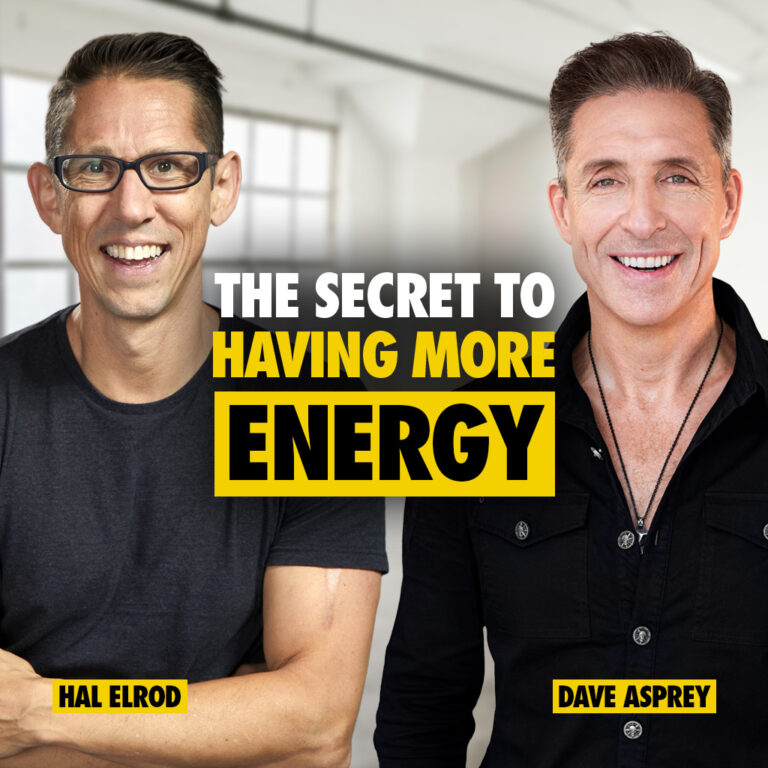
Today, I’m joined by my good friend Dave Asprey, the man widely known as the father of biohacking. In his twenties, Dave weighed over 300 pounds and struggled with chronic fatigue, brain fog, and numerous health problems. After spending more than $2.5 million experimenting with ways to optimize his health, he transformed his body and mind, lost 100 pounds, and helped pioneer what has become a global biohacking movement. He’s also a NYT bestselling author, entrepreneur, and someone I’ve known and learned from for over a decade.
In our conversation, Dave challenges the conventional wisdom around productivity and explains why managing your energy is far more important than managing your time. We explore how your daily habits influence your physical and mental performance, why your body has a greater impact on your thoughts and emotions than you might realize, and how making a few intentional changes can help you feel better, accomplish more, and show up as your best self for the people who matter most.
KEY TAKEAWAYS
- Why managing your energy is more important than managing your time.
- How yesterday’s choices determine today’s energy levels.
- Why you should stop wasting willpower on draining activities.
- How evening light exposure affects your sleep and energy.
- Why meal timing is critical for better sleep.
- How salt and hydration can impact your morning energy.
- The surprising benefits of drinking coffee.
- Why Dave prioritizes protein, minerals, and healthy fats.
- How optimizing your body can improve your mind and emotions.
AYG TWEETABLES
“The things that make old people young make young people powerful.”
– Dave Asprey Tweet
“When you just get your hardware working better, you're going to be a better human being. But if you get your body working better, and your hardware working better, and your software working better, that's when you get the really big benefits.”
– Dave Asprey Tweet
“The biggest mistake that people make is managing their time. And it's because time is of zero value if you don't manage your energy first.”
– Dave Asprey Tweet
“The actions of yesterday are affecting the battery levels of today.”
– Dave Asprey Tweet
“The problem is forcing yourself to wake up early doesn't work unless you have your biology set to go to bed at night.”
– Dave Asprey Tweet
RESOURCES
- DaveAsprey.com
- Dave Asprey on LinkedIn | Facebook | Instagram | YouTube | X/Twitter
- Heavily Meditated: The Fast Path to Remove Your Triggers, Dissolve Stress, and Activate Inner Peace―Unlocking The Secrets of Meditation and Neuroscience for a Healthier, Happier Life by Dave Asprey
- Super Human: The Bulletproof Plan to Age Backward and Maybe Even Live Forever by Dave Asprey
- Beyond Wonderland
- 40 Years of Zen
- Unlimited Life
- Bulletproof
- TrueDark
- Danger Coffee
- SleepwithDave.com
- Jim Kwik
- Bryan Johnson
- Peter Attia
- Biolayne
- Kenetik
- Paul Stamets
- Rick Doblin
- MAPS
- The Miracle Morning App
THIS EPISODE IS BROUGHT TO YOU BY:
CURED Nutrition:
I want to talk about two of my favorite products. I’ve been taking these for four years, and they’re now a sponsor of the podcast, CURED Nutrition, Flow Gummies. I start every day with two of these. I meditate for 30 minutes without any supplements, and then I take Flow Gummies seven days a week, almost every day.
And then I go to bed with Night Oil. 30 minutes before bed I take Night Oil and it helps me fall asleep and stay asleep. So I start my day with Flow Gummies, I end my day with Night Oil.
If you want to implement my routine into your day with CURED Nutrition, go to CUREDnutrition.com/Hal and use the discount code HAL at checkout for 20% off your entire order.
Flow Gummies to start the day Night Oil to fall asleep. You’ll feel better, you’ll act better, you’ll perform better. Check it out.
RATE & REVIEW THE PODCAST
Reviews for the podcast on iTunes are greatly appreciated and will allow us to get the word out about the show and grow as a community. We read every single review and believe each one goes a long way in helping us make the show even better! If you received value from this episode, please take a moment and rate and review the podcast by clicking here.
Copyright © 2026 Miracle Morning, LP and International Literary Properties LLC
[INTRODUCTION]
Hal Elrod: What if the reason that we’re all struggling with focus and productivity isn’t that we need better time management, but that we’re running on empty? In this episode, I’m joined by Dave Asprey, the man who invented the term and the entire industry known as biohacking, based on transforming his own health from weighing over 300 pounds and struggling with fatigue and brain fog to thriving as an entrepreneur. He makes a bold case. Manage your energy first, and your time becomes more valuable. We talk about how the choices you make the night before can shape your energy the next day, why sleep and light matter, and how to stop spending your willpower on things that drain you.
Dave also shares practical ways to think about your daily energy from your morning routine to what you eat and why you eat it. Whether you are an entrepreneur, a parent, or simply trying to feel more present in your life, this conversation may change how you approach every single day. And stay with us to hear Dave’s energy management strategy and the small shift he says can make a big difference.
[INTERVIEW]
Hal Elrod: Dave Asprey.
Dave Asprey: Well, Hal, that was a good clap just now.
Hal Elrod: Hey, the clap, that was production behind the scenes, Dave. They can’t know about that.
Dave Asprey: It was epic. All right.
Hal Elrod: Yeah. I’ll listen to it again.
Male: I’m just from the same team.
Hal Elrod: Okay, cool.
Dave Asprey: I would have actually kept the clap in as the attention-getter, and this would’ve been your top-performing episode, Hal.
Hal Elrod: You’re right. It probably would’ve. All right.
Male: We can edit this part out then.
Hal Elrod: We’ll figure it out. Here we go. Dave Asprey, it is good to be with you, brother.
Dave Asprey: Great to see you, Hal.
Hal Elrod: We are at Jim Kwik’s Limitless Live event, as he’s making clear for our podcast viewers.
Dave Asprey: Yes, these backdrops are awesome.
Hal Elrod: I love it. Hey, so I’ve known you for over a decade. For those that don’t know you, I’m going to start with you were a tech executive in your 20s, crushing it in business, but over 300 pounds. You spent over a million dollars famously to hack your body, and…
Dave Asprey: Two and a half million.
Hal Elrod: Two and a half million. Okay.
Dave Asprey: Just counting.
Hal Elrod: It was a million back then, I think, and then it accumulated.
Dave Asprey: Ten years.
Hal Elrod: But what did you do to transform your obesity, your brain fog, your chronic fatigue, and the other health problems that you had that led you to be known as the godfather of biohacking?
Dave Asprey: Well, I did all the stuff you were supposed to. I went to the doctor. I took antibiotics. I went to the gym 90 minutes a day, six days a week, went on a vegan or vegetarian or low-fat diet, all the stuff that didn’t work and made me more tired. And I just thought maybe it’s a moral failing. Maybe I’m just not trying hard enough, right? So, I’m at Carl’s Jr. with all my friends in my early 20s, and they’re all eating Double Western Bacon Cheeseburgers, and I’m having the chicken salad with no dressing. Oh, and no chicken, because of calories, and just ravenously hungry. And I was, “I work out more than all of my friends combined, and I eat less than any of them, including the women, who are literally less than a third of my body weight.”
Hal Elrod: Wow.
Dave Asprey: Maybe I’m still eating too much lettuce, or maybe I just have bad advice. And I made this decision: I’m only going to do things that work. And to know if something works, you have to measure it. And this works really well in business. If you just tell yourself, “Wow, if I just buy billboard ads, I’m going to make a billion dollars,” and you spend all your money on billboard ads and you don’t make any money, you go out of business. But most people live their health experience just with the religious belief that something works. They don’t track it, and they don’t change it when it doesn’t work. And the thing that saved me, maybe, was I started hanging out with a longevity nonprofit in Palo Alto, California.
This is the first longevity thing in the Bay Area like that in my mid-20s, and I’ve already made $6 million. I’m about to lose $6 million. And I’m hanging out with people in their 80s who are reversing their age and have more energy than I do. I’m like, “What is happening?” So, I was mentored by the leaders of the longevity field two generations before me, and I ended up running this group for five years. And it gave me such a head start because the things that make old people young make young people powerful. So, I got my brain back. I reversed my autism. I lost 100 pounds. I don’t have prediabetes anymore. In fact, I just measured my brain’s resilience at my neuroscience company with some of the latest tech. I’m in the top 0.0001% of people with brain resilience.
Hal Elrod: What is brain resilience?
Dave Asprey: This means that your brain doesn’t get fatigued. And when you have ADHD, your brain is kind of browning out, so like, “I don’t have enough energy,” and you just get all distracted. So, this is in a really annoying test. For 14 minutes, you have to stare at a screen, and every second it flashes no or go, and you just press a button every time it says go. So, it’s super boring. It’s the classic way to measure ADHD or any of those things. And my response time didn’t change at all for 14 minutes. And for almost everybody, what happens over time, for 14 minutes, it’s so boring, so you start thinking about cats or whatever.
And then all of a sudden, your variance on the response time, it didn’t vary at all. Because I’ve learned all these things. I’ve learned how to rewire my brain, my nervous system, how I walk, how I move, how I see, how I hear, and how my mitochondria work. I’ve also had gene therapy. I’ve reprogrammed my stem cells. And, well, it’s kind of incredible what you can do when you just learn how systems biology works. And because I’m a computer hacker, I was able to do it.
Hal Elrod: Apply it to biology.
Dave Asprey: Yeah.
Hal Elrod: So, someone should listen to you if they want to lose weight, improve their brain, optimize their health, right? These are the areas that you have a proven expertise in, not a studied expertise. I mean, there’s a big difference, right? We’re taught, we’re conditioned as a society to trust the experts. Those that have gone to school, read textbooks, learned from other people, and have a bunch of theories around what works. Not that have actually lost 100 pounds themselves, not that are actually in the top 0.001 per whatever it is, percentile. So, would you say that that’s where your expertise lies? It’s a proven expertise as someone that’s actually gone through practice, adapted, applied these protocols, biohacking to yourself, and then helped millions of other people do it. Is that a fair assessment?
Dave Asprey: Well, I definitely have written nine books, New York Times bestselling science books and all that. And I’ve interviewed 1,400 people on my podcast, including Nobel Laureates, about these sort of things. And I actually have more than 100 people in the medical concierge VIP longevity life extension program that I run. People fly their jets in to work with me and a physician, and I’m an unlicensed biohacker. And there’s a very specific reason for that. You can’t take away my license for telling you the truth. And when I say this, when I’m lecturing to thousands of doctors, some of them get really angry. But only a few. The rest of them, they applaud. Because they are muzzled right now.
Most doctors actually want to be healers. The rest of them, their parents shamed them into being doctors. And they are healers, but they’re not allowed to do it because of insurance companies, because of licensing bodies, because of what big pharma is doing to healers. So, when I stand up and I say things like, “Cholesterol isn’t bad for you. Here’s all the evidence,” you think that if I had a medical license that I’d still be practicing? No, the board would just come after me. So, there’s…
Hal Elrod: Because you can’t sell cholesterol medication if cholesterol is not bad for you.
Dave Asprey: Exactly. And I’m happy to talk with people, because I believed all the Western stuff, and I run a large meditation practice. You want consciousness, come to me as well.
Hal Elrod: 40 Years of Zen?
Dave Asprey: Yeah. So, I’ve worked with leaders in multiple fields, and the deal is I am the example: this body, this mind, and I share my numbers. And biohacking is on track to be a $200 billion industry. And my name is in Webster’s Dictionary under biohacking. But I didn’t trademark the word because I want it to be a societal movement, and it is. So, by the way, isn’t that mind-boggling? A $200 billion industry that started with a conference at a bar in San Francisco with 100 attendees in 2013?
Hal Elrod: That was your first biohacking conference?
Dave Asprey: Yeah, it was. And so, it’s kind of nuts. I also want to say, I started biohacking because I couldn’t get young people to come to a longevity group. And I know that anyone who starts saying, “Well, wow, you mean I can control my state? Wait, hold on,” they’re going to want to live longer, and they’re going to want to be better human beings. They’ll improve their consciousness. And if you practice longevity without consciousness, you’ll just live a long time unhappy.
Hal Elrod: Actually, I want to ask you. I love that you just said that. They want to be better human beings, improve their consciousness. What is your mission? Actually, I really want for people like, everything we just talked about so far just kind of establishes that your background, your credibility, what you’ve done, all of that. What is your mission? What is the heart of what you do?
Dave Asprey: I’m working on upgrading humanity. And that’s it.
Hal Elrod: That’s it. All right. Upgrading humanity. And I guess in what ways?
Dave Asprey: Well, that one’s a little bit more complex. So, like if you’re going to upgrade your car, in what ways? Well, there are a lot of things you could do. So, what I understand is that the body is an antenna for reality. So, when your body works better, you can do a better job of actually perceiving the world that you live in. And if you think about this, if you’re driving home from work today and someone cuts you off in traffic, the reality of it is that a car moved in front of you. And that is all that is real. The story in your head, the emotions in your body, all of that is not real. But you’re perceiving it, right? But it isn’t reality-based. So, the better your body works…
Hal Elrod: Yeah. And your mind.
Dave Asprey: And your mind. Well, it turns out the better your body works, the mind is a part of the body. And the body has its own mind. So, when you just get your hardware working better, okay, you’re going to be a better human being. But if you get your body working better, and your hardware working better, and your software working better, that’s when you get the really big benefits. Which is why for the past 25 years, I’ve hooked computers up to my brain to tune it, and I’ve been doing this for CEOs, about almost 1,500 of them now at 40 Years of Zen over the last 10 years. You know, five days going in saying, “What’s going on up here?” so that you can turn off the notification alerts that are pissing you off every day for no good reason.
So, having done this kind of thing to myself for a lot of years, I’ve gotten to this point where my body, I exercise less than I ever have before. I’m about 7% body fat. My last book became the best-selling philosophy book in the country. I’m sitting on the cover with my shirt off, and I didn’t take diuretics and all that crap that people do.
Hal Elrod: Was that Heavily Meditated?
Dave Asprey: Yeah. And so, it’s like I kind of feel like I’m winning, and I’m the guy who had arthritis at 14. The obesity, the brain fog, the cognitive dysfunction, fibromyalgia, chronic fatigue, all the symptoms of long COVID, which just is chronic fatigue caused by an injection instead of by toxic mold, all this crap, and like, I’m smarter, I’m stronger, I’m faster. Like, all the things that aren’t supposed to happen. And the calendar, it’s weird. It thinks that I’m 50.
Hal Elrod: How old are you, by the way, for context?
Dave Asprey: I’m 53.
Hal Elrod: 53?
Dave Asprey: Yeah. And all my lab tests just don’t agree with the calendar anymore. It’s like there’s this weird divergence.
Hal Elrod: Your biological age?
Dave Asprey: Yeah. Now, here’s the thing, and so I definitely have inspired Bryan Johnson. He’s been on my stage a couple of times, relatively new to the longevity world. There are literally 50 ways that you can use to measure someone’s age, and we do this with our clients in Unlimited Life, and people are spending $150,000 a year to work with me directly and my team. We take them to Kenya and other places, and all the personal development, all the longevity stuff, all at the same time. And so, I have a lot of experience with this. And we use a proprietary model. And this is one based more on insurance actuarial data. And when a client comes to us, we look at $50,000 worth of lab work, and we can tell them within 2.6 years when they’re going to die. It’s different than knowing your biological age, which is helpful. But there’s a lot of diversity in biological ages, by the way.
Hal Elrod: Now, how could you tell someone they’re going to die if they could potentially do anything from this moment forward to completely change the trajectory of where they’ve been?
Dave Asprey: Well, that’s what we do. We’re going to change your trajectory.
Hal Elrod: Oh, you’re saying based on where you’re at now?
Dave Asprey: Yeah. Based on where you’re at now, if you hold things steady, you are going to die at about this date.
Hal Elrod: Oh, wow.
Dave Asprey: And we can usually add 10, 20, sometimes 30 years. And sometimes just save people’s lives. Like, “Oh, guess what? You didn’t know you had a bun in the oven.” A tumor. And you know what this is like. Like, the earlier you detect cancer, there is… So, we’ve had a couple of people with cancer, a couple of people with aneurysms, things like that, where they don’t know, but it’s already started. And it’s incredible. But how do you measure someone’s age? I’ll tell you. If you want to do it for social media, pick the number that’s lowest. So, I want to be really clear. The calendar thinks that I am 53 years old, and I am 24 years old biologically. Now, what’s that based on?
That’s something called pulse wave velocity, the age of my arteries. It’s a valid measure of longevity. My walking speed and grip strength puts me somewhere in my 30s, right? You look at my VO2 max. VO2 max is actually not as important as people think it is, but mine’s 50. It’s 98th percentile for 53, and it’s 80th percentile if I was 30. I don’t do any of that zone 2 training that Peter Attia keeps yapping on about. It’s nonsense. In fact, a lot of his work is not based in science.
Hal Elrod: Well, we won’t even mention the Epstein files. Continue.
Dave Asprey: Thank you. That’s a good point. I wonder if they could hyphenate. Epstein-Attia. Anyway, I’m like, how is it that I’m getting better results with less inputs than ever before in my life? And it’s because of the connection between mind and body. And it’s just understanding that almost everything… Actually, I’m going to take this back. Everything you perceive is filtered by your body before your mind gets it. And if people just understood this, it creates a lot of peace in your life because when I clap my hands, you know it takes some amount of time for the sound to get to you, and then you heard it because that’s what you saw. Okay? Well, here’s a corollary to that.
You’re watching the Super Bowl, and it’s in real time because the guy passed the football, and that’s what you saw. Except there’s an eight-second delay in case there’s an unpaid wardrobe malfunction, right? So, all live broadcasts have a delay in case something bad happens so they can censor it. Your body has a one-third of a second delay on reality where it received the sound. It’s in your ears, but it doesn’t get handed off to your auditory processing, right? So, during that time, the body says, “Is this sound worth noting?” And it’s deciding without any activity in the brain whatsoever. And it runs through this little algorithm that your body’s constantly scanning the world on.
And how this algorithm is something you use. When I walked in the door, and you looked at me, before you could think, this is what your body did. It looked at me up and down. These are all F words, and there’s five of them. And it said…
Hal Elrod: This podcast is censored, so make sure the F words are in alignment with our… Okay, go ahead.
Dave Asprey: I understand.
Hal Elrod: Never mind.
Dave Asprey: So, the body looked at me and said, or so your body looked at me and said, “Is he scary?” Fear. Right? And so said, “Nah, I didn’t trigger any of your fear things.” Unless a guy who looked like me or walked like me bullied you in fifth grade, then you would’ve got a little tingle of a fear response that you might not have noticed, but your body would’ve been ready. Okay? It’s keeping you alive, as if your brain isn’t in there. And then it looked at me, and it said, “Can I eat him?” Said, “Nope, not food.” Okay. Then it looked at him and said, “Can I hump his leg?” And it said, “Nope, not appropriate baby-making material,” thank God. Okay? So, fear, food, the other F word, fertility.
Hal Elrod: Okay. There you go. All right.
Dave Asprey: And then after that it said, “Friend.” And then the body mapped out, is this another human being? Not necessarily whether you know me personally, but is this another human being? Is this a species I interact with to make the world a better place? Right? And then, well, the fifth F word in my books is forgiveness, which is how the body, when there’s energy left after all those things, you can go into personal development and letting things go, and all that. So, all the time, based on little things in your past that you probably don’t remember, your body is telling you, it’s manipulating you to make you feel or think certain things about everything in the world around you.
And this is why, if you ever seen a dog during a fireworks show, they’re cowering from all that, if someone blew fireworks off in your bedroom when you were a little kid and you heard them, you’d be doing what the dog did, too, and you’d feel the anxiety in your bones. And it is real, the anxiety, but the threat is not real, but the fear is. And most work on consciousness and the whole path in biohacking is, look, let’s get your body working so you have enough energy, so you can overcome fear, right? And then let’s teach you how to eat. So, you’ve turned fear into peace. You turn food, which is basically hunger. A third of people’s thoughts every day is about food. We turn that into nourishment, so you don’t worry about being hungry because you’re not.
And then the third F word, fertility. Intimacy is a source of intense nourishment and connection when you do it right. And lust and OnlyFans is not, right? So, each of these things has a positive and negative aspect, and if you can just have more energy to overcome all these things and to move them in the right direction, perfection’s not required, well, then there’s a ton of energy left for your community, for your friends, your family, to take care of people you care about. And then even after you’ve done all that stuff, and your community’s taking care of you, you go, “Wow, I still have some energy in the battery.” So, I’m going to work on myself. I’m going to have maybe a miracle morning the next morning.”
But if you don’t have enough energy at the beginning of the day, and you’re watching the news all the time, you’re tired and afraid and easy to program, and that’s how they want it. And you can have incredible amounts of energy and power that you would not imagine, and you can waste none of it on stupid fear that isn’t serving you because you were bullied in seventh grade or because Mommy said something mean to you when you were two. I have billionaires in my neuroscience company going, “Holy crap, I had no idea that I’m a billionaire because I was bullied.” And they’re not happy billionaires until they figure out that that was why they kept doing this, and then they become happy billionaires.
Hal Elrod: I love that you’re talking about this, because I’d actually love for us to go into this direction for our time together, which is energy. I think that so much is placed on time management, right? Time management is such, and it’s been for decades, it’s been one of the hottest topics, and you got to manage your time effectively. If you don’t have the physical, mental, and emotional energy to show up for the time allotted, you can’t be effective, right?
Dave Asprey: The biggest mistake that people make is managing their time. And it’s because time is of zero value if you don’t manage your energy first. So, if you have an extra hour and you’re exhausted, you’ll just sleep. So, I manage my energy first and my time second.
Hal Elrod: So, let’s talk about how to do that.
Dave Asprey: And that means I go through every day and I go, “What are the things that suck energy, that don’t provide a lot of value?” And I don’t do them. I make someone else do them. because it turns out things that I hate, someone else loves. So, I find someone who likes to do the things that I don’t like to do. Or at least is willing to do them. Like, this is going to sound really trivial and stupid. It’s probably some childhood trauma I haven’t resolved at 40 years of then. I hate taking out the trash. And no force on earth can make me do it. So, I pay someone to take out my trash. You could say, “Dave, you’re an entitled A-hole.” And okay, yeah, I’m an entitled A-hole. That’s cool.
It doesn’t matter what you say. But here’s the thing. To me, of course, I have taken it out lots of times. I’m sure my parents made me do it more than I wanted to, and I just don’t want to. So, I don’t do it. And there are certain kinds of meetings where I don’t need to be in that meeting, right? And so, what I’ve done is instead of saying, “How do I save minutes all the time?” I say, “How do I stop doing the things that I dislike the most?” Most, especially men, and especially entrepreneurial men like you and me, we can be like, “I’m going to lean into the suffering, and I’m going to grind it all out of me and make myself… I have more willpower than most people.
I have literally, well, I built this industry of $200 billion industry. I’ve sold more than a billion dollars of products through my own companies, and I have eight different businesses right now. I’ve been through a divorce and having investors steal Bulletproof from me, and just all sorts of stuff, and I’m still here, and I’m actually happy. So, I’m just saying, I don’t waste my willpower, right? It’s a finite resource. It comes from mitochondrial energy. And this is a permission slip for anyone, especially if you’re an entrepreneur or, heck, if you’re a mom, there are certain things that cost you more than other people. Don’t do those things. And if you have to do them, recognize that you’re doing them for a good cause, find a mission and a purpose behind them, and do them as little as possible until you can get someone else to do them.
And it’s completely okay to just say, “That’s not in my nature.” And it’s hilarious what happens with my team. I have about 50 people working for me across my companies, and there are people, I look at them, I would fire myself if I had to do their job in less than five minutes. I would absolutely fail. Like my executive assistant, I do not know how her brain does that. I suck at managing time and space. She manages time for me, and I have another assistant who manages space for me, so I don’t really have to think about much other than just being present.
And that’s my personal assistant. And you could say, “Dave, you’re rich.” Dude, I’m not that rich. I didn’t sell Bulletproof. Like, I’m doing okay. I’m not complaining here, right? I’m an entrepreneur with 50 employees, but I’m not a billionaire. And I’m not even a hundred-millionaire. And I do watch my cash flow, right? So, I don’t have a private jet. I don’t do any of that kind of stuff. I have one home. Like, I’m a relatively normal guy. And I allocate my resources this way because it gives me more energy. And the more energy I have, the more presence I have. And the more presence I have, the more of service I can be to my kids, to my community, to just the whole movement.
Like, this is important work, and every ounce of energy that I throw away by being reactive to someone else is wasted. And It’s turned trolls into one of my favorite, favorite things. I’m sure you’ve had some people troll you over the years because you’re a public figure, right?
Hal Elrod: Sure.
Dave Asprey: So, I have come to love them. My favorite one is this science bully I call him, although the science is kind of questionable. His name is Biolayne, and I think he’s really short. He acts like he’s really short. And he’s like, “I have a PhD in exercise physiology, and you can cancel out a Diet Coke with a Snickers bar.” And the guy’s absolutely 1970s science. He’s insulted every one of the longevity doctors who are doing the greatest work in the world. So, it’s like if you want to get insulted by someone, it’s an award if Biolayne does this to you. So, last time he came after me, it was the juvenile… It’s literally these are adult men who were bullied and never got over it.
So, he’s literally like, “Dave Asprey and his piss-stained glasses.” And I’m like, “Really? I wonder if your PhDs in seventh grade.” But anyway, I just replayed it on my Instagram, and I said, “Okay, man, here’s what the science is.” And by the way, you guys can use his Instagram account name as a discount code on the TrueDark glasses. These glasses have a specific filter that makes your brain work better. And to this day, you can use code biolayne on TrueDark.com, right? And it’s a troll. And the first time I did that, I sold an extra $10,000. And I am donating the profits from that to a nonprofit for victims of childhood bullying. I’ve got three nonprofits narrowed down. I just have to pick the right one, and I’ll donate it in his name.
Hal Elrod: I love that.
Dave Asprey: So, I love the trolls. So, if you want to troll me, guys, like you can come in, and here’s what I’m going to do. We’re dealing with fifth and sixth-grade stuff. I’m mostly going to make fun of your mom. Like I literally will be like, “That’s not what your mom said,” right? And everybody laughs. So, these people are so afraid of critics. The critics are playing scripts. Those F words we talked about? They’re just kids who never grew up, so let’s just act like kids. And usually, they get really offended. I go, “Hold on, we’re playing fifth grade here. Like I’m rubber, you’re glue. Everything you say bounces me. It sticks to you. Like it’s your turn now. You give me one,” because we’re acting like children, right? Because you came at me like a child, so I’m going to come at you like a child.
And that one troll I was just talking about, what did he do? He challenged me to a schoolyard fight. Yeah. It’s called a debate, right? I don’t do debates. I am not so locked in on everything that I know. I will have an intelligent discussion with curiosity from both people, and anyone who listens will learn, and you and I will probably disagree about some things. And the disagreement is where the interesting thing is, but if I insult you because you disagree with me, it’s because I’m a small-minded douchebag, and I should probably do better.
Hal Elrod: Fair. Okay. Let’s go into the energy management. You talked about it from a perspective of protecting your time, right? So, things that you don’t do well that drain your energy.
Dave Asprey: It’s protecting my energy, not my time.
Hal Elrod: Oh, sorry, protecting your energy.
Dave Asprey: There you go. I do protect my time as well. But that’s because if you spend time doing things that give you energy instead of things that take energy, then you have more time. At least it feels like it.
Hal Elrod: So, let’s talk about for the average person that maybe isn’t running a company. Maybe they’re not an entrepreneur. They are maybe a, whatever they are, right? But they’re not running a company, and maybe they don’t have anybody working for them. What are some ways to optimize energy from when you wake up until when you go to bed? Like, that’s really what I want to deliver to people is like Dave Asprey’s energy management strategy, how to optimize your energy from when you wake up until you go to bed.
Dave Asprey: Now, the first thing to understand is that you do not make the same amount of energy every day. And people oftentimes don’t think of it as number of electrons, but your body takes 30 pounds of air and some kind of fuel, and it combines them, and it makes electricity. Now, you’ve seen one of those diesels with a big cloud of smoke behind it, right? That’s poor combustion. And in your body, if you’re not making energy efficiently, you’re making exhaust. And that’s inflammation. So, making your cells do a better job of turning air and food into electricity gives you more electricity, so you get to control it. Was today a high-power day, where my battery started with a full charge, or did I start with half a charge? And if you plug your phone in at night to charge, which most people do, you know what I’m talking about.
So, if you slept well that night, you will have more energy to start the day. If you ate well at dinner three hours before bed the night before, you’ll have more energy today. If you drank last night, you’ll have less energy today.
Hal Elrod: If you ate too late, you’ll have less energy.
Dave Asprey: Right. So, the actions of yesterday are affecting the battery levels of today.
Hal Elrod: Great.
Dave Asprey: And I do everything possible to make sure that my quality of sleep is really, really good. And I used to answer questions and take half an interview of that, so here’s the entire canonical list of all the things I do. It is the marketing achievement of my life. Ready for this URL? Sleepwithdave.com.
Hal Elrod: Love it.
Dave Asprey: You won’t forget it. But it’s literally all the things. Most of it’s free. The most important thing for sleep quality is the color of the light that you’re exposed to at night. And it’s not just about blocking blue light. There are five different variables in light that control your sleep, and TrueDark.com is my company I’ve run for six years.
Hal Elrod: The glasses you’re wearing right now, right?
Dave Asprey: Glasses I’m wearing right now. These are actually titanium. I designed these.
Hal Elrod: Those are cool.
Dave Asprey: Thank you. And we’ve got ones for sleep. That changed my life. In fact, when we first got to know each other, I was like, “It’s Miracle Morning.” I used to wake up at 5:00 AM. And I’ve always been a go-to-bed-at-2:00 AM guy. My entire life until I was, oh, about 40, early 40s, I learned how to change it. And so, I forced myself to wake up at 5:00 AM. I’d get like very little sleep, so I was just so tired I would go to bed early, and I did it for a whole year based on your influence and others, going the early bird gets the worm. And after a year of doing it, I’m like, “You know what? All this has done is made me tired.” I do not like my life. I am less creative, and I decided that the early bird works for the late bird.
So, call me the anti-Miracle Morning guy. But I do have to say that when I understood circadian biology, and I’ve written a lot about this in my books, that you’re right. The problem is forcing yourself to wake up early doesn’t work unless you have your biology set to go to bed at night. And for me, it was the color and intensity of light, and that’s the number one variable. And then meal timing is number two. So, if anyone is following your work and struggling with being a night owl, well, the thing is, don’t eat dinner after 6:00 PM and put on your TrueDark glasses as soon as the sun goes down. And I promise you that if you do that religiously, you will become a morning person.
It’s because your mitochondria, that system that’s processing reality before you do, it’s constantly looking at light. And if there’s a bright light above you in your bathroom when you brush your teeth, it’s going to say, “Oh, it must be the daytime.”
Hal Elrod: It’s daytime. Yeah.
Dave Asprey: Right? And some people are more sensitive to light than others, and we actually know which genes control that, and I just have genes that make me more sensitive to light, so I’m easier to manipulate with sunshine than some people.
Hal Elrod: Okay. All right, so we’re starting the night, the day. So, yeah, I love it. Your energy for the day starts the day before and specifically the evening before. Not eating. And it’s funny, last night was a great example. I rarely eat dessert. But I’m traveling, I’m like, “I’m just going to do…” They have this bread pudding, which it’s like the kid in me. My mom used to make bread pudding, because I’m like, “You guys have any dessert? Like any healthy, maybe like something small?” She’s like, “Oh, well, we have this, this, bread pudding.” And the kid in me was like, “I’m just going to do it.” And I paid for it. I woke up this morning feeling like I was hit by a truck because I had bread pudding last night before bed. All right. So, I love it. So, you’re saying, all right, so we’re starting our energy…
Dave Asprey: Let me guess. Did you have weird dreams last night, too?
Hal Elrod: I don’t dream.
Dave Asprey: Oh, interesting. Let’s fix that.
Hal Elrod: That’s a whole different story. Ever since my brain, my car accident, and brain damage, I haven’t dreamed much in my entire adult life.
Dave Asprey: I bet you are dreaming. You just don’t remember.
Hal Elrod: I’m not remembering it. That’s it, yeah.
Dave Asprey: There are hacks for that. The reason I ask is you woke up feeling like you got hit by a truck in part because of bread pudding. But also, because this hotel has a huge indoor thing with a bunch of plants growing in it, like an indoor forest. This hotel has a lot of toxic mold. The number one thing that will happen to people when they go into a moldy environment is they’ll have weird, vivid, creepy dreams. And I definitely had those every night here and so have other people I talked to.
Hal Elrod: Got it.
Dave Asprey: So, you’re getting mold and bread pudding.
Hal Elrod: All right. So, removing the bread and mold pudding. Mold pudding? No, bread pudding and mold. So, we want to stop eating three hours before bed, which I do. Always have dinner 5:00 to 6:00. I’m in bed by 9:00. And then eliminating the blue light with some TrueDark glasses. And then, all right, now what?
Dave Asprey: When you wake up in the morning, your body is supposed to make cortisol, in fact, right before you wake up. And cortisol is a very important hormone. It is not a bad hormone. If you have low cortisol, your chances of dying are higher than if you have high cortisol. So, you don’t want either one. But it’s supposed to spike in the morning because its job is to get you out of bed with enough blood pressure so that you don’t pass out. And if you wake up in the morning and you’re like, “I am a zombie, I cannot move,” it’s in part because you’re not making enough cortisol at the right time, so you don’t have enough blood in your brain. And I see this over and over with clients.
So, the short hack for that is put some salt in water and drink it. You can do it before you even get out of bed. And crazy, within 10, 15 minutes, you’re fine. They make packets of electrolytes. Anything that contains actual sodium is going to work really, really well.
Hal Elrod: Thanks to you, I literally just use organic sea salt, and I put it every single… I don’t drink water without sea salt in it because of you.
Dave Asprey: Same here. Doesn’t it just change everything?
Hal Elrod: Yeah.
Dave Asprey: Yeah. It’s crazy.
Hal Elrod: Such a simple biohack, if you will, and it’s as easy and inexpensive as it could be.
Dave Asprey: Yeah. Same thing. I travel with a test tube thing full of salts. And I put it in everything. Sometimes I’ll use the electrolyte packets, too. But I just don’t drink water without it because your body is full of saltwater, and if you drink regular water, you just dilute the saltwater, and you need the sodium to carry electricity. You’re weakening your ability to move that power around within your body. And we have this weird thing, especially in the US, that salt is bad for you. But we used to preserve all of our meat before refrigerators. It was salted cod and salted beef, and we would eat 10 grams a day of sodium. And oftentimes more. I aim for between 6 and 8 grams of sodium a day. The US recommended daily allowance is around two-point-something.
Hal Elrod: Oh, really? Oh, wow.
Dave Asprey: It is so low that low-sodium diets increase heart attack risk because they raise something in the blood called renin. So, literally the recommendations from the government are what make people weak and sick. So, having enough salt is critical to waking up and feeling good.
Hal Elrod: Many recommendations from the government make people weak and sick, but that’s a whole another podcast that we’ll do at another time.
Dave Asprey: Yeah. No kidding, right? It’s like it’d be fine if they were just wrong half the time, but they’re consistently wrong in the wrong direction, which tells me someone in the government’s like, “I hate human beings. Let’s have less of them.”
Hal Elrod: We’ll save that for our conspiracy theory episode.
Dave Asprey: Exactly.
Hal Elrod: All right. So, we’re optimizing energy for the day. We stopped eating a few hours before bed, so we’re not digesting food while we sleep.
Dave Asprey: And then we kept our blood pressures high enough.
Hal Elrod: We minimized our blue light. Yeah, TrueDark glasses. Minimized the blue light in the evening. We’re starting the day with hydration and sodium. And what next?
Dave Asprey: Well, you might not like this one, but you need that cortisol bump in the morning anyway. And it turns out that coffee has a very small increase in it. And this is something else that no one talks about. We’ve all heard of alkaline water. Alkaline water is stupid. The reason is that if you really wanted alkaline, you could have baking soda, which is way more alkaline than the alkaline water. So, it’s provably nonsense. And your body is actually a battery. You have acid and alkaline compartments in the body, and if you didn’t, you would die. There’s also a daily acid/alkaline called a circadian curve. In the morning, you need acid. In the afternoon, you need alkaline. Acid is power. Alkaline is endurance.
This is why even if you’re, say, running a marathon, you want to be acidic at the beginning, and then you take baking soda and all for endurance. You actually add that halfway through, and you have a lot less muscle pain. And some of the athletes I work with do strategies like that. So, how would you have acid in the morning and alkaline later? You could put lemon juice in your water. Because lemon juice is actually acid. It’s citric acid, but when you metabolize it, it becomes alkaline. And you metabolize it later in the day. So, adding lemon juice to your salt water is a really good idea, because now you’ve supported your blood pressure with the sodium, which means it took less cortisol to get blood into your brain, and now you’ve got the acid that your body needs for the wake-up.
And you’ll have the alkaline later that you need. No alkaline water required. And then you want to double down with this weird thing that has powered most of civilization, which is called coffee. So, I highly recommend Danger Coffee. And it’s danger because who knows what you might do kind of danger. Like, I’m going to do something big today.
Hal Elrod: The good kind of danger?
Dave Asprey: Yeah. Yeah. And that way anytime someone says, “You’re going to do this for your own safety,” I can be like, “Hmm, thank you. I choose danger.” But coffee is just an…
Hal Elrod: And what are the benefits of coffee?
Dave Asprey: It’s an unparalleled longevity superfood. And if you were to go into a search engine and say, “Tell me medical conditions or diseases that are associated with coffee, things that get better,” like, google cancer, coffee, liver, coffee, Alzheimer’s, coffee, cognitive function, coffee, there’s a huge… Even diabetes, coffee. And just look at the research. It turns out that coffee has a collection of compounds in it, not just caffeine, that are pro-metabolic. And the thing that’s most important in coffee maybe is the polyphenols. Polyphenols are colored compounds from plants like blueberries and herbs, and they say eat the rainbow. For the average American, coffee is the number one source of polyphenols in their diet.
And if you don’t have polyphenols, you do not do well. So, these colored compounds tell the bacteria in your body and your gut what to do, and this stuff in your skin that makes your skin dark, melanin, is cross-linked polyphenols, and coffee is full of melanoids. You need them for your body to process light adequately. So, coffee, tea, chocolate, these are sources of it, raspberries. There’s just one problem. Tea, chocolate, and raspberries are full of plant toxins. You can have a couple of them, but if you try to do what I used to do when I was a vegan, eat two boxes of raspberries every day and have a bunch of dark chocolate, and had pain throughout my body and weird stuff in my skin. I had way too much oxalate, and oxalate is a plant toxin. I wrote about it in my big nutrition book in the first chapter.
Hal Elrod: Plants use it to protect themselves from bugs, right?
Dave Asprey: Yeah. It turns out 87% of people, when they die, when they do autopsies, they find crystals of oxalic acid in the thyroid glands. It’s one of the things driving thyroid problems. If there are women listening to this and you have problems with interstitial cystitis or chronic UTIs, it’s the oxalates in your food. It forms razor-sharp microscopic calcium crystals, calcium oxalate, in your urine. It causes 70% of kidney stones. They’re from eating plants. And so, not all plants are good for you. You can eat a lot of plants and not die of starvation, but it doesn’t mean you want to eat all the almonds. If you look back in time, Christmas cookies would have slivered almonds on them, right? And what is a slivered almond? They would steam or boil it, get rid of the skin that has the toxins, and then they would put a little bit of it in for flavoring. Perfect use.
I used to eat half a jar of almond butter a day when I was a raw vegan, and God, I had pain in all of my joints because I had razor-sharp crystals in all my joints. So, I see a lot of these people on plant-based diets doing things like even excessive sweet potatoes, which are actually quite high in this, or spinach and kale and rhubarb, and there’s a whole list of things any AI can tell you. Cutting down on oxalate is magically important for this. So, in the morning, if you’re going to get some polyphenols, coffee has essentially zero oxalate.
Hal Elrod: So, let me ask you about the coffee. Bulletproof Coffee was your initial kind of claim to fame that went global worldwide. That was buttered coffee. How important do you feel that still putting in butter or some source of fat, I use, what is it called?
Dave Asprey: MCT oil?
Hal Elrod: Yes, MCT oil, which is also part of Bulletproof Coffee, right? It’s the blend. How important is that to blend in your coffee in the morning?
Dave Asprey: With the new Danger Coffee, it contains trace and ultra-trace minerals. And if you drink just black Danger Coffee, I find that I usually, unless it’s a really big day, I don’t need the butter and the MCT. Now, the reason for putting butter and MCT in coffee the way I did when I was running Bulletproof, and this created a global shortage of grass-fed butter, is that most people are so hungry all the time because they’re not eating the right foods and because they don’t have the nutrients they need, that going without breakfast, they can’t function. And if you put a little bit of fat in your coffee, it changes the structure of the water. And I funded research at the University of Washington proving that.
And it also bumps your ketones up. What I do today is a little different. So, I will wake up, I’ll drink my Danger Coffee, but then I take a shot of something called Kenetik. And Kenetik is a ketone that raises your blood ketones, as if you’ve been fasting for three days. It’ll get you to about 1.5. MCT oil gets you to about 0.5. And the benefits of having ketones in your body are very strong. They’re anti-cancer. They help your brain, especially your neurons work very, very well. So, I have more ketosis now by using Kenetik and Danger Coffee than I would any other way. And it turns out coffee itself raises ketones. So, the reason I care about ketones, even though I don’t eat a zero-carb diet at all, is that having some ketones present fuels the neurons and turns off inflammation, and I can also have carbs present in my diet because carbs are anti-stress.
If you’re on a zero-carb diet for long periods of time, you’re going to crash. And I warned people about this in The Bulletproof Diet, and it drove me crazy. This is the first major book about intermittent fasting, and about, we’ll call it, clean keto. Problem is, I said, “Don’t do it for more than a week at a time, and then have pancakes, gluten-free maybe, on Saturday so that you don’t lose the ability to metabolize carbs.” And you do that if you’re losing weight. I don’t eat a low-carb diet at all. I don’t have to anymore. My blood work is great. I’m lean. In fact, I’d like to maybe put on a little bit more fat. And for me to go, “Wow, it’s hard to gain weight.” What?
Hal Elrod: From a 300-pound, formerly 300-pound, yeah.
Dave Asprey: And all my family on both sides, they’re all fat. How does this happen, right? It’s because I just got my metabolism working so well.
Hal Elrod: So, we’ve got to get through the whole day here with energy. So, we’ve started the day before, and now we’re starting with water. We’re hydrating with salt, sodium, because that helps us produce energy, potentially lemon juice in the water if we want to start with that acidity. Run me through just quickly the diet throughout the day, like breakfast, lunch, dinner, any snacks in between, like, to optimize energy, portion size, which foods to eat, etcetera.
Dave Asprey: I never limit my portion size. I eat as much as I want. And this is going to sound really crazy. I’m eating the right stuff, though. And you always eat protein first. And my goal is to get one gram of animal protein per pound of body weight. It doesn’t matter if it’s all in one meal or if it’s spread across two or three meals. It’s hard to do that. So, that means you put the steak or the animal protein on the plate. You eat that first, and then if the veggies are not toxic veggies, deep-fried in God knows what, then you eat some veggies. You don’t need that many. The real value in veggies isn’t from the salad or whatever’s on your plate. It’s the amount of rosemary and oregano that you put on the steak. Because the importance of plants isn’t for calories. Importance of plants is for polyphenols.
Hal Elrod: What about fiber?
Dave Asprey: Fiber can come from a relatively small amount of plants. But for fiber, I take a scoop of prebiotic fiber every day. And I’ve written, actually, I did a whole three-month study taking three different kinds of soluble fiber, and I quadrupled the number and type of gut bacteria. And this is in my big longevity book called Superhuman. So, you can put that in your coffee, in your tea, in a smoothie, and you will get more soluble fiber than the average American does if you take a scoop of any of the prebiotic fibers on the market. I like acacia gum as a base for that. So, my fiber is covered. And anyone listening to this, you have no idea how much fiber or anything else is in whatever kind of plant you’re getting.
There’s insoluble fiber, which is basically sawdust. It’s of limited value and is actually rough on the gut for a lot of people. And then there’s soluble fiber that feeds good gut bacteria. So, you could do this weird thing of I’m going to try to get all the things I need from plants, even though you have no idea whether this plant has it or not. You could have two identical-looking plants, and this one grew in sunshine, and this one had a bug on it, and they do different things. And this soil had glyphosate. So, plants are unreliable to deliver polyphenols. Oh, wild blueberries versus regular blueberries, totally different profile. So, you might as well just make sure that you get your fiber, you get your animal protein, and you get your minerals and your Vitamin DAKE. And I do those in the morning too. That’s important.
You got to have minerals. This is fundamentally important. All the expensive fun nootropic supplements I’m a fan of, none of that stuff matters if you’re deficient in minerals. And then Vitamin DAKE is D-A-K and E, and those are the two supplements that I make. They’re the most baseline foundational. Neither one gets you high, but if you’re low on Vitamin DAKE and you have the wrong ratios, thousands of processes don’t work right. And it costs less than $20 a month to get your levels right on that. And my Minerals 101 product is something that has all the minerals that no one talks about, like manganese in it and chromium and vanadium, and you just get those…
Hal Elrod: All the basics. All the foundational. Well, hey, they’re letting me know. I’d love to keep going, but I know we’ve got to wrap. I don’t want to end, though, without at least letting… I know you’ve got your first-ever Beyond Wonderland event. You are known for Beyond Biohacking. You’ve got a Beyond Wonderland event in like 60 to 90 seconds. What is this event, who’s it for, and where can they find out more about it?
Dave Asprey: Go to wonderlandconference.com. This is a conference that used to be in Miami. And it’s about consciousness and psychedelics. So, we’re bringing in the leaders in the field of psychedelics. We’ve got Paul Stamets, the mushroom man. He’s just an incredible human being.
Hal Elrod: He’s a legend.
Dave Asprey: A legend and a great storyteller. My God, what a great guy. And we’ve got Rick Doblin from MAPS coming. So, the leaders in the field, and scientists and researchers, but also indigenous shamanic leaders. And we’re also including breathwork, neuroscience. You can try out the 40 Years of Zen neurofeedback stuff and breathwork, all the things that alter your state. The deal is, to prepare for what’s coming in the world, you need to be a master of your state.
Hal Elrod: Yes. Amen.
Dave Asprey: There are tools that you can use to choose, because healing is an altered state. Connection is an altered state. High performance, focus, these are all altering your state. Wouldn’t it be cool if you knew all the knobs and buttons to change your state? It doesn’t have to be psychedelics, but they’re one of them. So, is tantric sex. That’s another thing. Like, deep connection with your partner can be as psychedelic as substances. So, we just talk about all the doorways in a scientific way in community. So, it’s going to be fantastic. Austin, October 13th and 14th. And I’ll see you there.
Hal Elrod: Tell me the website again.
Dave Asprey: Wonderlandconference.com.
Hal Elrod: Wonderlandconference.com. Well, Dave Asprey, we got to do this again. Again, you are a wealth of information. I could talk to you all day and still have more to talk about. So, I appreciate you, brother. Thanks for doing the work that you do.
Dave Asprey: Thanks, Hal. It’s great fun.
Hal Elrod: All right. Till next time.
[END]