

If you’ve ever been rejected, felt insecure, underestimated, or unsure whether you’re “good enough” to achieve your dreams, this conversation will show you how a positive mindset and betting on yourself can turn rejection into redirection that leads to an even better opportunity.
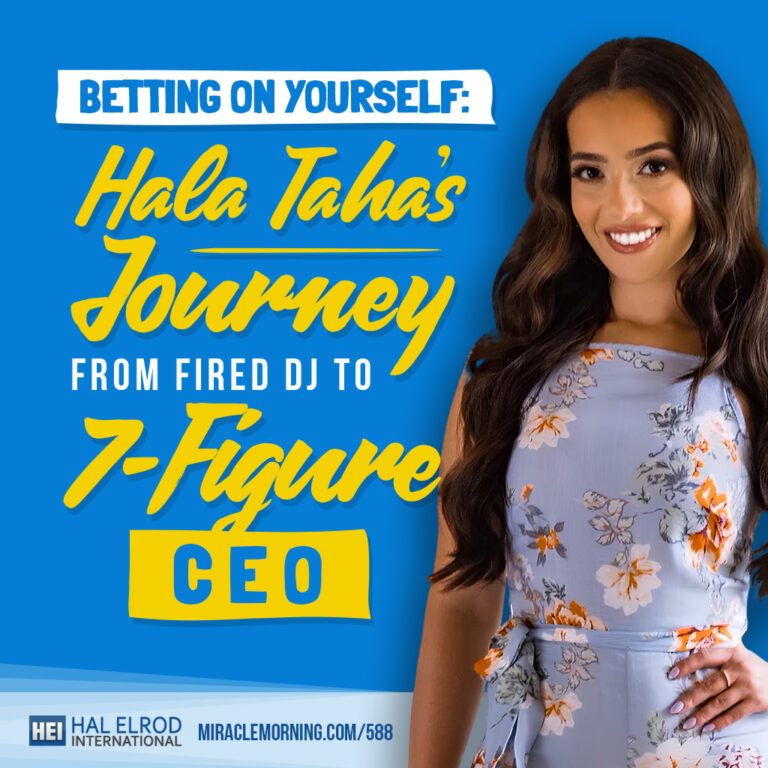
In this powerful and inspirational episode, I’m sitting down with Hala Taha—an entrepreneur who hosts one of the top podcasts in the world (Young and Profiting) and built a media empire (YAP Media)—to uncover the story behind her rise from an unpaid intern to one of the most influential voices in podcasting and media.
Hala’s journey to success certainly wasn’t linear. She’s been fired, rejected, overlooked, and discouraged, but with pure resilience and determination, she used each setback to sharpen her skills, build her brand, and expand her vision.
You’ll hear how she used manifestation and affirmations to break through imposter syndrome and continued stacking skills to build a thriving media empire. Whether you’re an aspiring entrepreneur or simply ready for your next chapter, Hala’s story proves that you don’t have to wait for permission to succeed; you just need self-belief and a positive mindset to get started.
KEY TAKEAWAYS
- Why Hala’s Dad has been a huge inspiration in her life and many others
- A positive mindset can turn rejection into a new opportunity
- How to create your own lane when gatekeepers say “no”
- Making the shift from an imposter syndrome mindset to an empowered one
- The power of skill stacking to fuel long-term success
- Why self-belief and the pursuit of excellence are business superpowers
AYG TWEETABLES
”When you are the owner, nobody can take it away from you.”
Hala Taha Tweet
”I find that when I'm in a positive mindset, everything goes well for my business. Everything is effortless. People can feel that energy.”
Hala Taha Tweet
“I just keep doing everything for everybody else. And it's like if I can't be successful, how am I going to help everybody else?”
Hala Taha Tweet
“How you do anything is how you do everything.” -
Hala Taha Tweet
”If there's no passion, you're not going to learn everything you need to learn. So if you're not passionate, that's probably why you can't become a successful entrepreneur.”
Hala Taha Tweet
RESOURCES
- YAP Media
- YAP Media on Facebook | Instagram | YouTube
- Hala Taha on LinkedIn | X/Twitter
- Young and Profiting Podcast
- HOT 97
- The Sorority of Hip Hop
- The Law of Attraction: The Basics of the Teachings of Abraham by Esther Hicks and Jerry Hicks
- Abraham-Hicks
- Angie Martinez
- Chris Brown
- MTV
- DJ Enuff
- Funkmaster Flex
- SiriusXM
- The Real World
- Podbean
- Hewlett-Packard
- Disney
- Heather Monahan
- VaynerMedia
- Jayson Waller
- Unleashed (formerly True Underdog)
- 1-800-GOT-JUNK?
- Brian Scudamore
- Kara Goldin
- Hint Water
- Tim Ferriss
- Jenna Kutcher
- Castbox
- Player FM
- Podcast Magazine
- SiriusXM
- Darius Mirshahzadeh
- Funnel Hacking Live
- Russell Brunson
- Phil Stringer
- Tom Bilyeu
- Gary Vaynerchuk
- Matthew McConaughey
- Angie Martinez
- Amy Porterfield
- Trent Shelton
- Scott Adams
RATE & REVIEW THE PODCAST
Reviews for the podcast on iTunes are greatly appreciated and will allow us to get the word out about the show and grow as a community. We read every single review and believe each one goes a long way in helping us make the show even better! If you received value from this episode, please take a moment and rate and review the podcast by clicking here.
Copyright © 2025 Miracle Morning, LP and International Literary Properties LLC
Hal Elrod: Hala, it is so good to be with you.
Hala Taha: Hal, so happy to be here.
Hal Elrod: And not just here, but you’re here now in Austin, Texas so we can see each other more often.
Hala Taha: Yes, I know. I’m really excited. I just moved out here from New York, and it has been awesome. It’s been like four months, and I love it out here.
Hal Elrod: Four months in Austin. Yeah.
Hala Taha: I already got my cowboy boots.
Hal Elrod: I love it. You’re acclimating quickly.
Hala Taha: Yeah.
Hal Elrod: Yeah. Very cool. What brought you out here?
Hala Taha: Well, to save on taxes. I’m an entrepreneur and I got killed on taxes last year, so I wanted to not have to pay state tax. So, it was really between Miami and Texas. And we’re building a creator house. We actually just put out an offer, and it got accepted yesterday. So, building a creator house for YAP Media.
Hal Elrod: Congratulations.
Hala Taha: Thank you.
Hal Elrod: That is very exciting. So, you’re an inspiration. Like, I have followed your story, and our friend, Darius, describes you as the most tenacious person that he has ever met. And in words like hard work, tenacity, work ethic, all of those things come up, but also like kindness, love. You exude positive energy. I’d love to start. I want to hear your thoughts on how your dad influenced you. If we could start with your dad. I’ve heard his story the way you’ve shared it. He was a big part of your life, and I’d love to know.
Hala Taha: Yeah. My dad was just the coolest, most generous guy in the world. And he inspired me. I always give credit. Literally, when anything good happens in my life, I’m like, thanks to dad. And that’s because I saw his adversity growing up. And so, basically, he grew up in Palestine. So, he grew up in the West Bank during the war. He had a family of like there was seven kids in the family. Two of his siblings died when he was younger. They had no running water. They had no electricity. They lived on a farm. My dad always told me he grew up on figs and dates. That’s all he ate. And my dad knew that the only way that he could get out of poverty is education. He was the first person in his town to read.
Hal Elrod: Really?
Hala Taha: He was the first person in his town to know how to read. And it’s not that they were dumb people or anything. It was just a different time, and people were farmers and that’s the life that they lived. And so, my dad would walk every day to school. He would read his books on the walk to school because that’s the only sunlight that he had. He would just study, study. He was known as the smartest kid in town. Very, very smart guy, and he ended up getting a scholarship to medical school in Egypt. Then he came to America, and he did his residency at a time when America was trying to recruit doctors.
So, he basically got sponsored to come to America and do his residency in Harlem. And then he became a surgeon, became chief of surgery at two major hospitals in New Jersey, opened up a medical center. And the best part about my dad is that he was so generous. And he spent the rest of his adult life, like once he made it, literally just raising money for other kids in Palestine to get scholarships because he knew that’s how he got out of it. And so, he probably put like 10,000 people through school through all of his fundraising, and then also paid for all of his nieces and nephews for college and MBA. And so, my dad was really successful, but I wasn’t spoiled growing up because he was giving his money to all his nieces and nephews and putting everybody through college.
Hal Elrod: Wow.
Hala Taha: And so, like in my family, my dad is the one that pulled everybody up. And now my family’s doing awesome. It’s like all my cousins are doctors. All my even cousins in Palestine like they’re really successful and like they went to college in London, and this and that, like my dad helped them. He’s just like an amazing man. And he actually died from COVID in 2020, and that was really tough for me. But that moment when he was in the hospital for two months, and I remember I was working in corporate, and I had an amazing job at Disney. I had a cushy job. I had the podcast. I had already started Young and Profiting podcast, and I remember seeing him in the hospital. And I would sing to him every day because I have a great singing voice, and he used to love to hear me sing, and he was like out of it. So, I just thought maybe that would calm him down.
And I remember in those moments when he was in the hospital, I was like, “I need to just think bigger, like my dad did so much and here I am just like, yeah, I’ve got a great corporate job and I’ve got this podcast, but like, is that really like the most that I can do?” Everybody’s asking me to start a company, and I have guests that come on my show. And at the end of the show, they’re like, “Can you do my LinkedIn? Can you do my podcast?” And I’d always just be like, “No.” And then I was like, “You know what? I’m just going to start doing this.” And so, he actually inspired me to start my company. And unfortunately, he never saw me starting a company. He passed away before that could happen, but I always know it’s because of him.
Hal Elrod: Yeah. Wow. Such an inspiration. And following up on that, your dad giving so much to others, what values do you embody from your dad?
Hala Taha: I mean, my dad was the type of person, so like after he passed away, my brother is a doctor, and he said that he had a patient who was from Nigeria that came, because now my brother works at my dad’s old office and he came to the office. He’s like, “I have to tell you something.” And he’s like, “I don’t think your dad ever told you.” He’s like, “When my mom was sick, your dad paid for a flight ticket for me to go see my dying mom in Nigeria.” He was like, “I was just his patient.”
Hal Elrod: Wow.
Hala Taha: And I had friends telling me that I grew up with, that didn’t have a lot of money, my dad would give them $100 before we went to the mall, and I had no idea. He gave me money, and he would secretly give them money. And they’d be like, “Your dad used to give me money before we went to the mall so that I wouldn’t feel left out.” So, those kinds of things, I’m just so generous. Like, even with my company, we can talk about it if you want, but it started with volunteers like I give equity openly. I am giving people raises before they ask for it, especially if they don’t ask it, and they deserve it.
And I feel like because I have such an abundant mindset towards money, the other thing that my dad did is that he made me feel like money was not a problem. So, even though he was so generous and he wouldn’t go be flashy or whatever, if I wanted something, he’d be like, “Yeah.” He would always tell me things are free. If something was $100, he’d be like, “Sure, it’s free.” So, a lot of parents will instill stinginess in their kids, but my dad always made it seem like money was abundant. Money was no problem. And I think it’s because he grew up with no money so he never wanted me to feel that way.
But what happened is that when I grew up, I had no resistance to money. And like this idea of I could make a lot of money, I had no resistance to it. And here I am, making a lot more money than most women do, ever. So, he taught me a lot about generosity, and I feel like I try to carry that generosity through. And I raise a lot of money from Palestine as well, and things like that.
Hal Elrod: I just learned a lesson from your dad about parenting. As you’re saying that, I’m examining like, “How do I talk about money with my kids?” Because sometimes I feel like if it’s like, “Hey, we can afford whatever we want,” right? I try to find this balance between…
Hala Taha: He might have overdid it. He might have overdid it.
Hal Elrod: That’s fair. That’s fair. So, find a balance.
Hala Taha: Yeah. Find a balance, I think.
Hal Elrod: Yeah. Okay. So, I want to back up. You and I have so much in common. We both, at 19 years old, started in radio. You started on HOT 97. I started on Q97.
Hala Taha: Amazing.
Hal Elrod: Which is so wild. And then we both dropped out of college after that year. So, a lot in common. But I know at 19, I believe that was the age you learned about the law of attraction and became obsessed with it. And through that, developed a belief that life is limitless. Talk about that.
Hala Taha: So, before I was 19 years old, similar to you, I was pretty mediocre. Like, I had some talents. I was a really good singer. So, that was like my one talent is that I was such a good singer. I’d always get solos, but I wasn’t extremely good at sports. I was a B student in college. I was like a C-D student because I just didn’t go to class, you know? And I was fairly mediocre and not extremely confident, especially because I grew up during 9/11. When I was in my formative years, like 14, 15, 16, 17, there was a lot of racism going on towards me being Arabic Muslim. And before that time period, the way that my family was treated, we were in a very white town, I was treated like I was Italian.
We were just an ethnic household, but there was no animosity, and we were really accepted, and I was getting a lot of opportunities. But in high school, I was treated a lot differently, and like 9/11 happened right in the beginning of my freshman year in high school. And suddenly, everything I tried out for, I never got. Even though I had the best voice in school, I was never the lead in the plays anymore. My chorus teacher was the only one that I still was getting solos and stuff, but that was the only thing. And I just felt like I was just not getting any opportunities. So, in college, I had lower self-esteem than I think I would’ve because I was just never given any opportunities. And I think a lot of that, honestly, stemmed from racism.
But in college I went to Newark in JIT. It was a super diverse school, and suddenly it was like an even playing field. And I discovered the law of attraction. My brother introduced me to Abraham and Esther Hicks. And they wrote a lot of different books, and I started becoming obsessed with these books. And I would start to write affirmations, and they were woo-woo affirmations like, “I’m the most beautiful girl in the world. I am so confident. I’m so popular. I’m so this, I’m so that.” And I would say these affirmations, and I would record them. And I would listen to them all day while I was driving, while I was doing chores, and suddenly, the whole world started to open up, and I feel like I changed as a person.
And I did incredible things from like 19 to 21, like I lived a life that most people would be like, “You did what?” Like, I worked at this radio station. It was the number one radio station in the world. I became Angie Martinez’s assistant, who was the voice of New York. I was dating Chris Brown when I was 20 years old. I was going out with all these celebrities and just living this life.
Hal Elrod: Yeah. Any 19, 20-year-old’s dream life. Yeah.
Hala Taha: Yeah. I was living this crazy dream life. And I started this blog, and I just got a show on MTV. Like, I just had all these amazing things happen to me because I really believed that I could do anything. And I had programmed my mind to really believe that. Part of it was a little bit naive, but I was naive enough to believe it. And so, I just approached everything, “Well, like I could do that. I could be whatever I want.” And I just saw myself really change in terms of who I was.
Hal Elrod: Well, you’re a living embodiment. You mentioned that you started reciting these affirmations over and over, and I always say that what you affirm repeatedly becomes your inner reality, right? So, you literally believed, “I am the most amazing, beautiful, capable person, and I can do all these things.” And then you hit a roadblock at one point, though, that caused you to question that belief.
Hala Taha: Yeah. So, I worked a lot for free in this industry. As you know, there’s not much money in radio. And radio is all about paying your dues. So, when I worked at HOT 97, I got an internship, like a formal internship from college. And then one day Angie was like, “Hey, I want you to work for me, but you need to come every day.” And I was like, “Well, I’m in school. Well, I guess I’m going to drop out because I’m not going to say no to this opportunity.” And so, I started, basically, I would crash at my brother’s. My brother lived in Brooklyn, so I was like living on his couch and working at HOT 97.
And I would make money at night hosting showcases, selling these underground rap battle tickets, and going out with the DJs and helping them, and just doing whatever I could to make money because I wasn’t actually getting paid during the day at the station. And so, three years into, basically, two whole years of me dropping out of college, all of my siblings are in med school. Everybody followed into my dad’s footsteps. So, here I was working for free at a radio station, college dropout, while everybody’s in residency and rotations. I’m like the black sheep, the failure of my family. The only person who believed in me was literally my dad, who was like, “Follow your dreams.” Everybody else was like, “You’re a failure,” like ignoring me at Thanksgiving, that kind of stuff.
Hal Elrod: Wow.
Hala Taha: And I remember like it just got to me at one point, and I emailed the heads of HOT 97, and I kind of complained like, “Hey, I’ve been working here for three years and I haven’t gotten paid.” There’s an assistant producer role opening up, and I want that job. And then come to find out that they gave it to somebody else who was in another department, and they wanted me to train him. Okay. So, they wanted me to train him with this job.
Hal Elrod: The job that you were asking for.
Hala Taha: Yeah. So, an assistant producer or the producer role opened up on Angie’s show, and I was already doing it, and they wanted me to train him how to do that job. So, I basically texted my, he was my friend, and I was like, “Hey, if you want to learn how to do this job, learn how to do it on your own like I don’t feel like going to work today.” And then they fired me instantly. And they not only fired me. I look back on this and like I have no resentment in my heart, but Angie was like my age when she fired me. And I think about how I treat my employees and my interns, and I’m like, “I would never do that.” I did everything for her. I sacrificed like I dropped out of college.
Hal Elrod: And one little mistake.
Hala Taha: Yeah, like I dropped out of college for her, and she literally never gave me $20, you know? So, she told everybody they can’t even talk to me anymore. So, all the DJs literally called me up, and I was like their little sister, basically, “Sorry, we can’t talk to you anymore. Just lay low.”
Hal Elrod: At that time, that was your identity, right? Your social media was…?
Hala Taha: Hala HOT 97. Everything. I had like let go of all my college friends, and everybody knew I was this girl that worked at the radio station. It was totally my identity. So, I felt like somebody died. I felt like I was just so upset. But similar to you, I have dealt with a lot of adversity, and I knew that the way to get out of it was to focus on something new and to pour my passion and pain into something that was going to help other people. And so, I decided to start this thing called the Sorority of Hip Hop. And I decided I was going to recruit girls who worked in the industry who weren’t getting opportunities. I went on Craigslist and Twitter, and I was like, “Hey, if you guys want to learn how to blog, submit your resume. I’ll teach you how to do it.”
I was blogging on the side for DJ Enuff and Funkmaster Flex, so I knew how to blog, and I got fired on a Thursday. By Sunday, I figured out how to create a WordPress website and built a website. And in two weeks later, I recruited 14 girls. I went back to college. And within three months, we were one of the most popular hip-hop and entertainment sites in the world. I basically had Twitter, kept going viral on Twitter. Got all these musicians to basically retweet our posts and almost got a show on MTV. So, it was like a whirlwind of me kind of just taking the control back. And the same DJs who didn’t hire me started to hire me for their parties. And I would get shouted out on HOT 97 and was more in with everybody as a peer than I was when I actually worked at the radio station.
Even Angie made up with me and tried to get me a job on Sirius and tried to get me on Love and Hip Hop and all this stuff. So, long story short, this is a very long-winded story, but you asked me like, what was rock bottom, right? Rock bottom was three years into Sorority of Hip Hop. MTV reached out to us for a reality TV show. Now, when I first started the blog, they reached out, and they did like a very short pilot. Like, they just filmed us for a couple of days. Nothing happened, but I was like, “Who cares? Like we just started. And we’re getting a reality TV show pilot,” but this time they’re like, “We’re serious.” Basically, we had to do all this paperwork. They filmed us all summer. They got us a studio on Broadway. It was like Real World.
And they filmed us everywhere. And I was so excited and I was like, “Finally, I made it.” I’m going to be making all this money once this show comes out. You got paid per episode. And I was like, “I made it.” I worked for free basically for six years doing all these odd jobs, whatever I could to survive. Now, my family’s going to be proud of me. Everything’s going to work out. And then two weeks before they were supposed to air the show, my producer calls me up. She’s like, “Hala, I’m so sorry. We’re moving in another direction.”
Hal Elrod: Wow.
Hala Taha: And that was for me like the last straw. And that’s when I really lost my connection to manifestation, law of attraction. I was like, “I need to just grow up.” I was like, “Everybody’s like a doctor in my family, and I’m just like a loser.” I moved to my parents’ house. And my dad was nice enough to pay for my MBA, so again, saved me again.
Hal Elrod: So, you decided to go get your MBA at that time?
Hala Taha: I decided I was… Oh, I shut down my blog. Sorry. It was a big part.
Hal Elrod: And so, then this is like a total reinvention. You’re like, “I’m going into corporate.”
Hala Taha: Yeah. It was so shocking to everybody who was… Because my blog was big. We were pretty famous in the tri-state area, and literally, I just shut it down.
Hal Elrod: Why’d you shut it down?
Hala Taha: Because I was like, “I can’t do this anymore.” If I can’t take care of myself, how am I going to take care of 50? There was 50 girls in the organization, 50 to 150 girls at any given time. And I was just like, I just keep doing everything for everybody else. And it’s like if I can’t be successful myself, how am I going to help everybody else? I’ve got to figure it out on my own. And I was like, “You know what, this is not good enough for me. This isn’t working.” And sometimes the best thing you could do is actually quit. And I just knew I don’t want to be in this industry anymore. I don’t feel appreciated in this industry. I feel like I learned a lot.
And now I am making so much money on all the skills that I learned in that time in my life, but I was like, “I don’t want to be a part of this industry anymore, and I want more control over my life.” And so, I decided I was going to go get my MBA. I basically had to beg to get into school, and I had to basically promise that I would get a 4.0 because I had a 2.3 GPA in college. But I did, I got a 4.0. I graduated number one in my class. I got an internship at Hewlett-Packard. That turned into a job. And then my last year at Hewlett-Packard, I basically started my podcast. So, I’ll pause there.
Hal Elrod: Yeah. The Young and Profitable Podcast.
Hala Taha: Young and Profiting, yeah.
Hal Elrod: Profiting. And that was last year at Hewlett-Packard.
Hala Taha: Yeah. So, it was four years into my corporate career.
Hal Elrod: So, four years at Hewlett-Packard. And then I know after that, you shifted into another corporate role at Disney Streaming.
Hala Taha: Yeah.
Hal Elrod: Right. Let’s talk about that.
Hala Taha: Yeah. So, basically, Hewlett-Packard was awesome. I was an entrepreneur at the company, and basically, I approached everything so differently. And I thought that I was going to enter corporate, and I was going to be like this big failure because all my friends had already been in corporate for many years. I think I was 28 years old in my first corporate job.
Hal Elrod: Okay. So, when you started at Hewlett-Packard at 28. Okay.
Hala Taha: Yeah, and my resume looked crazy. It was like intern at HOT 97, blogger at the Sorority of Hip Hop, but they took a chance on me, and then I crushed it. I was so much more tech-savvy than everybody else. I could graphic design. I could video edit. I was a good salesperson. I just had all these skills, and I ended up…
Hal Elrod: All these skills you had developed by doing your own entrepreneurial stuff, where you had to do everything on your own.
Hala Taha: Yeah. And by the end of it or throughout it, I would say I became like the Chief of Staff for the C-Suite. I had a really big position at Hewlett-Packard and was super respected, and was like leading people who were like double my age. And so, it was really cool, and I loved working at Hewlett-Packard. I had such a great experience. And I was actually the face of the young employees. I was president of the Young Employee Network. And I was like running all the different local chapters for New York, New Jersey. And then I was on the global board. And then I was supposed to be, in my opinion, the global young employee president. I didn’t get that. And that’s actually, it was something where the HR director put somebody in the role who had never done anything with the organization.
And here I was like essentially working a part-time job for free within Hewlett-Packard to help the company culture. That’s exactly what that was. And then they literally gave it to a man who wasn’t even involved. And it was like that same feeling at HOT 97 when that guy got the job that didn’t deserve it. I was like, “Why does this keep happening?” I was like, “I can’t keep having people control my destiny.” And that was when I was like, “Okay, I’m going to start Young and Profiting podcast. Instead of leading 7,000 young employees at Hewlett-Packard, maybe I’ll lead 7 million online.” And that’s when I started my LinkedIn journey and started the podcast.
And at the same time, I was ready to make a move because I felt like Hewlett-Packard had kind of disrespected me for basically working a free part-time job and then not giving me the role that I did deserve. And so, I moved to Disney Streaming Services, but I did not love that job.
Hal Elrod: Oh, how long were you there?
Hala Taha: I was there for two years. It was fine. It was just like a boys’ club. So, Hewlett-Packard, looking back, had a really great company culture and really respected women. When I went to Disney, I was treated like I was an intern again. And so, I was paid better, but that wasn’t enough for me. I wanted the respect, and I felt like I didn’t have the respect. And that’s why I kind of decided I was going to start my side hustle.
Hal Elrod: And so, was that 2018 that you started the Young and Profiting podcast?
Hala Taha: Yes.
Hal Elrod: Okay. Talk about that podcast. So, why did you start a podcast, by the way, of all the things you could have done? That was seven years ago, so podcasts were, you know.
Hala Taha: Well, it’s because I had so much radio background. So, all throughout HOT 97 and the Sorority of Hip Hop, I always had online radio shows. So, while I was working at HOT 97, I had online radio shows with the up-and-coming DJs, while I had the Sorority of Hip Hop, but it was just a different type of show. I would interview musicians and things like this. And online radio was basically the precursor of podcasts. You’d be like, “Go to alistradio.net, listen at 3:00 like DTF radio, listen at whatever time.” And so, I knew how to do everything. And when I saw podcasts actually becoming popular, because when I had been doing these online radio shows, podcasts existed, but they were really hard to do. It was too technical for me. I didn’t know how to do it, and then I saw like, “Oh, there’s these platforms like Podbean now where you just like…”
Hal Elrod: Yeah, plug and play.
Hala Taha: Yeah. You just start a podcast. I was like, “I could do this.” And so, one day I remember it was like a New Year’s resolution, end of 2017 or like beginning of 2018, and I was like, “I’m going to start a podcast,” I told my team at Hewlett-Packard. And because I told everybody in real life, I was like, “Okay, I guess I got to figure this out.” And by April, I launched one.
Hal Elrod: Wow. Okay. Fast forward to 2020. You said that was a pivotal year in your life, and I’ve heard you say it was both like the first half was the hardest year of your life, second half was the best year of your life. So, it was like a real dichotomy. Talk about 2020 for you.
Hala Taha: So, 2020 was probably a tough year for a lot of people. I remember I was with my ex-boyfriend living in Brooklyn, and it was March. Right at the beginning of COVID, I was working at Disney Streaming Services. People were just starting to wear masks. And I think that was like the first week that I was actually working from home. And I remember my sister calling me up, and she’s like, “Hala.” She’s like, “Mom, dad, your aunt and uncle down the street, and your brother have COVID.” And this was like mortifying because at the time, like COVID was…
Hal Elrod: We didn’t know what it was. We thought everybody was dying from it.
Hala Taha: Yeah. And a lot of people were dying from it, right? It was really like a bad strain. She’s like, “Mom, dad, your aunt and uncle down the street, your brother, they all have COVID.” I’m going home, and I didn’t have a car at the time. She’s like, “Can you be ready in 30 minutes? Did you want to come?” And I was like, “I guess I’m coming.” So, she comes. We have full hazmat suits on because she’s a doctor, so we were so scared like we were mortified. So, we put on full hazmat suits. Everybody is so sick. We walk in the house and like you can smell the sickness, like, it was crazy. So, me and my sister, basically went into the basement and we like camped out in the basement, and we would go up in our hazmat suits and try to help everybody and cook. And I was cooking like everybody’s soup. And my sister, she was like the doctor, so she was responsible for the doctor stuff.
And then we were scared to send anybody to the hospital because it was so packed at that time, the hospital. And basically, everybody was saying if you send to the hospital, it’s like a death wish, right? So, even my brother who is so fit, he’s like the ideal man, he was super sick. My dad has diabetes, so we were most worried about him. Eventually, though, me and my sister were like… Like, my dad was getting so sick, we were like, “Okay. Forget these hazmat suits. Forget everything. Look, let’s just try to save dad.” And so, we were just doing everything like spoon feeding him, like doing whatever we could. There are things I don’t even want to talk about like what we had to do.
And my dad ended up going to the hospital. And I remember when he said like, “Oh, if I go to the hospital, you guys aren’t going to see me again.” And he was right. And I remember him being wheeled out, and we had to call the ambulance. And he ended up going to the hospital, and he ended up staying in the hospital for basically two months. And because I got COVID, of course, I got COVID, I didn’t get very sick at all. I got COVID and then suddenly I had like the cooties to everyone. So, my boyfriend that I was with for like seven years, didn’t see him for three months. None of my friends. Didn’t see my friends. Even my dad’s funeral, like barely anyone came to the funeral because everyone was just so scared of getting COVID and like our family got the cooties.
Hal Elrod: Yeah.
Hala Taha: So, I was in isolation essentially for three months. And when I started my podcast, something we didn’t talk about is that I had a volunteer team, so I had 20 people who worked for free for me for two years while I was working full time. So, I was a scarred entrepreneur. I had failed as an entrepreneur, and so, I was really set on working a corporate job. Like, I thought I was just going to be the CMO of Hewlett Packard, the CMO of Disney. That was where I thought I was going to be, and I thought my podcast was just a hobby. Okay? So, I had all these volunteers helping me with my mission of this hobby podcast. And I had trained them all. I would teach somebody how to do audio editing, somebody had to do video editing, somebody to run my socials, to run my website. And I basically trained everybody and essentially, I had a company. So, I interviewed Heather Monahan about, like right before COVID happened, I interviewed her in February and…
Hal Elrod: Who’s Heather Monahan?
Hala Taha: Heather Monahan is like a big podcaster. She’s an author. She’s a huge LinkedIn influencer. And I had become a LinkedIn influencer. So, when I started my podcast, I started posting on LinkedIn and I actually became a big LinkedIn influencer before my podcast got big. Okay? So, Heather came on my show, I interviewed her. I remember in a phone booth at Disney and at the end of the show, she was like, “Hala, your videos are so good on LinkedIn. Can you do this for me? Like, can you help me do my videos?” I was like, I wanted her to be my mentor because she was like exactly who I wanted to be when I grew up. She’s like 10 years older than me. And I was like, “I’ll teach you how to do it, but I can’t do it for you.” But like, and I started taking these Saturday calls with her and we became really close and she was really, really helpful for me when my dad was sick and she became like my mentor, my therapist, and I would teach her how to make videos and try to teach her that.
Hal Elrod: And you were right around 30 at this time, or a little…
Hala Taha: I was 30, yeah. I was 30. So, teach her how to make these videos. And then I remember I showed her my Slack. We had a Slack channel that’s now like basically my company, I would show her all my folders, all our processes. She’s like, “Hala, I just had a call with VaynerMedia.” She’s like, “I could give them my money. I could give you my money.” She’s like, “I want to be your first client.”
Hal Elrod: Wow.
Hala Taha: She’s like, “You hate your job at Disney,” because I would tell her everything. She’s like, “You’re not appreciated at Disney. You’ve got nothing to lose. You have 20 people who work for you already. Come on, I’ll be your first client.”
Hal Elrod: Wow.
Hala Taha: And so, I was like, “Okay, fine.” And I didn’t quit my job. I did it as like a side hustle. So, my second client was a billionaire, and he actually invited me on his podcast. His name was Jayson Waller, and he had this True Underdog podcast. And at the end of the show, he was like, “Hey, could you do your LinkedIn? Could you do a podcast for me?” And I was like, “Yeah, I can.” And so, I pitched him and he was a $30,000 a month client.
Hal Elrod: Wow.
Hala Taha: So, Heather paid me like $1,000 a month. And my second client was $30,000 a month.
Hal Elrod: It’s a nice increase.
Hala Taha: So, then everything changes. Then I started hiring people in the Philippines and putting people on payroll. And I was still scared of quitting my job, so it took me six months to quit my job. I got two other huge clients, the CEO of 1-800-GOT-JUNK, Brian Scudamore. You probably know him.
Hal Elrod: Oh, wow, yeah.
Hala Taha: Kara Goldin of Hint Water became my client. I started running all her stuff, all Hint Water stuff. And we were making well over six figures a month as an agency. I actually got a couple US hires, and then I quit my full-time job.
Hal Elrod: Disney job, yeah.
Hala Taha: Yeah. So, it just kind of skyrocketed and things happened.
Hal Elrod: And that was the second half of 2020 when that all started to happen?
Hala Taha: Yeah. And then because I started making real money, I figured out how to grow my podcast. So, because I started making real money and I started just kind of thinking about like, what is success to me? Success doesn’t mean that I have to be the biggest podcaster on Apple. For a long time, I was like, in order to be successful, I need to be as big as Tim Ferriss on Apple, as big as Jenna Kutcher on Apple. And I was just treading water, treading water, trying to compete with people that I could not compete with.
And I decided to start thinking outside of the box. So, it’s like, what other apps are out there? There’s Castbox, there’s Player FM, there’s Podbean. I have this LinkedIn profile that, and I’m one of the biggest podcasters on LinkedIn now, how can I trade my audience with these other platforms? So, I started an initiative that summer, where I reached out to every single platform, every single player. There’s like 70 of them in the world, right, 70 different players outside of Apple. And I was like, “Hey, I’ve got this LinkedIn profile, I’ll post about you if you put me on your blog, if you blast me out in your email blast, if you feature me in your apps.” And so, Castbox, for example, sponsored me. And now, my partnership with Castbox is so huge. I have like 6 million subscribers just on Castbox.
Hal Elrod: Wow.
Hala Taha: And I’m like one of their biggest podcasters. I get 50% of my downloads this day are from Castbox.
Hal Elrod: I haven’t heard of that.
Hala Taha: Yeah. So, it’s the biggest Android app, right?
Hal Elrod: Wow. Okay.
Hala Taha: And so, like, I’ve got a ton of subscribers on Player FM and Podbean and all these different apps. And I just grew as a successful podcaster way differently than everybody else. And then I realized that you could pay for these types of media buys. So, I started making money and instead of just doing these trades, I was like, “Hey, Castbox, let me get a 10k media buy. Let me get this.” And I started investing in myself and then my podcast grew. And now, I’m bigger on Apple. But it took a long time, like I succeeded in another way first. So, in January of 2021, I got on the cover of Podcast Magazine and that’s when I decided to quit my job. I was like, “Okay, I’m on the cover of Podcast Magazine. I’m making over six figures in my agency. It’s time to quit my job.”
Hal Elrod: Yeah. So, that’s when you quit Disney.
Hala Taha: Yeah. And so, to your point, worst year of my life, father dying. But by the end of the year, it was the best thing because it’s like I basically created my own freedom, and now, it was like the precursor to the empire that Yap Media is today.
Hal Elrod: Yeah. And you said that your dad was the only one that believed in you and said, “Follow your dreams,” right? It’s like, you manifested or you made happen what he would’ve wanted for you. I can imagine, right?
Hala Taha: Definitely. And like I said, the turning point was when he was in the hospital and I was like, all right, I’m just going to go all in. I’ve been kind of dabbling here and there. But it’s time to just go all in and see if I could make something really happen and be a role model to other ethnic women and people out there.
Hal Elrod: So, anyone listening to this is, if they’re thinking in their head, probably like, wow, Hala is incredible and tenacious, hardworking, all of these words that come up, if you were observing yourself, if you’re analyzing yourself, what are the qualities that have enabled you to persevere through failure and setback and doubt, and just keep going. I mean, creativity comes to mind. Like, you’re constantly trying to think of, how do I take advantage of this opportunity or create an opportunity? So, how would you evaluate your own superpowers and abilities?
Hala Taha: I would say like a lot of it was just like obsession. So, there’s so many podcasters in the world, but nobody knows podcasting more than me. Like, nobody knows how to grow a podcast more than me. No one knows how to monetize podcasts more than me. So, it’s like I wanted to be a podcaster and instead of just focusing on the content, I focused on the marketing, the growth, the tactics, like, how can I maximize all these things? That’s why they call me the podcast princess now, right?
So, it was like an obsession of just knowing every nook and cranny that I needed to know and experimentation and realizing that like there’s no straight path to being a successful podcaster. I took a zigzag path and a very untraditional path to becoming a top podcaster. So, I feel like that’s number one. Number two is whenever somebody tells me no, I try to create my own lane, right? So, if a gatekeeper tells me no, which I had so much of in my life from HOT 97 to, I almost was swaying the mornings co-host on SiriusXM, which is like a huge show, and I didn’t get that. I didn’t get the MTV show. I didn’t get promoted at Disney, I didn’t get the– I always got rejected. I was always like, I never got on the team. I never, like, I was always getting rejected.
And the podcast was the first time that I decided, you know what? Instead of me just wanting to get chosen, I’m going to choose myself and I’m going to be an entrepreneur and create my own lane and just do it myself because I feel like when you are the owner, nobody can take it away from you. And especially, like before, I didn’t really understand what I was building. I was building a personal brand. And your personal brand is a transferrable asset that you take no matter how your career evolves. And I decided to invest in my own personal brand and like, that was just so powerful. So, it was like investing in myself, taking control over things, not waiting for somebody to give me permission or to pick me, and just choosing myself.
Hal Elrod: Incredible. So, since you were 19, you believed in manifestation, the law of attraction, utilized affirmations. How do you apply that now? Having back then, you were using it to create something out of nothing. Now, you’ve created so much. How do those tools still serve you?
Hala Taha: I still manifest all the time. We’ve got this meeting that we do every single Monday with my team. And it’s called G90. Actually, Darius, our mutual friend, is the one that kind of instilled this with us. He’s got a lot of different processes for companies, and one of the things that I added to it was weekly wishes.
Hal Elrod: I love that.
Hala Taha: So, in the beginning of our session, we’re saying affirmations like, “I want Hal Elrod to close this week, so that he can join us at Yap Media and we can monetize his show.” I want this deal to close or I want to make this new hire and want to find the perfect candidate. And we actually make affirmations, and all three of my business partners and I have three wishes every week that we try to manifest, because I find that when I’m in a positive mindset, everything goes well for my business. Everything is effortless. People can feel that energy, even if it’s just made up. Like, even if it’s not true, it’s my energy that changes. So, it’s my energy on the calls because I made these affirmations. And so, I use it in that way to manifest the things that we want in our business. I also use it to prepare myself for really big experiences, whether I’m guesting on a big show or having a big sales call.
Hal Elrod: Speaking on a big stage.
Hala Taha: Speaking on a big stage. Literally, I’ll tell myself I earned this spot. I’m talking to this person because I’ve been working so hard for 20 years and like, just trying to get that imposter syndrome out of my head. And I’ll tell myself, like, “I’m the best salesperson. Nobody else knows more than podcasting than me.” And I try to just build myself up. And again, it’s more about the energy shift and the confidence that it brings me and getting myself confident than me actually believing those things.
Hal Elrod: Yeah. Yeah, it’s not magic, right? It’s not the manifestation. It’s you’re optimizing your mental and emotional state so that you can show up at your best, which then increases the likelihood that you get the outcome that you’re after.
Hala Taha: Yeah. And I know that you always talk about having your affirmations based in reality, based in truth, that’s literally what I’m doing. I’m saying like, Hala, you worked for 20 years. Like, that’s why you’re here. You’ve sold millions of dollars or whatever. So, I try to tell myself, like, remind myself of like, this is why you’re here.
Hal Elrod: Yeah. So, you seem to have, and seem is the wrong word because you seemingly have an unstoppable mindset. And you just mentioned imposter syndrome a minute ago. Do you face imposter syndrome, still? Have you overcome it?
Hala Taha: The only time I face imposter syndrome are like the really, really huge moments. Like, I was telling you, I think in the last podcast that we did, that I spoke at Funnel Hacking Live. And it was in front of 6,000 people. And Russell Brunson, who’s my client, put me on that stage, and I have a lot of speaker friends who really deserve to be on that stage. Like, I have this friend Phil, who actually helped me with my presentation and he speaks all over and it’s like his dream to be on that stage.
Hal Elrod: Phil who?
Hala Taha: Phil Stringer.
Hal Elrod: I don’t know Phil.
Hala Taha: Yeah. He speaks about AI and sales. And I remember I told him, he was like, “What?” And I was like, “Yeah, I know I don’t really deserve it.” I’m like, so it’s like that’s kind of like what I felt. It was like, I don’t deserve to be on the stage. Like, people have been working a lot harder than me to be a speaker. But he chose me to speak about podcasting.
Hal Elrod: And that you’re very qualified.
Hala Taha: And like, he needed a speaker on podcasting and he decided I was the most qualified. And I was like, you know what? It’s true. There’s nobody who knows more than me about podcast growth and monetization. So, like, I did earn my spot. But I just got to make sure that I do a great job and I don’t let anybody down and that I can show that I deserved this spot.
Hal Elrod: Yeah, and I think that what came up for me, as you said that, is the imposter syndrome that we deal with is, it’s when we’re seeing ourselves as who we used to be, right? Often that’s like childhood, like, I was, if we were bullied as a kid or we weren’t accepted or we weren’t good at things or whatever, the imposter syndrome comes from us identifying as the child in us, right? Whereas what you’re doing is reminding myself, well, no, no, no, what’s happened since then in the last 20 years is I’ve actually earned the right to be on this day, but I’ve earned the right to succeed at this level, right? I’m not that kid anymore. I’m who I am now. I think that’s the separation.
Hala Taha: The only other example that I can think of where I felt like an imposter was actually interviewing Tom Bilyeu. And I talked about this on my podcast.
Hal Elrod: I love Tom.
Hala Taha: So, I love Tom. When we had this interview. I just looked up to him so much and he’s such an accomplished podcaster. So, I kept thinking like, man, he’s probably thinking about, like, he would ask this question better. Like, he doesn’t– like a lot of the times when I interview people, I could tell they’re really enjoying the conversation and I didn’t really feel that from him and I was like, oh, I feel like I’m bombing this. So, I got in my head, but I remember mid-interview the affirm– like, I’ve just spin around this rodeo too much. So, in my head, it was like, Hala, you’ve interviewed Gary Vee, you’ve interviewed Matthew McConaughey, like he’s not bigger than your other guests. Like, he might just be having a bad day. Like, snap out of it. You’re the podcast princess. So, it’s like the affirmations came back to give me the confidence to do a good job, at least second half.
Hal Elrod: Yeah. I love it. And again, what you affirm repeatedly becomes your reality. So, when you’re telling yourself, I am capable, I am the podcast princess, right, like, I got this, you create your interstate, you create your reality. What do you most want to teach people about building the life and the career of their dreams or the business of their dreams? Like, you have done it, right? You went from asking people for permission, right? Angie, what’s her name? Angie what?
Hala Taha: Angie Martinez.
Hal Elrod: Angie Martinez, give me a chance, Angie, right? I want to be the next Angie Martinez, right? MTV, give me a reality show, right? You used to ask for permission for what you wanted, and now you’re like, nope. I’m done with asking. I’m going to create what I want in my life. And Yap Media, you have a marketing agency, which you might not even know about, right? Your Yap podcasting network. You have multiple businesses. You have a team that you employ. So, all of that to say, what do you want to teach people about building the life and business or career on their terms?
Hala Taha: I think it boils down to skills.
Hal Elrod: Skills.
Hala Taha: Skills.
Hal Elrod: Okay.
Hala Taha: Everybody that I know that’s really successful is obsessed with being the smartest, most competent expert in their field. Okay? Like, obsession and studying and learning and reps and doing the grunt work and building things up from scratch. And everybody’s going to have a different experience, but for me, everything I’ve mastered on my own is what I then turned into services. Okay? I figured out LinkedIn. We’re the number one LinkedIn marketing agency.
Hal Elrod: Nice.
Hala Taha: We figured out podcast production. I have an amazing podcast. We started offering it to other people. I figured out how to grow podcasts. Then we started growing people’s podcasts. I figured out how to monetize my podcast. Then I started a network where I’ve got 35 other shows, like Russell Brunson and Jenna Kutcher and Amy Porterfield and Trent Shelton, where I grow and I’m the sole person responsible to monetize all their shows, right? And it’s all because I did it for myself first, and until I know that I can do it for myself exceptionally, and I know everything I need to know about that thing, I’m not going to sell it because my reputation is on the line and the way that I get customers is through referrals and by doing an excellent job.
And I just feel like people just don’t have that sense of excellence anymore. And a lot of people just want the quick and easy way to do it, but I feel like to have a great foundation as an entrepreneur, like nowadays, sometimes I wake up and I’m like, I don’t have anything to do. Like, I’ve got a team of 60 people.
Hal Elrod: They got it all.
Hala Taha: Everybody knows what to do. It’s like a well-oiled machine. And my life is changing now as an entrepreneur. It is not the same. But when I was first starting, it’s like I was really, really involved. And now, I’m only involved on the new things and I’m innovating, right? I’m really involved on the network side, on the sales side, and I really just have a smaller focus, but I’m still obsessed with it. So, I think, long story short, like obsession, gaining skills, putting the rep, doing the hard things that scare you and then stacking those skills.
Hal Elrod: Yeah. Talk about that. You talked about, it’s a concept you learned from somebody else.
Hala Taha: Yeah. Scott Adams, he talks about skill stacking.
Hal Elrod: Yeah.
Hala Taha: And basically, he’s this very, very world-famous cartoonist. And he has got a cartoon about corporate life. And so, he was in corporate. He wasn’t like the most successful corporate person. He’s pretty funny. He’s a decent drawer. He put all those things together and he became one of the most famous, like super, super accomplished cartoonists in the world. Same thing with me being a podcaster. I don’t think I’m the best host in the world, but I’m extremely good at marketing. I’m extremely creative. I’m a great writer. I knew how to audio edit. I knew how to delegate. I put all these things together and I have a top 100 podcast, right? But I’m not Tom Bilyeu. You know what I’m saying?
Hal Elrod: Nobody’s Tom Bilyeu.
Hala Taha: Yeah. So, I just feel like all these experiences that you get in your life really add up later. Like even me working at the mall, when I was like throughout high school and college, those types of skills, just selling people in real life, have helped me now sell millions of dollars in sponsorships for my podcasters, right? So, I just feel like every skill matters and working hard is super important, especially in your teens, 20s, 30s, so that when you’re 30, 40 years old, you can try to think of, okay, what can I put together to create an exceptional offer for people based on all the things that I’ve learned and put my hard work towards over the years.
But so many people just stay doing the same thing and not learning anything new and not feeling passionate about their career. And if there’s no passion, you’re not going to learn everything you need to learn. So, if you’re not passionate, that’s probably why you can’t become a successful entrepreneur, in my opinion.
Hal Elrod: Yeah. Well, yeah, one thing you did, I think courage just came up for me, is another word to describe you, right? Courageously leaving one thing, just trying something new, starting a new thing, and you diversified your skill sets, right? Like you said, if it’s building skills, you’re building a wide variety of skills that you can stack. And I relate to that, like I look at why my Cutco sales experience, okay, great, got that under my belt. Started speaking at Cutco conferences. Okay, now I can speak, wrote my first book, right? And then it’s like, yeah, just keep stacking those up. And I love that you went from being radio to podcast because it’s like podcasting, it can be radio.
Hala Taha: Exactly. And it’s also just understanding the opportunities at hand. When somebody asked me, when I first started my podcast, they were like, “Why are you starting this podcast? You’ve got a great job. Like, what is the vision? Where do you see yourself in five years?” And I’d always say, I’m going to have the number one self-improvement podcast network. I never said I’m going to have a social agency and a podcast agency. But that opportunity was so obvious, and I was open and I started realizing everybody’s asking me the same thing. Everybody wants this from me.
Same thing with my LinkedIn masterclass, I’ve made half a million dollars on that pure profit and that was people asking me for a course. So, I also am open to what people want from me. And being open has then allowed me to make money to actually create my dream because I used all that money to bootstrap what eventually became Yap Media network. So, it’s also just understanding your opportunities and taking them.
Hal Elrod: What would you tell someone who is stuck between playing it safe, right, keeping the status quo, going out of fear of the unknown, and then going after what they really want in their lives?
Hala Taha: You don’t have to do it all at once. You just don’t have to do it all at once. If you feel really passionate about starting something on the side, start it on the side, right? We waste so much time. Like, for example, I don’t watch any TV.
Hal Elrod: Wow.
Hala Taha: And that habit started when I started my podcast because I remember having to evaluate, well, I have a full-time job and I’m also in a very serious relationship and I got to cook dinner every night and I got to work out and I got to see my friends and my family and my mom, and where am I going to get this time? And I was like, well, I don’t need to watch an hour of TV every day or two hours of TV every day, that’s a waste of time. So, I stopped watching TV and instead, I use that time to build my company on the side and to build my podcast on the side initially.
So, think about, where are you actually wasting your time and can your time be used somewhere else? And you have to be really intentional and be willing to sacrifice that. I have to be the one, when everyone’s talking about all these TV shows, I’m like, yeah, I don’t know what you’re talking about. I don’t watch TV. Only as like a date with my partner, I’ll watch a movie or something like that, but I will not– I don’t even know how to turn on the TV in my house. So, it’s just a matter of prioritizing your time and things will open up.
Hal Elrod: So that story, I add intentional to the list of adjectives to describe Hala. Yeah, just being intentional going, “Okay, wait, this watching television does not move me closer to my goals and dreams.”
Hala Taha: No.
Hal Elrod: So, I’m going to cut it out. Yeah, I’m similar. I do watch, I only watch, I watch YouTube while I eat my lunch. It’s like my decompression in the middle of the day. But yeah, I’m eating the lunch anyway, right? But in the evening, no TV.
Hala Taha: And it’s all about balance, right? So, it’s like, instead of maybe, the way that I do that is like online shopping, I’m very fashionable, right? So, it’s like, I don’t watch tv, but I online shop. But I don’t do both.
Hal Elrod: Yeah. We all have our vices. Yeah, right, you pick what. Don’t indulge. What’s the big vision for Yap Media in the next one, two, three, four, five years?
Hala Taha: So, like you mentioned, I have two companies. So, I have my social media and podcast agency, and then now I have the Yap Media podcast network, which is really my main focus. We’ve got 35 shows, and my job now is just to recruit as many awesome podcasters like yourself as possible and just do a great job selling and growing their show. So, that’s my main focus. I hope we get 100 podcasters in the network. We’re already competing with all the major networks. We’re like number 17 in the US.
Hal Elrod: Nice.
Hala Taha: So, we’re just going to keep on going. We just relocated to Austin, as you know.
Hal Elrod: Yeah, I’m excited.
Hala Taha: And we’re building a creator house. So, we’re going to have a creator house with studios and it’s just going to be awesome.
Hal Elrod: Amazing. With you at the helm, Hala, I have no doubt. I have no doubt, right?
Hala Taha: Oh, thank you.
Hal Elrod: That’s the beauty of it, is you meet the person and you’re like, oh, this is a person. I see how you’ve gotten to where you are. And I can’t imagine anyone listening or including me to go, well, yeah, there’s a ceiling for her. Like, what’s the ceiling? I can’t imagine what it would be.
Hala Taha: Thank you.
Hal Elrod: All right, let’s wrap up with this question. If you got a billboard, it’s got one message that you want to leave with people, what would it say?
Hala Taha: The first thing that came up is how you do anything is how you do everything.
Hal Elrod: I love that.
Hala Taha: Yeah. So, just excellence, back to excellence, right? Like, I don’t put anything out in the world that I don’t think is excellent.
Hal Elrod: Yeah.
Hala Taha: And I feel like that’s how my whole team operates. That’s how me and my business partners think about everything that we do. It’s never about a quick buck. It’s always about integrity. Is this the best for everybody involved, including our team, and just putting our 100% effort?
Hal Elrod: Awesome. Well, you are doing exactly that.
Hala Taha: Thank you.
Hal Elrod: Appreciate you. What’s the best way for people to get in touch with you?
Hala Taha: The podcast, Young and Profiting, is awesome. We’ve got nearly a million subscribers now across all the different apps. So, go check out Young and Profiting podcast. I interview so many people that you always talk about, so many of the brightest minds in the world. You can go to YapMedia.com if you want to learn about the agency, if you want to learn about the network.
Hal Elrod: Amazing. Hala, it is such a pleasure. I’m so grateful you’re in Austin, and I am so excited to just keep getting to know you even better.
Hala Taha: Thanks, Hal.
Hal Elrod: All right, take care.