

The first few minutes after you wake up are far more important than you even realize. Before your mind gets flooded with emails, notifications, news, and everyone else’s priorities, there’s a window that will influence your thoughts, emotions, and how you approach the rest of your day.
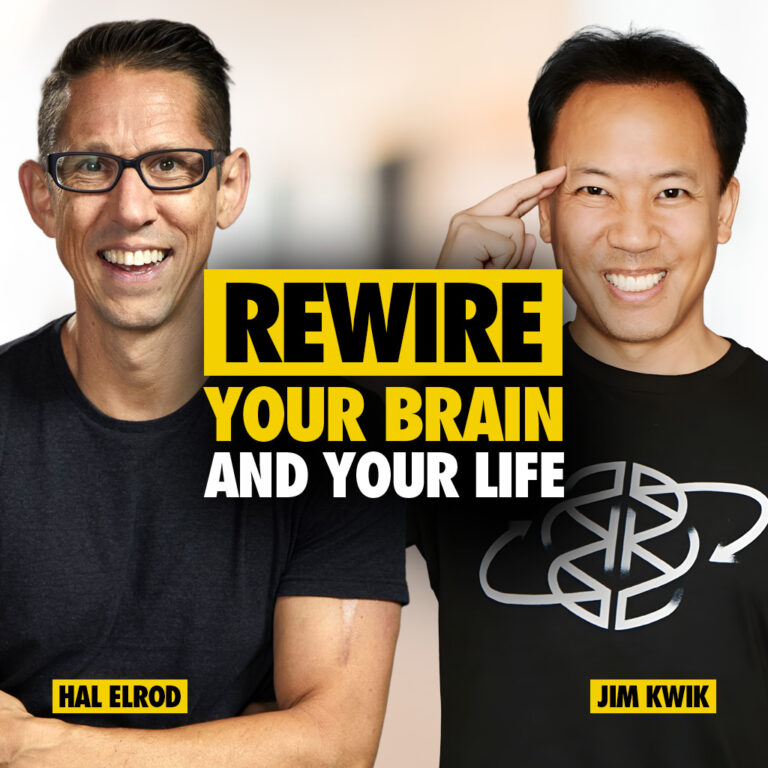
Today, I’m joined by my good friend Jim Kwik, a world-renowned coach and expert in memory, learning, and cognitive performance. His first book, Limitless, transformed the way I think about my own brain and helped me improve my memory after the brain damage I suffered in my car accident. His upcoming book, Limitless Daily, gives you 366 simple lessons designed to help you train your brain and master your mind in just five minutes a day.
In our conversation, Jim explains why you should put your “mind before media” and “intention before interruption” every morning, how small daily actions compound into extraordinary change, and why strengthening your human intelligence is more important than ever in the age of AI. He also shares practical strategies to improve your focus, protect your ability to think for yourself, and intentionally become the person that you aspire to be.
KEY TAKEAWAYS
- Why Your First Morning Inputs Matter
- Mind Before Media & Intention Before Interruption
- Small Daily Actions Create Extraordinary Change
- Reading Is Exercise For Your Brain
- Build Self-Trust By Keeping Promises To Yourself
- Your Identity Shapes What You Believe Is Possible
- Why Human Intelligence Matters More Than Ever
- Build Your Brain Before Borrowing From AI
- Turn Big Goals Into Small, Simple Steps
- Stop Feeding The Life You Don’t Want
- Details About Jim’s Live Event and The New Book
AYG TWEETABLES
“The mental inputs you put in during that time period (morning) has a disproportionate effect on the rest of your day.”
Jim Kwik Tweet
“Your mind is like a parachute. It only works when it's open.”
Jim Kwik Tweet
“HI is more important than AI, human intelligence over AI, because AI could scale and magnify, but it can only scale and magnify what we bring to it.”
Jim Kwik Tweet
“Everybody has 24 hours in the day. So, for me, it's not even about time management. It's about mind management.”
Jim Kwik Tweet
“I feel like sometimes we're burnt out, not because we're doing too much. I feel like sometimes we're burnt out because we're doing too little of the things that matter, or that light us up, the things that make us come alive.”
Jim Kwik Tweet
“Wishing is not a strategy.”
Jim Kwik Tweet
“Everyone who teaches something, you get to learn it twice.”
Jim Kwik Tweet
“One of the fastest way to change or create the life you want is to stop feeding the life that you don't want with your thoughts.”
Jim Kwik Tweet
“We can't be upset by the results we didn't get from the work we didn't do.”
Jim Kwik Tweet
“It's a myth that knowledge is power. It has the potential to be a lot of power. It only becomes power when we use it.”
Jim Kwik Tweet
“Build your own intelligence before you borrow artificial intelligence.”
Jim Kwik Tweet
“Don't shrink your dreams to meet your current circumstances. You don't downgrade your dreams to meet the current circumstances. You upgrade your mindset, your motivation, and the method you're using to be able to win the day, to win life.”
Jim Kwik Tweet
“AI, they give a lot of information, but it won't give you wisdom. Wisdom comes from experience. Wisdom comes from reflection.”
Jim Kwik Tweet
RESOURCES
- JimKwik.com
- Jim Kwik on LinkedIn | Facebook | Instagram | YouTube | X/Twitter
- Limitless: Upgrade Your Brain, Learn Anything Faster, and Unlock Your Exceptional Life by Jim Kwik
- Limitless Daily: 366 Keys to Train Your Brain, Master Your Mind & Win Every Day by Jim Kwik
- Limitless Live
- Health Optimisation Retreat
- Mindvalley U
- Bill Gates
- Oprah Winfrey
- Elon Musk
- The Motivation Manifesto: 9 Declarations to Claim Your Personal Power by Brendon Burchard
- The Daily Stoic: 366 Meditations on Wisdom, Perseverance, and the Art of Living by Ryan Holiday and Stephen Hanselman
- The Structure of Scientific Revolutions by Thomas S. Kuhn
- Dome
- Daniel Amen
- Blockbuster
- Kodak
- Steven Kotler
- Dave Asprey
- Michel Combes
- Matt Mullenweg
- Quincy Jones
- The Miracle Morning App
THIS EPISODE IS BROUGHT TO YOU BY:
CURED Nutrition:
I want to talk about two of my favorite products. I’ve been taking these for four years, and they’re now a sponsor of the podcast, CURED Nutrition, Flow Gummies. I start every day with two of these. I meditate for 30 minutes without any supplements, and then I take Flow Gummies seven days a week, almost every day.
And then I go to bed with Night Oil. 30 minutes before bed I take Night Oil and it helps me fall asleep and stay asleep. So I start my day with Flow Gummies, I end my day with Night Oil.
If you want to implement my routine into your day with CURED Nutrition, go to CUREDnutrition.com/Hal and use the discount code HAL at checkout for 20% off your entire order.
Flow Gummies to start the day Night Oil to fall asleep. You’ll feel better, you’ll act better, you’ll perform better. Check it out.
RATE & REVIEW THE PODCAST
Reviews for the podcast on iTunes are greatly appreciated and will allow us to get the word out about the show and grow as a community. We read every single review and believe each one goes a long way in helping us make the show even better! If you received value from this episode, please take a moment and rate and review the podcast by clicking here.
Copyright © 2026 Miracle Morning, LP and International Literary Properties LLC
Hal Elrod: Most people know the quality of your morning influences the quality of your day, but what if it does something more profound? What if it actually shapes the structure of your brain and enables you to create the life that you want? My guest today is Jim Kwik. He is a world-renowned expert on the brain and optimizing your cognitive function. I have learned a ton from Jim’s first book, Limitless. He has a new book coming out called Limitless Daily, and today we’re talking about, I call it the miracle mind, just because it’s on brand for me, but it’s really just about how do you set yourself up so that every day your brain becomes better than it was the day before.
That’s what Jim’s new book, Limitless Daily, does. It’s five minutes a day to start your morning, to put your mind in the optimal state so that you can show up at your best for those you love, those you lead. It’s essentially the Miracle Morning, but with neuroscience applied to it so that it’s focused on optimizing your brain function. Jim is one of my good friends, and I think you’re going to love this conversation.
[INTERVIEW]
Hal Elrod: Jim, it’s good to see you again.
Jim Kwik: Hal, yeah, we’ve been kind of bumping into each other.
Hal Elrod: Circling the globe. I mean, in the most literal sense, because a month ago we were both in Greece together speaking at the Health Optimization Summit. Last week, we were literally in Estonia together speaking at Mindvalley U. Now we’re in Nashville attending a mastermind together. And I don’t think there’s any other two people that were at all three of those events together, right?
Jim Kwik: No, it’s meant to be.
Hal Elrod: It is meant to be, man. I’m excited for this. So, here’s where I want to start. I’m reading your new book, Limitless Daily, right now. I was already a huge fan of your book, Limitless. In fact, I can’t believe this is the first time I’m having you on the podcast, because that book was transformative for my memory, my cognitive function, my ability to just strategize in my life, and really be better in every area. I know that both of us believe that mornings matter. That’s my life’s work, sharing how to win the morning. You’ve spent over three decades studying the brain. From a neuroscience perspective, why are the first few minutes after we wake up so crucial?
Jim Kwik: So, this time, the term is called sleep inertia, and sleep inertia is the time where you’re transitioning from a sleep state to a waking state. So, certain parts of your brain come online. Your awareness comes online, your alertness comes online, your attention is coming online, right? And, at that time, your working memory, which is a very short-term memory, that cup is empty. So, you haven’t filled it up with all kinds of other stuff. So, what happens, what the science is showing, when I was doing the research for Limitless Daily, is that the mental inputs you put in during that time period has a disproportionate effect on the rest of your day. Isn’t that interesting?
Hal Elrod: Yeah.
Jim Kwik: And specifically…
Hal Elrod: You’re speaking my language. Keep going.
Jim Kwik: Yeah. Specifically in three areas. What you input during that sleep inertia time when you first wake up in the morning has a disproportionate effect on three things. Your focus, it’s going to highly influence what you’re going to focus on. And we know that’s going to determine a lot of your day, your peace, your productivity, your performance, probably your profitability also. The second thing, your feelings.
Hal Elrod: Your emotional state.
Jim Kwik: Yeah, on how you feel have a disproportionate effect. And then the third thing is how you frame things. So how you frame situations, you frame difficulties. Is it a crisis? Is this a problem or a puzzle? Is this an opportunity? And so on. And so, now think about what most people feed, and you talk about this. I mean, what do most people feed that precious window they should be standing guard of?
Hal Elrod: Their so-called smartphone?
Jim Kwik: Yeah. This is the thing. I mean, this is their distraction device. So, imagine you first wake up, you’re in that sleep inertia, you’re very impressionable. Some people would say suggestible, but disproportionate effect. If you feed it with your device, and you’re looking at things like doom scrolling or whatever, then you’re feeding it comparison, conflict, world events. Everything that bleeds, it leads, right? And then you wonder why your focus is distracted later that day, or you’re focusing on what could go wrong as opposed to what’s good. Your feelings, right? Have you ever picked up your phone, you get a message, and it hijacks your mood?
Hal Elrod: Yeah. Oh, yeah.
Jim Kwik: Like an email, a social media comment.
Hal Elrod: If you start the day with a stressful input, you’re stressed. That’s your state all day. Yeah.
Jim Kwik: So, that’s your focus, that’s your feeling. It’s affecting, which is going to determine what you do based on how you’re feeling, because all life is state-dependent. If you’re in a compromised, difficult state, you’re probably not going to be loving to your spouse, to your kids, to your coworkers, to your client. And if you’re not focused, you’re not going to be present for work or anything else, or studies. And then the third thing is how you frame things. So, if you’re looking at the first thing in the morning, all this war, economy, whatever happens to be, right? Then you’re going to frame the difficulties throughout your day differently, the problems you face, the conversations that you have with other individuals from work and personal differently. And so, I always tell people, “Mind before media.” Like what a concept, right?
Hal Elrod: I like that. Mind before media. Take care of your mind.
Jim Kwik: Yeah. Like, focus on what you want. That’s why people who feed that, you know, I recommend people read this new book, Limitless Daily, in that window. They call it attentional priming in science. Attentional priming is priming your attention first thing in the morning, because your brain primarily is a deletion device. You’re trying to keep information out. If we let everything in, we would be overloaded, overwhelmed, right? We would go insane. So, what does it filter in? You have a part of the gatekeeper called the reticular activating system, RAS. And that determines what you let in, but if you’re priming, attentional priming, nobody would invite first thing in the morning, imagine waking up for everyone first thing in the morning, and then 200 strangers come into your bedroom and talk about whatever the heck they want to talk about.
Hal Elrod: And show you pictures from their life.
Jim Kwik: Right, right, all this stuff. And you would never allow that. But it’s kind of like what we’re doing with that. I have a client, this is tangential, but it’s also at the nighttime is a challenge too, because people are, they’re doing this sleep procrastination thing where they’re doom scrolling at night, and they justify saying, “I had a very stressful day. This is my way of decompressing,” but they do it for three hours, right? And granted it’s hard days, I totally understand disconnecting, but the challenge is they have sleep issues because all that context switching, the blue light, everything else that’s stimulating, and everything that they’re looking at, the doom scrolling is keeping them awake, and rumination, all that.
But besides that, I had this question for somebody. I was like, “Well, if you’re going to do that, I wouldn’t do any activity like that, that you wouldn’t wake up earlier to do that activity.” Like, if you’re going to doom scroll for three hours at night, and stay up three hours past your bed, would you wake up three hours earlier? Would you wake up at 3:30 in the morning to doom scroll for three hours? And so, it kind of puts things in perspective. But I say mind before media, right? Intention before interruption. Set your direction before distraction. Because when we pick up our device, if we’re in that kind of state, we’re training our mind for the rest of the day to be distracted, and we wonder why we can’t focus with the kids or at work or when we’re studying. And also, we’re training for something that’s just as detrimental. We’re training our minds to be reactive.
Hal Elrod: Yes.
Jim Kwik: Meaning that you’re starting on the defense. Like, get one message that kind of like you’re fighting fires all of a sudden. First thing you get a voicemail, a social media, WhatsApp, a social media comment, whatever it is. And you’re just reacting as opposed to really proactively, you know, Brendon Burchard, who wrote Motivation Manifesto, he says, “Your inbox is nothing but a convenient organizational system for other people’s agenda for your life.” So, it lands. So, I would be protective of that time. The highest performers in the world, I feel like, stand guard to their mind, especially when it comes to their attention.
Hal Elrod: And you literally coach some of the world’s top performers, whether CEOs, leaders, athletes, actors, so on and so forth. What are some of their morning habits? And I guess you can answer that in a way where it’s like, okay, so the majority of people are starting their day with their smartphone, which puts them in a state of reactivity, and that’s part of the Miracle Morning philosophy is how you start your day sets the tone, the context, the direction for the rest of the day, what you just said. And so, what’s the better alternative, drawing from the experience you have of coaching some of the top performers?
Jim Kwik: So, yeah, they have three qualities. Number one, besides protecting their attention, right? Because it takes focus to be the best at whatever you want to be, whatever you’re focusing on. They’re curious, so they love learning, and that’s how they grow. They never want to go to bed, and then in the nighttime, being the same person as they were when they woke up, right? And so, your mind is like a parachute. It only works when it’s open. So, I think that’s important. And they really focus on identity. And identity is an interesting conversation, especially in a world of AI where people their identity is at jeopardy because maybe they trained and went to school and been for years a coder when AI could do coding, right? Or a visual designer when AI could do those kind of things.
So, I think there’s a little bit of, and we could talk about it kind of, I think, HI is more important than AI, human intelligence over AI, because AI could scale and magnify, but it can only scale and magnify what we bring to it, right? Somebody could use AI to make a nice social media post, but others could use it to build the next billion-dollar brand. It’s the human intelligence we bring to it. But going back to morning routines, of course, you know that phrase, if you want to win the day, you have to win the morning, especially that first hour of the day. So, I’ve been a big fan of your work, right? SAVERS. I’ve gifted that book more than 100 times to clients, for sure.
We’re looking forward to, you know, our next gathering will be in Greenwich, Connecticut, for our annual conference where you’ll be speaking alongside a lot of luminaries and other New York Times best big bestselling authors and such. So, we get to spend more time together around the globe. And that’s at limitlesslive.com if you want to see the lineup and get details, and get books signed and all this great stuff.
Hal Elrod: Yeah, I’m excited for that.
Jim Kwik: Yeah. So, I would say, but they are protective of their time, and it’s not even about… And time, when I say time, that’s the only thing high achievers or anybody else, it’s the only thing that’s equal. The truth is not everybody has equal education, not everybody has equal access, not everybody has equal money, not everyone equals connections and network and everything, but everybody has 24 hours in the day. So, for me, it’s not even about time management. It’s about mind management. It’s about managing your mind. And I always say, like, the most important thing is to keep the most important thing the most important thing. And I think one of the most important things is to be protective of your time.
So, when you say it’s good to great, right? Like, you say no to good so you can say yes to great. I think a lot of people are burnt out throughout the day, morning and otherwise, afternoon, evening. Some people think they’re burnt out because they’re doing too much. I feel like sometimes we’re burnt out, not because we’re doing too much. I feel like sometimes we’re burnt out because we’re doing too little of the things that matter, or that light us up, the things that make us come alive.
Hal Elrod: That’s a great point.
Jim Kwik: And that first morning, especially with that sleep inertia, sets a tone and the tempo for the rest of your day. And so, I feel like when we wake up in the morning, we’re getting on a plane. So, imagine everybody next morning, like when you wake up, you’re getting on a plane, and hopefully you have a destination in mind at the end of the day, right, like a city you want to be able to go to. And so, it’s heading that way, but of course, there’s turbulence, right? There’s winds, there’s headwinds. And even if you’re just off 1%, over the course of that flight or the course of that day, you could end up in a completely different city or country depending on where you are.
And so, I want to remind people, part of me writing Limitless Daily is taking them from the passenger seat, taking them into the cockpit, and sitting them down, and them realizing that they are the pilot of their day. They’re the pilot of their mind, not the passenger. Maybe you and I could sit in the co-pilot seat to help guide people to stay on track. Because a lot of people are getting on planes, and the truth is, especially with their focus going this way, sometimes it’s hijacked, and somebody’s hijacking the plane, taking you somewhere you completely don’t want to go. Like, I wanted to write a daily book because for me, when Limitless came out, one of the biggest questions we had was like, wow, this is like an owner’s manual for a brain, the speed read memory, brain optimization, all focus flow habits. But how can I live this every single day?
And the other thing is you and I are here, we’re about to go to an author gathering with some notable authors that have sold millions of books, like yourself. But people aren’t reading as much. And then part of my mission, teaching the most preeminent speed reading program in the world, students in every country tripling their reading speed, but you get better comprehension, retention, and enjoyment, is to build better readers. People have seen photos with me, with those individuals, like the Bill Gates, the Oprahs, the Elons on social media, if we’re connected there. People always, they ask invariably like, “How’d you connect?” And I’m telling you, we bonded over books, right? You read to succeed. But that Atlantic article that recently came out is saying only 16% of people read daily.
Hal Elrod: Wow.
Jim Kwik: Right? Something that’s other than social media, an email, or something like that, like a book or magazine.
Hal Elrod: Like, actually content that will help them.
Jim Kwik: Yeah, exactly. And that’s the thing, like someone has decades of experience like you have, right? And you’re on our show, on our podcast, and speaking at our event. You’ve had these near-death, multiple near-death experiences, like from car accidents to cancer to all the things. Like you have all this wisdom that you’ve accumulated over, and you put it into a book. And somebody could read Miracle Morning or Limitless in a few days. You could download decades into days. Like, what bigger advantage is there? But 51% of people, it says 51% won’t read one book, and this is across gender, age, and ethnicity, right? 51%. And that’s the challenge.
Or people will buy books, they’ll sit on their shelf. It’ll be shelf help, not self-help, and not read it. Or they’re just poor readers because they’ll read a page in a book, forget what they just read, and go back and reread it and still not know what they just read. But people ask me all the time, “How do you keep your brain alive? How do you keep it strong and functional? You know, what’s the best app, brain-training app?” I’m telling you, it’s simpler than that. It’s reading.
Hal Elrod: Reading. It’s the best exercise for your brain.
Jim Kwik: Reading. It’s your mind. And especially, and not just, so I’ll read in the morning, something like SAVERS, right? So, the reading is a big component of that. At night, I’ll read fiction.
Hal Elrod: Yeah, me too. Same thing, yeah.
Jim Kwik: And studies have shown that people who read fiction, especially, and even at night, it reduces stress immensely, helps you get better sleep, but it also improves your, for those high performers out there, those who want to read nonfiction, business, psychology, whatever books, there’s a real argument to read nonfiction. Because I don’t want to read nonfiction at night, because I just get in my head and I think business, and I could start ruminating about things.
Hal Elrod: Yeah. Now you’re overthinking.
Jim Kwik: Psychology, science, all that stuff. So, I don’t want to stay awake. But fiction reading will help relax. It also improves your EQ, right? Not your IQ. Your EQ, meaning the narratives, empathy, compassion, seeing some things from different perceptual positions, right? The storytelling, all that, huge benefits, besides the stress reduction, the better sleep, and so on.
Hal Elrod: One of the things I love about Limitless Daily is it’s a daily reader. And it’s a page a day, essentially. So, if you’re a slow reader, it takes you five minutes.
Jim Kwik: Yeah.
Hal Elrod: And I think that that’s really important, and maybe more and more books will be going this way because our attention spans have shortened and reading 10 or 20 pages may feel overwhelming for someone. There’s no one, even if you haven’t read in years, that can’t go, “I could handle a page a day.” And to your point, your book, Limitless, which was transformative, it taught me how to speed read. I have brain damage from a car accident. It taught me how to improve my memory. I mean, I can run through your FASTer learn acronym. I could run through like, there are so many. From that book, because that’s the interesting thing, it’s brilliant that you’re teaching us how to have better memory while we’re reading your book.
So, it’s like I’m remembering more of your book than any book I’ve ever read. But the point is this. It’s a lot, right? It’s like, oh my gosh, this is the ultimate manual on the human brain how to optimize it. This is the same benefits of that, but to me, it’s more of a benefit because if you read Limitless, let’s say, probably took me a few weeks, a month to read a big book. And then I’m trying to remember all the things, whereas this is like, that’d be like going to the gym for a month, working out really, really hard every day for a month, and then taking the next 11 months off, versus work out for five minutes a day to keep your body in shape, and do that for every day this year.
And I want to ask you that. If somebody dedicates just five minutes a day, and the beauty is our listeners are Miracle Morning practitioners, like this is…
Jim Kwik: Yeah. This is perfect.
Hal Elrod: You already have the R in SAVERS. You’re reading every day. Read Limitless daily every day. Fast-forward 366 days from now. Describe what Limitless would be for someone that read the book.
Jim Kwik: Oh, goodness. Okay. So, little by little, a little becomes a lot, right? Consistency compounds. Like, more health creates more health, right? And we invest in things that we want the most. We don’t avoid it. You want more energy? Use your energy. You want more focus? Use your focus. You want a better memory? Use your memory, right? You want greater strength? Use your strength at the gym and everything to get greater strength, right? And same thing with our focus and everything else. So, I would say little by little, little becomes a lot, because inch by inch is a cinch, yard by yard is too hard. So, I put these little quickisms in there to… They stay in people’s minds, right? But the idea here is you don’t get a… It’s rarely in a business or in our brain or our body or our bank account, it’s by one windfall.
It’s usually the little things we do every single day, right, that add up to big things, right? You don’t brush your teeth for four hours, and then you don’t have to brush your teeth the rest of the year. You don’t have one great conversation at a party and then this great relationship for forever, right? You don’t go to the gym for a weekend 10 hours a day, and then you’re fit for life. I think it’s a misnomer that it’s this spark of effort, and all of a sudden this. It’s the little things that add up to big things, right? And so, Limitless Daily, you’re reading for five minutes, removes all the friction, right? Everybody, as you said, could do that. So, it’s built on, well, so Limitless, feeling I wrote that in six weeks when it came out.
Hal Elrod: Which is so crazy.
Jim Kwik: Yeah. Like, less than two months.
Hal Elrod: That just shows your super brain, by the way.
Jim Kwik: But I had 30 years of just like I wanted to help. And it was therapeutic just for me to organize it and put it in a way.
Hal Elrod: And this was before AI, for everybody that, yeah, this wasn’t he put it into AI, and it wrote it for him.
Jim Kwik: Because it’s a mission, and we donated the proceeds to build schools in Ghana, Guatemala, Kenya, healthcare for the kids that kept them out of school, clean water, Alzheimer’s research for women in memory of my grandmother. Women are twice as likely to experience Alzheimer’s than men. And most of the research is done on men. So, it’s a mission, right? Limitless Daily took over a year. So, this is more personal, but I’m 53. Started our family when we were 50. So, I have a three-and-a-half-month-old and a one-and-a-half-month-old. No, three-and-a-half-year-old and a one-and-a-half-year-old son and daughter. But when my daughter was born, so I write every morning as part of my Miracle Morning.
Hal Elrod: Yeah.
Jim Kwik: Just like gratitude or things I want to accomplish today or things on my mind. When we were in the hospital, and I saw my wife holding our daughter, and our son was there, maybe it’s because of my age. I start thinking like if I wasn’t there 20 years from now, when they’re an adult, and they were going through a hard day, what would they need to hear from their father to help them get through a hard day? So, I started writing to them for when they’re older, and I would write about things that I’ve experienced, or I’ve worked with clients on, like fear of failure, fear of looking bad.
Hal Elrod: All the most important lessons.
Jim Kwik: Negative self-talk, not believing in yourself, your self-esteem, or self-confidence distraction, burnout, imposter syndrome. I mean, procrastination, putting things off, or just all the things, right? And I started writing every single morning. Instead of doing what I would do for ages, as long as I can remember, on whatever I was writing, I would start writing to them. And then through the process, I realized that this was the answer to the number one question we got from Limitless was this is great, and how do I live this daily? And then, so I went back, and I started editing it. So, it’s one idea with the science that backs that idea. So, where I love, like Ryan Holiday’s Daily Stoic. It’s a daily reader. You read it on the same date. This pulls on stoicism.
So, I back it around, instead of stoicism, I pull it on science, the science of the mind, psychology, or the science of the brain, which is neuroscience, and explain why this idea is valid. And then I give them… And it’s written in an inspiring way. And I give them one implementation strategy, something they could do with no excuse in one or two minutes, right? And then a new identity statement.
Hal Elrod: An affirmation.
Jim Kwik: Yeah. Just because it’s… And it’s cultivated around this, and it always ends with I am limitless because an identity is built through behavior, right? You’re creating evidence every single day that you are the person that you say you are. And I think one of the most important things is self-trust, meaning when you say you’re going to do something, that you do it. Right? Because think about if in a relationship, if somebody says they would do something and they didn’t do it consistently, there would be a break in trust.
Hal Elrod: Totally.
Jim Kwik: But think about the conversation we’re having in our own head, and if we’re not keeping our promises. So, I feel like what this is is like a gateway habit to your new self, meaning that you’re showing up for yourself, and the requirement is very low energy, cost, time. Like, in five minutes a day, especially during that morning time where you get a disproportionate benefit in your focus, your feelings, and your framing, it’s kind of a no-brainer. I feel like it’s almost a disadvantage not to do something like that. And that’s why that morning time, some people use that sleep inertia time for gratitude, right, to get maximum great results or prayer, right? Or setting their goals and their focus.
But again, mind before media, intention before interruption, direction before disruption and distractions. And so, the book is very special to me, and I didn’t want to do a month of motivation, a month on focus, because I feel like, in my opinion, after seven days, people are like, “I kind of got this.” So, I broke it down into seasons: winter, spring, summer, and fall. And so, every single thing is meant to… Because we all, in business, that we have times of winter, in body we have times of spring. We have different seasons for everything, relationships also as well.
Hal Elrod: Jim, there are 366 lessons. Share a few. Share one, share two, share a couple, so that people get an idea of like, “Wow, what am I going to get on any given day?” And then multiply it over the course of the entire year.
Jim Kwik: Yeah. And that’s the compounding effect, which is really exciting. My goal for this book is that you do something a little bit each day, and five minutes, five minutes, five minutes, magnified like that, you’ll be unrecognizable after a year.
Hal Elrod: Totally.
Jim Kwik: Like, you have to reintroduce yourself to your friends and your family because it’s so different.
Hal Elrod: Who’s this genius that lives with us?
Jim Kwik: This is incredible. So, the idea is it’s to remove friction so you keep getting better flow. Those flow states where you feel your best, and you perform at your best. Because if you’re distracted, you’re not going to be able to get in that kind of space. If you’re overloaded, if you’re burnt out, if you have negative self-talk, if you’re procrastinating, you’re going to be able to access the best of be able to win the day. So, the promise is five minutes in the morning to be able to better win the day. So, like recent lessons, because I’m reading this through myself, going through it. So, when I wake up, one of the lessons is this. Most people wake up, and they have a 200 thing, like how big is your to-do list?
Hal Elrod: The to-do list? Yeah, yeah.
Jim Kwik: Right? And then we’re never going to be able. If anything, it just grows.
Hal Elrod: Sure.
Jim Kwik: So, here’s the thing. Like, you wake up, and I do this mental experiment when I first wake up. I’ll close my eyes, this is one of the entries, and I’ll fast-forward, like mentally time-travel to the end of the day, and I imagine myself getting back into bed. And let’s say my wife asks me, “How was your day?” And I imagine myself saying, “Today was incredible. Like, well, totally crushed it today. Best day ever.” And then I work backwards. I say…
Hal Elrod: Reverse engineer.
Jim Kwik: Yeah. What had to happen in order for me to feel this way, to say those words? And what I do in one of the entries is say, have them write down three things personally and three things professionally, because we don’t often have a scoreboard in life. Like, in sports, you know when it’s to celebrate because it says it right there on the scoreboard, but we don’t set that up for our day. So, we have no direction, right? And a lot of people…
Hal Elrod: And we just check emails and then bounce to this and that, and we’re distracted, and we’re all over the place.
Jim Kwik: And people can feel that busyness, but busyness doesn’t mean being effective, right? And so, we could go really fast nowhere. Just like on that plane, we could be going in a totally different direction. And so, those three things personally and the three things professionally become my target. And I actually won’t even touch my phone before I do one of those six things. So, I have those kind of built-in also as well. I also, by the way, you can’t just stop something and start something. You have to just start something else, right? You can’t just take something away. You have to replace it. So, imagine at your nightstand you don’t have your phone there because, number one, for habit design, is control your environment. So, you don’t have to use your willpower, right? If you don’t want to eat that junk food, don’t have it in the home.
Hal Elrod: Totally.
Jim Kwik: If you don’t want to pick up your phone first thing in the morning, then have your phone in your bathroom, something to create friction around. The prime directive is you want to make things that are bad for you harder, more difficult. And you want to make things that are really good for you easier, right? So, I have a kettlebell in the doorway of my office, or a pull-up bar, also. So, I make sure I do that because I make it easy for myself to be able to do. So, the nightstand, I don’t have my device there. I do have a copy of Limitless Daily because that’s one of the first things that I grab. But other people could have other things there. They have their journal, or whatever it happens to be. Their glass of water if they want to drink water first thing in the morning, or what have you.
So, those six things that’s to be an example, and then I go through the science of it and explain it, right, in an inspiring way, and I give them one tactical thing that they could do to be able to get momentum. And they get the dopamine that they earn. One of the challenges to today’s society, dopamine is the molecule of motivation, right? And most people feel like they have to be motivated to take action. And the reason why in Limitless that you studied, you don’t have motivation, you do it. I’m all about taking the nouns in our life and turning them into verbs. You don’t have energy? There’s a process for energizing yourself. You don’t have creativity? There’s a process for being creative.
You don’t even have a memory, there’s this three-stage process of encoding, storing, retrieving, right? And what does that do? It gives you your agency back,
Hal Elrod: People are waiting for, “I wish I had more energy. I wish I had more motivation. I wish I had a better memory. I wish I could focus.” Right? They’re waiting for it to fall into their lap, versus I’m going to generate energy. I’m going to generate motivation. I’m going to improve my memory.
Jim Kwik: Yeah. And that’s the difference between… And wishing is not a strategy, right? And so, it’s like, “Oh, I hope I get this, or I wish I had some creativity to write today.” Like, I never have writer’s block because there’s a process for being creative, right? And so, once you understand how your brain works, you can work your brain. Really, what this book is, is not only does it give you the inspiration and the information to win your day, it’s also developing the habit of reading, right? To get people because leaders are readers and training your brain, and that’s a gateway, so you start reading that, you read other things also, as well, which is a side benefit. But it also is a gateway that like if I could introduce one small thing, what else can I do, right? And also simultaneously it’s building your human intelligence. Like, in a world… I don’t know how concerned people are about artificial intelligence.
Hal Elrod: I think everybody’s pretty concerned.
Jim Kwik: Yeah. And some people are optimistic, other people are pessimist, some people are in between. For me, I just want to remind people, like whether or not AI replaces people, it’s definitely going to reveal people, meaning that I’m hoping, this is my hope, is that the AI revolution leads to a human evolution where we… I think one of the biggest conversations of today that could be had is how do we remain deeply human in a world, in an age of AI? If AI can compute and process, and do these things, what makes us valuable as human beings in the workplace or outside the workplace?
And I feel like my positive outlook, my hopeful outlook, would be that it’ll force us to become more human because we’re not going to be able to out-compute a thing. Because ultimately, AI could spit out immense amount of data, but humans have to decide what’s important. They have to decide what that data means. They have to decide what to do with that new information also as well. And so, I have an acronym as a shortcut mnemonic to help people listening, maybe they’re working out, or they’re driving, or something else, and they’re taking notes, human.
And this is the promise of the book make you more human and valuable. Meaning, if AI’s doing all these things, then what should we be focusing on? The H is heart, which is a symbol of emotion. Emotional quotient’s going to make… It’s going to be very, very important. Think about compassion. Think about empathy, right? Think about understand, like all that makes us feel, right? Because human being like AI is like it could fake empathy, but it doesn’t know how to have a conversation with a grieving child, what loss is, what a breakup is, how to forgive. It could simulate that, but it doesn’t know what that is because it hasn’t gone through that experience, you know?
So, I feel like heart. The second thing in HUMAN acronym, U, is understanding, because ultimately that’s where curiosity comes in. Human beings who stay naturally curious will grow and evolve. And understanding is comprehension, right? Like, doing the deep work of like, when you read something, to be able to deeply understand it and personalize it. The M, which I think will help us stand out as humans, is meaning, meaning purpose. And purpose is it’s a human trait where… And purpose and passion are used interchangeably, those two words. For me, functionally, passion is what lights you up, and you can have lots of passions. Purpose for me is how you use that passion to light somebody else up.
Like, I have a big, Hal, passion for learning. Wasn’t always the case with my brain injury, and my learning challenges, and all that stuff as a kid that put me on this path. But learning is now a passion. It lights me up. Teaching people how to learn lights them up, and that’s my purpose. But I feel like it’s important to find what drives us and gets us through difficult times, right, adversity. And then the A in HUMAN is adaptability. That’s what humans are really good at, especially if they’ve worked their cognitive flexibility and their cognitive anti-fragility, and I could talk about their sections on entries. I’m just literally pulling because these are things that I’ve read recently, because I feel like we also as authors write the thing that we most need to learn.
Hal Elrod: Totally.
Jim Kwik: And we teach the things. And then, by the way, everyone who teaches something, you get to learn it twice. So, even if you’re listening to this, I’d be thinking, “Oh, if I had to give a TEDx talk next week, would I remember all this?”
Hal Elrod: That’s the T in your FASTer acronym in your other book.
Jim Kwik: You’re so good. And so, the adaptability is our ability to learn, to unlearn, to relearn. because the only constant will be change, right? So, I feel like that’s a prize skill. And I talk about cognitive flexibility, where it’s like some of those entries are about doing mental parkour, right? Like, a lot of innovation was created by people outside of an industry because they had cognitive flexibility to ask a new question, because they didn’t have the same learned helplessness going through the same industry with the same limitations, mental limitations, if you will. Maybe it takes an Elon Musk to look at the automotive industry and then ask a new question saying, “If we were to create an automobile today with today’s technology, how would we do it,” right?
There’s a great book called The Structure of Scientific Revolution that talks about how most progress and innovation comes from people outside industries. Because what’s the opposite of cognitive flexibility? Like, physical flexibility will prevent injury. You’ll be faster, more pliable. You’ll bend instead of break. Cognitive rigidity, that’s where you have a Blockbuster, meaning that…
Hal Elrod: Blockbuster Video?
Jim Kwik: Yeah.
Hal Elrod: I just watched the documentary the other day on it, yeah.
Jim Kwik: Yeah. See, I’ve seen that. But that’s being rigid, right? Not adapting. So, that’s adaptability or a lack thereof.
Hal Elrod: Right now, in an age of AI, it matters more than ever. And I’m going to interrupt you just to say that’s what I love about your work is a few ways of putting this, but it’s that right now more than ever, our ability to think actually matters more than it ever has. And some people, I think, are confused going, “Well, there’s AI. That thinks for me.” And to your point, like right now, here’s a perfect example. AI exists right now. ChatGPT is available right now. Millions of people use it. Some people are using it to think of clever responses for their email, and do menial, like unimportant tasks. And there are some people that are building multimillion-dollar businesses with the same AI.
The difference is their brain, their ability to use their brain to think. And so, it is mattering now more than ever. And like when I read your book, Limitless, when I read it, I was like, “Why didn’t I read this years ago?” because I suffer from brain damage and such. Now, my memory, like it transformed my ability to think. And the other thing it transformed, which Limitless Daily does too, and you mentioned identity. This is so important. My identity was I have a bad memory. Well, why? Because I was in a car… Like, literally, I’ll show you pictures of my car accident. It’s almost like a victim mindset. I was like, “My memory’s terrible. I have literal brain damage. So, it’s not my fault. I can’t control it.”
And your work starts out with empowering the individual of like, “You’re not limited. You are limitless. Your past does not equal your future. Just because you struggled in this area before, or these areas, you can transform your brain, then transform your abilities and transform your life.” And so, I just want to say, like the work you do is so profound. It’s not like learn a few hacks to remember stuff. It’s like, no, transform your identity first, become limitless, and then do the work to become who you’re capable of being. So, I just wanted to give that endorsement.
Jim Kwik: I got goosebumps. I call them truth bumps. Yeah. I find that one of the most important skills to master when you’re talking about adaptability is our ability to learn rapidly. Because if you can learn how to learn, right, called meta learning, that’s what Limitless is all about, then like if you can learn how to think and read better and understand better and retain more and focus better, what can you apply that to? Everything, medicine, martial arts, Mandarin.
Hal Elrod: Parenting.
Jim Kwik: Money. Everything gets easier, right? So, it’s a meta skill. Very, very important, but it’s not taught in school. School teaches you what to learn, what to remember, what to think, but not how to do any of those things.
Hal Elrod: Rote learning, is that the… Or rote memory?
Jim Kwik: Rote repetition. It’s all antiquated, like how people read. The last time people took a reading class, like a class, not a college lit class, but a class called reading, they were like six or seven years old, right? So, the difficulty, the demand’s increased tremendously, but we’re still reading at the level of our… It’s like we don’t rise to the level of our aspirations as much as under pressure fall to the level of our training. I feel like we don’t rise to our goals and our dreams. We fall to the level of our systems to our, oh, here’s our story. Remember that story we were telling ourselves? Because I feel like the head injury for both of us, that is a limitation, potential limitation, but nothing compared, in my experience, to the story I was saying about that broken brain.
Hal Elrod: Totally.
Jim Kwik: Which I was slowing down in class. It took me three years longer how to read. In third grade, I was being teased for it. I was called slow, even though my last name really is Kwik. It’s not a stage name. It’s my father’s name, my grandfather’s name. Teacher came to my fence, and said, “Leave that kid alone. That’s the boy with the broken brain.” That label became my limit. That five seconds, and she had good intentions, I’m sure of it. That five seconds that she said, the broken brain, lasts only five seconds, but that conversation I had about being broken lasted a decade, and in my head. And so, the good thing is I feel like, so we don’t rise to the level of our aspirations. We fall to the level of our systems, to our stories, to our standards that we have for ourselves, and our self-image, going back to identity.
Because it’s really hard to outperform how we see ourselves. And I like with the work that you and I do, we’re giving people an example where they’re doing something, creating result, and that becomes evidence that you are the person who you want to be, right? Because I think that’s the best way of changing something. Now, even with the procrastination that people struggle with, you don’t have motivation, there’s a process for motivating yourself. I call it P x E x S3. You need purpose, you need to feel something, because it has to go from your head to your heart to your hands. You can visualize a goal in your head if you’re not acting with your hands.
Like, you’re visualizing, “I want to read 30 minutes a day,” but you’re not acting with your hands, like actually picking up a book. Checking with the second H, which is your heart, like the emotion that propels you. But then the E is energy. Some people, we don’t go and have a great day because we just lack the energy, and you don’t have energy, you generate energy. There’s a process for energizing yourself with sleep and nutrition and exercise and so on, stress management, that sucks all the energy out. And then this is the big thing. That is what the book is based on, one of the pillars, S3 is small, simple steps. Because I find that if you procrastinate, then it’s because you either don’t feel the purpose or you know the purpose intellectually, but you’re not feeling who’s counting on you to be at your best today, to show up today, right?
I’ll do more for people I love than I will sometimes for myself. Or people won’t do it because they’re exhausted. They lack the energy. An exhausted mind doesn’t do anything, right? But sometimes that thing is too big. Like, maybe going to the gym for an hour is too big of a jump, or reading 30 minutes a day is too big of a jump. So, S3 is small, simple steps. You break it down. And the question I ask myself, and whenever I get stalled, is I ask myself, “What is the tiniest action I could take right now, Hal, that would get me progress towards this goal where I can’t fail?”
And then I just like, even like my three-year-old, teaching him how to floss, because we did, on our podcast, we had a biological dentist talk about beyond brushing, and we’re talking about oil pulling and tongue scraping, all these other things, and how the microbiome and inflammation can affect your…
Hal Elrod: Doc Dome?
Jim Kwik: Yeah. He was amazing. And I actually flew to Germany to actually get work done and everything for him because I do this, too. I have my coaches that I pay and that I go around learning from because you can learn from books, but you can also learn from conversation and consulting, and having, as a person, one might have a personal trainer. I’d like to be their mental fitness trainer. But like with my son, just like, how do you floss? And maybe it’s too big of a jump. Like, wow, this is a big jump. Floss one tooth. Then he was really open to doing a second tooth and a third. Like, how do you, like if 30 minutes of reading is too big, opening up a book is the most simple step.
Reading one line, one page. And it’s so easy to be able to do, so it removes all the friction. You know, even when I want to write, I don’t even rehearse. Like, if your goal is, I don’t even visualize, and to manifest a goal by visualizing the goal. I visualize and mentally rehearse the habits and routines that get you, that will make that inevitable, that’ll make that happen. And that’s another entry in Limitless Daily, is that it’s called future, I call it future episodic remembering, where it’s not where you’re picturing in your timeline, your mental timeline, this ideal version of yourself, or the perfect day and who you’re around, what you’re hearing, everything else.
And then there’s a process for remembering that as clearly as you remember what you had for breakfast this morning. So, it’s not even an imagination. They say imagination is more powerful than knowledge, right? Einstein said that. Or your mind doesn’t know the difference between something you vividly imagine and something that’s real. But most people in the morning, they’re rehearsing all the dread and all the things they have to do, and they’re quietly quitting, or they’re rehearsing failure because of their fear of that, but they’re practicing those reps. So, it’s not a matter of if we’re practicing or not. We’re always practicing inside of our minds. The thing is the routines, the practices, the habits, the systems getting us to what we want or what we don’t want.
I think one of the fastest ways, another entry in Limitless Daily, one of the fastest way to change or create the life you want is to stop feeding the life that you don’t want with your thoughts and the habits, and the people, and the routines, and the projects, and everything else that could be that. And I just want to remind people, there’s another entry in there is about four choices. There’s a quote in Limitless from a French philosopher, I’m sure you’ve read in Limitless that says, “Life is letter C between the letters B and D.”
Hal Elrod: Yeah, I love this.
Jim Kwik: Yeah, where B is birth, and D is death, and life, C, everything between is choice. That our life is a sum total of all the choices we made up to this point. And I truly believe that these difficult times, if you see it that way, can distract you. These difficult times can diminish you, these difficult times can define you, or these difficult times, they can develop you. We decide with the choices. If we get bitter or better. Like, with everything that you’ve been through, anyone would’ve been okay, and totally understand if you’re just like, “I’m checking out. I quit. This is it.” And here’s the thing is there’s a thing about in there about complaining, because our stories, they can be absolutely valid.
My parents immigrated here. I didn’t speak the language. We live in the back of laundromat that my mom worked at. Alzheimer’s like here, brain injury here, learning difficulties, migraines every single day. And it could do that, right? Or we could be like, “This is what happened,” because that uses up an immense amount of time, energy, focus, and everything that could be going towards something. And the truth is, and it doesn’t mean just going on coaching mode, we can’t be upset by the results we didn’t get from the work we didn’t do. And so, it’s better well done than well said. It just is. And it’s a myth. I call it a LIE in Limitless, limited idea entertained. That’s a LIE, limited idea entertained, L-I-E. It’s a myth that knowledge is power. It has the potential to be a lot of power. It only becomes power when we use it.
But I want to remind people, people could read Miracle Morning or read Limitless Daily each morning, and if you don’t use it, then your life is no better off functionally than somebody who is illiterate and couldn’t read these books to begin with.
Hal Elrod: Yeah. I call it a personal development junkie, where you engage in personal development every day, and then you believe that’s enough. Like, you trick your brain into thinking, “Well, I did the thing. I read the book.” But it’s like, but you don’t actually implement it into your life, and then you just read another book, and another book, and another book. One of the ways that I would frame Limitless Daily is it’s like having Jim Kwik as my daily coach. It’s like imagine what no one could, listening including me, could afford what it would cost to be like, “Hey, Jim, how much if I hired you to talk to me for five minutes every day just for a year?” You’d be like, “$5 million,” right? Like, it’d be a crazy amount of money. But it’s like that’s literally it.
It’s like, hey, I get Jim Kwik to… And it’s not just reading something. Like you said, every day, every page ends with a short, simple action step to integrate what you just learned into your life, then an affirmation identity step to integrate it into your identity, right? So, it’s like, that’s it. It’s like, okay, you get a year of Jim coaching you every day. What he believes is so valuable that you wrote it for your kids, right? And I think that I know from your first book, and now reading this one, I’ve been convinced that, and our friend Dr. Daniel Amen says, like the most important organ in the body is the human brain. And it’s the one that 90 or most people don’t pay any attention to.
Jim Kwik: And the challenge is, as you mentioned, in a world of AI, there’s something called cognitive offloading, and I talked about this back in Limitless in 2020. I called it digital deduction, the high reliance on technology to think for us. I mean, even think about something basic like technology’s always changed the way we think, right?
Hal Elrod: Like, Google Maps, where you don’t have to remember to get anywhere.
Jim Kwik: Yeah. I mean, even back before there was written word, people would have to remember everything, right? And then there’s writing, and then there’s a printing press. Then there’s GPS, just calculators. Remember like calculators, and we don’t have to do mental math or anything else like that? And then there’s GPS, where it’s telling you when and where to turn, but then we don’t exercise our visual-spatial intelligence, so that will atrophy. Now with AI, if it’s doing the thinking for us, this is the challenge, is cognitive offloading or cognitive surrendering, where you wouldn’t send someone to the gym to lift weights for you. But that’s essentially what we’re doing.
And here’s the thing. Learning is meant to be effortful, and that comes from weird as being an accelerated learning coach, see people learn faster. But if you don’t do… You can’t buy a fit body, any more than you could buy a great, deep relationship, right? Anything worth, you have to be able to work for it. But what happens when AI takes all the friction out, and you don’t have to work for it?
Hal Elrod: You and I talked about this in Estonia, yeah.
Jim Kwik: Yeah, and you go to the gym, and you ask your friend to lift weights for you, you get no benefit because you haven’t earned it.
Hal Elrod: And your muscles atrophy in the same way that when you ask AI to think for you, your brain atrophies.
Jim Kwik: And that’s the challenge, because in Limitless, the original book, I talk about digital dementia, which is where technology remembers things for you. Your to-dos, your grocery list, your calendar, all your meetings, your phone numbers. So, we never had to use that. Not that I want to memorize 500 phone numbers, but it should be very concerning if you lost the ability to remember one phone number or PIN number, or what something you just read, or someone’s name, or anything else, right? On the other side, the book will also help improve your focus and your memory when you can easily remember client information, product information, give speeches without notes, names, and walk into a room, meet 20 strangers, leave saying goodbye to all of them.
Then everything, you’re mentally fit. It’s like someone who’s physically fit, and you’re pliable and flexible as opposed to being rigid like a Blockbuster or a Kodak, right? They developed the backbone for digital technology, and where are they today? Kodak. I’m dating myself being 50, 53. But they were rigid, and we can’t be rigid today. Now, the challenge with AI is it’s an amplifier, but it only amplifies. If you have clarity, it’ll amplify that and competence. If you’re confused, it’ll amplify that also. And that’s a challenge. But the cognitive offloading, most people have seen like the MIT study, where they took three groups of people, students A, B, and C, and had them write essays.
A used ChatGPT, B used Google, and C didn’t use either. And they scanned their brains, like seeing which one’s most active. And obviously, it was group C because they did the work, right? And they got the benefit. They also tested for recall about the essays. They asked them questions about what the essay was about. And group A didn’t remember hardly anything compared to group C, because they didn’t have to work for it. And so, what I’m saying is technology’s not good or bad, it’s just how it’s used. Like, the example I use is if your apartment is on the fifth floor, your office is on the fifth floor for work, an elevator is a form of technology. It’s very convenient, but then you don’t take the stairs, right?
If you have to go 10 blocks somewhere and you take an Uber or your car, that’s technology, but then we don’t get our steps in, right? And so, my challenge is not whether or not artificial intelligence will become more human. Mine is, will humans become more artificial, where natural intelligence becomes artificial? Like, what happens in a society where we don’t think anymore, and we’re just relying on technology to tell us what to think? Then that atrophies, right? It’s putting your arm in a cast for a year. It doesn’t grow stronger, it doesn’t stay the same, it weakens. That’s our mental muscles. What happens in a civilization where we can’t think? And then we’re easily manipulated, right? Everyone, authorities have an agenda, everything else, the marketing and media.
Hal Elrod: And I’ve already seen AI’s answers lean one way or, you know, like I mean, maybe not accurate, not true.
Jim Kwik: And so, then we lose our judgment. We lose our logic. We lose our critical thinking. We lose all the things that make us more of who we are, that help us navigate the storms, the storms in life. And so, the cognitive offloading or even worse, cognitive surrendering, where you’re just letting it do all of it for you, is a big challenge. But yes, even that MIT study, and again, so there are five things you want to do before you go into AI. I’ll give this to you. This is what I use personally. I don’t train on this, but this is what my team, my clients do. I want you to build before you borrow. Build your own intelligence before you borrow artificial intelligence. What I mean by that, simple acronym, of course.
The B is brainstorm. So, let’s say you have a problem or situation you’re going to AI for. Before you do that, brainstorm yourself, right? Like, think about it. Get some reps in yourself. The U is understand, and what I mean by that is even understand the problem that you’re facing. Like, Einstein said that if he had an hour to solve a problem, he’d spend most of it trying to figure out what the problem is.
Hal Elrod: Deeply understand it.
Jim Kwik: Yeah. The problem is not usually the problem. The problem is usually our assumptions or thinking around the problem, right? So, get deeper understanding. Spend a little time there. And then the I in BUILD, build your brain, right, is imagination. This is where you just ask yourself new questions. Like, how would a five-year-old approach this problem? How would someone 20 times smarter than me look at this problem, right? Or how would Leonardo da Vinci or whatever be able to do this? What would my future self want me to see here? Then you’re prompting yourself before you’re prompting artificial intelligence. You’re prompting your natural intelligence. So, that’s the I is imagine. The L in BUILD is leverage AI. Then you can use AI.
Hal Elrod: Okay. Once you’ve done the preliminary work and you’ve used your brain, now you can leverage AI.
Jim Kwik: Because you’re doing your retrieval. You’re seeing how much you actually know as opposed to just reading something and reinforcing something. Because seeing something is different than remembering it and knowing it, right? People could see a bunch of faces because it reminds them of something, but it doesn’t mean they remember those things. Like, just like reading something and rereading it, it’s better that you go through and ask a bunch of questions. Try to think, “What do I know about sales?” or, “What do I know about biohacking or anything else?” And then you read it, then you get more information. So, the L is leverage AI.
And I would leverage it, in Limitless, I had a whole chapter on how to use AI to enhance your HI, your human intelligence, how you take every single process to build memory palaces, to do mind mapping, to be able to quiz yourself, to be able to create AI to your preferred learning channel, whatever you want to learn. To summarize this, to ask you questions someone has never asked before. So, I would use AI in this context. Once you’ve brainstormed, you understand, use your imagination, then I would say leverage AI, and just use it to stress test your ideas.
Hal Elrod: To challenge your assumptions. Not just say, “You’re the smartest. Yes, everything you said is perfect. You’re the smartest,” which it was trained to do, right?
Jim Kwik: Right. But then challenge, ask questions to debunk this. Create a debate. Argue the other side of it, right? That’s where I think part of intelligence is our ability to be able to change our opinions based on new data, right? But the challenge is on social media, and everything else is whatever you’re engaged with, you get more of. So, it’s an echo chamber, right? You’re seeing more and more of the things that you agree with, right? And so, you never even see the other perspective. But cognitive flexibility demands reading things that are outside your scope, right? Because, actually, some of the most successful individuals, they are generalists. They have hobbies.
They have other interests that they could borrow on that intelligence for the thing that they’re most focused and passionate about. That is their skill set or their mission. And so, I would use AI to be able to ask you questions, to be able to quiz you, to be able to see your cognitive biases or your blind spots, all of that leverage. And then the D in BUILD, then you decide. You have all this great information, then you can decide what to do. But you’ve done some exercise before you go to the technology. And I feel like if people kept that habit, then they would stay mentally fit as we age. And I think this, in a world… Nobody listening to this. It’s not like it was in the agricultural age or even industrial age, where primarily your value in society was your brute strength. Today, it’s your brain strength. It’s not your muscle power, it’s more your mind power.
And the faster you can learn, the faster you can earn, because knowledge is not power, but it is profit. Because those who know more could do more. Those who know better, they can make better decisions and get better results also as well. So, there’s this divide of not just those who have and those who don’t have. There’s a gap between those who know things about health or marketing or morning routines or whatever, and those who don’t. And those who know can make better decisions on their life, and all of their life is a reflection of those combined decisions.
Hal Elrod: Man, I could go on and talk with you for a long time. There are so many questions I still am thinking about, but I know we’ve got to wrap up here. I wanted two things. I know you have a live event coming up, because I’m speaking at it, so that’s exciting. Limitless Live.
Jim Kwik: Limitlesslive.com.
Hal Elrod: And you’re giving away bonuses with the book.
Jim Kwik: Yes.
Hal Elrod: Right? So, first, let’s circle back to the book, but the event. Talk about the event for a minute, and where people can go to join us in Connecticut.
Jim Kwik: This’ll be the 19th year. We’ve been doing this event for 19 years. It’s an annual event. It’s the only event that we do for the public. We’ll have 1,000 individuals right outside New York City in Greenwich, Connecticut, September 11th and 12th. If you hear this in time, all the information is at limitlesslive.com, and it’s a special experience. So, the book comes out on September 8th, and so it’s a year-long journey. 366 entries, so it’s a journey we take together. The event is where the book comes alive. It’s where we kick off the journey, the adventure, the expedition together, and all the speakers speak specific aspects of the book. Like, a morning routine.
Hal Elrod: There you go. Who else is speaking there? Because I know there’s some…
Jim Kwik: Yeah. We have the best of the best in category. So, as an example, like we talk about flow in the book, so we have the number one flow expert, Steven Kotler, who’s written multiple New York Times bestselling books. Some of the books, like entries in there, talk about having your best brain and how to biohack your brain, so we have the father of biohacking, Dave Asprey. Our events also are very interesting attendees. So, at any given time, we’ve had the CEO of Sprint, the founder of WordPress, Quincy Jones would come every year. So, people, I think, come to events for content and also connections. But for me, Limitless Live is the starting point for our readers to start our journey together, to celebrate this year-long journey together.
Hal Elrod: And the book, and the bonuses. Where do people go to get the book right now?
Jim Kwik: So, limitlessdaily.com, and we have an amazing bonus. It’s a compendium where it’s kind of your companion. And so, it’s a way of where you will receive. So, here’s the science of it, right? So, the Limitless model is based on three Ms. If you want to become limitless, the opposite is being limited, where you’re stuck in a box, right? And that box is three-dimensional. By definition, those three dimensions hold that box together. So, the three forces that contain it are the same three forces that will liberate it, become more limitless, and that’s your three Ms: mindset, motivation, and methods.
So, the goal here, these are the three things you can control. Mindset is your assumptions and attitudes about something. So, if someone can learn a great method on how to make money, but their mindset is, their attitude, assumption, money’s the root of all evil. I have to hurt people to make money. It’s lonely when you make money. People are going to judge you when you make money. Money is not abundant. It doesn’t grow on trees. Then you’re still stuck in that box.
Hal Elrod: Mine was I have a bad memory, so I can read Jim’s book, but he doesn’t get. I have brain damage, so nothing will work for me, yeah.
Jim Kwik: Yeah, So, that’s why Limitless, the whole sections of the book were mindset, motivation, and methods. But someone could have a limitless mindset, believe the three things that I would think about identity, what you believe is possible, what you believe you’re capable of, what you believe you deserve, right? Because some people only feel like they deserve a certain amount of love or health or vibrancy or financial resources, right? And that’ll keep them in that box, that dimension. But let’s say someone has limitless mindset, then maybe the second M, and they know the methods, but they’re still stuck in that box. They lack the motivation to get out of that box.
And that’s why we talk about purpose, energy, small simple steps. Now, here’s the thing. This is where Limitless Daily comes from. If you imagine a Venn diagram, which are just three intersecting circles, right? Like Mickey Mouse, a face with two ears, but they’re all intersecting. So, mindset, let’s say the ears are mindset, motivation, and the face is methods. So, here’s the thing, the crossovers. Where mindset and motivation crossover, you have three Is, inspiration. An inspiring speaker or a movie will change your mindset and also give you some motivation. So, mindset, motivation, crossover inspiration. Where mindset and methods crossover, you have the second I, which is ideation.
Mindset is in your head, like methods in your head. Idea stays an idea because you lack the motivation, right? Where motivation and methods crossover, you have the third I. You’re motivated, you have the know what to do with the methods, that’s implementation, third I. Now, where all three Ms or three Is connect right in the middle, that’s the limitless state. That’s the fourth I, which is integration. Another word is identity. It’s just who you are. And so, the goal is don’t shrink your dreams to meet your current circumstances. You don’t downgrade your dreams to meet the current circumstances. You upgrade your mindset, your motivation, and the method you’re using to be able to win the day, to win life.
And when I talk about human intelligence, this is a strong distinction. Intelligence is not IQ. IQ is you take a test when you’re eight years old, and that’s your potential when you’re 88 years old. That’s been debunked, right? And it’s not even testing for all the things that matter. There’s multiple intelligences, and we could go into that, but it’s not fixed like your shoe size. For me, intelligence, we could say, it’s pattern recognition. We could say it’s your ability to change your opinion based on new data. For me, functionally, intelligence is how you use your brain and direct your mind to create the life you want. How you use your brain and direct your mind, because brain and mind are different, to create a result that you want.
Like, somebody could be book-smart and quote all the financial masters of all the big financial books from our friends and experts like that, but if their bank account doesn’t reflect that, how intelligent are they? Somebody could do the same thing for wellness. They could do it for everything else, but if their life doesn’t reflect it. So, for me, that’s intelligence. So, it’s your ability to create a result. So, Limitless Daily, when I say it’s the subtitle, 366 Keys, because we’re unlocking a door every single day to train your brain and master your mind, that’s how you use your brain and direct your mind to be able to win each day. My goal is to give them the science of the mind, the science of the brain, to be able to create a real result within two minutes.
And those two minutes add up, those five minutes total of reading and implementing add up to really big things. Because I don’t think big changes happen from disperse of things. It happens. And it’s kind of like, you know what the metaphor is I saw recently? It’s like a tree. Everyone sees a tree. You see the tree growing outward up towards the light, right? But we don’t see that same part that’s underground, the root that’s going down deep, right? And it’s like a metaphor because this is going up towards light, this is going down towards gravity, but both are important, absolutely, for that tree to grow and flourish. And it’s also a metaphor for if you want to shine and flourish with all the flowers and the leaves here, then you have to sometimes do the work when no one’s looking underground, when you have to go through tough times, when you have to go through dark stages.
And Limitless Daily was meant to be that five-minute coaching from me first thing in the morning with the pure intent of helping my children when they’re older, adults. Not for children, but as adults. But I’ll read this. I think a lot of people will have, like Miracle Morning, where they have conversations over meals about it, because everyone’s reading the same thing around the world on the same day.
Hal Elrod: Yeah. Ooh, I like that.
Jim Kwik: And so, as a gift, we give people this companion when they order the book to be able to get that inquiry, because the last… So, remember, I mentioned ideation, implementation, inspiration, right? And then identity?
Hal Elrod: Yeah.
Jim Kwik: That’s every passage. There’s an ideation. It’s written in an inspiring way. There’s an implementation strategy and an identity statement. The last thing I would add to it is intention. So, they get sent an intentional e-, whether it’s an email or text, or however they prefer to receive it, a question that will direct their focus with intention throughout the day, so they can reflect on it. Because AI, they give a lot of information, but it won’t give you wisdom. Wisdom comes from experience. Wisdom comes from reflection. Reflecting on that, right? And so, these questions help you to reflect on it, and there’s a lot of other bonuses there at limitlessdaily.com.
Hal Elrod: So, limitlessdaily.com for the book.
Jim Kwik: Yes.
Hal Elrod: Limitlesslive.com to join you and I in Connecticut.
Jim Kwik: Yep.
Hal Elrod: That’s in October, no. September.
Jim Kwik: September 11th to 12th. It’s right outside of New York City.
Hal Elrod: Yeah. My wife’s excited. She’s never been to Connecticut. She’s like, “Can I go to that one with you?” I’m like, “Of course.” She’ll be there, too. Amazing. Well, Jim, your work has profoundly transformed my life. I’m grateful for your friendship and all the traveling that we get to do together.
Jim Kwik: Yeah.
Hal Elrod: And next will be Connecticut, and yeah, everybody, if you want to transform your life, it really does, and I’ve learned this more and more recently, it’s transforming your brain first and foremost, your ability to think effectively, to remember what you think, remember what you learn, to discern what matters most, to get the results you want. Like Jim said, intelligence it’s not just learning stuff to learn stuff. It’s learning to apply it to your life to see the outcomes that you want in your health, your relationships, your finances, your family, your career, your purpose, you name it. And Limitless was the book that first turned me on to this way of thinking, and now Limitless Daily is, for me, it’s been the next evolution because, again, it’s that five minutes a day.
It’s so easy. Anybody can do it, and you compound that over the next 366 days. You will be a different person. You’ll be the limitless version of you. So, go to limitlessdaily.com for the book, and if you want to join Jim and I in Connecticut for the Limitless Live event, go to limitlesslive.com. I love you so much. I’ll talk to you next week.