

Writing a book is a goal that many people talk about for years, but very few actually follow through. We convince ourselves that we’ll get started when life slows down, and before you know it, years have gone by with a great idea just sitting on the back burner.
As someone whose life was completely transformed by writing The Miracle Morning book series, I truly believe a book can become one of the most valuable assets you ever create. It can amplify your impact, preserve your legacy, and open doors that would never have opened otherwise.
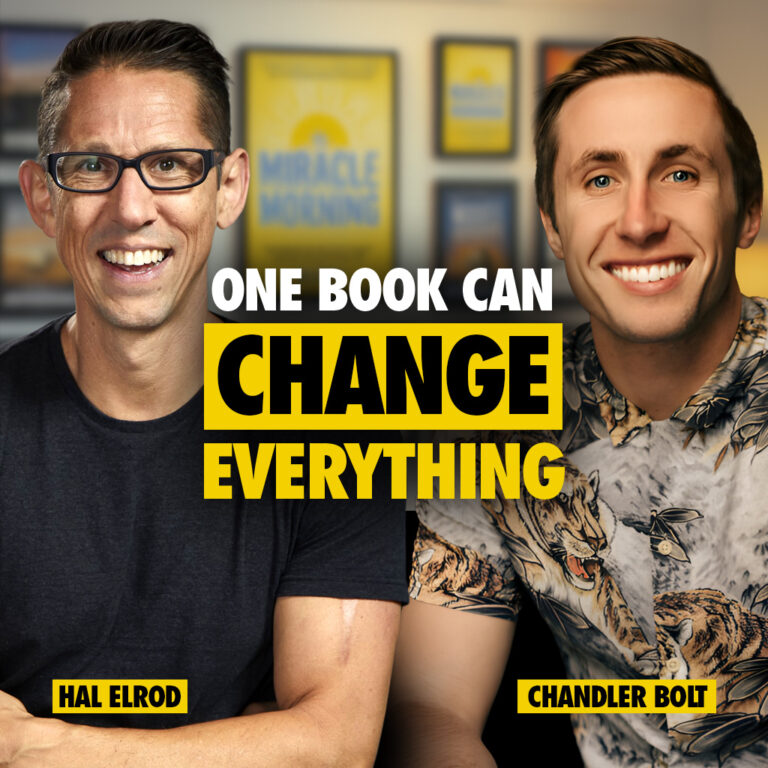
Today, I’m joined by my good friend Chandler Bolt, the founder of SelfPublishing.com and author of Published.: The Proven Path From Blank Page To 10,000 Copies Sold. Chandler has helped thousands of authors write and publish their books and, in the process, has scaled his company into an eight-figure business.
In our conversation, Chandler explains why writing a book can become the best business card you’ll ever create, how to leverage your book to grow your business, and how he’s using AI to help authors write better books and build better companies.
KEY TAKEAWAYS
- Why Chandler Wrote His First Book
- The Tragedy That Changed Chandler’s Life
- Just Get In The Room And Get Started
- Why Everyone Can and Should Write A Book
- How A Book Preserves Your Legacy
- Your Book Can Grow Your Business Exponentially
- How Chandler Scaled An Eight-Figure Company
- The 4 Ps Of A High-Converting Offer
- Decide What You Want Your Business Looks Like
- Hire People Who Compliment Your Skills
- Chandler’s Goal To Publish 100,000 Books
- How AI Is Changing Book Writing
- How Chandler Uses AI To Scale His Business
AYG TWEETABLES
“You've got to get around people who are way smarter than you, way more successful than you, by any means necessary.”
– Chandler Bolt Tweet
“My parents always said, ‘Bloom where you're planted. No matter what you're doing, do it to the fullest extent of your abilities, and eventually someone will notice.’”
– Chandler Bolt Tweet
“You can't spell the word authority without the word author. So when you become an author, you become an authority in the mind of everyone around you.”
– Chandler Bolt Tweet
“Winning isn’t someone else’s scoreboard. It’s your own personal scoreboard.”
– Chandler Bolt Tweet
RESOURCES
- Self-publishing.com
- Self-publishing.com on LinkedIn | Facebook | Instagram | YouTube | X/Twitter
- Chandler Bolt on LinkedIn | Facebook | Instagram | YouTube | X/Twitter
- The Productive Person: A how-to guide book filled with productivity hacks & daily schedules for entrepreneurs, students, or anyone struggling with work-life balance by James Roper and Chandler Bolt
- Breaking Out of a Broken System by Seth Bolt and Chandler Bolt
- Published.: The Proven Path From Blank Page To 10,000 Copies Sold by Chandler Bolt
- The $7M Business Card: Writing A Book That Makes Millions
- The Millionaire Author series
- Fiverr
- Mast ermindTalks
- Jayson Gaignard
- Five-Minute Journal
- UJ Ramdas
- Jon Berghoff
- The Well
- Ryan Deiss
- Alex Hormozi
- Dan Martell
- Codie Sanchez
- James Schramko
- Jeremy Reisig
- JJ Virgin
- Claude
- ChatGPT
- Google Gemini
- Andrew Warner
- The Miracle Morning After 50: A Proven Path to Joy, Vitality, and Purpose for Aging Adults by Hal Elrod, Dwayne J. Clark
- The Miracle Equation: The Two Decisions That Move Your Biggest Goals from Possible, to Probable, to Inevitable by Hal Elrod
- The Miracle Morning App
THIS EPISODE IS BROUGHT TO YOU BY:
CURED Nutrition:
I want to talk about two of my favorite products. I’ve been taking these for four years, and they’re now a sponsor of the podcast, CURED Nutrition, Flow Gummies. I start every day with two of these. I meditate for 30 minutes without any supplements, and then I take Flow Gummies seven days a week, almost every day.
And then I go to bed with Night Oil. 30 minutes before bed I take Night Oil and it helps me fall asleep and stay asleep. So I start my day with Flow Gummies, I end my day with Night Oil.
If you want to implement my routine into your day with CURED Nutrition, go to CUREDnutrition.com/Hal and use the discount code HAL at checkout for 20% off your entire order.
Flow Gummies to start the day Night Oil to fall asleep. You’ll feel better, you’ll act better, you’ll perform better. Check it out.
RATE & REVIEW THE PODCAST
Reviews for the podcast on iTunes are greatly appreciated and will allow us to get the word out about the show and grow as a community. We read every single review and believe each one goes a long way in helping us make the show even better! If you received value from this episode, please take a moment and rate and review the podcast by clicking here.
Copyright © 2026 Miracle Morning, LP and International Literary Properties LLC
[INTRODUCTION]
Hal Elrod: What if making one decision could change your entire life in ways that you could never imagine? That’s what today’s episode is about, the decision that changed my life more than any other. Now, of course, marrying my wife is probably at the very tip top. But right below that is writing and self-publishing a book.
This book you see right behind me, The Miracle Morning, and the dozen books around it. Now, if you’re watching this, of course, you can see it. If you’re listening, you don’t see what I’m pointing at. But you get the point. Writing and self-publishing The Miracle Morning created financial freedom for me and my family.
It created an impact for millions of people that gave my life purpose and meaning in terms of the work that I was able to do in the world. It enabled me to support my family financially while I was fighting cancer. So during my cancer journey, The Miracle Morning books earned hundreds of thousands of dollars for our family to pay all of our medical bills and all of our mortgage, everything, so that my wife could focus on taking care of our kids and supporting me, and I could focus all of my energy on healing and being alive for my family.
Chandler Bolt is the founder of selfpublishing.com. He has helped thousands of people become not just authors, but best-selling authors. And for me personally, I’ve known Chandler for over 10 years. I’ve watched him grow selfpublishing.com into a $75 million business. So, not only is Chandler making a huge impact for other people, of course, he has become a leader as an entrepreneur.
And today, we’re talking about a little bit of both, mostly about why writing a book, even if you’re not a writer, even if you never thought you could write a book, how you can leverage AI to help you write a book, how you can do it in a way where you will create an impact and an income that will last long beyond you writing that book.
And then also, I asked Chandler for a little bit of tips on how do you grow a $75 million business, as well, whether that’s with your book, or whatever your business is. And Chandler, one of his big focuses for authors is if you are an entrepreneur, how do you leverage that book as the biggest business card and brochure and marketing tool to grow your income?
So whether you wanna grow your impact, your income, or leave a legacy that lasts long beyond you, this episode can change your life in the same way that that decision to write and self-publish a book, even though I wasn’t a writer, I didn’t know if I could do it, I didn’t have an audience, that one decision changed my life.
And I highly encourage you to listen to today’s episode, and it can change yours.
[INTERVIEW]
Hal Elrod: Chandler, so good to be with you, buddy.
Chandler Bolt: Great to be here.
Hal Elrod: Dude, the lighting, man.
Chandler Bolt: Home turf.
Hal Elrod: The lighting, I was just commenting, it’s very dramatic. I feel like we’re in a movie or something.
Chandler Bolt: You’re a dramatic guy.
Hal Elrod: We’re both really dramatic. So, there are two things I want to talk to you about today. We’ve known each other for 10 years-ish, more?
Chandler Bolt: At least.
Hal Elrod: More. No, more, because yeah, over 10 years. I’ve watched your meteoric rise, if you will. And the two things I want to talk to you about. Number one is books, because that is what you’re known for. You’re the founder of selfpublishing.com. Writing a book changed my life. Writing a book, this book, one of your books, changed your life. And I, from the rooftops, I’ve shared you because I’m like, “Hey, if you are a human being, you have a story, you have life lessons that can either leave a legacy for your kids, for your family, or can amplify your business,” right? So, it’s like, whether it’s a personal ambition or it’s a business ambition, either way, I think everybody should write a book, right?
So, that’s the first thing I want to talk to you about. The second is scaling a business, and selfishly, it’s like I want to actually ask you to help. You’ve scaled your business, multiple businesses, so well that how actually can I do that? So, I’m actually going to get a little coaching from you.
Chandler Bolt: Love it.
Hal Elrod: Sound good?
Chandler Bolt: Let’s do it.
Hal Elrod: And then our audience can learn as I learn as well. For those that don’t know, share your story, share why you wrote your first book, the tragedy that occurred in your life that led to that.
Chandler Bolt: My first book was born out of probably what a lot of people watching or listening to your show. You feel like you have something inside or life experience that you have that you can share with other people, and you want to find a way to share it. And maybe that’s video, maybe that’s a book, maybe that’s something else. But it started not as a book, but just as almost like an experiment and a PDF. And so, we wrote this PDF, and the goal was just to distribute it to some friends who were trying to start businesses. And then eventually, it kept evolving into something where we said, “Hey, we should just publish this, see what happens.” And we published it. We took all of the things that we learned.
Hal Elrod: And self-published it, to be clear.
Chandler Bolt: Yeah. And I mean, we screwed a ton of stuff up. I’ll never forget when it was three days before our pub date, and we went to upload the PDF and realized that you can’t upload a PDF. It’s got to be an EPUB file or a MOBI file or whatever else. So, we were scrambling. I mean, we’re going on Fiverr, trying to hire someone to convert it. And so, we screwed everything up, but we still said, “Hey, let’s publish it.” We use the guerrilla marketing tactics that we learned from running businesses, selling paint jobs door to door. We applied that to books. Then the book blew up. I mean, it started making thousands of dollars a month, and it paid the bills when I dropped out of school.
Hal Elrod: You were young. How old?
Chandler Bolt: Yeah, I was 19 years old.
Hal Elrod: Wow.
Chandler Bolt: Nineteen. No audience, no anything. I just had a lot of grit and some basic marketing chops. And so, we did that, and then…
Hal Elrod: What was the title of that book?
Chandler Bolt: So, that was called The Productive Person, and then basically immediately following published a book with my brother called Breaking Out of a Broken System. That was a nonprofit kind of charity project. So, those two things back to back, then people said, “Hey, how are you doing this?” Then we started teaching it, had 44 people in our first cohort, 60% of those wrote and published a book in less than six months.
Hal Elrod: 60%. Wow.
Chandler Bolt: 60. And then I almost gave up, because I just wasn’t making any money. I made so little money that first year in business that the IRS basically said, “Don’t file your taxes. You’re below the poverty line.” But then, just kind of what you’re alluding to, is a buddy of mine, Kendall, passed away right in front of me. Crazy, tragic accident.
Hal Elrod: On a cruise?
Chandler Bolt: Yeah, on a cruise. I’ve worn this bracelet ever since then, and I talked about this in my TEDx Talk. I mean, it was a major pivotal moment where I wrote. I just kind of took inventory, I’m sure, not dissimilar to you’ve had multiple kind of crazy life-changing moments, where it just forces you to take stock of what’s important, what’s not important, what are the things that you’re chasing that don’t matter, and what are the handful of things that you’re doing that’s actually making a difference. And that’s when I realized this book stuff, that was pretty much the only thing in my life that I was doing that was making a positive impact on people. So, then that’s when I decided to go all in.
Hal Elrod: Put your energy into it.
Chandler Bolt: Yeah.
Hal Elrod: And it started as self-publishing.com or no, school. Sorry. Self-publishingschool.com, right? So, hyphen, three exclamations. So, yeah, you and I, but just real quick, our story, right? So, you and I met at the MastermindTalks event in Toronto.
Chandler Bolt: Yeah.
Hal Elrod: You were a volunteer, and you were 20, right? And you’re running mics, and I just like, I loved just you, I just loved your energy, like we connected, we were laughing, and then you reached out, and you’re like, “Hey, can I take you out to lunch?” Or one of those, right? “Can I take you out to dinner?”
Chandler Bolt: Can I pick your brain? Worst reach out ever.
Hal Elrod: Yeah, but I’m like, “Of course.”
Chandler Bolt: You’re so nice, yeah.
Hal Elrod: Yeah, I haven’t yet learned that, wait, you shouldn’t say no when people ask to pick your brain. No. So, we went out to the yard house in San Diego, and then I had my first live event ever. This was 2013, so yeah, we’ve known each other, dude, for 13 years. So, I had my first live event coming up, and I was like, “Hey,” I think I asked you. I don’t know if you volunteered or I asked you to volunteer, but I’m like, “Hey, what you did at Jayson’s event, MastermindTalks, would you do that for our event?” You’re like, “Yeah.” And so, you did it, and I’ve got pictures of you sleeping at like two in the morning, like you busted your butt.
But one of the funniest, like, I always love this part of the story, which is, you’re like, “Hey, I’ve always had a dream.” We had gotten hundreds of five-minute journals to give out from UJ Ramdas, and you’re like, “I’ve always wanted to do that Oprah thing, where you go, ‘Everybody gets a five-minute journal,’” so we had you do it, and it was like one of the highlights of the event for me, dude.
Chandler Bolt: I wish we had better video footage because we’ve tried to clip this up for stuff, and I’d look back at my phone, and it’s so grainy. But it was such a moment where I just remember, I think there’s a couple of lessons in here. One, get in the room, right? And so, for people watching or listening, get in the room. You’ve got to get around people who are way smarter than you, way more successful than you, by any means necessary. And I come from a small town in the middle of nowhere. I had to get out of that environment and get into a room, but I couldn’t. There was only one problem: I couldn’t afford to get in that room, so I just started.
Hal Elrod: That was like $5,000 to go to MastermindTalks.
Chandler Bolt: Yeah. So, I just volunteered, and then volunteered at your event, and so I kept volunteering, but not just that, because I watched when I showed up to those events. There were multiple other volunteers doing the bare minimum, and they were really just there for the free ticket. And so, they were sitting in sessions, they were not trying to help, they were not really doing much, and people noticed that.
Hal Elrod: So, you busted your butt. Yeah.
Chandler Bolt: My parents always said, “Bloom where you’re planted. No matter what you’re doing, do it to the fullest extent of your abilities, and eventually someone will notice.” And so, I just remember being in those rooms. Literally, when they say, “run the mics,” I was running the mics, sweating. I’m just doing the most because I want to stand out, and then that association with the person leading the event, they almost looked at me as your sidekick, or whoever else, so it opened a ton of doors, but because I blew where I was planted. But then the second thing, because I love it’s not T.D. Jakes, it’s oh man, “You got to be hungry,” that guy.
Hal Elrod: Not Joel Stein?
Chandler Bolt: “Oh, you got to be hungry, you got to be hungry.”
Hal Elrod: I can’t remember his name.
Chandler Bolt: So, he basically says it’s better to be prepared for an opportunity and not have one than to have an opportunity and not be prepared. And so, I remember when we were backstage at the event, and we were just kind of goofing off and saying, “Everyone gets a humpback whale,” doing the Oprah thing, and then I think it was Jon Berghoff said, “Hey, you want to do that on stage?” and I said, “Absolutely.” And so, then went out there, I mean, brought the house down. And then the next year you said, “Hey, why don’t you come speak?” And that was one of the first speaking opportunities that I ever got, but that would not happen if I wasn’t ready for that opportunity. So, it’s better be prepared for an opportunity, not have one, than to have an opportunity, not be prepared.
Hal Elrod: And the mindset that you took, which is like, how you do anything is how you do everything. I’m going to show up, go over and above, be excellent at volunteering, and running mics, and grabbing coffees, and whatever it is, right? And then, yeah, I mean, that led to relationships, that led to opportunities, you speaking on my stage, self-publishingschool.com Have to tell you, I’ve always been a little jealous. I’m like, “Man, I should have, like self-publishing.com. What a brilliant idea. Why didn’t I think of that?” And so, you went self-publishingschool.com. Now, it’s self-publishing.com.
Chandler Bolt: You forgot to dash.
Hal Elrod: The dash. Yeah. Self-publishingschool.com. Best domain ever. All right, everybody, go to self-publishing.com.
Chandler Bolt: At least it wasn’t dotnet, dude. I mean, come on.
Hal Elrod: Let’s go. Focus on what matters. So, then you start Self Publishing School. I love your videos now. You literally almost every.. it is every single day. Don’t you help somebody publish a book now?
Chandler Bolt: Yeah.
Hal Elrod: So, what’s your philosophy if somebody’s watching this and they’re like, “I don’t know if I want to write a book, whether it’s I don’t know if I have a book in me, I don’t know if it’s worth my time”? And I can give my take on this, writing a book. Self-publishing Miracle Morning changed my entire life in every way, impact, income, freedom, you name it, like fulfillment, every way. So, what’s your pitch, or your thoughts on why everybody watching should consider or pursue writing a book?
Chandler Bolt: I’d say if you’re not sure about it, you probably shouldn’t do it.
Hal Elrod: Okay.
Chandler Bolt: I mean, if you don’t want to be successful, if you hate making an impact, if you’re selfish with the knowledge and information that you’ve learned. No, I mean, I think it’s just one of those things that 81% of people want to write a book, less than 1% actually do it. You are automatically differentiated. The root word of authority is author. You can’t spell the word authority without the word author. So, when you become an author, you become an authority in the mind of everyone around you, and especially your prospects and customers if you have a business. So, it’s just one of the highest leverage things that you can do. Yes, it takes work. Yes, it’s not easy, but it is a massive differentiator.
And if nothing else, it’s the thing that you leave for your kids and grandkids. And so, even if it’s not some massive business thing, I think everyone should do it as a rite of passage. Been thinking about this for a while, where people, the retirement age is 65, 70. Well, what happens? People retire, they lose purpose, they die, because they don’t have purpose and meaning in their life. And so, I think what we should do is when people retire, you take two years, or a year, or whatever else, and you write a book on all the lessons you learn in your life, and it’s almost like turning a page into this next phase of life, but also, if nothing else, that book can be passed down to your kids and grandkids, right?
And so, I just think it’s such an amazing and powerful process, not only for the impact that it makes, but selfishly, I mean, you become a better person, you crystallize the frameworks that you have. I mean, it’s a pretty incredible thing.
Hal Elrod: I love that. I love that whole new, like that new demographic, right? That writing a book it’s like, yeah, retire and then write a book. I love that. I love for my dad and my mom to write a book. In terms of leaving a legacy and writing a book for the kids, your grandkids, etcetera, that was one thing when I got cancer, and I was on death’s doorway, it was like, “All right, you got a 30% chance of surviving.” The one thing I told her, so I’m like, “Please have the kids read my books, like, if I’m not here, have them read the distilled wisdom, the greatest wisdom that I thought was worth putting on a page,” right? Like, I mean, that became big.
We were always joking with you, my first book, Taking Life Head On, which I tell everyone, “Don’t read that book unless you’re at a third-grade reading level, because that’s what it was written at.” But even that, I’m like it was my first book, and it was my story, and like the lessons at that age. I was 26 when I wrote that, and then so on and so forth. So, I love that. What about for anyone watching that’s a business owner, an entrepreneur, even a career professional that wants to stand out, that wants to increase their income, increase their impact through a book? What’s that like?
Chandler Bolt: That’s easy. That’s the sweet spot in the podcast. I want to take a step back, just a second. I want to come back to that, and just so you mentioned about your dad writing a book. So, my dad’s in the ICU as we speak, and on Saturday, he had this crazy event happen where he tore his esophagus, which basically just means that anything that comes into your lungs or comes into your esophagus goes into your body. And so, my mom took him to the ER, and then they’re rushing him to surgery, and I was looking on Gemini or something, just looking at this, what’s set up, what do we need to do, whatever, and it said, “Hey, 90% of people that this happens to die.”
And now luckily there are some advancements in medicine, and so if you catch it within the first 12 to 24 hours, they’ve got a shot. And so, luckily, he’s on the road to recovery now, but I was just thinking about this as you said that I hadn’t really thought about this before, but if he would have passed away on Saturday, my future kids would never get to meet my dad, which is heartbreaking to think about. And that is the power of a book, right? Because it wouldn’t bring my dad back, but it would, at least, I would have something to give my kids to say, “Hey, this guy was a legend. He taught me everything I know with him and my mom, and here’s a piece of him and his best lesson.”
So, I just think it is the thing that memorializes you, makes an impact to your kids and your grandkids. I think everyone in that situation should write a book. Now, the closest thing I’ve gotten to that, this isn’t quite the same thing, but just in case something like this happened, I basically gifted my parents for Christmas one year. We brought videographers in, and we asked them a ton of questions. So, we’ve got kind of like that’s the, “Hey, I can’t convince them to write a book, so we’re going to do that, so we at least have that,” but I just think it’s a really, really powerful thing.
Hal Elrod: Are you like me in that you want to optimize your energy and your focus? Well, if that is you, like I do, then I highly recommend that you check out CURED Nutrition Flow Gummies. I’m telling you, I said this last week, I think. I’m like addicted to these things. I take them every morning. In fact, yesterday I took them twice, took them in the morning, first thing, and then I took them before my workout as well. Four functional ingredients that will help you increase your focus and energy. It’s lion’s mane that improves mental clarity, focus, and memory. Ginkgo biloba enhances cognitive speed and memory and boosts blood flow to the brain. Green coffee increases alertness, reaction time, and enhanced mood with 48 grams of caffeine, very minimal caffeine, just enough to give you that edge.
And then Huperzia serrata supports neurotransmitter function, memory, and learning. And they’re all in these delicious apple gummies. I take two gummies in the morning to get into my flow state, and I highly recommend that you do the same. Head over to CUREDNutrition.com/Hal. That is CUREDNutrition.com/Hal and use the code ‘HAL’ at checkout for 20% off your entire order. And if you do a bundle or you do a subscription, it stacks on top of that, so you get an additional 20% off. Check out the Flow Gummies and their other products as well at CUREDNutrition.com/Hal and enjoy the rest of today’s episode.
Hal Elrod: And I mean to say, yes, and by the way, you should actually, in fact, you should launch a service itself, publishing.com, that is like it’s both, like, “Hey, we come and film your family and interview them, and then we turn that into a book,” for 10%.
Chandler Bolt: Yeah. For high net worth clients. But you asked about writing a book that grows you as a professional or as a business. It is the single thing that you could do to exponentially increase your impact, your income, and your business. But I think really, really important caveat, the book that you write has to be directly connected to the business that you have, or the business that you want to create.
Hal Elrod: And the target audience for the book needs to be the target audience for the business.
Chandler Bolt: Exactly. It’s got to align, and so with this book, this book has brought in roughly $7 million in sales.
Hal Elrod: For those listening, this book, Published.
Chandler Bolt: Yeah. This book, Published, has brought in roughly $7 million in sales over the last 12 months, but that’s because we’re strategic and intentional about how we do it. And so, that’s when it really stuck out to me at that author mastermind that we were at, where there was probably six of us at The Well here in Austin. And I just remember Ryan Deiss saying, “Hey, at this mastermind, other one that shall not be named, where all these people have sold a million or millions of books, the dirty little secret is that none of those people have made any money on those books.” And I remember Ryan and I saying, “Damn, I bet you’ve made more money off your book than all those people.”
And I’m not saying that to brag. I’m just saying it because it speaks to, hey, just the book alone for most people is not enough. Unless you’re Hal Elrod, then you’re just freaking printing royalty checks, and that you’re selling millions and millions of copies, but even then, it makes sense to have…
Hal Elrod: And I’ve left millions of dollars on the table by not approaching it the way that you did, like by not actually thinking, “How can I serve people beyond the book?” And I did, you know, we’ve done it a bit, but, yeah, to your point, like beginning with the end in mind and making sure the book serves the business, the greater purpose, I had it presented to me once by my coach when I was writing Miracle Morning, is he said the book is the greatest brochure that you have for your business. So, whether you’re a financial advisor or a speaker, for me, it’s like all of my speaking engagements have come from people reading The Miracle Morning that are a CEO or a C-suite level executive, and then they’re like, “Oh my gosh, we got to bring this to our people.” That’s how every speech I’ve gotten has come from the book, right? So, yeah, keep going with this is your expertise. I want to hear more.
Chandler Bolt: Oh, I just think, I mean, we got all the frameworks and stuff. So, I mean, go to our YouTube channel. We call it $7 Million Business Card.
Hal Elrod: You do killer YouTube. Your YouTube channel is great.
Chandler Bolt: Shout out to the team.
Hal Elrod: And is it self-publishing or is it @ChandlerBolt? I don’t remember.
Chandler Bolt: Well, there are two of them. So, self-publishing.com is all about writing and publishing books, especially if you want a book that grows your business. And then Chandler Bolt content is all about scaling to eight figures as a business owner. Funny enough, kind of like the two parts of our conversation today. But so, we’ve got stuff on the self-publishing.com channel. We call it a $7 Million Business Card. It lays everything out. If people want to go deeper, go through that, or there’s another series called the Millionaire Author series, where we just basically walk people through, “Hey, how do you figure out a million-dollar idea? How do you write a book in a way that converts into customers? How do you do a six-figure launch, turn it into a seven-figure business card?”
And then we do a bunch of eight-figure case studies from the Alex Hormozis, and Dan Martell, and Codie Sanchezes of the world, like, hey, here’s how they turn their book into eight-figure empires, kind of thing. But how would you say, hey, a lot of the frameworks are there.
Hal Elrod: If you struggle to fall asleep or stay asleep, I have a supplement that I take that I’ve taken for about three years now, virtually every single night. I highly recommend it. It’s called Night Caps by CURED Nutrition. It is a CBN and CBD oil supplement, and CBN supports your body’s natural sleep rhythms throughout the night for deep restorative sleep that leaves you feeling refreshed and ready to rise in the morning. Highly recommended, I bookend my days with CURED Nutrition. I take their Flow Gummies in the morning, I take Nightcaps at night, and you can get 20% off of both of those products as a listener of the Achieve Your Goals podcast. Head over to CUREDNutrition.com/Hal. That’s CUREDNutrition.com/Hal and use the discount code ‘HAL’ for 20% off your entire order.
And if you do a subscription, which I do a monthly subscription for both of those products, you get an additional 20% off that stacks on top of the 20% as a listener. So, you can save a bunch of money, and it’ll help you fall asleep and stay asleep. Again, CURED Nutrition Nightcaps in the evening, and I start my day with Flow Gummies every single morning. And I hope these products will help you and enhance your life, as they have for mine. Enjoy the rest of the episode.
Hal Elrod: Well, yeah, and you’re a brilliant businessperson, and at teaching and breaking it down. Your TEDx stuff, which is just like an aside for you, because you gave a TEDx Talk with 400,000 views. It’s brought you a ton of business as well. I mean, you’re who I reached out to, right? We actually played pickleball together, and I was like, “Hey, I got a TEDx Talk coming up. What do I do?” And you’re like, “Watch this video.” And by the way, I sent your.. I forgot which because you have multiple TEDx videos, like how to book it, how to write it, how to deliver it, and what to do after. I think it was the “what to do after” because we’d all given it, but I sent it in the TEDx thread for the event that I’m on.
I put your video in there. I sent you a screenshot of that, but they were just, everyone’s like, “This is gold. Hal, thank you so much.” So, yeah, let’s actually transition into you mentioned two YouTube channels. One, Self-publishing.com. Chandler Bolt, more on scaling a business. When did you, because I’ve been watching you like kind of subtly, not so subtly, make that pivot from being like, okay, this is the thing that I teach, which is how to write, publish, and market, and promote a book, and grow your business, but I’ve actually become an expert at scaling the business that was that thing, self-publishing.com and now I’m going to teach that. And like, I think about, for me, when I was done with, I hit Hall of Fame with Cutco 2005.
And I was like, “What am I qualified to do next?” I was like, “Well, all I’ve done is sell a bunch of knives, so I’m going to become a coach for other Cutco reps and tell them how to go from where they are to the highest level, right?” And so, that’s kind of what you’re doing for business owners. You’ve scaled self-publishing.com to what, $75 million?
Chandler Bolt: Yeah, probably more like 80 million cumulative eight-figure a year business.
Hal Elrod: Yeah, which is amazing. And so, when did you decide to make that pivot, and what does that look like?
Chandler Bolt: Yeah, it’s funny. So, years ago, I just started creating these videos, and it was just a fun side project. And it’s actually an interesting lesson looking back, because I would do these video shoots two or three times a year, and I would have this note on my phone. And as I would just, I’ll be on a one-on-one, or I’d have friends like you, or entrepreneur buddies, text me about the stuff I was doing in the business, or message me, call me, whatever, and they just knew me as the operational guy, the scaling guy. And so, they would ask me questions, “Hey, how are you running an offsite? How do you do your hiring? How do you blah blah blah?” Something will come up on a one-on-one. “Hey, what happens when you have a top performer unexpectedly put in notice and quit?” And so, it’s just all these things.
Hal Elrod: And poach employees. Anyway, keep going.
Chandler Bolt: That is an episode for another day. Three people will get that joke, and they will deeply understand what’s going on there. But so, I just started saying, “All right, I’m going to write all these topics, and then two or three times a year, I would batch film 50 videos.” I mean, it would be insane. It’d be two and a half days. And I would just go back to back to back to back, and I would, I mean, really challenge my video crew to just let’s batch it. And then we just started putting them out. And we did that for a long time, and they just started getting traction because it was just no BS, super practical, here’s how to scale your business.
And really, for me, and I think this is maybe a lesson within a lesson. I remember James Schramko years ago said, “I never do anything once.” I said, “What are you talking about?” He said, “I never do anything once. If I’m going to do something, there needs to be leverage on that time and activity, so that it yields fruit for me and my business forever.” And so, the way I think about that is, “Oh, will you create assets? You don’t just do one-off stuff.” And so, the book, an asset, the video, an asset. So, to me, I wanted to say, instead of me having 50 one-off conversations about how we run off-sites, what if I just recorded the definitive guide on how to run an offsite in your company?
And then just anytime someone texts me about it, I just text them the link and say, “Hey, watch this, hit me up if you have any questions.” And so, it brings leverage there. It brings leverage to I can scale, or I can train my team at scale. We’ve got 50-something people now, so I can’t one-on-one teach.
Hal Elrod: You send them the video. You’ve got this whole content library, yeah.
Chandler Bolt: And so, it just was leverage, but then the funny thing is, somewhere along the way, it was below the line, where I said, “Ah, man, this kind of a distraction.” And so, we stopped doing it, and that was a really stupid decision. I should have kept doing it, and that was really, really dumb.
Hal Elrod: Why you stop? Because of overwhelm?
Chandler Bolt: Because it didn’t bring in revenue, so it’s like, okay, I’m a big…
Hal Elrod: Fun, nice to do, but…
Chandler Bolt: FOCUS, follow one course until successful. So, I think you should always be pruning, so that you keep the main thing the main thing, which is obviously what I’ve done to self-publishing.com.
Hal Elrod: Wait, say the FOCUS acronym again. I don’t know if I’ve heard that, and I love that.
Chandler Bolt: Follow one course until successful.
Hal Elrod: So good.
Chandler Bolt: So, it’s one course, not two courses, not three. So, obviously, with Self-Publishing.com, I’ve kept that the main thing for over a decade. People ask me, “What’s new? What’s next? What are you working on?” Yeah, I’m just doing this, but better and more. So, at the time, I said, “This is a total distraction from that because there’s no revenue over here. This is just kind of a fun side thing.” And so, I just pruned it.
And then years later, you know, you see the proliferation of a bunch of content creators. I just said, “Man.” I looked around and there were so many people, even to this day, this is pretty frustrating for me, who are out there talking. They’re on the stages. They’re blowing up on social media. They’re blowing up on YouTube, whatever else. They have not done the thing. They’re just bullsh*tting about stuff that they know nothing about. But they’re good at promoting themselves, right? And so, they get the opportunities. And so, at a certain point, I had to look myself in the mirror and say, “Chandler, you can be bitter or you can get better.” And so, you can begrudgingly say, “Oh, all these people.”
Hal Elrod: I know more than them. I’ve built a bigger business, but yeah.
Chandler Bolt: I’ve built bigger businesses. Why are they getting these opportunities? Or you could just change it. And so, I realized for years, I was silently grumbling.
Hal Elrod: You were bitter.
Chandler Bolt: I was bitter, 100%. And so, then I said, “Well, hold up, this is totally my fault. I just need to change it.” So, then we went all in. We started a media company, and now, we’re building up basically a seven-figure startup inside of an eight-figure company. And that media company will feed all the Self-Publishing.com stuff. Obviously, Chandler Bolt stuff still doesn’t make any money, but long term, it will. And that’ll be another kind of brand asset for what we’re doing.
Hal Elrod: Yeah. And so, big picture is you’ll have two businesses that potentially both grow to eight figures and beyond?
Chandler Bolt: Yeah, I could see that.
Hal Elrod: Yeah, why not? And actually, you’ve done it, you communicate it well, etc. For anybody watching or listening that’s scaling a business, like they’re not even clear on exactly what that means, what does that mean? I’m asking for a friend.
Chandler Bolt: Yeah, yeah, yeah. So, I think it comes down to two things. First is what we call the four Ps of a high-converting offer. So, it’s person, pain, promise, price. Now, the beautiful thing about this is I talk about it in my book, Published. You have to define this for your book. You need to define this for your business. If you do the work once and you connect the two, well, then it’s even more powerful. But who’s the person that you’re serving with this business? What’s the pain that they have?
Hal Elrod: Or with the book.
Chandler Bolt: What’s that?
Hal Elrod: Or with the book.
Chandler Bolt: Or with the book, yeah, What’s the pain that they have that they know that they have? What’s the promise that you’re making with your product or service or whatever else? And then what would be a fair price for that that they would feel like they got a great deal on? And so, I think you got to nail that because if you don’t have customers, you don’t have a business, you have a business idea.
And this is where I think so many people are stuck in wantrepreneur mode, trying to get started, but not really knowing how. But then let’s assume you’ve done that and you’ve got a little bit of traction, well, then you’ve got to learn the art of scaling, which is part science, part art, which is we’ve got this series on the Chandler Bolt channel, which is all about, basically, we call it the five Ps of the profit bridge. And so, it’s…
Hal Elrod: You got a lot of Ps.
Chandler Bolt: Yeah, there’s a lot of Ps. We’re P’ing a lot. Basically, there’s a profit bridge, and we say, “All right, well, you need paying customers first because, again, if you don’t have paying customers, you don’t have business. Then you need product market fit.” So, this is where a lot of people get stuck, which product market fit is basically, is there demand, and can you sell what you’re selling at scale? Which means you’re not just arm wrestling people into buying, but they actually want the thing that you’re selling.
Then, okay, are you doing that profitable or profitably? So, then that’s big thing, because if you’re doing it profitably, well, then you can reinvest back in the business. Then, there’s people. So, obviously, as you grow, you got to have good people to drive the growth of the business. And then there’s process. So, if you got great people, but there’s no process, well, then there’s just kind of flailing in the wind. So, I mean, depending on where you are revenue-wise is where I would diagnose kind of what is the focus next.
It’s funny, I just created this thing called the one-page profit plan. We’re kind of like in early stages of working this out because I just realized, like we need to have a diagnostic tool. I would love to be able to get under the hood of your business and kind of fill this thing out and say, “Okay, focus here,” right? Because I think that’s what most people are really struggling with is, okay, but how does this apply to me, and what can I focus on next? And so, we’re just kind of working through some of that stuff and the content that we’re creating over there.
Hal Elrod: Yeah. I take you up on that. And then, like, for me, it’s been where I’ve learned trying to grow a business that I actually don’t have your skill sets, right? Like, I’m a speaker. I’m an author. I’m a communicator, right? So, I’m communicating ideas in a way that inspire, that serve, that help other people, but it’s like organizing a team and managing a bunch of people. I realized during my cancer journey, I was like, I have a journal entry that, like, I keep printed out. It’s like, dude, you don’t want to manage people. You don’t want to manage, like, you just want a simple life. So, it’s like for me, I’ve realized that I actually, what I want and what I don’t want. And so, I’ve scaled back.
Chandler Bolt: Which is smart. That’s what we’re kind of creating with this one-page profit plan, is I think the very first thing is figuring out what do you want. And do you want to actually scale? Or do you value freedom the most? Or do you value having a bunch of time off? Do you want a lifestyle business or do you want more of a– to scale like crazy. And not that those things have to be mutually exclusive, but what is most important to you? Because that’s going to guide all of your decisions, which maybe you say, “Hey, I want to pull home a half-million a year, and I want to work 20 hours a week.” Okay, cool. Well, let’s reverse engineer that. That is what’s important to you. So, that’s totally doable. Let’s just reverse engineer it. But I think where a lot of people get stuck is in the comparison trap. You just look to other people and you think, “Oh, man, I want that business,” or “I want that thing,” and you really don’t. You want the fruit. You don’t want the tree.
Hal Elrod: Because the fantasy’s better than the reality.
Chandler Bolt: 100%.
Hal Elrod: Which I find to be true in so many aspects of life, right? You say yes to something or you pursue something and you’re like, “What? I didn’t even want that. I thought I wanted that because they had–” Like you said, comparison. “They have that” and like, “That looks really good,” or “I should do what they do,” or “They’re helping people,” or “They’re making money,” or whatever. And then we bypass our own intuition. And we just follow somebody else’s path.
Chandler Bolt: You want the fruit, but you don’t want to be a farmer.
Hal Elrod: Yeah, there you go.
Chandler Bolt: And so, you see the fruit of what they’re doing. But I mean, if you look under the hood, you would say, “Oh, I don’t want to do any of those things.” So, there’s nothing wrong with that. That’s what I think is so beautiful about your skills and gifts and abilities is you’re right, they’re totally different from mine, but they’re way more powerful in a lot of different ways. You just got to find people who are different from you.
Hal Elrod: Who not how.
Chandler Bolt: Yeah, 100%. And so, that’s where I think if there’s one thing I’ve done well, it’s hire really, really, really, really great people that I think is actually one of my biggest superpowers. Our team is incredible. It’s like a Navy SEALs just, I mean, you get the interactions even just with my team over the years or over more than a decade, but then just being here filming this, I mean, it’s really, really telling people, “We have fun, and we win.” And that’s always been really important to me is like, hey, we’re going to win at anything we’re doing because if you’re not winning, well, I mean, why are we here? What if we’re not…
Hal Elrod: How do you define winning? That’s a broad word.
Chandler Bolt: That’s a great question. Growing. I think if you’re not growing, you’re dying.
Hal Elrod: Yeah. Succeeding, reaching your goals.
Chandler Bolt: Setting goals and achieving those goals.
Hal Elrod: Yeah, yeah, there you go.
Chandler Bolt: So, I think that comes back to maybe what you were saying, which is, well, winning isn’t someone else’s scoreboard. It’s your own personal scoreboard.
Hal Elrod: And so, often, whether it’s our parents or we are running somebody else’s scoreboard.
Chandler Bolt: And so, it’s not, oh, am I winning on how– am I getting $50,000, $100,000 keynotes? Because if not, well then I’m not winning because I’m not Hal Elrod. Well, no, don’t get me wrong, I would love that. But it’s like, well, that’s not my scoreboard though. That’s not my goals. And so, are we as a team winning on the goals that we have? And are we having fun? And so, I would say hire great people, but then I think the thing that I’ve done well within that is I hire people who are very different from me. And I think that’s where a lot of people get stuck.
Hal Elrod: I like this person. They’re just like me. Come on board.
Chandler Bolt: 100%. Which if people make this mistake in all facets of life, they make the mistake in who they choose as their business partner, who they choose as their employees, and who they choose as their spouse. And if you are choosing someone in any of these three categories who’s the same as you, you have no value and they have no value, and it is not going to work, because you’re just the same person. So, whether if it’s a business partner or a partner or someone who’s got the same skills as me, well, then one of us is not needed, right? Same with a spouse, same with employees.
Now, here’s the problem though, is that creates a lot of friction because you’re different. So, you want to choose the easy route and just get a bunch of yes people around you or just get a bunch of people who are like you, but I think it makes you better as a person and it makes whatever the organism is, like the marriage better, it makes the business better, it makes all the things better if you find people who are very different than you. So, that’s where I think it comes back to you to just say, “All right, great, you hire for your weaknesses more than your strengths.” So, hire for your weaknesses.
Hal Elrod: And I’ve experienced that recently in hiring Jeremy Reisig as Chief Growth Officer. He’s incredible, and we have a nice overlap of complementary strengths, but for the most part, he’s a detail-oriented, doesn’t miss a– and I’m no detail at all. In fact, when I was trying to find your office, I’m like, “Wait, where is the office? What? There’s buildings,” and there’s like, it’s not just one building, there’s so many buildings in this thing. And me and my daughter are driving around. And your phone’s on– I’m like, “Chandler, dude, I’m trying to find your office,” right? But if it were Jeremy, he would’ve had the whole thing mapped out.
And same thing with my spouse, like, Ursula, we’re so different. And I thought when I was dating that I want someone just like me. I want someone that’s ambitious and entrepreneurial. I’m like, well, who would’ve taken care of the kids? Who would’ve made sure all the details were han–you know what I mean? So, yeah, I love that perspective is not those that are like you, those that complement your strengths. What’s next for you? What are you most excited about right now? And where are you heading in the near future?
Chandler Bolt: Yeah. I mean, we’ve got two big goals. One is to publish 100,000 books over the next decade or get to that.
Hal Elrod: What are you guys at so far? You’re in the thousands?
Chandler Bolt: 7,000 or so, 8,000.
Hal Elrod: Wow. 7,000 books.
Chandler Bolt: So, we publish about two to five books a day.
Hal Elrod: That’s insane.
Chandler Bolt: And so, I mean, every day, we’re getting closer to that goal.
Hal Elrod: And where does somebody go if they– Self-Publishing.com, right? So, if they want to, yeah.
Chandler Bolt: We made a link for you guys, Self-Publishing.com/HalElrod.
Hal Elrod: Amazing.
Chandler Bolt: Self-Publishing.com/HalElrod. If people want to speak with the team, get started on their book, so then maybe be a part of that 100,000. We’re probably in the hundreds of people from the Miracle Morning Community that is published at this point.
Hal Elrod: You’re the first person I’ve ever brought to our community, right, and like done an online webinar, workshop, whatever, because I’m like, I know you, I love you, I trust you, and writing and self-publishing a book is the best decision I’ve ever made in my life, next to my wife and all the things that you have to say. But in all seriousness, like, my sweetheart, I love you. But no, but like my whole life revolved around that is my life’s work. I’m driving to Dallas after this message to go speak at a big conference on The Miracle Morning. And then I’m flying to Tampa to do another podcast on JJ Virgin to talk about The Miracle Morning After 50 book. Then, I’m– you know what I mean? Like, it all revolves around writing and self-publishing a book. It’s the most important decision that I ever made.
Chandler Bolt: Yeah, I agree. It’s fun seeing that grow. And obviously, we’re going to talk on our channel about the secrets behind all the book sales. But I mean, that’s the goal is publish a bunch more books and grow the business. I’m really excited. I think we can get this thing to 100 million a year over the next, let’s call it three to five years. I’m excited about building out the media company. I’m excited about growing in person. We started this office probably, gosh, a year and a half, two years ago, and have grown from 0 to 20 people in person, and we’re building out a…
Hal Elrod: How big is this office, by the way? It’s huge. It feels huge.
Chandler Bolt: Yeah. We’re outgrowing it a little bit.
Hal Elrod: Are you really?
Chandler Bolt: Yeah.
Hal Elrod: Oh, wow.
Chandler Bolt: But I mean, it’s, I don’t know, maybe 4,000 square-foot, something like that. So, I’m excited about that because I think a lot of business is phase of life. And so, I think I’m just rolling into a phase of life where I moved to Austin because I wanted to set roots and grow roots. I wanted to buy my dream home. I wanted to get married, and I wanted to start a family. And two of those three things have happened so far.
Hal Elrod: When are the Chandler and Aubrey’s kids coming?
Chandler Bolt: Oh, I haven’t heard that question yet. You sound like my mom, “Are you pregnant?”
Hal Elrod: Just bloated, ah, dude.
Chandler Bolt: So, I’m excited about that next phase, not only in my personal life, but in the business of building deep community and going deep and growing this thing.
Hal Elrod: There’s one more topic I want to talk about, which I completely spaced until now, which is AI. I want to take a few minutes to talk about this from your perspective. And really, you can address this in any way that you want. For me, I’m thinking about AI when it comes to writing a book and publishing a book, like, what that looks like. And I have my own experience and I’m doing it right now, and there’s a wrong way to do it, which is the AI slop, right? You’re just like, “Hey, write me about this,” and “Oh, cool,” right, versus you write it, and then you’re like, “Hey, analyze it. Am I missing anything in this?” whatever. So, AI and writing a book, and then I’m just curious how you use AI as a business owner scaling a business, if either of those fit.
Chandler Bolt: Yeah, both of them fit. I think when it comes to AI and book writing, people make two big mistakes. One is they bury their head in the sand and pretend that it doesn’t exist, and it’s the worst thing to happen to creators since, I don’t know, the printing press or something. And then, I think the second thing is they just think that they can press a couple buttons and ship a book. And it is AI slop.
And I think what actually people should do instead is use AI to write a better book and to better market that book and to raise the quality bar of the thing that you create. How do you do that, though? Your AI is only as good as you train it on several things, I mean, what you know and how you talk. And so, I think those two things are really important. So, then you got to spend the time up front to do that training. We’ve always taught kind of the MORE writing method, which is mind map, outline, rough draft, editing. We’re about to do a video on the MORE AI method mostly just because I know it’s going to piss a lot of people off. It’s the MORE AI writing method, which everyone who hates AI is just going to attack that.
But we look at AI as author intelligence. And so, how do we use it to make authors smarter and to make their writing better? And so, that’s what we’re focused on, is using it to create better books.
Hal Elrod: Yeah. For me, and actually, my TEDx talk was where I spent two months with, where I wrote the rough draft of the talk, added the AI, “Hey, what am I missing? What can be better?” right? Got it back. To me, it’s using it as a thinking partner and having– I did one book with a ghostwriter, The Miracle Equation. And it was after I had cancer, and my brain is still not working great, but it wasn’t working. And having done that, I go, “Oh, working with AI is exactly how I’d work with my ghostwriter,” where I would explain to her everything that I wanted in the book, in the chapter. And then she would write the rough draft of that and send it to me, and then I would spend hours editing it, making it so– no, I would never say any, like, this is how it happened or this is how I would say it.
And so, now, I’m using Claude in that same way. Do you use ChatGPT, Claude? I’m curious which AI tool you prefer.
Chandler Bolt: I mean, Chat kind of sucks. I love Gemini.
Hal Elrod: Oh, really?
Chandler Bolt: I love Claude. Now, Chat’s making a comeback. I think it’ll continue being like this, where it’s a race, right? But especially, I mean, that’s more so for coding. I love Gemini because everything we do is in G Suite, so it can access all of that. Obviously, now, with connectors, you can just do the same thing with Claude or wherever else. But that’s where I think, really interestingly, as you tie it to your writing, is I think AI is better than a good ghostwriter if you have a good process.
And so, this is actually what we’re helping with people on our ghostwriting arm is we have a good process, we have great writers, but then the process is really what carries the day. And so, because you said, “Oh, here’s what I want to say, you tell that to your ghostwriter.” Well, now, you could say that, but you could also say, “Go find all of my interviews. Go find all of my videos. Now, go integrate, find me 10 stories that I’ve told or actually just pull this story from how I’ve told it previously on podcasts or in videos.”
And so, you’re able to pull all of this information that no ghostwriter could ever do. I mean, even the best researched ghostwriter could spend hundreds of hours watching your content and still not hold a candle to what AI can do.
Hal Elrod: And the instantaneous, like, with the ghostwriter, it was like, we’d have a call once a week and I’d have to wait for a week to tell them what I wanted. Right now, it’s instant iteration. Oh, actually, you know what? I just said I changed my mind. Like, go back to this and tell that story and access what I said, told you seven weeks ago about the bus ride to the– the instant iteration which allows, especially with ADHD, like, my brain to be like, I’m thinking quick and then I’m inputting and then I’m getting feedback, and then I’m– and then what about scaling? How do you use it in your business?
Chandler Bolt: Oh, gosh, yeah. So much. I could go for a really long time on this.
Hal Elrod: This is a whole ‘nother topic, yeah.
Chandler Bolt: We’re spinning off a bunch of videos right now on the Chandler Bolt channel about how we’re using AI in the business. I mean, I think…
Hal Elrod: YouTube channel, are you talking about this?
Chandler Bolt: Yeah, YouTube channel. Yeah. And so, I mean, first off, we’re replacing all of our managers with AI. And I think managers will cease to exist and when the age of AI. And so, we are using that to build better managers than we’ve ever had in the company. So, we better serve our people, we better serve our authors and better serve the business, and then we repurpose those folks for their highest best use.
Now, leadership, which is different from management, that’s great. You’re a good leader, do that. All the management stuff is just repeated sameness. It’s, “Hey, we have this standard. We need you to follow that standard.” I’ve repeated myself on this standard hundreds of times over the last five years, and guess what? We’re going to hire someone new a month from now, and I’m going to have to repeat all the same things 15 more times. Well, let’s just stop doing that. That’s really dumb. That’s a really bad use of human time, energy, and attention, because we can just automate that now. And so, that’s one of the big things that we’re doing. I mean, we’re using it as a sales manager. We’re using it to…
Hal Elrod: Do you have videos up on the Chandler Bolt channel yet about it?
Chandler Bolt: Yeah. And then I just did one on Andrew Warner’s channel that was cool, walking through the sales manager that we built. I mean, it’s already brought in hundreds and hundreds and hundreds of thousands of dollars for us.
Hal Elrod: Wow.
Chandler Bolt: And I mean, we’re using it for texting. We’re going to start using it for accountability with our authors. We’re going to use it to somebody slips through the cracks and they’re not booked for their next coaching call, well, then the AI will reach out and check in on them with their book and then get them rebooked with their coach. And so, it’s just kind of just saying, “Hey, how do we take all of our humans who are really talented and just–”
Hal Elrod: Get them the highest, best use of their…
Chandler Bolt: Yeah, get them doing the thing that they do that only they can do that is the highest, best use for our authors and for the business, and then everything else, let’s eliminate or automate through AI.
Hal Elrod: How many people do you employ?
Chandler Bolt: 55.
Hal Elrod: Wow. That’s cool. Actually, that’s something that, to me, being like I provide meaningful work for people doing something that matters, that helps others, and they can create a living for their family, like, that to me is also very really– that’s where an entrepreneur, like the purpose of being an entrepreneur is not just about your goals and your dreams, but then that you have the blessing to pay it forward and help other people do the same, man. Awesome. Well, so best places to get ahold of you, follow-up, etc.
Chandler Bolt: Yeah. So, if you want to check out the content, you can subscribe to Self-Publishing.com or the Chandler Bolt channel. You can find us on Instagram on both of those. As you know, I just created my first Instagram a few months ago. So, we’re putting out a bunch of content over there. And then if you want to talk with our team, Self-Publishing.com/HalElrod. We’ll sit down with you and map out your book, your goals, see if we can help. And maybe we’ll get some more Miracle Morning books.
Hal Elrod: Let’s go. Appreciate you, brother. Until we play pickleball next time. Goal achievers, I love you. I will see you next week.
[END]